
NEWS
NATS Grounds Nearly 2,100 Flights After a Third Failure
A four-hour NATS Swanwick fault cancelled nearly 2,100 flights, and passengers are unlikely to receive cash after ministers blocked a reimbursement clause.

A four-hour NATS air traffic control fault at Swanwick cancelled nearly 2,100 UK flights on 8 and 9 September. About 330,000 passengers were delayed or stranded, and airlines are left with hotel and meal bills they cannot reclaim.
It was the third major technical failure in three years at the Hampshire centre. Transport Secretary Heidi Alexander told MPs she did not believe the issue was unavoidable, and chief executive Martin Rolfe must send ministers a cause report by 16 September.
A Four-Hour Fault Cancelled Nearly 2,100 Flights
NATS first said at 13:46 BST on Tuesday, 8 September, that a technical issue was disrupting departures. By 15:25 it had pinned the fault on its flight processing system, the software that takes filed plans and turns them into the strips controllers use. A fix went in at 16:40. The company said the system was resolved at 19:30, then at 22:10 called the evening a very complex recovery that had created difficulties for the whole aviation network.
Alexander later put the outage at four hours. That is long enough, once aircraft and crews finish the day in the wrong cities, to wreck the next one as well.
HOW THE AFTERNOON BROKE
- 13:46 BST, 8 September 2026: NATS says it is investigating a technical issue causing disruption to departures and that engineers are on site.
- 15:25: The company identifies the fault in its flight processing system and says airspace is still open, with recovery expected to take time.
- 16:40: A fix is implemented and the flight system starts to recover.
- 19:30: NATS says the issue is resolved and operations are normal, while recovery from the backlog has taken longer than hoped.
- 20:00: Heathrow suspends remaining arrivals for the night.
- 22:10: NATS warns of a complex recovery across the aviation network.
- 12:55, 9 September 2026: Operations are described as stable, with a full investigation promised.
Those status updates on 8 September never named a root cause. Rolfe told interviewers the firm had not fully done the investigation and did not yet know exactly what went wrong. He ruled out a cyber attack and said he always accepts full responsibility as chief executive of a piece of critical infrastructure.
Aviation analytics firm Cirium counted 1,750 cancellations on Tuesday out of 5,800 scheduled UK flights, about 30 percent of the day’s programme against a typical 1 to 2 percent. A further 327 were cancelled on Wednesday, taking the two-day total to nearly 2,100. Heathrow accounted for 541 of Tuesday’s cancellations. Industry estimates put the human count at about 330,000 passengers, including more than 155,000 whose flights were cancelled and more than 180,000 who were delayed.
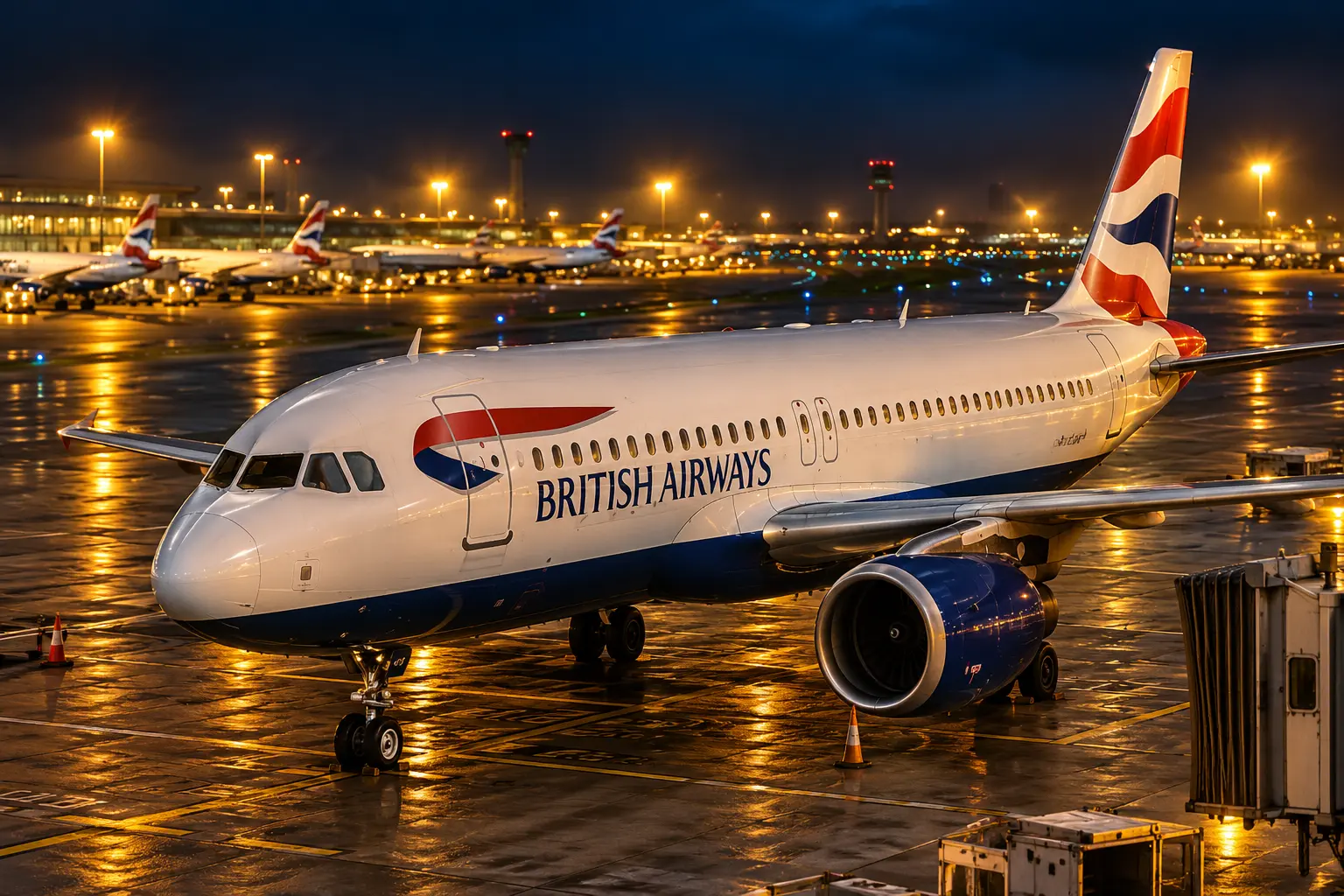
British Airways said the fault forced it into cancelling almost 550 flights, affecting more than 85,000 customers, and called the cause entirely out of its control. Ryanair said around 150,000 of its passengers were affected, with more than 200 flights cancelled. easyJet took the largest share of the cancellations, followed by BA, Ryanair, KLM and Eurowings. Gatwick, Manchester and Birmingham were next in line after Heathrow, with knock-on holds across Europe as inbound aircraft sat short of UK airspace.
Swanwick Has Failed Three Times in Three Years
Rolfe has led NATS for 11 years. Airlines spent Wednesday arguing that three major faults on his watch is the record that should end it. Ryanair chief operating officer Neal McMahon and Wizz Air UK managing director Yvonne Moynihan both called for him to go. Downing Street, speaking for Prime Minister Andy Burnham, said the government still had confidence in Rolfe and wanted his investigation back within a week.
THREE SWANWICK FAILURES
| Date | Fault | Cancellations | Passengers hit |
|---|---|---|---|
| 28 August 2023 | FPRSA-R flight-plan software, both primary and backup down in about 20 seconds | More than 1,500 that day; more than 2,000 over 28 and 29 August | More than 700,000 |
| 30 July 2025 | Radar software glitch; switch to backup in about 20 minutes | 155 (84 departures, 71 arrivals) | Tens of thousands |
| 8-9 September 2026 | Flight processing system at Swanwick, about four hours | Nearly 2,100 | About 330,000 |
The 2025 incident was treated as isolated. Alexander met Rolfe the next morning, said there was no evidence of malign activity, and no formal inquiry followed. Ryanair used the same resignation line it used again this month. The 2026 failure is larger, sits in the same building, and hits the same class of system: the automated handling of flight data rather than the radios or the runways.
A Single Flight Plan Stopped the System in 2023
On 28 August 2023 the Flight Plan Reception Suite Automated, FPRSA-R, received a valid plan for a Los Angeles to Paris Orly service. Searching for the flight’s exit from UK airspace, the software treated the three-letter code DVL as Deauville in France when the same letters also marked Devil’s Lake in North Dakota. The extracted UK route had an exit earlier than its entry. The system judged that not credible, threw a critical exception, and disconnected to stop bad data reaching controllers. The backup took the same plan and failed the same way. Automatic processing stopped in about 20 seconds.
The Civil Aviation Authority later estimated that more than 700,000 passengers were hit, including 300,000 by cancellations, 95,000 by delays of more than three hours, and a further 300,000 by shorter delays. NATS said the sub-system had processed more than 15 million plans since 2018 without seeing that combination. A software change was made so that specific case could not recur. Rolfe said this month he does not believe an incident happens more than once, and that 8 September would be something different, never seen in 50 years of operation. He has not published the 2026 mechanism, so that claim cannot be checked yet.
A 20-Minute Radar Switch in July 2025
On 30 July 2025 a radar-related software fault at Swanwick forced NATS to cut traffic while it switched to a backup. The company said the issue was resolved by quickly switching systems. Cirium counted 155 cancellations, most of them at Heathrow, and some inbound flights diverted to European cities. Alexander called it an isolated event. There was no week-long report and no six-month regulator review.
Thirty-Four Fixes Did Not Stop the Next Outage
An independent panel chaired by Jeff Halliwell, commissioned after the 2023 collapse, published 34 recommendations issued in 2024. They told NATS to review contingency and engineering rostering and to warn airlines earlier. They told airlines and airports to improve support for stranded families. They told the CAA to revisit the incentive framework on NATS. They told government to look at giving the regulator stronger consumer powers.
The incident on 28 August 2023 represented a major failure on the part of the air traffic control system, which caused considerable distress to over 700,000 aviation passengers, and resulted in substantial costs to airlines and airports.
Jeff Halliwell, Chair, Independent Review Panel
Transport minister Keir Mather told the Commons on 10 September that all 34 recommendations have been implemented. He also told MPs that resilience is clearly not where it needs to be, and that the systems need to be more adaptive. Conservative MP Simon Hoare had asked whether it was ludicrous that NATS had put all its eggs in one basket. Mather accepted the point.
The 2023 review put numbers on why a processing fault empties a day. In normal running the system could handle about 800 flight plans an hour. Manual input cut that to about 60. Controllers keep the sky safe either way. They just cannot feed a busy island at machine speed, so the only safe lever is to stop sending aircraft. Crews then time out. Aircraft sleep in the wrong hangars. Night-flight alleviations at Heathrow, Gatwick and Stansted were granted to claw some of that back. Whether 8 September produced the same 800-to-60 drop has not been stated. The pattern of a short outage and a long recovery is the same.
Why Passengers Will Not Get Cash Payouts
UK passenger law still makes the airline the first wallet passengers meet. If a covered flight is cancelled, the carrier must offer a refund or another seat. If people are stuck for hours, it must provide food, drink, and a hotel with transport when the wait runs overnight. Those care duties apply even when the cause sits outside the airline.
Cash compensation is a different door. For delays of more than three hours, or for cancellations the airline could have avoided, the scale runs from £220 (about $300) to £520 a person. Air traffic control failures are treated as events outside an airline’s control. The CAA has said the 8 September disruption is likely to count as extraordinary circumstances under passenger rules, which means passengers are unlikely to be entitled to that cash for delays and cancellations caused directly by the incident. The regulator added that this is guidance, and that a passenger who disagrees may still pursue a claim.
WHAT YOU CAN STILL INSIST ON
- A refund or a new seat: If the flight is cancelled, the airline must offer a full refund for the unused journey or reroute you under comparable conditions.
- Food and drink: Care is due after two hours on short-haul, three on medium-haul, or four on long-haul, whether or not compensation is payable.
- A hotel and a ride: Overnight stranding requires accommodation and transport between the airport and the hotel, with reasonable self-arranged costs reclaimable if the airline fails to provide them.
- Receipts, not luxury: Keep bills for meals, rooms and necessary travel. Regulators warn that alcohol and upgraded rooms are unlikely to be repaid.
- EU overlay on some tickets: UK261 is the home rule. EU rights still apply if an EU airline flies you into the EU, or if you depart an EU airport for the UK.
After the 2023 failure, airlines put extra costs at close to £100 million in rebooking, hotels and care. Lord Young of Cookham later told the Lords that compensation itself still ran to £65 million even after the extraordinary-circumstances cut, with more lost when aircraft and crews were in the wrong place. That bill lands on carriers, then on fares, not on NATS.
Airlines Already Own 42 Percent of NATS
NATS is not a distant state agency. The NATS public-private partnership structure dates from 26 July 2001. The government holds 49 percent and a golden share. The Airline Group holds 42 percent. LHR Airports Limited holds 4 percent. Staff hold 5 percent through a trust.
Eurocontrol’s factsheet lists the Airline Group 42 percent stake as British Airways, Lufthansa, easyJet, TUI Airways, Virgin Atlantic, the Pension Protection Fund and USS Sherwood Limited, which owns 49.9 percent of the Airline Group itself. Five of the 12 NATS board seats are appointed by that group. Ryanair is not in it. The loudest resignation demand on 9 September came from a carrier that does not sit on the register, while BA, which does, published an apology and a customer count.
That split explains the muffled row. The airlines that own NATS pay when Swanwick fails, then collect a share of NATS profits in calmer years. The government that owns 49 percent still voices confidence in the chief executive. Passengers get meals and a later seat, not a cheque. The company that broke the day investigates itself first, with the CAA running a parallel review.
The Reimbursement Clause Never Became Law
In the Lords on 13 July 2026, during the Civil Aviation (Consumer Protection and Regulatory Reform) Bill, Lord Young of Cookham proposed that NATS reimburse airlines for compensation paid after its failures. The government opposed the amendment. He withdrew it. The minister’s argument, as Young restated it, was that extraordinary circumstances already reduce what airlines pay passengers, and that pushing the rest onto NATS would be circular because airlines own just over 40 percent and the taxpayer stands behind the 49 percent stake.
Liberal Democrat MP Luke Taylor put that rejected clause back on the Commons record after this month’s outage. He said the government had been assured, after earlier computer problems, that NATS had taken the steps needed to prevent a recurrence of those particular circumstances. After a third major failure in three years, he said NATS was quite clearly not fit for purpose, and that the country cannot suffer a major air traffic outage once a year.
Following the 2023 collapse, we were told lessons would be learned. We were told resilience would improve. We were told the systems had been fixed. Yet here we are again.
Neal McMahon, Ryanair chief operating officer
McMahon also said NATS has a weak system and does not invest in it, paying bonuses and dividends instead. That is a carrier’s charge, not a published capex audit. What is on the record is simpler. Ministers had a chance, weeks before 8 September, to make NATS write the cheques. They declined. Alexander still told the Commons she did not believe this issue was unavoidable.
Rolfe Must Report the Cause by 16 September
Alexander and Mather met Rolfe on 9 September and set the company a deadline of 16 September to explain the cause. The CAA was asked to run an independent review of what happened and of how well NATS is set up to deliver a resilient service, with an update to the department within six months. NATS has said only that the fault was technical, that cyber is not believed to be involved, and that a full investigation will establish what happened.
WHAT WE KNOW
- The window: Automated flight processing at Swanwick failed on the afternoon of 8 September and was described as resolved by 19:30, with recovery running through 9 September.
- The scale: Cirium’s two-day count is nearly 2,100 cancelled flights and about 330,000 passengers disrupted.
- The legal frame: The CAA’s working view is extraordinary circumstances, so cash compensation is unlikely while care, refunds and rerouting remain due.
WHAT IS UNCONFIRMED
- The trigger: NATS has not published the field, value or software module that failed, or whether FPRSA-R was involved.
- The redundancy: Ministers say resilience is not where it needs to be; the standby state of the failed component has not been described.
- Who pays next: No new reimbursement duty has been added to the aviation bill since the July vote against it.
Rolfe’s note to ministers is due on 16 September. Until that paper, or the CAA’s later review, names the mechanism, the country has a three-year pattern at Swanwick, a four-hour hole in the timetable, and a cost that still sits with airlines and the people who slept in terminals.
Disclaimer: This article is news reporting and analysis of the NATS disruption and of published passenger-rights guidance. It is informational only and is not legal advice, a determination of any claim, or a substitute for an airline contract of carriage. Readers who want to pursue a refund, expenses or compensation should check their booking conditions and, if needed, consult a qualified consumer or travel-law adviser or the airline’s own claims process before acting. Figures, investigation deadlines and the CAA’s working view of extraordinary circumstances reflect the sources available on 14 September 2026 and may change when NATS files its cause report or when individual tickets are assessed.

Greed Held After a $697 Million Crypto Long Flush

Fed Minutes Keep a Year-End Rate Hike Alive

A Nanny-Cam Tape Follows Tyreek Hill Into Free Agency

Star Wars Galactic Racer Makes a Crash End the Tour

Amazon Puts Apple’s June MacBook Prices Back on Sale

Sophia Wootten Turns the Miss Georgia Crown Toward Cleft Care

Georgia Beach Bacteria List Leaves Swim Areas Open

The iPhone 16 Pro Flipkart Cut Did Not Last

Microsoft Prints Azure’s $29.42 Billion Quarter and Shrinks the Map

UltraTech’s Ultravolt Launch Puts Cable Multiples on Trial
-
 ENTERTAINMENT4 months ago
Sophia Wootten Turns the Miss Georgia Crown Toward Cleft Care
-
 NEWS4 months ago
Georgia Beach Bacteria List Leaves Swim Areas Open
-
 NEWS1 year ago
The iPhone 16 Pro Flipkart Cut Did Not Last
-
 BUSINESS2 months ago
UltraTech’s Ultravolt Launch Puts Cable Multiples on Trial
-
 NEWS2 months ago
Microsoft Prints Azure’s $29.42 Billion Quarter and Shrinks the Map
-

 NEWS3 months ago
Little St. Simons Island Hatches Loggerheads at 72.4 Percent
-

 NEWS10 months ago
IXI Autofocus Glasses Still Lack a European CE Mark
-

 NEWS3 months ago
OnePlus Ends OxygenOS After Quitting US and Europe