
BUSINESS
Aberdeen’s Green HQ Opened While Two Fields Still Wait
King Charles opened Great British Energy in Aberdeen on 22 September. Jackdaw and Rosebank, already built, still lack the signature that would start them.

King Charles opened Great British Energy’s Aberdeen headquarters on 22 September. Ministers have still not decided the fate of two North Sea fields the city has been waiting on for years.
In November 1975, Elizabeth II pressed a golden button at BP’s base in Dyce to start the Forties field. Another monarch has now blessed a state clean-energy office in the same granite city, while Jackdaw, a gas field east of Aberdeen, and Rosebank, an oil field west of Shetland, sit built and unsigned.
A King, a Plaque and 300 Headquarters Jobs
The visit was billed as proof that Aberdeen’s next chapter would be written in renewables. Great British Energy, set up in May 2025 to co-fund clean projects, has taken space at Marischal Square. The king unveiled a plaque at the new headquarters, made by designers at Gray’s School of Art at Robert Gordon University, and met Harlaw Academy pupils who had designed a wind farm for an Aberdeenshire village.
He had already made a series of engagements in Peterhead and Aberdeen that morning, including the port that now handles offshore wind, carbon capture kit and low-carbon power work. At the reception he praised the engineering skill concentrated in the north-east, the same “genius” he has long argued the country should put to work on a cleaner system.
It is remarkable, always, to see the extent of all the engineering skills in this part of the world.
King Charles III, Great British Energy headquarters, Aberdeen, 22 September 2026
Dan McGrail, the company’s chief executive, called the day a proud moment and said the plaque would hang in reception. Energy minister Michael Shanks said the doors were open on a publicly owned firm that would now move into its next phase. On the same day the company pledged £750,000 for skills and employability work in the north-east.
The payroll inside those doors is modest beside the basin it is meant to succeed. Shanks said some 140 people then worked for Great British Energy, with plans to grow the workforce to 300. McGrail has said the firm should not be judged only on its own headcount and has set a target of helping to create 10,000 extra jobs through its investments by 2030, with three projects already expected to support about 1,500. Chairman Jürgen Maier had earlier spoken of as many as 1,000 direct Aberdeen jobs over 20 years. The working figure for the office is now 300.
Jackdaw Is Built. Whitehall Has Not Said Yes
The two fields the city actually wants a decision on are not new ideas. They already have production licences. They do not have consent to produce. Both are run by Adura, the Shell and Equinor joint venture that is itself based in Aberdeen.
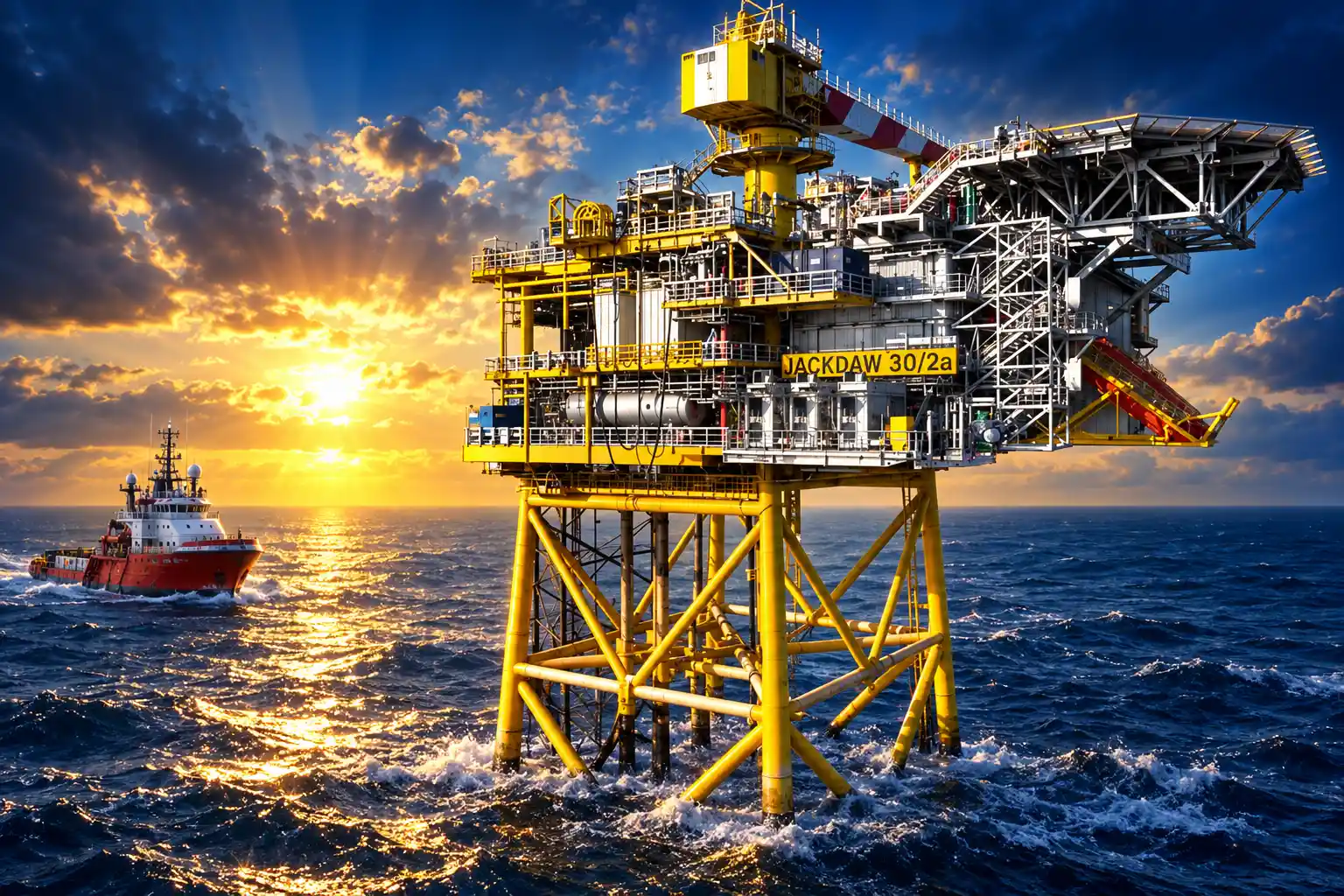
Jackdaw is a gas development tied back to the existing Shearwater hub, with gas planned to come ashore at St Fergus in Aberdeenshire. Adura says the platform is already installed and in the last stages of start-up. Company figures put lifetime output at 10 billion cubic metres of gas. In its early phase, Adura says, the field could supply more than 6% of UK gas, a volume it equates to heat for 1.4 million homes. Construction has been described by the operator as all but finished, which is why a mid-September signature was supposed to mean gas this winter.
Rosebank is a different bet. The Commons Library, drawing on the North Sea Transition Authority, says production would be about 90% oil and 10% gas. In an optimistic case it could yield 437 million barrels of oil, or 62.4 million tonnes of oil equivalent, plus 10.7 billion cubic metres of gas, equal to about 12% of projected UK oil imports between 2025 and 2050. The retrofitted Petrojarl Rosebank floating production vessel has already been moved onto the field west of Shetland. Greenpeace says work has also been set back after two pieces of drilling kit, including a safety valve, were dropped 1,100 metres to the seabed.
THE HARDWARE ALREADY IN THE WATER
- Jackdaw platform: Installed east of Aberdeen and tied back to Shearwater, with onshore delivery planned at St Fergus.
- Rosebank vessel: The Petrojarl Rosebank FPSO is on station west of Shetland, waiting on new environmental consent.
- Money already spent: Adura says more than £3 billion has been invested across the two developments, against a combined anticipated outlay of £10.8 billion.
- What the operator claims they add: Combined, the fields could make up 10% of UK gas production and generate £28.7 billion in gross value added over their lives.
None of that metal moves commercial molecules until Energy Secretary Miatta Fahnbulleh agrees that the revised climate assessments stack up. She has told MPs the two sites will be decided separately. The public consultations closed in August.
Why the Decision Slipped Past Conference Season
In early September, people close to the process said Jackdaw could be cleared in mid-month, before parliament rose for conference season, and that an announcement might even come in Aberdeen. Friends of the Earth called any approval “a staggering step backwards”. The date passed. The signature did not.
Prime Minister Andy Burnham has left room to honour existing licences while keeping Labour’s promise of no new exploration licences. On 17 August he was described as minded to approve Jackdaw, with Rosebank still in the balance and officials looking at ways to steer any proceeds toward clean-energy funds. Scottish Labour leader Michael Marra has said outright that he wants both fields approved and the Energy Profits Levy replaced. Holyrood still refused, on 30 September, to back a Conservative motion for an immediate green light, voting 77 to 42 to leave the call with the energy secretary.
The live political fact is the Holborn and St Pancras by-election on 8 October, called after Keir Starmer left the Commons. Labour is under pressure there from the Greens. Zack Polanski, the Green leader, has attacked Burnham for a “glaring gap” on climate that includes Rosebank. Opposite him, GMB general secretary Gary Smith has urged approval on jobs and import-dependence grounds, and shadow Scotland secretary Harriet Cross has warned that a refusal would be read by the industry as a full stop.
The environmental paperwork is not what is still open. The consultations ended in August. What is open is whether Burnham wants that fight in the same week as a London contest the Greens have chosen to make about oil. Opposition MPs have said the wait is about votes, not wells. That reading is crude, and it is also the one that now fits the calendar.
WHAT WE KNOW
- Existing licences: Jackdaw and Rosebank keep their licences; the fight is over development and production consent, not a new round of acreage.
- Separate calls: Fahnbulleh will decide the two fields apart, with the North Sea Transition Authority still to issue formal consent if she agrees.
- No new licences: The North Sea Future Plan bars new exploration and production licences and offers Transitional Energy Certificates for tie-backs next to fields that already exist.
WHAT IS UNCONFIRMED
- Jackdaw this winter: Adura says a yes would still allow gas in the coming winter; no date has been set for the decision.
- Rosebank’s odds: Some government figures have treated an oil-heavy field as harder to defend than a gas tie-back; no formal steer has been published.
- Where the tax would go: Talk of routing revenues into a national wealth fund for clean projects remains just talk.
Cross, speaking as the by-election campaign ran, put the industry’s fear in one line.
If Rosebank and Jackdaw are not permitted, you can pretty much guarantee that that is the end of the oil and gas sector. No company is obliged to invest in the UK.
Harriet Cross, shadow secretary of state for Scotland, 5 October 2026
The Jobs Math Does Not Match the Ceremony
Aberdeen’s oil years minted a dense cluster of high earners around the turn of the 2000s. The extraction industry that supported them has been shrinking for a decade. Office for National Statistics figures, collated by the Commons Library, show employment in oil and gas extraction down from about 38,000 jobs in 2015 to 28,000 in 2024, a loss of 10,000 posts, most of them in Scotland. UK extraction still generated almost £19 billion of gross value added in 2025, 0.7% of the national total.
Adura says the two fields would support 3,500 jobs at peak construction, 880 through production and 125 apprenticeships, and that Rosebank alone would sustain an average of 525 UK jobs over its life. Campaigners use a much smaller number for the gas field that is actually ready. Areeba Hamid of Greenpeace UK, writing after the consultations closed, said Jackdaw would create just 27 new direct full-time jobs on the developer’s own assessment, and that the oil and gas would be sold at world prices, not reserved for British boilers.
Those figures can sit together if they are not mashed into one headline. Peak construction is temporary, and a large share of it has already happened, which is why the platform is in the water. The 27 is a long-term direct count. The 880 and the 525 are wider, life-of-field estimates. Great British Energy’s 300 desks, and its hope of 10,000 jobs via other people’s projects by 2030, are a third set. None of them is the old Aberdeen payroll.
JOBS CLAIMED FOR THREE ABERDEEN BETS
| Project | Status | Direct jobs cited | Output cited |
|---|---|---|---|
| Great British Energy HQ | Opened 22 September 2026 | 140 staff now, 300 target | Co-funding clean projects; 10,000 jobs claimed by 2030 via investments |
| Jackdaw (gas) | Platform installed, consent unsigned | 27 long-term full-time posts on the developer’s assessment | 10 billion cubic metres of gas; more than 6% of UK gas in the early phase, per Adura |
| Rosebank (mostly oil) | FPSO on station, consent unsigned | 525 UK jobs on average over field life, per Adura | 437 million barrels of oil in an optimistic case, plus 10.7 billion cubic metres of gas |
The Resolution Foundation has argued the link between extra barrels and extra Aberdeen jobs is already weak, because remaining reserves sit in smaller tie-backs and because a production bounce between 2014 and 2019 came with an 11% fall in local oil and gas employment. If that is right, a royal opening and a late yes on Jackdaw could both disappoint anyone still waiting for the 2000s to return. It does not make the unsigned platform a sideshow. It makes the mismatch smaller, and colder.
Court, Tax and a 78% Marginal Rate
Jackdaw was first consented in June 2022, Rosebank in September 2023. Greenpeace, with Uplift on Rosebank, went to court on a simple point: ministers had not counted the carbon released when the fuel is burned. The Supreme Court ruling on downstream emissions in the Finch case in June 2024 established that principle. After the general election, Labour did not defend the old consents. In January 2025 the Court of Session in Edinburgh quashed them. New environmental material went out in 2026. Fresh applications went to the regulator in July. The consultations ran through August. Then the file sat on Fahnbulleh’s desk while the king unveiled a plaque.
HOW THE CONSENTS FELL APART
- November 1975: Elizabeth II starts Forties production from BP’s base at Dyce, on the edge of Aberdeen.
- June 2022: The then Conservative government consents Jackdaw.
- September 2023: Rosebank is consented.
- June 2024: The Supreme Court, in Finch, requires downstream burning emissions to be assessed.
- January 2025: The Court of Session quashes both consents.
- May 2025: Great British Energy is established, with Aberdeen later named as its home.
- July 2026: Adura files new consent applications; consultations run into August.
- 22 September 2026: The king opens the Aberdeen headquarters.
- 8 October 2026: Holborn and St Pancras votes, with the fields still unsigned.
Tax sits beside the legal fog. The effective marginal rate on North Sea production is 78%, including the Energy Profits Levy at 38%. The levy was built for the price spike after Russia’s invasion of Ukraine and is due to run until 31 March 2030, or until an investment trigger tied to “historically normal” prices. The government says it will then move to a permanent Oil and Gas Revenue Levy that can still bite in a future spike. Operators call the present rate a reason to take rigs and people elsewhere. The Treasury still books the cash.
Domestic output will not close the import gap even if both fields run. The Commons Library notes that North Sea production is already over 70 percent below its 1999 peak, that the UK has been a net importer of gas since 2004 and of oil since 2005 (except 2020), and that between 2025 and 2050 UK oil demand is projected at about 2.6 times domestic production, with gas demand 3.3 to 3.7 times production. Campaigners add that most UK crude is exported anyway, so Rosebank barrels would not, by themselves, fill British refineries. UK Energy Research Centre work has also found that extra North Sea barrels would not cut household bills, because prices are set on world markets.
Who Still Needs a Winter Gas Field
Hamid’s test is blunt. “Neither field should go ahead,” she wrote, arguing that consumers do not get cheaper energy and that workers do not get the scale of secure jobs being advertised. Adura chief executive Neil McCulloch has put the other case: the kit is largely built, the gas would land at St Fergus, and a yes would still mean supply, tax and skilled work from a basin that is otherwise being wound down by policy as well as geology. The Energy Independence Bill named in the 2026 King’s Speech is meant to lock in the ban on new licences. These two fields are the leftover exception that tests whether “existing licences” means existing production.
For Aberdeen the ceremony and the permit are not substitutes. A 300-person state office, a £750,000 training pot and a hope of 10,000 indirect jobs by 2030 can be real and still be a different industry from the one that filled Dyce in 1975. A winter-ready gas platform with no consent is also real. So is an oil vessel already sitting west of Shetland. The king’s plaque now hangs in a Marischal Square reception. The signature that would start Jackdaw does not.
If Fahnbulleh signs Jackdaw after 8 October, Adura says gas could still move this winter through Shearwater to St Fergus. Rosebank would take longer. Both files have been ready since August. The office with the plaque has been open since 22 September.

Greed Held After a $697 Million Crypto Long Flush

Fed Minutes Keep a Year-End Rate Hike Alive

A Nanny-Cam Tape Follows Tyreek Hill Into Free Agency

Star Wars Galactic Racer Makes a Crash End the Tour

Amazon Puts Apple’s June MacBook Prices Back on Sale

The iPhone 16 Pro Flipkart Cut Did Not Last

Microsoft Prints Azure’s $29.42 Billion Quarter and Shrinks the Map

UltraTech’s Ultravolt Launch Puts Cable Multiples on Trial

IXI Autofocus Glasses Still Lack a European CE Mark

Little St. Simons Island Hatches Loggerheads at 72.4 Percent
-
 NEWS1 year ago
The iPhone 16 Pro Flipkart Cut Did Not Last
-
 NEWS1 month ago
Microsoft Prints Azure’s $29.42 Billion Quarter and Shrinks the Map
-
 BUSINESS1 month ago
UltraTech’s Ultravolt Launch Puts Cable Multiples on Trial
-
 NEWS9 months ago
IXI Autofocus Glasses Still Lack a European CE Mark
-
 NEWS3 months ago
Little St. Simons Island Hatches Loggerheads at 72.4 Percent
-

 NEWS4 months ago
Georgia Beach Bacteria List Leaves Swim Areas Open
-

 ENTERTAINMENT4 months ago
Sophia Wootten Turns the Miss Georgia Crown Toward Cleft Care
-

 NEWS3 years ago
Eyal Waldman Keeps a Two-State Bet After Gaza