
NEWS
Georgia Beach Bacteria List Leaves Swim Areas Open
Georgia’s 2026 list puts 15.3 miles of coastal beach, including Tybee, Jekyll, and St. Simons stretches, on an impaired roll that does not close the water.

Georgia’s 2026 impaired-waters list counts 15.3 miles of coastal beach as not supporting recreation because of enterococci, a fecal bacteria marker, including named stretches on Tybee Island, Jekyll Island, and St. Simons Island. The designation comes from samples taken from 2020 through 2025, not from a single bad weekend, and it does not shut the sand.
EPD spokesperson Sara Lips said there were enough violations for those beaches to be named “Not Supporting” their recreation use. Other Tybee and Golden Isles segments still meet the standard, and the weekly warning system that actually tells swimmers to stay out of the water is a different test run by a different shop.
Nine Stretches Land on Georgia’s 2026 Impaired List
The May 29, 2026 drafts cover two Tybee segments in the Savannah River Basin and seven St. Simons and Jekyll segments in the Satilla River Basin. Enterococci was newly added on Jekyll’s North Beach in this cycle. Each stretch is a mapped assessment unit with its own length, not a blanket stain on an island.
THE NINE STRETCHES IN THE MAY 2026 DRAFTS
| Island | Stretch | Miles |
|---|---|---|
| Tybee | Polk Street Beach, end of beach to jetty | 1.8 |
| Tybee | Strand Beach at the Pier, 11th Street to 18th Street | 0.7 |
| St. Simons | North Beach at Goulds Inlet, Fifteenth to Tenth Street | 0.4 |
| St. Simons | Middle Beach, old Coast Guard station, Tenth Street to Driftwood Drive | 0.9 |
| St. Simons | Massengale Park Beach, Driftwood Drive to Cedar Street | 0.5 |
| St. Simons | 5th Street Crossover, Cedar Street to 9th Street | 0.6 |
| St. Simons | South Beach at the lighthouse, 9th Street to the pier | 1.5 |
| Jekyll | Driftwood Beach, kilometer marker 1 to Tallu Fish Lane | 2 |
| Jekyll | North Beach at Dexter Lane, Tallu Fish Lane to Brice Lane | 4 |
Tybee’s Middle Beach at Center Terrace, North Beach at Gulick Street, and South Beach at Chatham Street are listed as supporting recreation. Sea Island’s north and south beaches are supporting too. The statewide 15.3-mile impaired total also holds older Jekyll listings that already have 2017 cleanup plans on file.
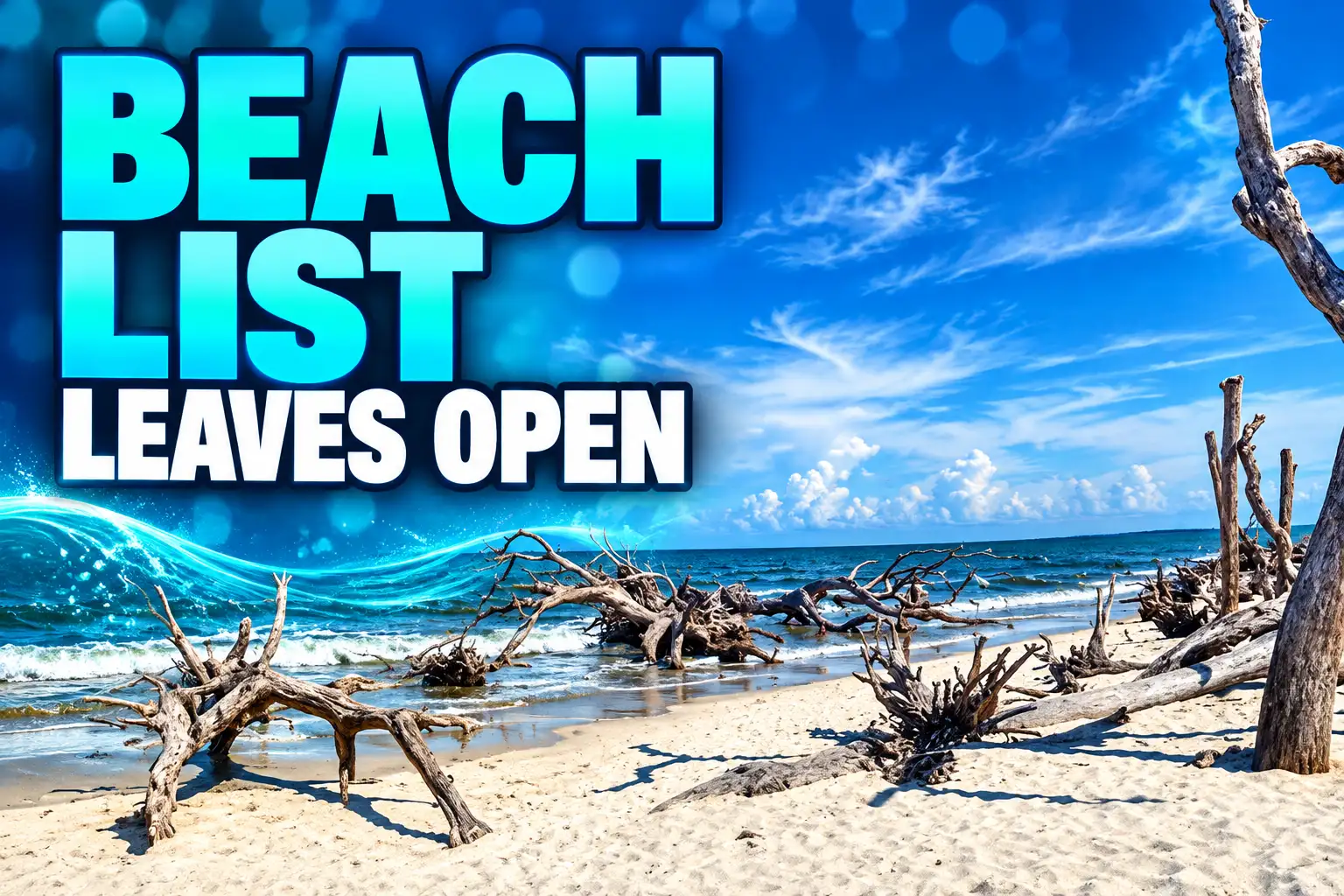
A Listing Does Not Close a Beach
The Clean Water Act makes states name polluted surface waters every two years. Waters that fail their use and lack a pollution budget go on the 303(d) list, which is what these nine stretches joined. That roll is a planning document. It triggers a Total Maximum Daily Load, a cap on how much enterococci the water can take and still meet the recreation standard.
It does not post a lifeguard, pull a parking pass, or lock a crossover. Georgia’s Coastal Resources Division says an advisory never closes a beach. The risk, when one is posted, is in the water, not on the dry sand, and plenty of access points on the same island stay clear.
Lips noted that the five-year file can lag what a sampler finds on a given Monday. A family walking onto Polk Street Beach in peak season is not standing inside a closed zone. They are standing on a segment whose long-run record failed a paperwork test.
Weekly Tests Use a Different Number
Two programs share the same bacteria and split on the number that matters. The 303(d) listing uses Georgia’s coastal recreation criteria, adopted by the Board of Natural Resources on January 28, 2022 and approved by U.S. EPA Region IV on August 31, 2022. Those criteria match EPA’s 2012 recreational water quality criteria: a geometric mean of 35 counts per 100 mL from at least four samples in 30 days, and no more than a 10% rate of samples above a statistical threshold of 130.
The live warning for tourists is the Georgia Healthy Beaches program, a Coastal Resources Division and Coastal Health District effort paid with an EPA grant. That shop’s weekly beach bacteria tests and advisories trip when a sample tops 70 cfu/100 mL. The beach is retested the same week. Signs stay up until a later sample falls back.
HOW THE TWO PROGRAMS DIVERGE
- The listing test: A five-year record of 30-day means and 130-count spikes decides whether a stretch is “Not Supporting” on the 2026 roll.
- The swim test: A single weekly grab above 70 cfu/100 mL puts a yellow status on that zone until the retest clears.
- The signs: Fifty-six advisory signs sit at popular access points on Tybee, St. Simons, and Jekyll, tied to the latest sample, not to the 303(d) map.
- The weather tell: Program staff say high counts often follow heavy rain and strong wind that wash waste off the uplands or stir bacteria out of sediment.
Sampling on the three islands runs once a week in the swim season and twice a month in winter. Permanent-advisory sites, a rarer class, are sampled four times a year. Georgia has about 105 miles of sandy beach; 22.2 miles of coastal beach are listed as supporting recreation on the same 2026 inventory that flags 15.3 miles as not supporting.
Draft Budgets Demand Cuts as High as 98%
EPD posted proposed enterococci TMDLs for both basins on May 29, 2026. The Savannah draft says Polk Street Beach needs a 57% cut from its current critical load and Strand Beach at the Pier needs 52%. The Satilla draft, covering the seven St. Simons and Jekyll stretches, calls for cuts from 76% to 98%.
THE NUMBERS BEHIND THE CAPS
- Target mean: 35 enterococci counts per 100 mL, the recreation criterion the load must hit.
- Safety slice: A 10% margin of safety is built into the math as 3.5 counts against that 35.
- Tybee cuts: 57% at Polk Street Beach and 52% at Strand Beach at the Pier.
- Satilla cuts: 76% to 98% across the seven St. Simons and Jekyll segments.
Because the beaches are tidal, the drafts write the cap as a function of total flow rather than a single dump of counts per day. Point-source plants still get a wasteload at the 35-count mean times their permitted or long-term average flow. The rest, and it is most of the load, is assigned to nonpoint sources and a safety margin.
EPD calls this a long-term, phased effort that can be revised in the next five-year cycle. The drafts also note that the agency delayed other TMDL dates because of staffing, pushing some Savannah basin work from 2024 to 2029 and some Satilla dates from 2026 to 2031. These beach documents still went out in May 2026.
Jekyll’s 2017 Limits Left the Water Impaired
Jekyll already knows what a finished enterococci TMDL looks like on paper. Clam Creek Beach, 1.95 miles from Clam Creek to kilometer marker 1, and St. Andrews Beach, 0.8 miles from Macy Lane to the picnic area, received TMDLs in 2017. Those plans sought a 96% cut at Clam Creek and a 98% cut at St. Andrews. On the 2026 coastal-beaches list both remain not supporting, now in category 4a, the bin for waters that have a TMDL and have not yet met the standard.
THE PAPER TRAIL ON THE COAST
- 2017: Enterococci TMDLs are completed for Jekyll Island Clam Creek Beach and St. Andrews Beach.
- January 28, 2022: The Georgia Board of Natural Resources adopts E. coli and enterococci criteria that replace the old fecal coliform limits.
- August 31, 2022: EPA Region IV approves those criteria.
- May 29, 2026: EPD offers new enterococci TMDLs for nine Tybee, St. Simons, and Jekyll stretches.
- July 16, 2026: The public comment window on those drafts closes at 5 p.m.
- August 28, 2026: The Chatham County Health Department posts a swim advisory on Tybee Strand Beach at the Pier, from 11th Street to 18th Street, the same stretch named on the 303(d) list.
The August advisory is the weekly program doing its job on a listed beach. It is also a reminder that a multi-year impaired tag and a Tuesday yellow sign can stack on the same sand without either one emptying the parking lot.
Storm Drains and Marshes Share the Blame
EPD has not named a single pipe, septic field, or flock as the source. The Satilla draft lists urban runoff and nonpoint sources as the potential causes and counts ten NPDES discharges in the contributing watershed as of 2024, among them the Jekyll Island State Park Authority plant (GA0020508) and the St. Simons Island plant on Dunbar Creek (GA0021521). The Savannah draft assigns a wasteload to the City of Tybee Island plant (GA0020061), which discharges to the Atlantic at the mouth of the Savannah River.
Enterococci live in the guts of warm-blooded animals, people included, and show up after sewage leaks, boat waste, pet droppings, and wildlife. The Jekyll Island Group put the marsh in the frame.
There is always going to be some levels of bacteria present in nutrient-rich natural waters, particularly beach areas in Coastal Georgia connected to tidal marshes abundant with wildlife.
Jekyll Island Group, email statement
That line does not clear a 98% cut. It does explain why a TMDL that leans on load allocations, the share assigned to runoff and background, can sit for years while weekly samples still spike after a storm. Healthy Beaches already tells visitors to weigh the last 24 to 48 hours of rain and wind before they swim, listed stretch or not.
The July Comment Window Closed in Silence
EPD’s notice asked for written comments due by July 16, 2026, at 5 p.m., with technical questions routed to Tyler Parsons, the TMDL modeling unit manager. After comments, the agency said it would revise the drafts and send them to EPA for approval. A TMDL is final only when EPA’s approval letter is in hand. On the agency’s TMDL page the May 2026 Satilla and Savannah enterococci reports still sit under Proposed TMDLs, with no approval letter posted.
The islands did not pause the season for that wait. Visit Tybee counts $182 million in 2024 visitor spending, down from $190 million in 2023, and the water at Polk Street and the Pier stayed open under the weekly rules. On August 28, 2026, Chatham County posted that Strand Beach advisory and said it did not cover the rest of Tybee. The listed miles are still a planning problem for stormwater desks and plant permits. The sign a swimmer can actually use is the yellow one at the crossover, tied to last week’s bottle, not to a draft that has not yet left Atlanta.
Disclaimer: This article is news reporting on Georgia’s 2026 impaired-waters list, beach monitoring, and draft pollution budgets. It is for information only and is not medical advice, a swim clearance, or a health diagnosis. People who have been in water under advisory and then have stomach upset, an ear infection, a sore throat, or a wound infection should talk with a licensed clinician. Bacteria counts, advisory status, and TMDL documents change as new samples and agency actions come in.

Greed Held After a $697 Million Crypto Long Flush

Fed Minutes Keep a Year-End Rate Hike Alive

A Nanny-Cam Tape Follows Tyreek Hill Into Free Agency

Star Wars Galactic Racer Makes a Crash End the Tour

Amazon Puts Apple’s June MacBook Prices Back on Sale

The iPhone 16 Pro Flipkart Cut Did Not Last

Microsoft Prints Azure’s $29.42 Billion Quarter and Shrinks the Map

UltraTech’s Ultravolt Launch Puts Cable Multiples on Trial

IXI Autofocus Glasses Still Lack a European CE Mark

Sophia Wootten Turns the Miss Georgia Crown Toward Cleft Care
-
 NEWS1 year ago
The iPhone 16 Pro Flipkart Cut Did Not Last
-
 BUSINESS1 month ago
UltraTech’s Ultravolt Launch Puts Cable Multiples on Trial
-
 NEWS1 month ago
Microsoft Prints Azure’s $29.42 Billion Quarter and Shrinks the Map
-
 NEWS9 months ago
IXI Autofocus Glasses Still Lack a European CE Mark
-
 ENTERTAINMENT4 months ago
Sophia Wootten Turns the Miss Georgia Crown Toward Cleft Care
-
 NEWS3 months ago
Little St. Simons Island Hatches Loggerheads at 72.4 Percent
-

 NEWS3 years ago
Eyal Waldman Keeps a Two-State Bet After Gaza
-

 BUSINESS3 months ago
Georgia Furniture Mart Closes a Growing 40-Year Business