
NEWS
Fed Minutes Keep a Year-End Rate Hike Alive
FOMC minutes still back a 2026 hike, yet the 10-year’s 24-year high and a 29,000-job print have priced out October.

Most Federal Reserve officials still saw another rate increase as likely by year-end, the minutes of the September 15-16 meeting showed on October 7. The FOMC had voted 12-0 to lift the federal funds rate by a quarter point to a range of 3.75% to 4.00%, the first increase since 2023. CME FedWatch still implied nearly an 81% chance of a hold at the October 27-28 meeting.
The gap is not a mix-up in the text. Officials want another move in the overnight rate because they still see easy financial conditions in stocks and credit. The bond market has already raised the long-term cost of money, and the data that arrived after the meeting gave them room to wait.
Most Officials Still Want Another Hike by Year-End
The account of the meeting, released three weeks after the decision, is blunt on the next step. With regard to the outlook beyond that sitting, most participants assessed that another increase would likely be appropriate by year end. They also said they would come to each future meeting with an open mind, and that later votes would turn on incoming information and the balance of risks.
We have posted the minutes from the #FOMC meeting held September 15-16, 2026: https://t.co/OOgu25FzQu
— Federal Reserve (@federalreserve) October 7, 2026
All 12 voters backed the September move. Staff had told them inflation was still high, the labor market was near full employment with some signs of firming, and activity was expanding at a solid pace. Almost all of them saw inflation risks tilted up, while risks to jobs had faded and were now broadly balanced. On that reading, a higher target range would support a faster return to the Committee’s 2% goal.
The plain fact is that inflation is too high and has been for too long.
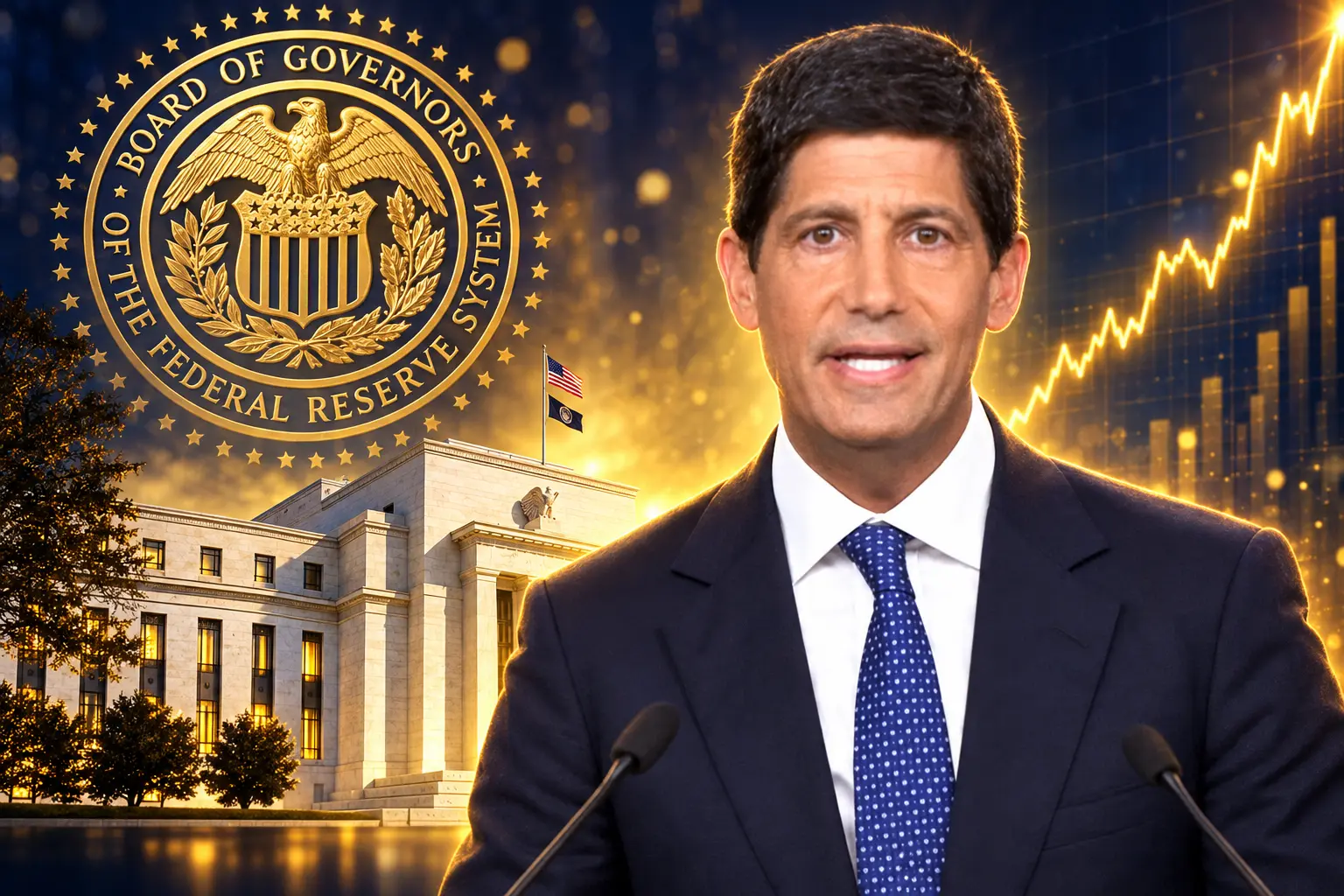
Kevin Warsh, Chair, FOMC press conference, September 16, 2026
The accompanying forecasts put numbers on that bias. Eighteen officials submitted projections; Warsh, as in June, did not file a rate path of his own. Of those 18, 16 of 18 put the year-end funds rate at 4.1% or higher, which is at least one more quarter point from the new 3.75% to 4.00% range. Twelve penciled in one extra move, four penciled in two, and two left the rate where September put it. The median funds rate is 4.1% at the end of 2026 and still 4.1% at the end of 2027, up from 3.8% and 3.6% in the June round.
Several officials said the current setting was not restrictive, or only mildly so, and a couple raised their estimates of the neutral rate. Many framed a higher path as insurance against inflation staying above 2%. That is the Committee Warsh inherited on paper: united on the first hike, still leaning toward another before December 31, and not yet willing to call policy tight.
Why October Is Already Off the Table
The minutes describe mid-September. The market is trading early October. Between those dates the inflation print the staff had estimated in the room was revised lower, hiring slowed sharply, and two of the most influential voices on the Committee said they had time.
THE DATES THAT REPRICED OCTOBER
- September 16, 2026: The FOMC raises the funds rate 25 basis points to 3.75% to 4.00% and publishes a median year-end rate of 4.1%.
- September 29, 2026: New York Fed President John Williams, speaking in Buffalo, says there is no need for urgency after the September hike and that officials have time to gather more information.
- September 30, 2026: The Bureau of Economic Analysis publishes August inflation, with headline PCE up 3.4% from a year earlier and core up 3.0%.
- October 1, 2026: Vice Chair Philip Jefferson tells an audience at the University of Virginia that any further move should wait on a careful read of the data, the outlook, and the risks.
- October 2, 2026: The Labor Department reports that nonfarm payrolls rose just 29,000 in September, with the unemployment rate up to 4.2% from 4.1%.
- October 7, 2026: The minutes confirm the September hike bias; stocks hold a slight loss of about 0.2% and the 10-year yield edges up 1.6 basis points.
Williams still expects one more upward adjustment late this year if the economy tracks his forecast. He was not arguing for an October vote. He said the September action had already bought time, and that more data should clarify the trend in inflation and the risks around the dual mandate. Diane Swonk, chief economist at KPMG, read the minutes the same way after they dropped: the live argument inside the Fed is over timing and how many hikes, not over whether inflation is the problem.
The jobs report did the heavier lifting for October odds. Payrolls of 29,000 missed a 90,000 consensus and sat well below the 45,000 average of the prior 12 months. July was revised from a 21,000 gain to a 10,000 loss, and August from 162,000 to 133,000, a combined markdown of 60,000 jobs. Private payrolls rose 46,000; government payrolls fell 17,000. Average hourly earnings were up 3.0% from a year earlier. The three-month average held at 51,000. That is a cooler labor market than the one staff described in mid-September, when the unemployment rate was 4.1% in both July and August and payrolls had just picked up.
The 10-Year Has Tightened More Than the Fed
The policy rate moved 25 basis points. The Treasury market moved more than that, and it moved before and after the meeting. During the intermeeting period the manager of the System Open Market Account told the Committee that nominal yields had risen about 35 basis points across the 2- to 10-year sector. Part of that was a higher expected path for the funds rate and stronger data. Market commentary also pointed to geopolitics, uncertainty around Treasury buybacks, and competition for capital from heavy private issuance to finance AI infrastructure.
From the September 16 decision through the minutes release, the benchmark 10-year yield rose another 28 basis points. It last traded at 5.284% on October 7, after an intraday high of 5.364%, levels last seen in 2002. The 30-year yield tagged 5.732% the same session. A $39 billion reopening of 10-year notes cleared at 5.300%, the highest auction rate on that tenor since November 2000.
THE LONG END AFTER THE HIKE
- 10-year last: 5.284% on October 7, up 1.6 basis points on the minutes themselves.
- Session high: 5.364% that day, a 24-year peak, with the 30-year at 5.732%.
- Since September 16: about 28 basis points added on the 10-year, on top of the 35 basis points the Desk already reported going into the meeting.
- October hold: nearly 81% in CME FedWatch around the minutes, for the October 27-28 gathering.
Jefferson named that selloff directly. Since the September meeting, he said, yields across the term structure have increased further, a sign that investors are reassessing the outlook, and that reaching a judgment on the next move may take more time. Higher long-term yields raise mortgage rates and corporate borrowing costs without a second FOMC vote. In the staff briefing, financing conditions were already somewhat restrictive for homebuyers and small firms, even as they stayed easy for large companies.
That last distinction is why the minutes are hawkish and the market is not. Many officials said that, despite the rise in longer-term Treasury yields, financial conditions still looked supportive of growth, with equity prices up a lot this year and corporate bond spreads still narrow. The Desk’s own recap put a finer point on the equity side: the year’s gain was entirely from earnings, while price-to-earnings multiples had fallen, and firms tied to AI infrastructure led the tape. Overnight policy is what the Committee controls. The parts of the economy that still look loose are the parts the 10-year has not reached.
HOW THE SEPTEMBER FORECASTS SHIFTED FROM JUNE
| Variable | June 2026 median | September 2026 median |
|---|---|---|
| Real GDP, 2026 | 2.2% | 2.3% |
| Unemployment rate, 2026 | 4.3% | 4.1% |
| PCE inflation, 2026 | 3.6% | 3.7% |
| Core PCE inflation, 2026 | 3.3% | 3.4% |
| Federal funds rate, end-2026 | 3.8% | 4.1% |
| Federal funds rate, end-2027 | 3.6% | 4.1% |
The same forecasts see PCE inflation at 2.3% in 2027 and 2.0% in 2029, with the longer-run funds rate at 3.2%. Staff, more cautious, did not have inflation back at 2% until 2029. Second-quarter real GDP had been revised to 2.2% from 1.5% by the time the minutes circulated, which fits the stronger activity the Committee already cited.
AI Debt Is Showing Up in Prices and Yields
Artificial intelligence is not a side note in this document. It is in the inflation story, the investment story, and the bond story at once. Staff attributed the still-high 12-month PCE readings in the room mostly to past tariff increases, higher energy and input costs from geopolitical shocks, and a rise in technology-related consumer goods prices tied to the AI buildout. Under the methodology the BEA had said it would introduce at the end of September, staff thought August total inflation would print at 3.6% and core at 3.2%. The published figures came in softer than that.
The August PCE price index rose 3.4 percent from a year earlier, matching the revised July rate, and core PCE rose 3.0%. Month to month, headline prices were up 0.3% and core up 0.2%. Consumer spending was not weak: current-dollar PCE jumped $190.8 billion, or 0.9%, and real PCE rose 0.6%. The annual update of the national accounts also rewrote earlier months. That is a different vintage from the 3.8% headline and 3.4% core staff had estimated off CPI and PPI going into the meeting, and it is one reason October faded even as the minutes stayed hawkish.
Williams put the same three forces in plain language in Buffalo, and he said the AI piece is getting larger.
WHAT WILLIAMS SAYS IS HOLDING INFLATION UP
- Tariffs: They lifted goods prices over the past year and a half, though he said they are no longer adding to goods inflation unless new levies arrive.
- Energy and shipping: Conflict in the Middle East and tight refining capacity are keeping crude, gasoline, and diesel elevated.
- AI demand: A race between supply and surging demand in goods used for the buildout, with those higher costs starting to pass into other products.
He called the inflationary impact of the AI-related demand shock increasingly salient, and he now expects larger and longer-lasting effects from energy. He still sees overall inflation at 3.5% this year, then just above 2% next year, and at 2% in 2028 if energy normalizes and AI goods supply catches demand. In the minutes, a few officials listed a stronger economy, increased expectations for AI-related borrowing, and geopolitics as factors behind the rise in longer-term Treasury yields. Spreads on hyperscaler debt used to finance that infrastructure had stayed wide because of the size and long duration of the issues, then narrowed slightly.
That is the second-order bind. The same buildout that officials treat as a demand shock is also the earnings engine behind this year’s equity rally, which is why they can look at a 24-year high in the 10-year and still call financial conditions supportive. One reply to the Fed’s own minutes post put it more sharply, arguing that those earnings run in a circle among a small group of firms. The Committee’s language is drier, and it still treats AI as a reason inflation may stay high, not as a reason to stop hiking.
Warsh Converted July Dissents Into a Unanimous Vote
The September 12-0 vote is the political fact inside the economic one. In July the Committee had held at 3.50% to 3.75% on a 9-3 vote, with Beth Hammack, Neel Kashkari, and Lorie Logan preferring a hike then. September absorbed that dissent. The statement shrank. It said economic activity was expanding at a solid pace, domestic spending was resilient, productivity growth was strong, and capital investment was robust. It also added a short pledge the Committee will deliver price stability, and it offered no rate path beyond the 25 basis points just taken.
The implementation notes that went out with the decision raised the interest on reserve balances to 3.90% and the primary credit rate to 4.00%, both effective September 17. The Desk told the Committee it had paused reserve-management bill purchases, judging reserve supply still ample. A few officials, looking at the Treasury market, said it was functioning smoothly but that the Board should plan for stress. That is a balance-sheet conversation running next to the rate conversation, not a substitute for it.
Warsh’s press conference walked through the medians he did not himself submit: GDP at 2.3% this year and 2.4% next, total PCE at 3.7% this year falling to 2.3% next year, unemployment near 4.1%, and a 4.1% funds rate at the end of both 2026 and 2027. Inflation risks to the upside, labor risks roughly balanced. The minutes now show that language was not a chair’s solo. It was the room.
The December Meeting Is the One the Dots Still Mark
The next scheduled decision is October 27-28. The one after that is December 8-9, the last of 2026. Williams’s “late this year” maps onto December if October stays a hold. The September dots still point there: a 4.1% year-end median is one more quarter point from 3.75% to 4.00%. Four officials wrote down two more moves, which would require both remaining meetings. Two wrote down none.
Informed trading after the minutes treated that split as a December problem, not an October one. The document is hawkish about inflation and about whether 3.75% to 4.00% is even tight. The officials who have spoken since then, Williams and Jefferson first among them, have stressed time, incoming data, and a long-term yield that has already jumped. Payrolls of 29,000 and a 4.2% unemployment rate are now in the book. So is an August core PCE rate of 3.0% that the Committee did not have when it voted.
S&P 500 stocks had lost 0.5% in September, then ran four sessions into October and set a record on October 6, the first since mid-August. They barely noticed the minutes. That is what easy financial conditions look like while the 10-year sits at 5.284%. Officials can still decide that the overnight rate needs to follow the long end higher. They would be doing it because they think stocks and credit have cancelled out the bond selloff, not because the bond market has been quiet.
If they wait until December, they will be voting on a year-end hike the September minutes already described as likely, with two more labor reports and two more inflation reports in hand, and with a 10-year yield that has already done a larger move than the 25 basis points they delivered in September.
Disclaimer: This article is news reporting and analysis of Federal Reserve communications, official economic releases, and market measures, and it is for information only. It is not investment advice, a recommendation to buy or sell any security, bond, or futures contract, or a prediction of how the FOMC will vote in October or December. Readers should consult a licensed financial advisor or investment professional before making decisions that depend on interest rates, inflation data, or Treasury yields. The figures, policy odds, and statuses here reflect the documents and prints named in the article as of those dates and can change with the next release or meeting.

Greed Held After a $697 Million Crypto Long Flush

Fed Minutes Keep a Year-End Rate Hike Alive

A Nanny-Cam Tape Follows Tyreek Hill Into Free Agency

Star Wars Galactic Racer Makes a Crash End the Tour

Amazon Puts Apple’s June MacBook Prices Back on Sale

The iPhone 16 Pro Flipkart Cut Did Not Last

Microsoft Prints Azure’s $29.42 Billion Quarter and Shrinks the Map

UltraTech’s Ultravolt Launch Puts Cable Multiples on Trial

IXI Autofocus Glasses Still Lack a European CE Mark

Little St. Simons Island Hatches Loggerheads at 72.4 Percent
-
 NEWS1 year ago
The iPhone 16 Pro Flipkart Cut Did Not Last
-
 NEWS1 month ago
Microsoft Prints Azure’s $29.42 Billion Quarter and Shrinks the Map
-
 BUSINESS1 month ago
UltraTech’s Ultravolt Launch Puts Cable Multiples on Trial
-
 NEWS9 months ago
IXI Autofocus Glasses Still Lack a European CE Mark
-
 NEWS3 months ago
Little St. Simons Island Hatches Loggerheads at 72.4 Percent
-

 NEWS4 months ago
Georgia Beach Bacteria List Leaves Swim Areas Open
-

 ENTERTAINMENT4 months ago
Sophia Wootten Turns the Miss Georgia Crown Toward Cleft Care
-

 NEWS3 years ago
Eyal Waldman Keeps a Two-State Bet After Gaza