
NEWS
Little St. Simons Island Hatches Loggerheads at 72.4 Percent
A private Georgia island hatched loggerheads at 72.4 percent in 2026, well above the state rate in a record nest year.

Little St. Simons Island closed Georgia’s 2026 loggerhead season with 209 nests and a 72.4 percent hatch rate, far above the state mark. The ferry-only island sent 16,151 hatchlings to the water on seven undeveloped miles of beach.
Statewide, the Georgia Sea Turtle Cooperative logged a record 4,174 loggerhead nests. The quiet partner in that rebound is a private island, a 32-guest lodge, and a DNR technician who lives on the sand from May through hatch.
The Island You Reach Only by Boat
Little St. Simons sits at the mouth of the Altamaha River, just north of developed St. Simons and Sea Island, and it is reachable only by ferry. The Lodge has hosted overnight guests since 1979. It still caps the stay at 32 people, on a 20-acre compound inside more than 11,000 acres of upland, marsh, and dune.
About 3,000 of those acres are upland. The rest is salt marsh. The beach itself is seven miles long and still growing, accreting two to three feet a year on sediment from the undammed Altamaha. There are no condos, no streetlights, and no public parking lot behind the dunes.
Hank and Wendy Paulson, who own the island through a private company, donated a conservation easement on the entire property to The Nature Conservancy in 2015. Wendy Paulson said then that she and her husband had wanted the island “protected in perpetuity” since their first visit, and that earlier owners had already kept it in unusual condition for generations.
The legal lock bars hotels, lots, and industrial use even if the title changes hands. That is the habitat female loggerheads meet when they crawl above the high-tide line at night and dig.
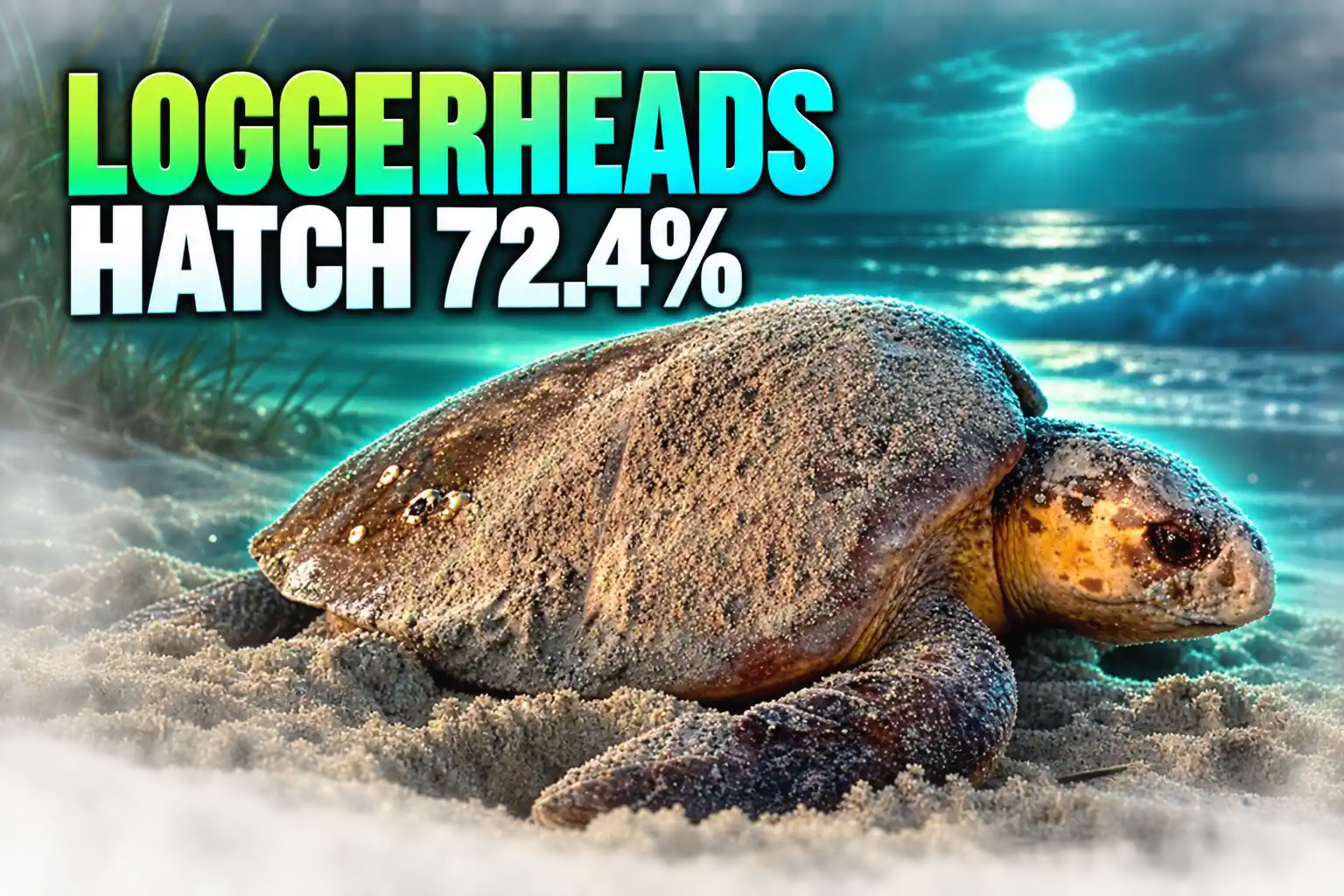
Little St. Simons Counted 209 Nests This Summer
The island’s 2026 file in the 209 nests and a 72.4 percent hatch rate log, updated on October 2, lists 202 confirmed loggerhead nests and seven nests still classed as unknown. Staff left 155 clutches in place and moved 54, or 25.8 percent, usually away from washouts. Females also made 220 false crawls, trips onto the beach that did not end in a nest.
Those 202 loggerhead nests were 4.8 percent of Georgia’s loggerhead total, yet the island sent 16,151 hatchlings to the water, 8.7 percent of the cooperative’s emerged count. Estimated eggs ran to 22,365, with 566 lost, a 2.5 percent loss rate against 8.9 percent statewide.
A year earlier the same beach held 84 loggerhead nests and 6,128 emerged hatchlings, at a 69.4 percent hatch rate. The 2026 count is about two and a half times that 2025 total, in a summer that also snapped the statewide record after a weak 2025 nesting year.
Georgia DNR put the 2025 statewide total at 1,879 nests, the fewest since the 4,071-nest high in 2022. Nesting had been running on a rough three-year pulse. 2025 broke that pattern. 2026 put it back, then some.
THE 2026 NESTING CALENDAR
- May 5, 2026: First loggerhead nest of the season is logged on Cumberland Island, with another that morning on St. Catherines.
- May 7, 2026: Little St. Simons staff find the island’s first nest; the Lodge later welcomes DNR technician Jennie Hudson for the season.
- July 29, 2026: The cooperative count sits at 4,080 nests, then tops 4,110, and DNR says the total has passed a Georgia nesting record in early August.
- August 30, 2026: Last nest of the season is recorded on Blackbeard Island.
- September 28, 2026: Last documented emergence is on Tybee Island.
- October 2, 2026: Little St. Simons still lists 5 incubating nests in the database, with 16,151 hatchlings already emerged.
The cooperative nest database for Georgia closed the count at 4,174 loggerhead nests and 4,292 nests of all species, including 7 green turtle nests and 4 Kemp’s ridley nests. That is the figure above the 4,110 DNR cited when it called the record, and above the 4,071 mark from 2022.
72 Percent on Seven Miles of Dark Sand
Volume and hatch rate are not the same story on this coast. Cumberland Island led the state with 1,305 nests and a 35.8 percent hatch rate. Little St. Simons, with a fraction of that traffic, hatched 72.4 percent of its eggs. Mean incubation on the island ran 53.8 days. Nest success, the share of nests that produced hatchlings, reached 92.2 percent.
Jekyll Island, which runs the Georgia Sea Turtle Center, finished close behind on hatch rate with 208 nests and 71.9 percent. Developed St. Simons, one channel to the south, finished with 21 nests. Statewide, loggerhead hatch success was 50.7 percent, 21.7 points below Little St. Simons.
HATCH RATE BY BEACH, 2026
| Beach | Nests | Hatch success |
|---|---|---|
| Little St. Simons Island | 209 | 72.4% |
| Jekyll Island | 208 | 71.9% |
| Cumberland Island | 1,305 | 35.8% |
| St. Simons Island | 21 | 63.7% |
| Statewide loggerhead | 4,174 | 50.7% |
Cumberland is the volume engine. Little St. Simons and Jekyll are the beaches that actually get eggs out of the sand at a high clip. The difference is management intensity on dark, relatively intact dunes, not a mystery of turtle preference alone. Predators still find the private island. The 2026 loss log there includes coyotes, ghost crabs, raccoons, and research takes, but the overall egg loss stayed at 2.5 percent.
How Little St. Simons Protects Each Nest
A DNR technician is stationed on the island all season and walks the beach each morning with Lodge staff, a setup in place since 1987. They look for crawls, mark new nests, and later inventory hatched clutches. All of that data goes into the statewide file. The Lodge’s Center for Coastal Conservation says the local loggerhead population is growing by 3 percent a year after that four-decade watch, a local rate beside DNR’s figure of about 4 percent annual growth in Georgia nest counts since the early 1990s.
THE DAWN ROUTINE ON LITTLE ST. SIMONS
- Crawl check: Staff scan seven miles of beach at first light for last night’s tracks and distinguish nests from false crawls.
- Mesh screen: A white plastic grid is staked over each nest; hatchlings can climb out, raccoons cannot reach in.
- Move when needed: Clutches too close to the tide line are relocated, 54 of them in 2026.
- DNA egg: DNR still pulls one egg from nests to identify the mother; unique-female analysis for 2026 was still incomplete in October.
- Hatch inventory: After emergence, the nest is dug to count shells, unhatched eggs, and dead hatchlings, the source of the 72.4 percent figure.
Jennie Hudson held the technician post in 2026. DNR later used her photographs of hatchlings crawling to the surf in its record announcement, and it has run nest-inventory training on the island. Guests who book the Lodge in summer get that work folded into guided walks. They are not a crowd on the night beach. They are a paying audience for a patrol the state could not staff alone on a private island.
One Island Over, St. Simons Logged 21 Nests
St. Simons Island, the populated neighbor with a causeway, hotels, and unshielded house lights, recorded 21 loggerhead nests and 15 false crawls. Hatch success there was 63.7 percent, and 1,478 hatchlings emerged. In 2024 the same beach had four nests. Midsummer 2025 it had one, while Cumberland was already past 450.
Lights are the local complaint. Hatchlings crawl toward the lowest, brightest horizon. Porch lamps and high-mast highway lighting pull them inland. In 2025, conservation groups said glow from new high-mast lights at I-95 Exit 42 was visible from Little St. Simons and Sapelo, more than 12 miles away. Glynn County has been rewriting a beachfront lighting rule to balance property rights with nest protection.
The contrast is not moral theater. It is a land-use split. One island sold density and night lighting. The other sold 32 beds and a dark beach, then legally barred the alternative. Loggerheads voted with their bodies. They still nested on St. Simons. They nested an order of magnitude more often where the dunes stay black.
Dodd Puts Full Recovery a Decade Away
Mark Dodd, Georgia Sea Turtle Program coordinator and a senior wildlife biologist in DNR’s Wildlife Conservation Section, has been the public voice of the rebound. Comprehensive surveys on all barrier islands began in 1989. The recovery plan’s annual mark of 2,800 nests has now been cleared three times in five summers. DNR, the University of Georgia, and the U.S. Geological Survey still model a plateau of more than a decade because recruitment was so weak in the early 2000s, when Georgia hit a record-low 358 nests in 2004.
Loggerheads are a long-lived species and don’t reproduce until they’re 30-35 years old. Based on current trends, we predict it will take another 10 years before we reach our recovery goals.
Mark Dodd, Georgia Sea Turtle Program coordinator, Georgia DNR
Adult females can run more than 3 feet long and top 300 pounds. They crawl up at night from May through mid-summer, dig at the dune line, and lay clutches of about 100 eggs. Turtle excluder devices on shrimp trawls, required from the late 1980s, cut one major source of drowning at sea. Beach work cut another on land. The Northwest Atlantic loggerhead remains a threatened Northwest Atlantic population under the Endangered Species Act, the DPS that includes Georgia. NOAA Fisheries and the U.S. Fish and Wildlife Service split loggerheads into nine distinct population segments in 2011. A 2023 five-year review left that threatened listing in place.
The record people shared online treated the 4,110-nest call as generic good news, a wildlife win with no island attached. It did not mention a ferry, an easement, or a hatch-rate gap. The beaches that actually convert nests into hatchlings at 70 percent-plus sit behind guest lists and refuge boundaries, which is why a statewide cheer can miss the machinery.
Loggerheads Still Have a Male Problem
Hot sand makes female hatchlings. Cooler sand makes males. Dodd spent the summer on Sapelo and other islands collecting tissue for a first Georgia attempt to count fathers, using DNA from eggs and from dead hatchlings, because nest totals only track females that crawled ashore.
The big concern is are we producing enough males? Obviously, we have to have enough males around to mate with your females to sustain this recovery that we’re seeing.
Mark Dodd, Georgia Sea Turtle Program coordinator, on Sapelo Island
WHAT WE KNOW
- Nest rebound: Georgia’s 4,174 loggerhead nests in 2026 beat the 4,071 record from 2022 and more than doubled the 1,879 nests of 2025.
- Island hatch rate: Little St. Simons hatched 72.4 percent of its eggs and released 16,151 hatchlings from 209 nests.
- Legal status: The Northwest Atlantic loggerhead DPS is still listed as threatened; DNR says full recovery goals sit about 10 years out.
WHAT IS UNCONFIRMED
- Sex ratio: Georgia does not yet have a published 2026 split of male versus female hatchlings.
- Father count: Sperm-DNA sampling of nests, begun on Ossabaw in late spring 2026 and extended along the coast, is still in the lab.
- Final hatch tally: Five Little St. Simons nests were still incubating in the October 2 update, so the island’s 16,151 emerged figure can still tick up.
The Lodge will keep selling summer rooms on a dark beach, and DNR will keep sending a technician. Guests who arrived when the first nests were logged in May could watch screens go up and, later, hatchlings run. That is the bargain the island has run since 1987. The record nest year on the rest of the coast does not replace it. Five clutches were still buried in Little St. Simons sand after the last Tybee emergence, waiting on the same 53.8-day clock the rest of the file already closed.
Frequently Asked Questions
When Do Loggerhead Eggs Hatch on the Georgia Coast?
Daily nest monitoring on all Georgia beaches starts in mid-May, even though the first crawls often arrive in the first week of May. Eggs typically hatch in 55 to 65 days, so emergence runs from early July into late September, after the last females have nested. Mean incubation on Little St. Simons in 2026 was 53.8 days, a bit shorter than the statewide mean of 54.7 days.
What Is a False Crawl on a Nesting Beach?
A false crawl is a female’s trip onto the beach that does not end in egg-laying, often because of lights, scarp, debris, or a poor spot in the dunes. Little St. Simons logged 220 false crawls against 209 nests in 2026, which is why its “beach success” figure, nests as a share of all crawls, sat at 48.7 percent even though hatch success was 72.4 percent.
Can Day Visitors Walk Little St. Simons Island?
No public day-use ferry runs to the island. Overnight stays are booked through The Lodge on Little St. Simons Island, which holds no more than 32 guests at a time on a 20-acre compound. Naturalists fold turtle-nest education into those stays during nesting season, and Center for Coastal Conservation staff often brief guests on current work.
Do Any Sea Turtles Besides Loggerheads Nest in Georgia?
Yes, in small numbers. The 2026 cooperative file lists 7 green turtle nests and 4 Kemp’s ridley nests beside 4,174 loggerhead nests, plus 107 nests still labeled unknown. Little St. Simons recorded no green or Kemp’s ridley nests in that file, only loggerheads and seven unknowns.

Greed Held After a $697 Million Crypto Long Flush

Fed Minutes Keep a Year-End Rate Hike Alive

A Nanny-Cam Tape Follows Tyreek Hill Into Free Agency

Star Wars Galactic Racer Makes a Crash End the Tour

Amazon Puts Apple’s June MacBook Prices Back on Sale

The iPhone 16 Pro Flipkart Cut Did Not Last

Microsoft Prints Azure’s $29.42 Billion Quarter and Shrinks the Map

UltraTech’s Ultravolt Launch Puts Cable Multiples on Trial

IXI Autofocus Glasses Still Lack a European CE Mark

Little St. Simons Island Hatches Loggerheads at 72.4 Percent
-
 NEWS1 year ago
The iPhone 16 Pro Flipkart Cut Did Not Last
-
 NEWS1 month ago
Microsoft Prints Azure’s $29.42 Billion Quarter and Shrinks the Map
-
 BUSINESS1 month ago
UltraTech’s Ultravolt Launch Puts Cable Multiples on Trial
-
 NEWS9 months ago
IXI Autofocus Glasses Still Lack a European CE Mark
-

 NEWS4 months ago
Georgia Beach Bacteria List Leaves Swim Areas Open
-

 ENTERTAINMENT4 months ago
Sophia Wootten Turns the Miss Georgia Crown Toward Cleft Care
-

 NEWS3 years ago
Eyal Waldman Keeps a Two-State Bet After Gaza
-

 BUSINESS3 months ago
Georgia Furniture Mart Closes a Growing 40-Year Business