Samsung’s next Ultra flagship is shaping up around a clear trade. Multiple leakers now describe a Galaxy S27 Ultra that drops its dedicated 10MP 3x telephoto, adopts a new 200MP main sensor with LOFIC technology, and finally lifts battery capacity past the long-stuck 5,000mAh mark with a silicon-carbon cell.
The changes remain unconfirmed and subject to revision before a likely January or February 2027 launch. Yet the pattern is consistent enough across Ice Universe, Galaxy Club, Digital Chat Station and supply-chain reports to map the second-order effects already.
The Main Sensor Finally Moves After Four Years
The Galaxy S23 Ultra introduced a 200MP 1/1.3-inch main sensor. Every Ultra since, including the S26 Ultra, kept that same physical format with only aperture and processing tweaks. Chinese rivals normalized larger sensors and advanced periscope systems in the same window. Critics noticed.
Ice Universe and Digital Chat Station now point to the ISOCELL HP6 (a modified version of the larger HPA) as the S27 Ultra’s primary. It stays near 1/1.3 inches in some accounts or reaches 1/1.12 inches in others, but the decisive addition is LOFIC. Lateral Overflow Integration Capacitor technology routes excess light electrons into a dedicated capacitor instead of clipping them. The result is single-exposure HDR that captures bright highlights and deep shadows without multi-frame merging.
That single-frame path matters in mixed light. Multi-frame HDR can smear motion or lag on fast scenes. LOFIC keeps the capture instantaneous while still protecting highlight detail that would otherwise clip on a conventional 200MP read. The sensor still outputs a high-resolution file; the capacitor simply gives the highlights somewhere to go before the ADC stage.
| Camera | S26 Ultra (confirmed) | S27 Ultra (rumored) |
|---|---|---|
| Main | 200MP 1/1.3-inch | 200MP HP6/HPA with LOFIC |
| Ultrawide | 50MP | New 50MP (Sony IMX855 in some reports) |
| Telephoto mid | 10MP 3x | Removed |
| Telephoto long | 50MP 5x | 50MP 5x (possibly dual or ALoP variant) |
| Selfie | 12MP | 16MP with possible OIS |
Ice Universe earlier said Samsung would replace the main, ultrawide and front cameras while leaving the periscope largely unchanged. A 16MP selfie upgrade ends a four-year stay at 12MP. Variable aperture on the main sensor has also surfaced in tipster notes, matching rumored moves on rival flagships.
If variable aperture lands, the main camera gains another lever for depth control and low-light intake without relying solely on computational blur. Combined with LOFIC, the primary module becomes the center of the imaging story rather than a stagnant carryover refined only in software.
Dropping the 3x Changes the Zoom Math
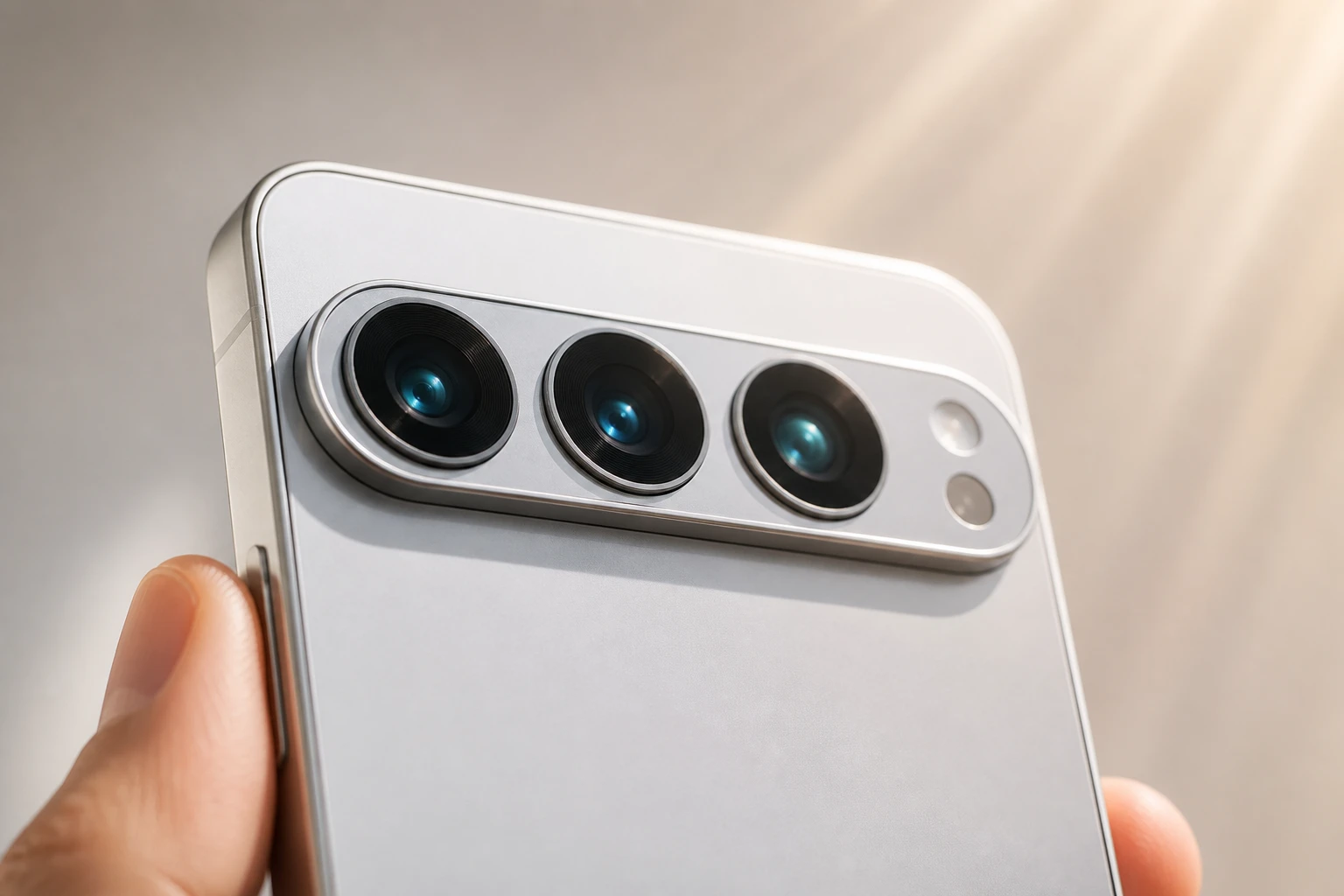
Removing the dedicated 3x lens turns the Ultra into a triple-camera phone for the first time in years. ETNews and Galaxy Club reports now converge on that layout. The 200MP main can crop to 3x with high pixel density in good light. Low light exposes the difference: optical glass still wins.
- Daylight medium-range shots stay competitive via in-sensor crop and AI sharpening.
- Low-light or high-contrast 3x work loses true optical capture and will rely more on processing.
- Freed module space and weight go toward larger main sensor, stronger OIS or thinner overall bump.
- A cleaner rear layout also eases magnetic accessories and table stability.
Crowd reaction on X splits along those lines. Some users call the 3x the most-used optical step and hate losing it. Others note Chinese phones already force heavy crop reliance and prefer the battery and sensor gains. Concept images of a horizontal pill or unified island circulate as the visual payoff.
The practical test will come at dusk and indoors. In bright sun the 200MP crop can look close to a dedicated 3x. Under streetlights or in backlit rooms, the missing glass will show as softer edges and heavier noise reduction. That is the cost of the space reclaimed for the main sensor and the thinner pack.
Silicon-Carbon Cells Close the Endurance Gap
Five years of roughly 5,000mAh cells left Samsung exposed. Chinese flagships pushed 6,000mAh then higher while Ultras stayed put. Silicon-carbon chemistry raises energy density so capacity can climb without a much thicker pack.
| Report Stage | Capacity Cited |
|---|---|
| Five-year Ultra baseline | Roughly 5,000mAh |
| Conservative early reports | 5,500mAh |
| Most recent @TheGalox_ tip | 5,700mAh |
| Earlier claims later walked back | 6,000mAh-plus |
5,500mAh appears in multiple early reports as the conservative target. 5,700mAh is the figure attached to the most recent tipster drop from @TheGalox_. A few earlier claims of 6,000mAh-plus have been walked back. Either number is the first real step-up in capacity in half a decade.
Pair that with a Snapdragon 8 Elite Gen 6 Pro for Galaxy, rumored on Samsung’s own 2nm process in some supply notes, and efficiency gains compound. Up to 16GB RAM is tipped, though LPDDR6 and UFS 5.0 upgrades look cancelled in later leaks, leaving LPDDR5X and UFS 4.0. Thermal headroom should improve for sustained camera and AI loads. Charging speed remains the open question; 60-65W has been floated but not locked.
For official chip context, Qualcomm’s own Snapdragon processor performance details outline the generational path these custom Galaxy variants follow.
The cancelled memory upgrades keep cost and supply risk in check, yet the 2nm process rumor and the larger cell still point the same direction: longer screen-on time under the heavier AI and camera workloads the Ultra now carries every day.
A Cleaner Module and Privacy Screen Carry Over
The floating camera rings that defined Ultras since the S22 era may give way to a unified module or horizontal bar. Android Central’s tipster material describes the largest visual rear change in years. Ice Universe separately detailed an expansion of inkjet light-blocking on multiple lenses. Matte black absorber printed directly on lens ribs cuts stray light and ghosting while shaving micrometers that free room for bigger sensors or stronger stabilization without a taller bump.
The 6.9-inch QHD+ Dynamic AMOLED panel is expected to keep the Privacy Display that debuted on the S26 Ultra, limiting side-angle visibility. Peak brightness, anti-reflective layers and power efficiency should all tick up with newer M16 material in some reports. A flatter profile may remain for S Pen usability. Titanium frame, Ceramic Shield or equivalent front glass, and IP68 are baseline assumptions.
S Pen itself looks unchanged after earlier rumors of both deletion and major upgrades faded. A companion Galaxy S27 Pro, smaller and S Pen-free with shared main and ultrawide sensors, is also in the rumor mix.
Inkjet blocking on more lenses is a quiet manufacturing win. It trims optical noise without adding glass elements, and the micrometers saved stack with the space freed by dropping the 3x. That is how a larger main sensor and a higher-capacity cell fit without a thicker slab.
How the S26 Ultra Set the Stagnation Bar
The S26 Ultra earned praise for its Privacy Display and strong sales, yet its camera hardware drew the same critique as the two generations before it: evolutionary processing on stagnant silicon. Battery life was good enough for most users but no longer class-leading. Samsung’s internal leak-suppression effort after the S26 cycle suggests the company wants tighter control this time, though supply-chain tipsters continue to surface details.
- 2023: S23 Ultra locks in 200MP 1/1.3-inch main and 5,000mAh class cell.
- 2024-2025: S24 and S25 Ultra refine software, aperture and telephoto brightness while keeping core sensor and battery sizes.
- March 2026: S26 Ultra adds Privacy Display and incremental camera tweaks; sales strong, hardware criticism persists.
- April-August 2026: S27 Ultra leaks crystallize around LOFIC main, triple camera, SiC battery and module redesign.
That multi-year lock-in created the opening Chinese brands exploited on pure imaging and endurance metrics. The S27 moves are the delayed response.
Strong S26 sales bought Samsung time. They did not erase the hardware gap that critics and rival marketing kept highlighting. The leak pattern now forming around the S27 reads as a deliberate catch-up on the two specs that aged worst: main-sensor dynamic range and cell capacity.
Buyers and Rivals Both Gain Ground
Photographers who live at 3x optical will feel the cut. Everyday users who want longer screen-on time, cleaner single-shot HDR in mixed light, and a less protruding camera island will see the upside. On-device Galaxy AI features for editing, translation and summarization continue to scale and will benefit from the extra RAM and efficiency headroom.
By expanding this technology on the Galaxy S27 Ultra, Samsung is using more refined optical manufacturing techniques to create additional room for the next generation of Ultra-class imaging hardware and overall device design.
Ice Universe wrote that after detailing the inkjet process that first appeared on the S26 Ultra and is now slated for broader use. The same space math applies to the battery and sensor decisions.
Rivals face a Samsung that is no longer standing still on the two metrics that hurt it most. Apple’s parallel path shows in reports of variable aperture and process-node upgrades on the iPhone 18 Pro held-back upgrades and price side. Samsung’s own foldable line continues to post growth even as Apple’s 2027 entry looms, per coverage of Samsung foldable sales growth ahead of Apple. The Ultra remains the volume and prestige anchor.
LOFIC and Crop Zoom Share the Imaging Load
With the 3x glass gone, the main sensor must cover medium reach through crop while LOFIC protects the exposure that crop still needs. High pixel density supplies the resolution for a clean 3x pull in good light. The capacitor path supplies the highlight headroom so that same crop does not blow out skies or windows.
The long 50MP 5x periscope stays in place, possibly as a dual or ALoP variant. That keeps true optical reach at the far end. The missing middle step is the compromise. Daylight travelers and social shooters may barely notice. Night shooters and anyone who framed tightly at 3x optical will lean harder on AI sharpening and multi-frame stacking that LOFIC was meant to reduce elsewhere.
- Main sensor crop handles daylight 3x with density to spare.
- LOFIC keeps single-exposure HDR intact on those cropped frames.
- 5x optical remains the dedicated long step.
- Low-light medium zoom becomes the weakest link in the new math.
Samsung is betting that most Ultra owners value the brighter, more flexible main camera and the longer cell over a dedicated mid-tele lens they used less than they claimed. The leaker consensus treats that bet as locked in for now.
Shared Sensors Point to a Smaller Pro Sibling
The rumor mix also carries a Galaxy S27 Pro that stays smaller, drops the S Pen, and reuses the Ultra’s main and ultrawide sensors. That split lets Samsung amortize the new HP6/HPA and ultrawide across two bodies while reserving the periscope, larger cell, and S Pen bay for the Ultra.
S Pen rumors of deletion or major redesign have already faded, so the Ultra keeps the stylus experience buyers expect. The Pro path, if it ships, gives customers the LOFIC main and refreshed ultrawide without the full Ultra footprint or price. Shared sensors also simplify tuning: one ISP pipeline and one set of AI models can serve both devices for the most-used focal lengths.
Nothing in the current leaks locks the Pro’s battery size, chip variant, or display treatment. What is consistent is the sensor sharing and the absence of the S Pen. That is enough to sketch a two-tier launch in which the Ultra remains the endurance and zoom flagship and the Pro chases buyers who want the new main camera in a lighter shell.
Early 2027 Timeline and Price Pressure
Consensus points to a January or February 2027 Unpacked window, with retail following weeks later. Development of One UI 9.5 builds for the series has already been spotted. Base pricing is expected to start near the S26 Ultra’s $1,299, but Qualcomm chipset price increases after September 2026 and ongoing memory inflation raise the odds of a steeper step at higher storage tiers.
What We Know
- Triple rear camera layout with new main and ultrawide is the dominant leaker consensus.
- Silicon-carbon battery in the 5,500-5,700mAh range is repeatedly cited.
- Snapdragon 8 Elite Gen 6 Pro for Galaxy and Privacy Display carry strong multi-source support.
- Launch window remains early 2027.
What’s Unconfirmed
- Exact main sensor size (1/1.3 vs 1/1.12) and whether dual telephotos survive.
- Final wired and wireless charging speeds.
- Whether LPDDR6/UFS 5.0 appear or stay cancelled.
- Precise price tiers once component costs settle.
All of it still sits months from official Samsung Newsroom product announcements. Specs will shift. The direction, however, is no longer a mystery: Samsung is spending optical mid-zoom purity to buy back dynamic range and battery ground it conceded for four years.