The U.S. Court of Appeals for the Eleventh Circuit on Tuesday vacated a 2023 federal trial court judgment that had permanently blocked Georgia’s 2021 congressional and state legislative maps, sending the challenges back for a fresh look under the Supreme Court’s April decision in Louisiana v. Callais. The three-judge panel said the high court’s ruling made “significant” changes to Section 2 of the Voting Rights Act and that the district court must apply the new framework first.
Under Georgia law the current lines will not change before the November federal and state elections, ACLU Voting Rights Project senior staff attorney Ari Savitzky said. Secretary of State Brad Raffensperger’s office confirmed the same through spokesman Robert A. Sinners: election directors remain ready and the decision leaves the November contests untouched.
The vacatur resets the legal baseline without disturbing ballots already headed to print. What changes is the standard the Northern District must now use when it reopens the record on the 2021 plans.
The Panel Sent Everything Back Without Deciding the Merits
The per curiam opinion, issued by Judges Robin S. Rosenbaum, Barbara Lagoa and Senior Judge Charles R. Wilson, covered three consolidated appeals: Alpha Phi Alpha Fraternity, Inc. v. Secretary of State of Georgia, Pendergrass v. Secretary, and Grant v. Secretary. The district court had permanently enjoined use of SB 2EX (congressional), SB 1EX (Senate) and HB 1EX (House) after finding Section 2 violations.
The appeals court did not reverse or affirm those findings. It simply vacated the judgment so the Northern District of Georgia can reconsider “whether Georgia’s redistricting plans violate Section 2 of the Voting Rights Act under the updated Callais framework.”
The appropriate response to such a significant change of law is to vacate and remand, so the district court may reconsider, in the first instance, whether Georgia’s redistricting plans violate Section 2 of the Voting Rights Act under the updated Callais framework.
Eleventh Circuit per curiam opinion, Aug. 25, 2026
Plaintiffs had asked the panel to decide which Callais factors were already met so the remand could move faster. The court declined, calling the tests “fact-intensive” and saying those facts “may take new shapes under the scrutiny of the new” framework. The full text of the decision is available as the court’s order to vacate and remand under the updated Callais framework.
By refusing to pre-clear any factor, the panel left every element of the old liability record open to fresh argument. That choice slows any path back to an injunction and gives the state a clean slate on which to restate its partisan-advantage defense under the higher bar.
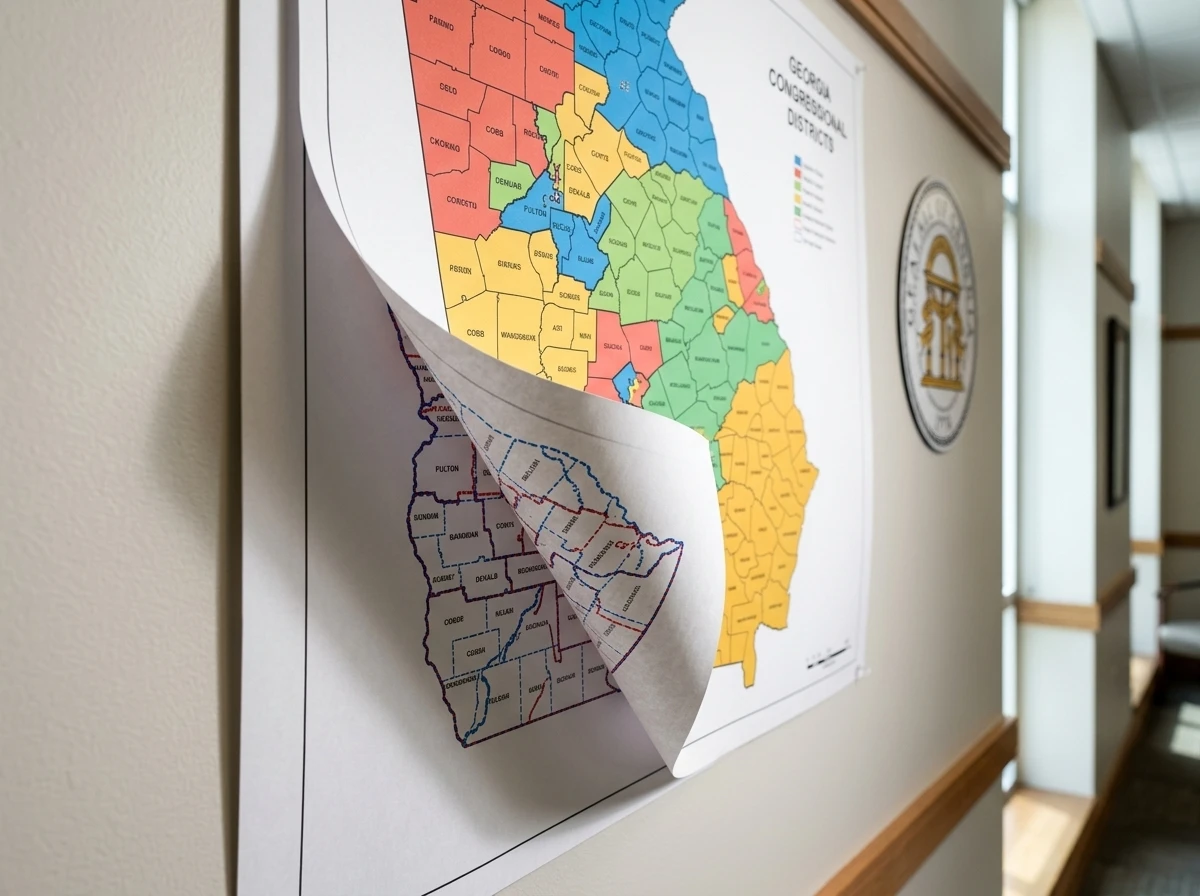
Callais Rewrote the Forty-Year Gingles Test
In Louisiana v. Callais, decided April 29, 2026 by a 6-3 vote with Justice Samuel Alito writing for the majority, the Supreme Court held that Section 2 liability arises only when circumstances give rise to a “strong inference that intentional discrimination occurred.” Mere discriminatory effect is no longer enough. The Court also updated the framework for Section 2 racial vote dilution claims that had governed since Thornburg v. Gingles in 1986.
- Illustrative maps offered by plaintiffs cannot use race as a districting criterion and must meet every legitimate state objective, including partisan goals such as protecting incumbents or achieving a preferred partisan balance.
- Proof of racially polarized voting must control for party affiliation; if politics alone can explain the patterns, the claim fails.
- The totality-of-circumstances review now centers on present-day intentional discrimination regarding voting and gives less weight to older historical discrimination or “effects of societal discrimination.”
- Partisan advantage is treated as a constitutionally permissible, race-neutral aim that states may pursue freely.
The opinion made clear that if race and politics could both explain a district’s shape, the plaintiff has not cleared the bar. That shift is what forced the Eleventh Circuit’s hand.
Under the prior Gingles regime, a plaintiff could win by showing compact minority populations, polarized voting, and diluted electoral opportunity. Callais keeps the vocabulary of those inquiries but raises the proof required at each step. Race-conscious illustrative maps that once anchored liability now risk failing at the threshold if they sacrifice partisan goals the state is free to pursue. Polarization evidence that once pointed toward a Section 2 violation can instead defeat the claim once party is controlled for. The net effect is a narrower gate for effects-based challenges and a wider lane for maps drawn to protect a party’s majority.
What the 2023 Trial Court Ordered
U.S. District Judge Steve C. Jones ruled on October 26, 2023 that the 2021 maps diluted Black voting strength in specific areas. He permanently enjoined the 2021 plans and gave the General Assembly until December 8, 2023 to draw remedies.
The court identified concrete shortfalls and required:
- One additional majority-Black congressional district in west-metro Atlanta
- Two additional majority-Black Senate districts in south-metro Atlanta
- Two additional majority-Black House districts in south-metro Atlanta
- One additional majority-Black House district in west-metro Atlanta
- Two additional majority-Black House districts in and around Macon-Bibb
The legislature enacted remedial maps in a December 2023 special session. Judge Jones approved them later that month. Those maps have been used since 2024. Critically, the 2023 legislation did not permanently retire the 2021 plans; it contained a reversion clause so the original lines would return if the state ultimately prevailed in court.
Majority-Black Counts on the Two Sets of Maps
| Map Set | Congressional Majority-BVAP Districts | Notes |
|---|---|---|
| 2021 Enacted | 2 | Plus additional plurality or majority-minority seats |
| 2023 Remedial | 4 | Added two in the Atlanta metro region |
Georgia’s Black population is roughly one-third of the state total. The 14-member U.S. House delegation and the state House and Senate have long tracked that share through a mix of majority-Black and influence districts. The 2023 remedial maps raised the share of Black voting-age population living in majority-BVAP congressional districts from about 27 percent to roughly 46 percent.
Those figures framed the original liability case. On remand they become reference points rather than fixed entitlements. The district court must ask whether the gap between the 2021 and 2023 configurations still supports a strong inference of intentional discrimination once partisan aims are treated as legitimate and race-neutral.
Georgia Chose Not to Redraw After Callais
After Callais landed, several GOP-controlled Southern states moved quickly to redraw congressional lines in hopes of adding Republican seats before the midterms and protecting the party’s narrow House majority. Georgia did not join them.
Governor Brian Kemp (R) called a June 2026 special session and urged lawmakers to replace both the congressional and legislative maps for the 2028 cycle. The General Assembly adjourned without acting. Lawmakers cited a desire to study the new legal landscape carefully rather than rush. Primaries had already occurred in May under the existing maps.
That decision now looks different in light of Tuesday’s vacatur. With the 2023 liability finding wiped clean and the higher Callais bar in place, the state has less pressure to create additional majority-Black districts. If the district court on remand finds no Section 2 violation, the 2021 maps can return under the reversion clause, or new maps can be drawn with freer partisan hands.
Skipping the redraw kept the remedial lines in force for November while preserving every legislative option for 2028. The vacatur rewards that patience: the state can now litigate first and draw later, rather than the reverse.
Who Holds the Advantage on Remand
The state, represented by the Georgia Department of Law and several private firms, argued throughout that the 2021 maps were drawn for partisan advantage, not racial reasons, and that Callais dooms the plaintiffs’ case. The district court had previously found the maps capitalized on partisan advantage. Under Callais that finding cuts against liability rather than for it.
Plaintiffs, represented by Elias Law Group, Krevolin & Horst, the ACLU and WilmerHale, must now produce evidence supporting a strong inference of intentional racial discrimination and race-neutral illustrative maps that still satisfy every state criterion, including the legislature’s partisan goals. Savitzky said the groups will keep protecting voters of color “as we have for decades.” The practical path, however, is steeper.
On X, accounts tracking the courts quickly framed the outcome as a conservative win that undercuts race-based redistricting mandates. A high-engagement thread from @scotus_wire laid out the timeline from the 2023 order through the remedial maps and Callais, noting that the Eleventh Circuit did not declare the 2021 maps lawful, only that the trial court must start over. Replies and quote posts treated the remand as a placeholder victory that makes restoration of the original lines more likely.
The burden shift is mechanical. Before Callais, showing diluted opportunity plus polarized voting could carry a claim. After Callais, the same record can be read as proof that politics, not race, explains the lines. Plaintiffs must separate those strands with evidence strong enough to support an inference of intent, and they must do so with illustrative maps that do not trade away the partisan objectives the legislature is allowed to keep.
How the Reversion Clause Frames the Remand
The December 2023 remedial legislation never erased the 2021 plans. It installed new lines for use while the injunction held and paired them with a reversion clause that restores the original maps if the state prevails. Tuesday’s vacatur does not itself trigger that clause, because the district court has not yet entered a final judgment for the state. It does remove the injunction that kept the clause dormant.
On remand, three outcomes remain possible under the facts already in the record:
- The district court finds no Section 2 violation under Callais, the injunction stays dissolved, and the reversion clause can return the 2021 lines.
- The district court again finds liability, a new injunction issues, and the 2023 remedial maps or a fresh remedy remain in force.
- The legislature draws an entirely new set of maps for 2028 that reflects the freer partisan hand Callais permits, mooting parts of the old fight.
Because the appeals court vacated rather than reversed, none of those paths is locked in. The clause simply means the 2021 maps are not gone; they are paused, waiting on a new judgment.
The Key Dates That Brought the Case Here
The dispute now spans three election cycles and two Supreme Court eras. The sequence matters because each step fixed the maps voters actually used and the legal standard that will govern the next draw.
- October 26, 2023 – Judge Jones finds Section 2 violations and permanently enjoins the 2021 congressional and legislative plans.
- December 8, 2023 – Deadline the court set for the General Assembly to pass remedial maps.
- December 2023 – Special session enacts remedial maps; Judge Jones approves them later that month; the bills include the reversion clause.
- 2024 – Elections proceed under the remedial maps.
- April 29, 2026 – Supreme Court decides Louisiana v. Callais, raising the Section 2 bar to a strong inference of intentional discrimination.
- May 2026 – Georgia primaries run under the maps already in place.
- June 2026 – Governor Kemp calls a special session to redraw for 2028; the General Assembly adjourns without new maps.
- August 25, 2026 – Eleventh Circuit vacates the 2023 judgment and remands for application of the Callais framework.
Read in order, the dates show why November is untouched and why 2028 is the live fight. The remedial maps filled the gap created by the 2023 injunction. Callais then changed the test. Georgia declined to redraw in June. The vacatur now sends the original liability findings back through the new test before any permanent map choice is locked for the next full cycle.
The Stakes Run Past November Into 2028
November’s elections will use the maps already in place. The real fight is for the next full cycle. State government responses to the Callais ruling show a pattern of Southern legislatures testing how far they can go in reducing the number of districts where Black voters form a majority or near-majority. Georgia’s skipped special session left that question open; the vacatur keeps it open on favorable legal terms for the state.
Nationally, majority-minority districts made up just over one-third of seats in recent Congresses and elected the large majority of Black and Hispanic members. Analyses after Callais projected that a dozen or more Democratic-held districts could become more competitive or Republican-leaning if states redraw under the new rules. Georgia’s 14 seats sit inside that larger arithmetic. Whether the 2021 configuration returns, a new map is drawn, or the remedial lines somehow survive, the second-order effect is the same: effects-based Section 2 claims that once forced additional majority-Black districts now face a far higher intentional-discrimination threshold.
The district court will take the evidence again under that standard. Until then the November ballots stay fixed and the longer contest over who draws Georgia’s lines, and on what legal terms, moves into its next chapter.
For Georgia the practical question is narrow and concrete. Can plaintiffs still assemble race-neutral illustrative maps that meet every stated partisan goal and still prove a strong inference of intentional discrimination? If they cannot, the reversion clause and the legislature’s unused 2028 authority become the main tools that set the next decade of lines. The Eleventh Circuit did not answer that question. It only made clear which court must.