Apple’s iPhone 18 Pro arrives in September carrying upgrades the company has held back for years: a mechanical variable aperture camera, the first 2nm A20 Pro chip, and a smaller Dynamic Island. The cost for those deferred upgrades now sits at $200 to $300 over the current iPhone 17 Pro, with Apple CEO Tim Cook warning the Wall Street Journal the hikes are “unavoidable.” The standard iPhone 18 itself is set to slip to spring 2027.
What Apple Plans to Unveil on September 9
Bloomberg’s Mark Gurman pegs September 8 or September 9 as the most likely unveiling date, with the second week of the month fitting Apple’s usual post-Labor-Day slot. The iPhone 18 Pro and iPhone 18 Pro Max are expected to share the stage with Apple’s first foldable iPhone, the iPhone Ultra, which Gurman says remains on track for a September debut despite a Nikkei report suggesting otherwise. The foldable, sometimes called the iPhone Fold, is now expected to go on sale at the same time as the Pro models or shortly after.
By Apple’s recent pattern, the on-sale date falls on the third Friday of September, with pre-orders opening that morning. Forbes’ David Phelan, tracking the iOS 27 beta cycle, predicts an on-sale date of Friday, September 18, anchored by the on-time release of the second iOS 27 developer beta on June 22. Apple introduced the Siri AI overhaul at WWDC in June 2026, with developer testing live across iOS 27 and a public beta arriving later this year. Apple Watch Ultra 4 and Apple Watch Series 12 are also expected to launch that day.
The Camera Apple Held Back Since the iPhone 14 Pro
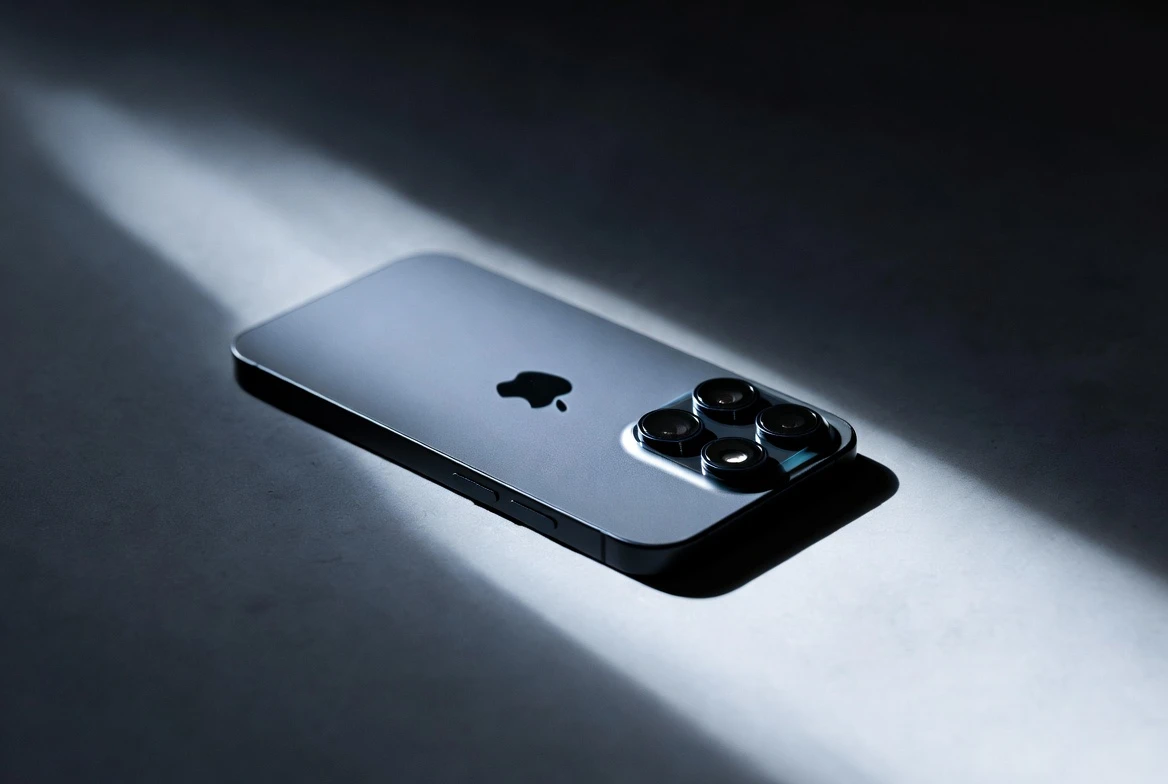
For four generations, from the iPhone 14 Pro through the iPhone 17 Pro, Apple’s main Fusion camera shipped with a single, unchanging f/1.78 lens, always wide open, every shot. The iPhone 18 Pro ends that streak. Supply-chain reports describe a mechanical variable aperture on the 48MP main sensor, with physical blades that move to control how much light reaches the sensor before any software processing kicks in. The mechanism is closer to the iris of a camera lens than to anything Apple has shipped before, and it is the most concrete upgrade the Pro lineup has carried in years. On the fixed lens that the iPhone 18 Pro replaces, bright scenes required computational processing to avoid overexposure and portrait depth of field was simulated in software.
Analyst Ming-Chi Kuo first reported the variable aperture in December 2024, after Apple had considered the feature for the iPhone 17 Pro before pushing it to 2026. By April 2026, active supplier production of the iris blade assembly had begun on schedule, with Sunny Optical making the lens module and BE Semiconductor providing the equipment for the aperture blade system. A Reuters-reported data breach at supplier Tata Electronics in June added an unusual channel, surfacing more than 200,000 files including iPhone 18 Pro drop test photos and internal schematics.
Kuo’s December 2024 report pointed to both iPhone 18 Pro models receiving the variable aperture, with no Pro Max exclusive restriction. The cost of the new module lands on Apple’s bill: the camera hardware alone is expected to run roughly 50 percent more than the current generation. For buyers, the practical payoff is real exposure control in bright daylight, replacing computational recovery. Video gains natural depth of field optically, a step the fixed-lens cameras could not deliver.
The A20 Pro Chip and the Battery That Follows
The A20 Pro is Apple’s first chip built on TSMC’s 2nm process, the so-called N2 node. Each transistor is now a stack of nanosheets wrapped on four sides by gate metal, suppressing the leakage that limits 3nm designs. The move from 3nm to 2nm is the largest process-node transition Apple has made since the A17 Pro in 2023.
The chip is paired with 12GB of RAM in both Pro models and with the third generation of Apple’s in-house modem, the C2, replacing Qualcomm’s modem entirely. The C2 is expected to add mmWave 5G support and a privacy mode that limits precise location data shared with mobile networks. Per TSMC’s published figures and analyst projections, the move to N2 delivers roughly 15 percent faster CPU performance at equal power, or roughly 30 percent lower power consumption at equal performance, compared with the A19 Pro in the iPhone 17 Pro Max. TSMC began volume production of the N2 node in late 2025, and Apple has secured more than half of TSMC’s total 2nm capacity. The C2’s tighter integration with the application processor reduces inter-chip communication overhead, extending run time independently of the battery cell size.
Battery capacity is rising modestly. Leaked figures from Digital Chat Station suggest approximately 4,288 mAh for the standard iPhone 18 Pro and between 5,100 to 5,200 mAh for the iPhone 18 Pro Max, up from 5,088 mAh in the iPhone 17 Pro Max. On its own, that bump is small. Combined with the 2nm chip’s efficiency and the C2 modem, several analyses see the Pro Max reaching a real two-day stretch for lighter users.
Three engineering decisions are landing at once: a slightly larger cell, a more efficient processor, and a modem that no longer depends on a third-party component. The battery improvement is the product of those overlapping choices layered together. Apple’s first-generation C1 modem debuted in the iPhone Air earlier this year; the C2 is its successor and is set to debut in the iPhone 18 Pro lineup. Earlier iPhone 18 Pro leaks covering the A20 chip and variable aperture have tracked each of these figures separately.
iPhone 18 Pro at a glance
- Process: TSMC 2nm (N2), gate-all-around transistors
- Memory: 12GB RAM on both Pro models
- Modem: Apple C2, with mmWave 5G
- Battery: ~4,288 mAh (Pro), 5,100 to 5,200 mAh (Pro Max)
- Efficiency: ~30% lower power than the A19 Pro at equal performance
A Smaller Dynamic Island on a Familiar Frame
The Dynamic Island cutout is expected to shrink by roughly 35 percent on the iPhone 18 Pro models, per measurements of leaked dummy units, reclaiming a strip of usable display real estate. Bloomberg’s Mark Gurman has independently confirmed the smaller Dynamic Island, making it one of the most institutionally sourced claims in this year’s leak cycle. The change is structural: Face ID’s flood illuminator is being moved beneath the OLED panel, and the front camera configuration has been reshuffled to occupy less of the cutout. The front camera itself is not expected to move fully under the display until at least 2027. The pill-shaped cutout narrows from roughly 20.76mm to about 13.5mm.
The body stays close to the iPhone 17 Pro, with Apple said to be reusing the same moulds and retaining the aluminum chassis introduced last year. The camera bump on the back has reportedly grown to accommodate the variable aperture mechanism, with the camera plateau visibly thicker than on the 17 Pro. Colour options are getting their own reset, with Cosmic Orange and Deep Blue discontinued and four new finishes expected. The bump’s back glass is also tipped to match the frame more closely, addressing the two-tone look that drew criticism on the iPhone 17 Pro.
- Dark Cherry: the rumoured 2026 signature shade, a vivid reddish-pink or burgundy
- Light Blue: a softer, brighter blue than previous generations
- Dark Gray: the return of a darker option after black was absent from the iPhone 17 Pro lineup
- Silver: a familiar finish carried forward
The iPhone 18 Pro’s $200 to $300 Receipt
Apple has already raised prices across most of its product lines this summer, with the average increase across affected products running at $246.67, according to MacRumors. Hikes ranged from $30 on the HomePod mini to $1,300 on the high-end Mac Studio. The iPhone, AirPods, Studio Display, Apple Watch, and accessories were the only categories left unaffected. The pressure that drove those increases is now reaching the iPhone line. CEO Tim Cook told the Wall Street Journal the hikes are “unavoidable” given soaring memory and storage chip costs.
Three independent forecasts now anchor the iPhone 18 Pro’s opening price. The Wall Street Journal, citing research firm TechInsights, projects a starting price of $1,399 or higher, a $200 to $300 jump over the current $1,099 iPhone 17 Pro. Market research firm IDC expects hikes of up to $200, putting the iPhone 18 Pro between $1,249 and $1,299. J.P. Morgan has taken the most optimistic view, suggesting hikes of no more than $50 per model.
| Forecaster | iPhone 18 Pro starting price forecast | Basis |
|---|---|---|
| Wall Street Journal (TechInsights) | $1,399 or higher | Component cost analysis, $270 margin-preservation figure |
| IDC | $1,249 to $1,299 | Memory and storage cost projections |
| J.P. Morgan | Up to $50 above iPhone 17 Pro | Margin absorption scenario |
TechInsights estimates the iPhone 18 Pro’s bill of materials will rise 25 percent, from about $582 for the iPhone 17 Pro to around $726 for its successor. DRAM and flash storage costs are projected to roughly quadruple by fall. The iPhone 17 Pro currently starts at $1,099, a figure the new line will need to clear to preserve Apple’s current margins.
The full cost stack matters because it explains why the three forecasts diverge. J.P. Morgan assumes Apple absorbs most of the cost inside its margin, IDC assumes a partial pass-through, and TechInsights assumes Apple preserves its current margin and passes the cost on. What all three share is the assumption that memory and storage prices have surged.
The Foldable Joins, and the Base Model Slides to Spring 2027
The September lineup is reshaping itself around Apple’s highest-margin devices. Gurman’s reporting puts the iPhone 18 Pro, the iPhone 18 Pro Max, and Apple’s first foldable iPhone on the September stage, while the standard iPhone 18 and the iPhone 18e are now expected to be delayed to spring 2027. The base model iPhone 18 is now expected to land in or around March 2027, judging by Apple’s previous track record for releasing more affordable handsets in the spring. This would mark the first iteration of a new release cycle Apple plans to maintain for years to come.
Apple’s foldable iPhone is on track for a September debut with the iPhone 18 Pro. While supply could be limited initially, it’s also on track to go on sale at the same time or soon after the Pro models.
Mark Gurman posted that in his own post about the foldable timing, pushing back on a Nikkei report that the foldable’s debut would slip to December. The foldable itself is expected to carry a 7.8-inch inner display, a 5.5-inch cover display, the A20 chip, the C2 modem, Touch ID instead of Face ID, two rear cameras, and a starting price of at least $2,000. Apple’s earlier wave of price increases across Mac, iPad, and Apple TV has not yet touched the iPhone line in retail, and the September event is where that catches up. For buyers weighing a Pro now versus waiting for the base model in the spring, the trade is roughly six months of waiting against the price gap on each tier.
Apple has not officially announced any of this. Every detail above is drawn from supply-chain reports, analyst notes, and the Bloomberg reporting of Mark Gurman, with the foldable timing confirmed by Gurman in his own post. The single date Apple has effectively locked is the iOS 27 software timeline, anchored by the on-time second developer beta in late June.
Frequently Asked Questions
When does the iPhone 18 Pro launch?
Bloomberg’s Mark Gurman has flagged September 8 or September 9 as the most likely unveiling date, with the on-sale date expected to fall on the third Friday of September, likely Friday, September 18. The iOS 27 developer beta timeline is on schedule to support a September keynote.
How much will the iPhone 18 Pro cost?
Forecasts cluster around a $200 to $300 increase over the iPhone 17 Pro’s $1,099 starting price. The Wall Street Journal projects $1,399 or higher, IDC expects $1,249 to $1,299, and J.P. Morgan expects no more than a $50 hike. Apple has not confirmed any number, with CEO Tim Cook telling the Wall Street Journal that iPhone pricing will be clarified at the September launch.
What’s new with the iPhone 18 Pro camera?
The main 48MP sensor gains a mechanical variable aperture, the first in iPhone history. Physical blades move to control how much light reaches the sensor, replacing the fixed f/1.78 lens Apple has shipped since the iPhone 14 Pro. Analyst Ming-Chi Kuo first reported the feature in December 2024, with supplier production underway by April 2026.
Does the iPhone 18 Pro have a 2nm chip?
Yes. The A20 Pro is Apple’s first chip built on TSMC’s 2nm process, the N2 node, replacing the FinFET transistors used in the A19 Pro with gate-all-around nanosheets. Both Pro models ship with 12GB of RAM and Apple’s third-generation C2 modem, replacing Qualcomm’s modem entirely.
Will the standard iPhone 18 launch at the same time?
No. According to Mark Gurman’s reporting, the standard iPhone 18 and the iPhone 18e are now expected to slip to spring 2027, likely landing in or around March. The September event will host the iPhone 18 Pro, iPhone 18 Pro Max, and Apple’s first foldable iPhone.