
NEWS
IXI Autofocus Glasses Still Lack a European CE Mark
IXI’s $36.5 million autofocus bet has a Finnish plant and a French optician pact, but the glasses remain waitlist-only without a CE mark.

IXI still cannot sell its autofocus glasses in Europe. The Finnish startup’s site collects a waitlist, and as of 18 August 2026 the company said the product had no CE mark and was not for sale.
That is a hard stop for a firm that showed working CES 2026 prototype lenses in January and talked then about a launch the following year. The money, the plant and the shop pact are real. The glasses on a face, paid for and approved, are not.
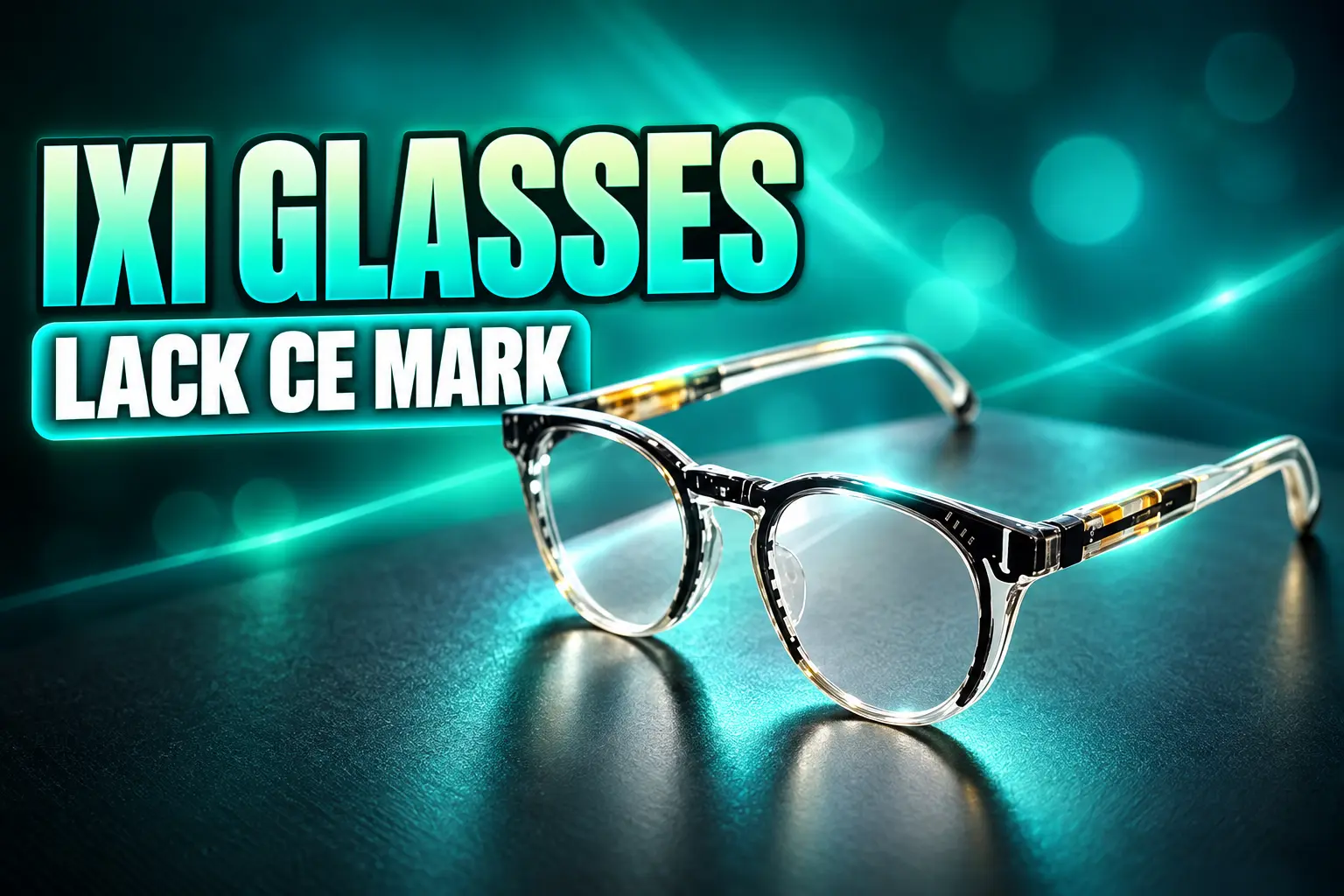
IXI Autofocus Glasses Still Have No CE Mark
CEO Niko Eiden and chief algorithm officer Wili Miettinen founded IXI in Espoo in 2021 after leaving the mixed-reality firm Varjo. On 29 April 2025 they announced $36.5 million in funding, a Series A led by Plural with the Amazon Alexa Fund among the backers, to finish a first commercial pair.
The target buyer is someone in middle age who has lost near focus, the close-up fade known as presbyopia. A 2018 modelling study in Ophthalmology found 1.8 billion people had presbyopia in 2015, with the count peaking near 2.1 billion in 2030. The World Health Organization lists presbyopia as the main cause of near vision impairment, with 826 million with uncorrected near vision loss.
IXI’s pitch is one pair that adds near power when the eyes converge on a page or a phone, then drops that boost when the wearer looks up. Eiden has said the first product will sit in the premium progressive lane and move through opticians, not a consumer-electronics aisle, even with Amazon on the cap table.
THE BET’S PAPER TRAIL
- 2021: Eiden and Miettinen start IXI in Espoo.
- April 29, 2025: The company announces $36.5 million, with Plural leading and the Amazon Alexa Fund participating.
- September 26, 2025: At SILMO in Paris, IXI buys Finnsusp’s Finnish lens plant and signs a long-term pact with Optiswiss.
- January 2026: Working prototypes go on the table at CES in Las Vegas.
- January 30, 2026: A letter of intent with Atol and Vizio covers more than 3,000 French stores, with pilots only after CE marking.
- March 20, 2026: Eiden tells a Milan trade audience that CE marking is the year’s gate and needs a product freeze first.
- August 18, 2026: The official site still says the glasses are in development, not for sale, and not CE marked.
- September 18, 2026: IXI says autofocus pairs have entered daily-use testing outside the lab.
A waitlist sign-up is not an order. Atol’s stores are not stocking a SKU. The freeze Eiden described in March is the step that still sits in front of any French pilot.
Infrared Sensors Around Each Lens Track Gaze
The CES frames hid batteries, memory, sensors and drive chips in the front and in the temple arms near the hinge. IXI put the charge port in the left-arm hinge, so the pair cannot be worn while it charges. The cells are about the size of those in Apple’s earbuds, and the company said a full charge should cover a typical day.
There is no camera. Small LEDs around each lens bounce invisible infrared light off the eyes, and photodiodes read the return to judge gaze, convergence and blinks. Eiden has said that a handful of analog channels beats millions of pixels at high frame rates, which is how the tracker stays near 4 milliwatts. That choice also keeps a camera out of the wearer’s face, a privacy point the company leans on against other smart glasses.
When the system decides the wearer has moved to a near target, it applies a small voltage to a liquid-crystal layer between optical elements. The crystals reorient, and the lens gains the extra power needed up close. Look up, and the process runs in reverse. If the battery dies, distance correction stays; the pair keeps acting as ordinary distance glasses without the near boost. Eiden has also described a mode that turns the dynamic functions off on purpose.
The liquid-crystal stack uses a transparent indium tin oxide conductor and is thin enough, the company says, to sit inside a normal prescription, including cylindrical power for astigmatism. First-generation lenses will not rewrite the entire lens area. Eiden has said a wearer can still glance around the dynamic zone, a hedge he tied to safety.
Early glass was ugly. “The first lenses that we produced were horrible,” Eiden said, calling those units hazy with poor edges. At CES the company still admitted leftover edge distortion and said more work was needed before the pair could be treated as safe for driving. Product director Emilia Helin has warned that the electronics also limit how far the frames can be adjusted: some flex, not full flex, which is why IXI is betting on a small range of shapes that fit many faces.
INSIDE THE CES PROTOTYPE
- Frame weight: About 22 grams without lenses, a lab figure, not a finished pair on a face.
- Tracker draw: About 4 milliwatts, using LEDs and photodiodes instead of cameras.
- Charge: A day’s typical use, via a port in the left-arm hinge; the glasses come off to charge.
- Fail-safe: Dead battery still leaves distance vision; near boost is what drops out.
IXI’s own film shows the silhouette it wants people to accept, ordinary frames with the electronics packed out of sight.
A Finnish Plant and a Swiss Lens Partner
On 26 September 2025 in Paris, IXI said it had acquired Finnsusp’s Finnish lens plant and locked a long-term deal with Optiswiss, the Basel maker that has produced prescription lenses since 1937. Finnsusp, founded in 1978, handed over a working shop and team so it could concentrate on dry-eye and contact-lens care. Optiswiss CEO Samuel Frei said the independent Swiss plant wanted a partner on a new kind of lens, with production staying in Basel and going out to more than 20 countries through a staff of over 250.
Eiden framed both moves as a European build, not a contract run in Asia. “For us, we’re intentionally building our production base in Europe. This is where the deepest expertise in optical precision and design lives,” he said. Internally the company talks about a five-day path from order to delivery, in line with high-end custom progressives, because a gadget that adds a week in the shop will not survive first contact with an optician’s diary.
The same roof in Finland now cuts conventional OLO prescription lenses for independents while the adaptive stack is prototyped next door. Head of R&D Juha Timonen has described drop rigs, hinge-bend machines, sweat and cream baths, and radio tests in an Oulu chamber, including the same style of random-drop gear Nokia once used on phones. That is the unglamorous half of a medical-device file, and it is still running.
Atol and Vizio Hold the Shop Floor
On 30 January 2026 in Milan, IXI signed a letter of intent with Atol and Vizio, two French optical groups whose combined network is more than 3,000 stores. The paper covers the in-store journey, the commercial model and how staff would demo a pair. Potential pilots, the companies said, come after regulatory steps, including CE marking.
“It’s always been important for us to build this together with opticians,” Eiden said. Éric Plat, CEO of Atol les Opticiens and a trained optician who has led the cooperative since 2010, called the work a chance at “the biggest shift optical retail has seen in a decade,” while stressing that a new product has to drop into the existing shop without breaking ticket times.
That channel choice is the wager inside the wager. In 2013, Adlens sold fluid-filled, dial-tuned glasses in the United States for $1,250. Rob Stevens, later the firm’s chief executive, said shoppers liked them and opticians did not, and that the shops “strangled sales.” IXI is trying to recruit the same profession before a SKU exists, with a tablet demo that shows the lens kicking in when a customer looks at a screen. Plat has talked about starting in a slice of stores, city sites and mall sites, maybe 30, 50 or 100, to learn which shop profile fits.
Price is still unpublished. Eiden said the pair will land near high-end progressive money even though it carries sensors, a cell and software, and that the first run will be one main category rather than a maze of add-ons. Oxford physicist Joshua Silver, who built low-cost fluid lenses that reached about 100,000 people, has asked the blunt version of the same question: why would someone buy a powered frame if a cheap reader on the nightstand does the near job?
The key milestone this year is CE marking. To achieve this, we need a “product freeze”, meaning the design is finalized and no further changes are made. Only then can the formal procedures begin. Without CE marking, there can be no commercialization.
Niko Eiden, CEO and co-founder of IXI, at MAFO in Milan, March 2026
Daily testing in Helsinki now puts pairs onto other people’s faces for weeks at a time, through summer light that barely fades and winter days that barely start, then pulls the hardware back for inspection. That is useful engineering. It is not a freeze, and it is not a mark.
PixelOptics Raised $132 Million, Then Folded
Electronic focusing lenses have already been a product. PixelOptics, of Roanoke, Virginia, launched emPower in 2011, a liquid-crystal layer in the lower part of the lens that switched on for near work. Investor records compiled by Dealroom put total capital at $132 million, with Panasonic Healthcare on the electronics and Aspex on the frames. The company sold about 1,000 pairs.
Reliability problems hit the first generation. PixelOptics stopped distributing it in March 2013, tested a second generation in Europe that summer, and on 4 November 2013 filed Chapter 7 in Delaware, case 13-12875, listing more than 400 patents. Mitsui Chemical later bought the IP and set up a unit called Whole You to try again. The revival did not become a mass product either.
IXI’s founders know that history. Their counter is weight, power and a camera-free tracker that can live in a frame people will actually wear, plus a fail-safe distance lens if the electronics quit. Those are design answers. They do not erase the commercial one: a powered lens has to survive drops, sweat, odd faces, shop returns and a regulator who treats it as more than fashion.
Button Lenses Already Sit in Some Shops
IXI is not alone in liquid crystal, and it is not first to a till. Several firms already sell, or have sold, a switch the wearer flicks by hand. Autofocus, where the frame decides, is the narrower, harder claim.
WHO IS ACTUALLY SHIPPING A SWITCH
| Company | How the lens changes | Who decides | Where it stands |
|---|---|---|---|
| IXI | Liquid crystal plus infrared gaze sensors | The frame, from eye convergence | Waitlist; no CE mark |
| Morrow | Liquid crystal “eProgressives,” +1.00D reading boost in 0.6 seconds | A button on the frame | Awarded at SILMO in 2023; Zeiss Ventures is an investor |
| Deep Optics 32°N | Pixelated liquid-crystal sunglasses | A swipe on the temple | Sold as sunwear, with prescription versions discussed |
| PixelOptics emPower | Liquid crystal in the lower lens | Electronics on the frame | About 1,000 pairs; Chapter 7 in 2013 |
Japan’s ViXion has already put a 33-gram over-glasses unit on sale at home, a different form that sits on top of a pair the customer already owns. France’s Laclarée, founded by physicist Bruno Berge of Varioptic liquid-lens fame, has slipped launch dates more than once and has talked about prices in the €800 to €1,200 band. Elcyo in Japan is still in development on Fresnel liquid-crystal lenses. None of those efforts is a European CE-marked autofocus prescription pair you can order from an optician this month, which is the specific hole IXI says it will fill.
The College of Optometrists Still Wants Driving Data
Paramdeep Bilkhu, clinical adviser at the College of Optometrists, has said autofocus lenses could help people who never settle into varifocals, and that there is still not enough evidence they match ordinary options or belong in safety-critical work such as driving. Chi-Ho To, an optometry researcher at Hong Kong Polytechnic University, put the lag problem in a starker setting: what if the correction was late while he was operating?
IXI’s answers are the static distance lens, the off switch, and the partial dynamic zone. Those are engineering replies to a clinical file that does not yet exist in public. CES staff also said the current prototypes were not ready to treat as safe or reliable for driving. Until a regulator and a large wear study say otherwise, the pair is a shop demo and a test article, not a licence to merge onto a motorway.
WHAT STILL BLOCKS A SALE
- Product freeze: CE work, Eiden said in March 2026, starts only after the design stops changing.
- CE marking: No mark, no EU commercial launch, and no Atol or Vizio pilot under the letter of intent.
- Driving file: Independent clinicians still want proof the switch is safe in a car.
- A price: IXI has not posted a retail figure; the waitlist is a notice list, not a reservation.
On 18 September 2026 the company said the glasses had moved into daily-use testing, with wearers taking them to work, lunch, bright sun and the sofa while logging diaries the lab then reads against sensor traces. Helsinki is a harsh light box for that work. It is also not a shop.
The $36.5 million, the Finnsusp floor, the Basel line and the French letter of intent are what a serious attempt looks like after PixelOptics. They still leave the same last mile: a frozen design, a CE mark, and an optician willing to put a powered lens on a paying face. Until those three show up together, IXI’s autofocus glasses remain a waitlist and a prototype, not a replacement for the progressive in the case.
Disclaimer: This article is news reporting on a medical device still in development and is for information only. It is not medical, optical or product-safety advice and should not be used to choose, stop or change any vision correction, including glasses, contact lenses or surgery. Speak with a qualified optometrist or ophthalmologist before acting on any vision need, and treat manufacturer claims as claims until a regulator has cleared a specific product. Figures, partnerships and approval status reflect the company notices and public sources cited here and can change as testing and filings move.

Greed Held After a $697 Million Crypto Long Flush

Fed Minutes Keep a Year-End Rate Hike Alive

A Nanny-Cam Tape Follows Tyreek Hill Into Free Agency

Star Wars Galactic Racer Makes a Crash End the Tour

Amazon Puts Apple’s June MacBook Prices Back on Sale

Sophia Wootten Turns the Miss Georgia Crown Toward Cleft Care

The iPhone 16 Pro Flipkart Cut Did Not Last

Georgia Beach Bacteria List Leaves Swim Areas Open

Microsoft Prints Azure’s $29.42 Billion Quarter and Shrinks the Map

Little St. Simons Island Hatches Loggerheads at 72.4 Percent
-
 ENTERTAINMENT4 months ago
Sophia Wootten Turns the Miss Georgia Crown Toward Cleft Care
-
 NEWS4 months ago
Georgia Beach Bacteria List Leaves Swim Areas Open
-
 NEWS1 year ago
The iPhone 16 Pro Flipkart Cut Did Not Last
-
 NEWS3 months ago
Little St. Simons Island Hatches Loggerheads at 72.4 Percent
-
 BUSINESS2 months ago
UltraTech’s Ultravolt Launch Puts Cable Multiples on Trial
-
 NEWS2 months ago
Microsoft Prints Azure’s $29.42 Billion Quarter and Shrinks the Map
-

 NEWS3 years ago
Eyal Waldman Keeps a Two-State Bet After Gaza
-
 NEWS3 months ago
OnePlus Ends OxygenOS After Quitting US and Europe