
LIFESTYLE
Georgia Names Ten Spotlight Farmers Markets, Five in Atlanta
Georgia named ten Spotlight Farmers Markets for 2026, five in Atlanta, while 231 USDA-listed markets and SNAP shoppers sit mostly outside the push.

Georgia Agriculture Commissioner Tyler J Harper named ten Spotlight Markets on June 18, 2026. The Meet Me at the Market campaign puts Georgia Grown signs, social posts, and Market Days behind those stalls.
Five of the ten sit in Atlanta. The state has 231 USDA-listed farmers markets, and 2,186 Georgia farms sold straight to shoppers at the last census.
Meet Me at the Market Puts Ten Stalls on a State Map
Harper’s office framed the drive as a way to tie certified markets together and send shoppers to them while peaches and Vidalia onions were in season. The list is not the state’s wholesale produce yards. It is a short roster of Georgia Grown certified community markets that filled out the department’s form and then got extra promotion.
Harper said the campaign would highlight “Georgia Grown certified farmers markets in every corner of our state.” The kit is modest and specific: signs, social posts, special Market Days, and communications help for each market’s mix of produce and goods.
WHAT THE CAMPAIGN SENDS TO A MARKET
- The signs: Georgia Grown branding at participating stalls so shoppers can spot a certified market.
- The posts: State social channels pushing the ten names and a wider directory.
- Market Days: Special event days meant to pull extra foot traffic to featured sites.
- Yard signs: An Ambassador Card and a custom yard sign with Georgia icons, offered at the ten markets in July.
- A pop-up store: A Meet Me at the Market general-store display of products already sold at Georgia stalls.
The department selected ten farmers markets as Spotlight Markets for 2026. Getting onto the public list still starts with a Georgia Grown Farmers Market Registration Form, not with a visit from the commissioner.
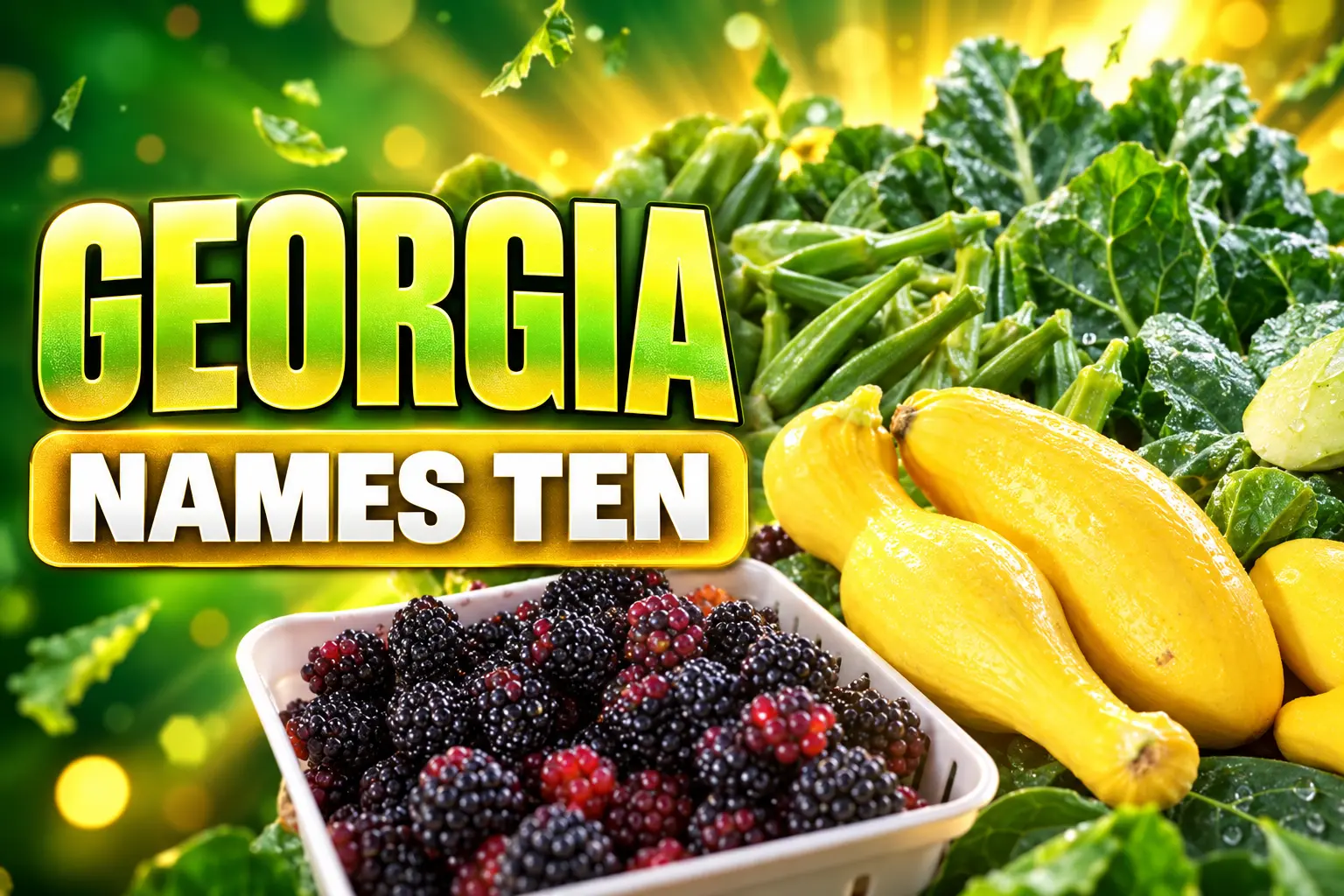
Five of the Ten Spotlight Slots Went to Atlanta
Atlanta holds 27 of the 231 markets in USDA Agricultural Marketing Service Local Food Portal records compiled in 2026. That is a large city share, and it is not half the state. Half the spotlight slots still went there.
The other five names stretch from Dawsonville to Savannah to Waycross and a West Georgia cooperative that lists Columbus, LaGrange, and West Point. The poster is statewide on paper. The density is not.
THE TEN SPOTLIGHT MARKETS
| Market | Place | What the record shows |
|---|---|---|
| Amicalola Regional Farmers Market | Dawsonville | Saturdays, 8 a.m. to 1 p.m. |
| Cartersville Farmers Market | Cartersville | Sales topped $1 million in 2024; SNAP match |
| Freedom Farmers Market | Atlanta | Fresh for Less partner |
| Forsyth Farmers’ Market | Savannah | Producer-only; Fresh for Less partner |
| The Grant Park Farmers Market | Atlanta | Year-round Sunday market; Fresh for Less |
| Peachtree Road Farmers Market | Atlanta | Producer-only, 70-plus vendors, 19th year |
| Piedmont Park Green Market | Atlanta | Fresh for Less partner |
| Unearthing Farm & Market | Atlanta | Pay-what-you-can plot in DeKalb County |
| WayGreen Local Fare Market | Waycross | Monthly; SNAP doubled up to $50 |
| West Georgia Farmers Cooperative Farmers Market | Columbus, LaGrange, West Point | Cooperative stalls in three cities |
Two of the Atlanta picks are not Buckhead brunch markets. Freedom Farmers Market takes Fresh for Less tokens. Unearthing Farm & Market, run by executive director Katie Kissel, sells on a pay-what-you-can model from a three-acre DeKalb plot where 20 to 25 people work assigned rows. Kissel has said the stand is growing squash, cucumbers, and zucchini as the season turns.
Harper Promised Rural Towns and Showed Up in Buckhead
In a June 24 television interview, Harper said the campaign would reach “all corners” of the state and “spur economic activity in our small towns and our rural communities.” The first high-profile stop that followed was not Waycross.
On August 15 he spent the morning at Peachtree Road Farmers Market, 2744 Peachtree Road NW, beside the Cathedral of St. Philip. The market is in its 19th year. It is producer-only, which means vendors sell what they grew, raised, or made. More than 70 farmers and producers set up there on Saturdays from 8:30 a.m. to noon, March through December.
Farmers markets serve as important incubators for agricultural entrepreneurship, giving farmers and small food businesses the opportunity to introduce new products, test new ideas, and build relationships with consumers.
Tyler J Harper, Georgia agriculture commissioner, Peachtree Road visit
He had flagged the stop on August 10 and told people to find the Georgia Grown tent.
Meet me at the market!
I’m looking forward to visiting the Peachtree Road Farmers Market in Buckhead on Saturday, August 15, from 9:00 a.m. to 12:00 p.m.
Come see us at the @GeorgiaGrown Tent! pic.twitter.com/eEJ6Grs1yS
— Georgia Agriculture Commissioner Tyler Harper (@AgCommHarperGA) August 10, 2026
Peachtree Road already had a Saturday crowd, a producer-only rule, and a long waiting list of the sort flagship urban markets keep. Dawsonville, Waycross, and the West Georgia cooperative got the same logo. They did not get the Saturday with the commissioner.
Georgia Farms Sell $46.4 Million Straight to Shoppers
Direct sales are the reason a stall exists. They are still a thin slice of Georgia farming. Vanessa P. Shonkwiler, a UGA Extension public service associate, and Angie Im, an assistant professor, walked through the 2022 Census of Agriculture in a January 2025 field report.
GEORGIA DIRECT SALES IN ONE LOOK
- The farms: 2,186 of 39,264 Georgia farms sold agrifood products direct to consumers in 2022, or 5.57%.
- The haul: Those sales reached $46.4 million in 2022, up from $13.2 million in 2012.
- The share: Direct sales were 0.35% of Georgia farm sales in 2022, up from 0.14% in 2012.
- The average: Inflation-adjusted sales per participating farm rose 21.98%, from $17,403 to $21,229.
Thirty-two farms with more than $1 million in direct sales took 34.18% of that $46.4 million. Most participating farms are not in that group. They are the vendors who need a Saturday of paying strangers.
UGA also separated a different Georgia system that shoppers mix up with these stalls. The department runs nine State Farmers Markets, wholesale and retail yards that the August 4 Farmers Market Week release said support more than $1 billion in sales each year. That billion is produce moving through state yards. It is not the $46.4 million that farms booked on census forms for farmers markets, CSAs, u-picks, and farm stands.
Cartersville is the spotlight market that already proved a stall can grow. With Bartow County, the city, and UGA Extension behind it, the market posted a close to nine-fold sales increase from 2019 to 2024 and finished 2024 over $1 million. Vendor count and Saturday count stayed about the same. The shoppers changed.
Wholesome Wave Matches SNAP at Partner Markets
A logo does not ring up a tomato. An EBT swipe does. USDA portal records list SNAP or EBT at 26 of Georgia’s 231 markets, or 11.3%, about even with the U.S. rate of 11.4%. Most stalls still have no way to take a food-assistance card.
Wholesome Wave Georgia matches SNAP dollars dollar for dollar for locally grown produce at Fresh for Less partners. The group lists over 75 partners, including farmers markets, farm stands, mobile markets, and stores. Freedom, Grant Park, Peachtree Road, Piedmont Park Green Market, Forsyth in Savannah, Unearthing, and Cartersville are on that partner map, as is WayGreen in Waycross.
WayGreen doubles SNAP on fresh fruit and vegetables up to $50. Cartersville hands out EBT tokens at an information table and matches them through Fresh for Less, then reimburses vendors through the Bartow County UGA Extension office. That is cash in a grower’s pocket the same day, which a yard sign is not.
The local-food posts that actually travel are rarely about the state’s ten-name list. They point to farm stands the poster omitted, including a Black-owned produce market in Ellenwood and vegetable stalls inside MARTA stations. Those places already sit where people already are. The campaign’s own posts drew almost no argument at all, and by late September the Georgia Grown account had moved on to a fall agritourism map and the Georgia National Fair.
How a Market Gets Onto the Georgia Grown Map
Georgia Grown dates to 2011. It is a Department of Agriculture marketing program, a directory, and a sticker. UGA’s report calls state branding a tool for visibility. The 2026 market campaign is that tool pointed at stalls.
On August 4, Harper signed a proclamation for Georgia Farmers Market Week, August 3 through 9. The same release said the Georgia Grown Farmers Market Map lists more than 50 Georgia Grown-certified markets and farm retail locations. Ten of those names got the spotlight. The rest got a pin.
USDA portal records are a wider net: 231 markets, 35 CSA programs, and 95 farm stands, with Georgia ranking 11th among 52 states and territories and sitting at 2.1 markets per 100,000 residents, under the U.S. figure of 2.4. Certified and listed are not the same thing. A market that never files the Georgia Grown form never appears on the campaign’s statewide farmers market map.
THE 2026 MARKET CALENDAR
- June 18, 2026: Harper launches Meet Me at the Market and names the ten Spotlight Markets.
- June 24, 2026: Harper says on television the drive should help small towns and rural communities.
- July 3, 2026: WayGreen holds a night market in Waycross with a Georgia Grown booth.
- August 3, 2026: Georgia Farmers Market Week opens; Harper signs the proclamation the next day.
- August 15, 2026: Harper visits Peachtree Road Farmers Market in Buckhead.
- September 16, 2026: The department publishes a Fall Agritourism Map of about 70 farm sites.
By the last week of September, Georgia Grown was selling the fair in Perry, not the June stall list. The Georgia National Fair runs October 8 through 18, with a Georgia Grown building for cotton, forests, peanuts, and pecans.
WayGreen Opens One Saturday a Month in Waycross
WayGreen Local Fare Market is the southern name on the poster that least resembles Peachtree Road. It is a producer-only market for food and goods grown or made within 100 miles. Explore Georgia lists more than 25 vendors, including produce, meats, goat cheese, eggs, honey, breads, olive oil, grits, and pastured pork, beef, lamb, goat, and buffalo.
It runs the first Saturday of each month from May through November, 9 a.m. to noon, on the Okefenokee Heritage Center grounds at 1460 N. Augusta Ave. A July 3 night market at WayGreen House on Ben Hill Avenue put Chef Matthew Raiford in the kitchen and a Georgia Grown booth on the lawn. SNAP is welcome. The match tops out at $50.
Amicalola in Dawsonville is a Saturday market tied to the Dawson County Chamber and UGA Extension. The West Georgia cooperative is the only spotlight entry that is three cities at once. Those are the stalls Harper’s June interview pointed toward. They share a campaign with five Atlanta markets and a commissioner who spent his televised Saturday in Buckhead.
The ten names are set for 2026. The registry is still open to anyone who files the form. The shoppers who can double a SNAP dollar, and the farms that booked $21,229 on average, are the ones the signs have to reach if the campaign is going to do more than reprint a directory.

Greed Held After a $697 Million Crypto Long Flush

Fed Minutes Keep a Year-End Rate Hike Alive

A Nanny-Cam Tape Follows Tyreek Hill Into Free Agency

Star Wars Galactic Racer Makes a Crash End the Tour

Amazon Puts Apple’s June MacBook Prices Back on Sale

Sophia Wootten Turns the Miss Georgia Crown Toward Cleft Care

The iPhone 16 Pro Flipkart Cut Did Not Last

Microsoft Prints Azure’s $29.42 Billion Quarter and Shrinks the Map

UltraTech’s Ultravolt Launch Puts Cable Multiples on Trial

IXI Autofocus Glasses Still Lack a European CE Mark
-
 NEWS1 year ago
The iPhone 16 Pro Flipkart Cut Did Not Last
-
 ENTERTAINMENT4 months ago
Sophia Wootten Turns the Miss Georgia Crown Toward Cleft Care
-
 BUSINESS1 month ago
UltraTech’s Ultravolt Launch Puts Cable Multiples on Trial
-
 NEWS1 month ago
Microsoft Prints Azure’s $29.42 Billion Quarter and Shrinks the Map
-
 NEWS9 months ago
IXI Autofocus Glasses Still Lack a European CE Mark
-
 NEWS3 months ago
Little St. Simons Island Hatches Loggerheads at 72.4 Percent
-

 NEWS4 months ago
Georgia Beach Bacteria List Leaves Swim Areas Open
-

 NEWS3 years ago
Eyal Waldman Keeps a Two-State Bet After Gaza