The Caucasus exhibition at the new Tbilisi Zoo opened in test mode on August 9, giving the public early access to a section long planned after the 2015 flood. Zoo administrators moved the completed area forward because of strong public interest, with the full official opening set for autumn.
Landscaping continues and a café plus children’s educational center remain under construction. Visitors must stay on marked paths around the enclosures.
The decision to let people in early reflects how long the city has waited for a safer home for its animals. Test mode lets the public see finished enclosures while crews still work on the rest of the grounds. That approach keeps interest high without claiming the complex is complete.
Early Access Draws Crowds to the New Site
The entrance sits at the end of Khudadov Street near Tbilisi Sea and Ivertubani. Hours run daily from 11 a.m. to 7 p.m., and the ticket office closes at 6 p.m. Ticket prices for the new facility have not been announced.
Director Zurab Gurielidze had targeted a July start earlier in the year. High demand pulled the test opening forward once the Caucasus zone was ready.
- 48 hectares total for the new zoo near Tbilisi Sea
- About $50 million invested in the project
- First phase focused on Caucasus native animals
- Old zoo on Kostava Street keeps operating with its own collection
The administration warned guests to avoid restricted zones still marked by signs while finishing work proceeds.
Early entry is limited to what crews have finished. Marked paths guide people past the first enclosures and keep them clear of active construction. The ticket office cutoff at 6 p.m. gives staff time to clear the grounds before closing.
Visitors who arrive after the ticket office shuts cannot enter, even if the grounds stay open another hour. That rule keeps numbers manageable while the site is still partly unfinished. Public interest was strong enough that waiting for every café and classroom to open would have left completed habitats empty for months.
- Stay on marked paths only
- Respect signs around unfinished zones
- Plan arrival before the 6 p.m. ticket cutoff
- Expect limited services until the café and education center open
Flood of 2015 Forced the Move
On June 13, 2015, the Vere River flooded central Tbilisi. The old zoo, built in 1927 in a vulnerable river valley on roughly 9 hectares, took a direct hit. More than half the animals died or escaped. At least 20 people lost their lives across the city.
A hippopotamus and other large animals wandered streets. Rescue and recovery stretched for months. The lower sections reopened that September, but the site’s flood risk had been known for decades.
- June 13, 2015, Flash flood inundates the zoo and kills or frees hundreds of animals.
- September 2015, Surviving sections reopen; plans firm up for a full relocation.
- 2015 onward, 48-hectare plot allocated at Tbilisi Sea; design and funding efforts begin.
- April-May 2026, Gurielidze confirms phased summer opening, Caucasus first.
- August 9, 2026, Caucasus exhibition enters test mode for visitors.
The relocation aimed to give animals far larger, safer habitats away from the dense urban valley. Construction delays stretched the timeline past a decade.
The 2015 disaster turned a long discussed risk into an urgent rebuild. Animals that survived the flood still lived on ground that could flood again. Moving the collection to higher ground near Tbilisi Sea removed that threat and opened room for habitats the old valley could never hold.
Recovery work after the flood took months because animals had scattered across the city and many enclosures were destroyed. Reopening the lower sections in September 2015 restored a public face for the zoo, yet it also underlined that a permanent fix required new land. The 48 hectare allocation near Tbilisi Sea answered that need, even if design and funding then took years to lock in.
Phased delivery became the practical answer once full completion slipped past the original hopes. Opening the Caucasus zone first puts finished space to use while later phases continue. The August test date shows how public pressure and completed work finally lined up after more than ten years of planning.
Native Species Fill the First Enclosures
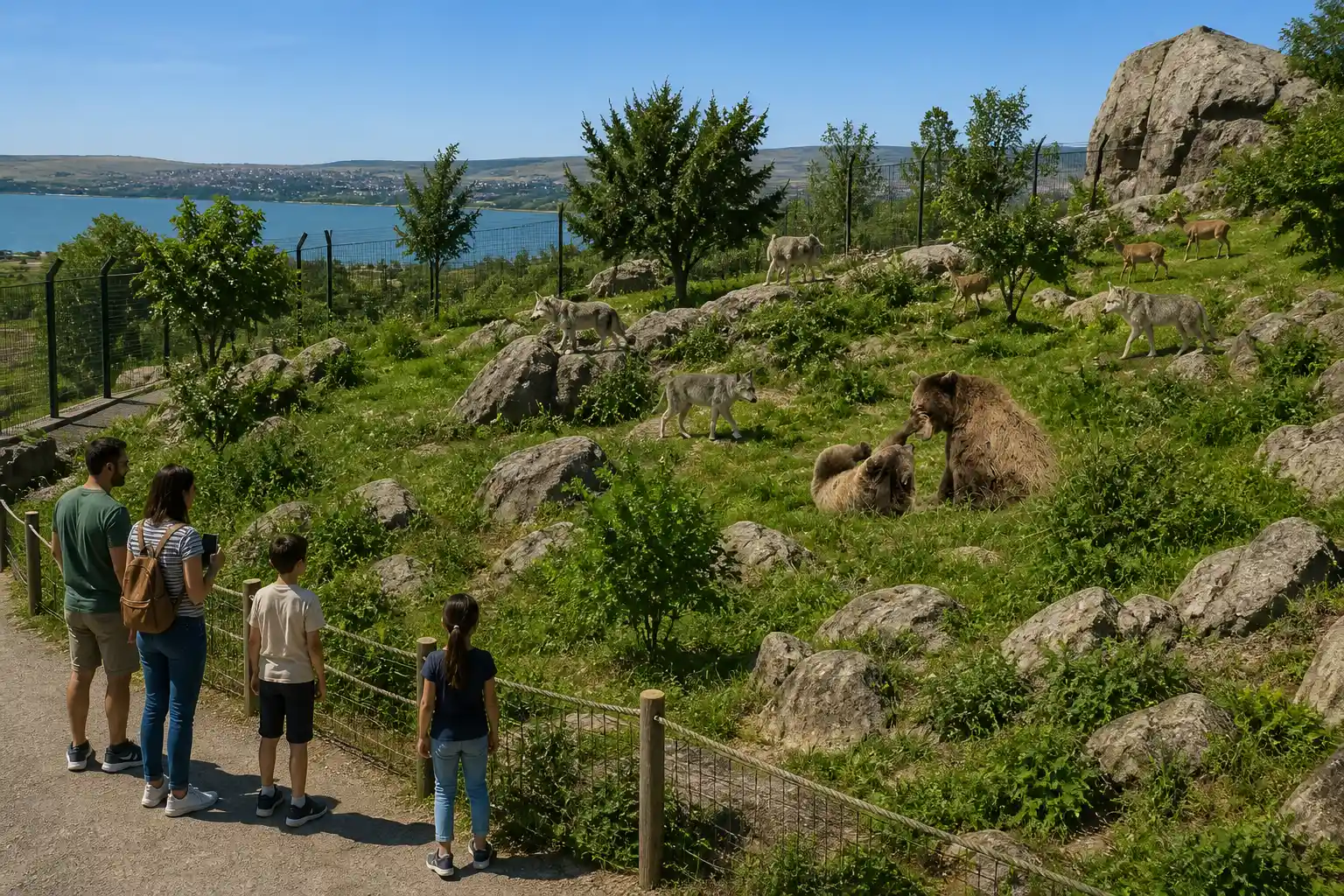
Bears, wolves, deer and wild goats form the core of the opening collection. These animals native to the Caucasus region occupy the initial enclosures, which the zoo designed larger than the old site’s cages.
| Animal | Role in Exhibition | Notes |
|---|---|---|
| Bears (Eurasian/Syrian brown) | Primary large predators | Wary in wild; key for visitor draw |
| Wolves (Eurasian grey) | Pack social display | Common across mountain habitats |
| Deer (incl. Caucasian red) | Herbivore herds | Support breeding and release work |
| Wild goats / turs | Mountain ungulates | Some regional subspecies endangered |
Space constraints at the old zoo remain visible even now. Staff recently built temporary outdoor housing for three young martens rescued after people raised them, underscoring how the new grounds ease overcrowding for lively climbers and predators.
Starting with Caucasus natives ties the first phase to the region visitors already know. Bears and wolves give the exhibition large predators that draw attention, while deer and wild goats show the herbivores that share the same mountain range. Larger enclosures let packs and herds move in ways the old cages could not support.
The marten rescue shows the daily pressure on the old site. Young climbers need vertical space and secure outdoor runs. Temporary housing at Kostava Street works as a stopgap, yet the new grounds were planned to absorb animals like these without constant improvisation. That difference is one reason the Caucasus zone opened as soon as its enclosures were ready.
Breeding and release goals for red deer sit alongside the public display. Visitors see herds that also serve conservation work. The same logic applies to regional goat subspecies already under pressure in the wild. The first enclosures therefore carry both show and recovery roles from day one.
Conservation Runs Alongside the Displays
Gurielidze has described the Caucasus exposition as serving two roles at once.
This exposition has a dual purpose, it is both an exhibition space and a conservation area, which is one of the main roles of zoos.
The director made the point while outlining the phased plan. Protection and restoration of endangered species sit inside the design, not as an afterthought.
Caucasus wildlife faces pressure from habitat loss, hunting and fragmentation. Species such as the Western tur and Persian leopard appear on IUCN lists as endangered. Zoo work on breeding, rescue and potential reintroduction fits broader regional efforts.
- Larger enclosures reduce stress and support natural behaviors
- Breeding programs target regional rarities including red deer
- Rescue intake continues for orphaned or human-habituated animals that cannot return to the wild
- Education center under construction will expand public outreach
Readers can explore Caucasus wildlife species profiles for background on the same animals now on view. Parallel programs appear through WWF Caucasus conservation programs that focus on leopards, sturgeon and habitat corridors.
Dual purpose design means the same hectare can hold a visitor path and a breeding group. Stress drops when animals have room to keep distance from crowds and from each other. That layout supports the natural behaviors the director linked to modern zoo work.
Rescue intake will not stop because the new site opened. Orphaned or human raised animals still arrive, and some can never go back to the wild. The new grounds give staff more options for long term housing than the crowded valley site. The education center, once finished, will turn those stories into public teaching rather than leaving them as back of house work.
Links to regional wildlife profiles and WWF corridor projects place the Tbilisi effort inside a wider map. Leopards and turs on IUCN lists need habitat beyond any single zoo. Breeding and rescue at the new site feed into that larger picture without replacing it.
How to Reach the New Grounds Today
The test opening keeps access simple. Follow only the marked path. Warning signs block unfinished zones. The old zoo at 64 M. Kostava Street continues with separate hours and its established collection of roughly 300 species.
No entrance fee figure has been published for the new site. The municipality supports the project under the current budget. For basic contact and legacy information, the official Tbilisi Zoo site details remain the starting point while the new location ramps up.
Public transport and parking near Tbilisi Sea and Ivertubani will evolve as the full complex opens. Early visitors report the scale difference immediately once they leave the city core.
Two addresses now serve the public at once. Kostava Street holds the long running collection. Khudadov Street near Tbilisi Sea holds the new Caucasus zone. Guests choose which site to visit, or plan both, knowing the hours and rules differ.
Until ticket prices appear, the new site operates under municipal support without a published fee list. That gap is temporary and tied to the test phase. Anyone needing contacts or background still starts with the existing official site while the new location builds its own pages and services.
Africa Zone and More Still Ahead
The Caucasus section is only the start. An African exposition is scheduled next, with enclosures expected by the end of 2026 or early 2027. Giraffes sit on the acquisition list once habitats are finished. Additional species will arrive in stages.
Phasing keeps capital and animal care manageable. Crews finish one set of habitats, open them, then move to the next. Giraffes require height and browse space that must be ready before any transfer. The end of 2026 or early 2027 window for African enclosures gives a clear target without freezing the Caucasus zone already in use.
Later stages will widen the species list beyond regional natives. That expansion depends on the same landscaping and building work still visible around the test paths. Autumn’s official opening for the Caucasus area will not mean every future wing is done. It will mark the first full public chapter on grounds sized for many more.
The New Grounds Dwarf the Old Valley Site
The move multiplies the land under zoo control and removes the river threat that defined the old address. Numbers already published make the contrast plain.
| Measure | Old Zoo | New Zoo |
|---|---|---|
| Area | Roughly 9 hectares | 48 hectares |
| Location | River valley, Kostava Street | Near Tbilisi Sea, Khudadov Street |
| Origin | Built 1927 | Planned after 2015 flood |
| Flood exposure | Known risk for decades; hit hard in 2015 | Chosen for safer ground |
| Current role | Still open, roughly 300 species | Caucasus phase in test mode |
Six times the land changes what keepers can build. Enclosures grow. Visitor paths can loop without pressing against cage bars. Rescue animals gain outdoor runs instead of improvised corners.
The old site’s roughly 300 species remain on view while the new collection starts with a focused Caucasus group. Parallel operation lets the city keep a full public zoo during the long transfer. Investment of about $50 million underwrites that shift from a tight valley plot to the open ground at Tbilisi Sea.
Scale alone does not finish the job. Landscaping, the café and the children’s center still under construction will decide how comfortable a full day visit feels. Even so, the hectare count already sets a different standard from the 1927 layout.
Why Both Sites Stay Open Together
Keeping Kostava Street active while Khudadov Street opens avoids a gap in public access. The old collection of roughly 300 species has nowhere else to go until later phases and transfers catch up. Visitors therefore meet two zoos with different animals and different rules.
Test mode at the new site covers only the finished Caucasus enclosures. Unfinished zones stay closed behind signs. The old site runs its established hours and list without those limits. Families can pick the familiar address or the new expanse near Tbilisi Sea.
Municipal budget support covers the project while ticket prices for the new grounds stay unpublished. That arrangement keeps the test period simple. It also leaves the official website as the shared reference for contacts until the new location publishes its own full details.
Parallel running will last as long as animals and exhibits remain split. Africa zone work planned for the end of 2026 or early 2027 will add another chapter on the new land. Until those habitats open and further moves occur, both gates matter.
What We Know
- Test access daily 11 a.m.-7 p.m. through the autumn official opening
- Café and children’s educational center under active construction
- Old zoo stays open with different animals
What’s Unconfirmed
- Exact ticket prices and any membership options
- Precise arrival dates for giraffes and further African species
- Full landscaping completion timeline
The new grounds give Tbilisi a modern zoo footprint six times the size of the old river site. After more than a decade of planning that began in the mud of 2015, the first animals and first visitors are finally sharing the same large enclosures. Autumn’s official opening will lock in the Caucasus chapter while crews push on toward Africa and the unfinished public buildings still rising around the paths.