De facto authorities in Russian-occupied Tskhinvali declared that Georgia as a state must bear responsibility for the August 2008 war, seizing on Georgian Dream leaders’ fresh blame of former President Mikheil Saakashvili. The statement, issued after the 18th anniversary, rejected Tbilisi’s occupation language and cast Russia as a security guarantor.
The move turns an internal political attack into external narrative ammunition. It lands while Georgia’s own Foreign Ministry continues to demand Russian withdrawal and while Western partners restate non-recognition of the breakaway regions.
Tskhinvali Claims the Whole State Is Liable
The de facto foreign ministry in Tskhinvali accused Georgia’s Foreign Ministry of distorting the 2008 events and following NATO-country lines. It called Tbilisi’s anniversary statement illogical and detached from reality.
It pointed directly to Prime Minister Irakli Kobakhidze’s remarks that pinned the outbreak on Saakashvili. “In fact, this was known from the very beginning, and South Ossetia has been saying this for the past 18 years,” the statement said.
Therefore, responsibility for the August 2008 war must be borne by the country as the subject of this policy, including representatives of the Saakashvili regime as the implementers of this policy.
The de facto ministry argued that as president Saakashvili acted for the Georgian state, so liability cannot stop with him or his United National Movement circle. It rejected any description of Russian forces in Abkhazia and the Tskhinvali region as occupation and urged Tbilisi toward a more constructive stance inside the Geneva International Discussions.
That chain of reasoning is deliberate. By treating the wartime president as the voice of the state rather than a discarded faction, Tskhinvali converts a domestic quarrel into a claim against Georgia as a whole. The same statement then offers Russia as the security guarantor, closing the loop between blame and recognition.
Kobakhidze’s Cemetery Remarks Supplied the Opening
On August 8 Kobakhidze spoke at Mukhatgverdi Brothers’ Cemetery after a wreath-laying. He said the Russia-Georgia war began on August 8 and that on August 7 “the Saakashvili regime shelled Tskhinvali.”
“We blame Saakashvili’s bloody regime for starting the war,” he said. He called the former president a traitor and a “shameful, dirty foreign agent.” Full-scale hostilities, in his framing, meant the Saakashvili government started the war.
Georgian Dream has long separated the “UNM regime” from the Georgian state. Tskhinvali closed that gap. Opposition voices immediately noted the gift. Former prime minister Giorgi Gakharia wrote that repeating Moscow’s line betrays national interests and hands the occupant legal and political claims. On X the same critique spread quickly: the rhetoric validates an 18-year propaganda frame.
Civil society and many Western partners mark August 7, citing Russian troop movements through the Roki Tunnel before Georgian artillery opened on Tskhinvali that night. The date split itself has become part of the argument.
Once the prime minister’s cemetery language circulated, the de facto ministry needed only to quote it. The opening was supplied in Tbilisi; the legal expansion was written in Tskhinvali.
What Official Tbilisi Still Demands
Georgia’s Foreign Ministry released its own full Georgian MFA anniversary statement on August 8. It described Russia’s 2008 actions as full-scale military aggression and illegal occupation of Abkhazia and the Tskhinvali region, both “inalienable parts of Georgia’s territory.”
Eighteen years on, the ministry said, Russia continues to defy the EU-mediated 12 August 2008 Ceasefire Agreement, expands control, militarises the regions and moves toward de facto annexation. It listed concrete steps it wants:
- Cease the illegal occupation and annexation-directed actions
- Fully implement the 12 August 2008 ceasefire obligations
- Withdraw Russian military forces from Georgian territory
- Ensure the safe and dignified return of internally displaced persons and refugees
- Restore regular functioning of the Incident Prevention and Response Mechanism in Gali
The ministry underlined Georgia’s commitment to peaceful resolution through the Geneva International Discussions and paid tribute to the servicemen and civilians killed. The language sits in open tension with the prime minister’s domestic framing that Tskhinvali then amplified.
Those five demands remain the formal baseline of state policy. None of them accepts shared state liability for the outbreak. None of them treats Russian forces as a security guarantor. The distance between that list and the cemetery remarks is exactly the space Tskhinvali moved into.
The Night the Open Fighting Began
The Independent International Fact-Finding Mission on the Conflict in Georgia, led by Swiss diplomat Heidi Tagliavini and established by the EU, remains the most cited external account. Its 2009 report found that open hostilities started with a large-scale Georgian military operation against Tskhinvali and surrounding areas on the night of 7 to 8 August 2008.
It also stated that any explanation cannot focus solely on that artillery attack. The attack was the culminating point of a long period of rising tensions, provocations and incidents. The mission assigned no overall responsibility to one side alone. It noted Russian forces and volunteers had already entered the picture and that Russian air action began before the public decision in Moscow on 8 August.
- 7 August 2008 evening: Georgia declares a unilateral cease-fire; fighting continues in South Ossetia villages.
- Night of 7-8 August: Georgian artillery and ground assault on Tskhinvali begins around 23:35.
- 8 August: Russia announces an operation “to compel Georgia to peace”; Russian forces push deeper; Abkhaz front also opens.
- 12 August 2008: EU-brokered six-point ceasefire signed; Russian recognition of Abkhazia and South Ossetia follows days later.
Casualties remain disputed in detail but the scale is clear. Georgian figures cited roughly 170 servicemen, 14 policemen and 228 civilians killed. Russian claims listed 67 servicemen killed. South Ossetian tallies ran higher. Altogether around 850 people died. Far more than 100,000 civilians fled; tens of thousands of ethnic Georgians remain unable to return. That unresolved displacement still defines the humanitarian file in Geneva.
The Tagliavini sequence undercuts single-cause storytelling from any capital. It records a Georgian assault on the night of 7-8 August and, in the same account, prior Russian movement and early air action. Selective quotation of only one beat is how anniversary politics keeps the fight alive.
Western Capitals Restate the Occupation Frame
International reactions on the anniversary lined up against the Tskhinvali-Moscow reading. The EU spokesperson reaffirmed support for territorial integrity and condemned Russia’s recognition of the breakaway regions. The EU called Russia’s military presence and activities illegal and a violation of the 12 August 2008 six-point agreement. It flagged the May “Agreement on Deepening Allied Cooperation” between Moscow and Tskhinvali and the appointment of a Russian official as so-called acting president of South Ossetia as lacking validity under international law.
| Actor | Core claim on 2008 | Position on Russian presence |
|---|---|---|
| Georgian MFA | Russian full-scale aggression and illegal occupation | Must withdraw; ceasefire unfulfilled |
| Irakli Kobakhidze / GD | Saakashvili regime started the war | Still describes territories as occupied |
| Tskhinvali de facto | Georgia as state bears responsibility | Russia is reliable security guarantor |
| Russian MFA | Saakashvili regime treacherously attacked | Operation to compel peace; recognition justified |
| EU / Four Powers / US | Russian military action and occupation | Illegal; non-recognition policy stands |
France, Germany, Italy and the United Kingdom issued a joint Four Powers warning on annexation risks. They marked August 7 as the day Russia launched military action, welcomed Nauru’s withdrawal of recognition of the regions, and called the continued military presence a violation of international law and the ceasefire. The US Embassy in Tbilisi condemned killings, kidnappings and abuses under the occupation and restated support for Georgia’s sovereignty within internationally recognised borders. NATO’s special representative used similar language. The US non-recognition of Tskhinvali elections fits the same long-standing line.
Across those statements the non-recognition policy holds. Western partners still refuse to treat the de facto authorities as a settlement party with equal standing. That consensus is what Tskhinvali’s liability claim tries to soften by borrowing Georgian Dream’s own words.
Eighteen Years of Hardened Lines
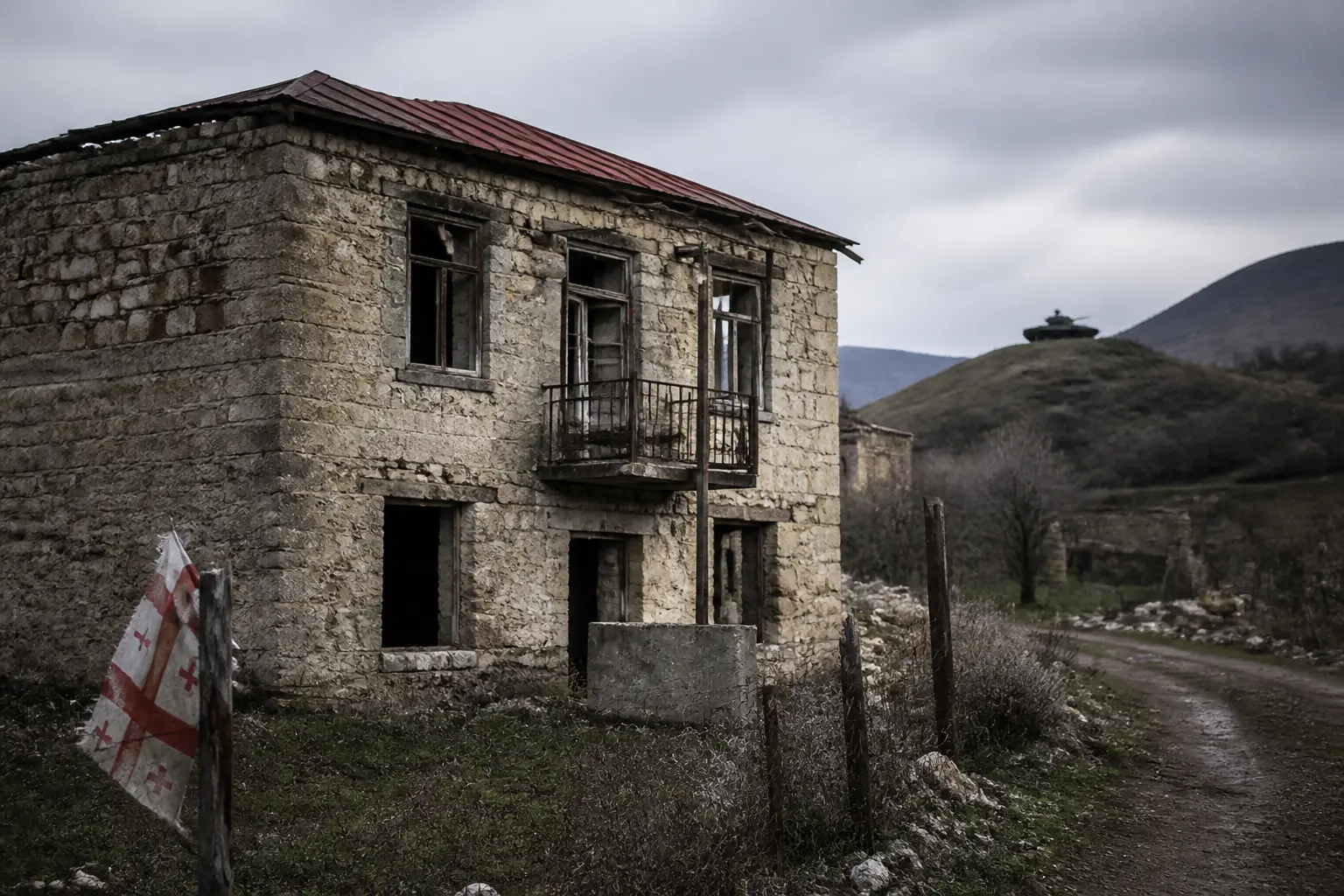
Russia recognised Abkhazia and South Ossetia shortly after the fighting. It maintains bases and has steadily integrated the regions into its security and regulatory space. Georgia and the overwhelming majority of UN members treat both as occupied Georgian territory. The European Court of Human Rights has held Russia responsible for human-rights violations there because of its effective control.
Key numbers that still drive policy:
- ~850 total deaths across sides in the short war
- Tens of thousands of ethnic Georgians still displaced from the two regions
- Only one international monitoring presence on the ground: the EU Monitoring Mission, which has no access inside the occupied areas
- Geneva International Discussions remain the sole dedicated format, yet they have produced no breakthrough on return of IDPs or a non-use-of-force agreement acceptable to all
The pattern of each anniversary is now familiar. Tbilisi’s MFA and Western partners restate occupation and territorial integrity. Moscow and the de facto authorities restate the “peace enforcement” story and demand Georgia accept the new reality. Georgian Dream’s domestic score-settling with Saakashvili has become a recurring accelerant. That is how how the 2008 war still shapes Russia’s occupation approach continues to evolve: legal and political space is claimed inch by inch whenever Tbilisi’s internal rhetoric softens the state’s own case.
August Seventh and August Eighth Still Clash
The calendar itself is now part of the dispute. Who marks which day signals which sequence of blame they accept. The existing record already shows the split in plain view.
| Voice | Day emphasised | What that day is said to mean |
|---|---|---|
| Kobakhidze / Georgian Dream | August 8 as war’s start; August 7 as shelling | Saakashvili regime began full-scale hostilities |
| Civil society and many Western partners | August 7 | Russian troop movements through the Roki Tunnel before the night assault |
| Four Powers (France, Germany, Italy, UK) | August 7 | Day Russia launched military action |
| Tagliavini fact-finding mission | Night of 7-8 August | Georgian operation opens open hostilities; wider context of prior tensions and Russian moves |
When the prime minister anchors the story on August 8 and names only the former government, he aligns the public calendar with the frame Tskhinvali has repeated for eighteen years. When Western partners and the Four Powers mark August 7, they keep Russian initiative in the first line of the account. The dates are short; the political load on each one is not.
Georgian Dream Words Reach Tskhinvali Directly
The pathway from cemetery microphone to de facto ministry statement is short and visible. No new battlefield event was required. The sequence ran on language alone.
- Georgian Dream separates the “UNM regime” from the Georgian state in domestic speeches.
- Kobakhidze at Mukhatgverdi pins the war’s start on Saakashvili and calls him a traitor and foreign agent.
- Tskhinvali quotes the blame, then widens it: the president acted for the state, so the state is the liable subject.
- Opposition figures, including Giorgi Gakharia, warn that the line hands the occupant legal and political claims.
- The MFA anniversary text still demands withdrawal, ceasefire implementation and return of the displaced.
Each step uses material already on the public record. The effect is cumulative. A ruling-party attack meant for a domestic rival becomes citation material for authorities Tbilisi will not recognise. The Geneva format, the EU Monitoring Mission’s limited reach, and the frozen return of IDPs all stay unchanged while the argument over responsibility sharpens around them.
The Cost Falls on Georgia’s Own Position
Tskhinvali’s statement does not change facts on the ground. Russian troops stay. Borders remain closed to most Georgian returnees. The Geneva talks stay largely frozen. Yet the second-order effect is real. When the sitting prime minister’s words are quoted approvingly by the de facto foreign ministry to argue that the Georgian state itself is the responsible subject, the non-recognition consensus faces a new soft spot.
Opposition parties call the language treasonous. Western partners continue to treat Abkhazia and South Ossetia as Georgian territory under illegal occupation. Georgian Dream still formally demands de-occupation. The gap between the MFA text and the political rhetoric from the ruling party is now being filled by the very authorities Tbilisi refuses to recognise. That is the practical consequence of turning an anniversary into another round of domestic reckoning.
Eighteen years after the five-day war, the maps, the bases and the displaced families have not moved. The argument over who must answer for it has only grown sharper.