Tbilisi Mayor Kakha Kaladze told reporters on August 10 that he sees no problem in a chance interview with a Russian-language blogger he met days earlier while buying coffee. The former AC Milan defender and Georgian Dream secretary general framed the encounter as ordinary hospitality that brings tourist spending to local businesses.
His comments arrived days after he dismissed online claims of threats against Russian visitors as hybrid warfare and just after the anniversary of the 2008 war. The stance ties a cafe chat to the larger revenue stream that keeps Russian visitors at the top of Georgia’s arrival lists.
A Coffee Stop Turned Interview
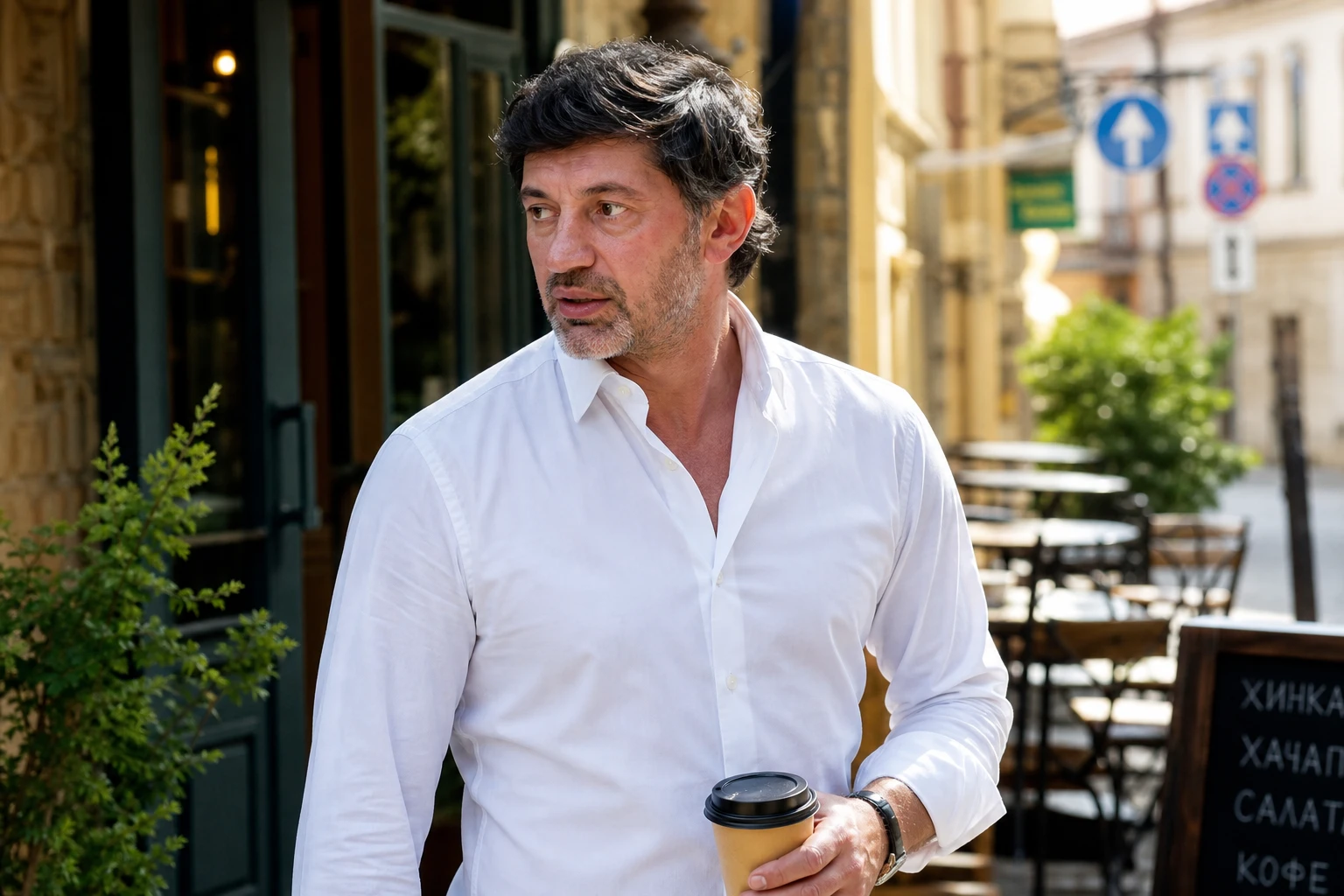
Kaladze said he was checking municipal works, then stopped at a café. A woman approached, said she was preparing a story about Tbilisi, and asked questions. He does not know if she is a blogger or journalist.
I don’t know whether this particular person is a blogger or a journalist. A few days ago, I was visiting municipal works. Then I went into a café to buy coffee and happened to meet this woman. She told me she was making a story about Tbilisi and asked me some questions.
He told Georgian media the exchange raised no issues. Journalists pressed him on why the talk stayed on Georgian cuisine and hospitality rather than broader attractions. Kaladze replied that the question itself was about hospitality and that the country has many sights beyond food and wine, which remain popular because they sit inside national culture and traditions.
The sequence he described was brief and unplanned. Municipal inspection, a coffee order, a stranger with a recorder or phone, a few answers about food and welcome. That is the whole account he has given.
TV Pirveli carried images of the mayor with the woman. No outlet has named her or published the full interview.
The gap matters for public debate even if it does not matter to the mayor. Without a name or a full transcript, critics cannot test tone or framing, and supporters can treat the meeting as the chance encounter he describes. Kaladze’s public line does not depend on either outcome. He presents the talk as hospitality in action, and hospitality as an economic asset.
Russian Visitors Still Lead the Pack
The economic backdrop is clear from the numbers. Georgia recorded 6,856,809 international visits in 2025, up 6.2 percent from the year before, according to National Tourism Administration data reported by Civil Georgia. Tourist visits that included at least one overnight stay hit a historic high of 5,521,866, up 8.4 percent.
Russia supplied the largest share.
| Country | 2025 Visits | Change vs 2024 |
|---|---|---|
| Russia | 1,579,764 | +11.1% |
| Turkey | 1,248,881 | -6.6% |
| Armenia | 948,242 | unchanged |
| Israel | 402,426 | +29.4% |
| Azerbaijan | 292,149 | +33.2% |
Russian visits made up 23 percent of the total. EU and UK visits together reached a record 499,890, still under 8 percent. Full breakdowns appear on the official inbound tourism statistics pages maintained by Geostat. Analysts have noted revenues from Russian visitors near $694 million in recent tallies, and forecasts for 2026 hold tourism income near $5 billion.
Set beside each other, the shares show how uneven the inbound mix remains.
- Russia alone accounts for roughly one visit in four.
- The combined EU and UK total, even at a record, stays below one visit in twelve.
- Turkey and Armenia still deliver large absolute volumes, yet neither matches Russia’s growth rate in 2025.
That concentration means any sustained drop in Russian arrivals would hit hotels, restaurants, guides and transport operators hard. Kaladze’s repeated open-door language keeps that channel wide.
Growth elsewhere does not cancel the dependence. Israel and Azerbaijan posted sharp percentage gains, but from smaller bases. Overnight stays at a historic high still rest in large part on the same leading source market. Policy that treats all passports as equal spending power therefore tracks the ledger more closely than the politics of any single neighbor.
Anyone Can Come and Spend
Kaladze returned to a familiar line. Anyone who wants to visit can come at any time, no matter their origin.
- Russians, Ukrainians, Italians and Americans are equally welcome.
- Visitors spend money that supports the economy and tourism workers.
- Georgia stays safe and hospitable compared with larger European cities facing different security pressures.
He made a similar case on August 7 when social media posts claimed Russian tourists faced threats or poor treatment. Kaladze called those claims part of a hybrid war run by a multi-million-dollar foreign agency and bots. The State Security Service opened a sabotage investigation into the posts. Georgia remains open, he said, and people can move freely.
The mayor’s message stays consistent: tourist cash is tourist cash, and restricting it would punish Georgians more than anyone else.
Equal welcome is the public formula. In practice it protects the largest current flow while sounding neutral. Naming Ukrainians, Italians and Americans beside Russians lets him reject the charge of a special preference without promising any cut in the market that already leads the table.
Hybrid War Talk and the Anniversary Window
The blogger comments landed inside a denser stretch of messaging. Around the 18th anniversary of the 2008 war, Kaladze said the short conflict never generated the global campaign against Russia that later followed the full-scale invasion of Ukraine. Georgian Dream leaders have spent the period arguing that opposition forces and external critics ignore earlier history while demanding harsher lines now.
On trade, Kaladze accused the EU of double standards for continuing Russian gas purchases while urging Georgia to cut economic ties. Russia ranked as Georgia’s third-largest trading partner in recent full-year figures, with bilateral turnover in the billions. The ruling party’s position is that bilateral sanctions would hurt local families without changing Moscow’s behavior.
The same days produced a tight public sequence.
- 2008 war anniversary period – Kaladze contrasts the limited global response then with the campaign that followed the full-scale invasion of Ukraine.
- August 7 – he labels claims of threats against Russian visitors as hybrid warfare and points to a multi-million-dollar foreign agency and bots; the State Security Service opens a sabotage investigation.
- Days before August 10 – the cafe meeting with the unnamed Russian-language blogger takes place during a stop for coffee after municipal work.
- August 10 – he tells reporters the interview raises no problem and ties ordinary hospitality to tourist spending.
These threads, the cafe interview, the safety guarantees and the hybrid-war framing, form one package. Open tourism becomes both revenue policy and political shield.
Anniversary week supplies the historical frame. Hybrid-war language supplies the domestic threat frame. The cafe answers supply a everyday image of openness. Together they make a restriction on Russian visitors look like both an economic self-harm and a concession to hostile narrative work.
Georgian Dream’s Long Bet on Open Channels
Kaladze has led Tbilisi City Hall for years and serves as Georgian Dream secretary general. The party has faced sustained street pressure, including months of street closures on Rustaveli Avenue as protests stretched toward 600 days. It has also advanced legislation that critics call Russian-style, with new Russian-style laws taking effect for organizations.
Opposition voices and civil society groups treat each public welcome to Russian visitors or media as further evidence of a tilt away from the EU path that still commands majority public support in polls. Kaladze and the party counter that economic pragmatism is the only responsible course for a small country that never joined Western sanctions regimes.
The same week brought the cancellation of a Russian singer’s Batumi show timed near the war anniversary, showing how cultural bookings can still trigger pushback even as tourist numbers from Russia keep rising.
Street pressure and open-channel policy now run on parallel tracks. Protests can close avenues for months. They have not closed the border to the leading visitor market. Cultural flashpoints can still cancel a concert. They have not reversed the 11.1 percent rise in Russian visits. The party’s bet is that households tied to hotels, food service and transport will weigh receipts more heavily than the symbolic fights that dominate Rustaveli.
Open Tourism Works as Revenue Policy
Strip the cafe story down to cash flow and the mayor’s calm is easier to read. Russian visitors already deliver the largest single block of arrivals and a reported revenue slice near $694 million. National tourism income is forecast near $5 billion for 2026. A source market that large is not a side account.
Mechanism follows from share. When one country supplies 23 percent of visits, hospitality workers, landlords and municipal tax bases feel that country’s travel mood first. Kaladze’s equal-welcome rule keeps that mood steady. It also avoids forcing the government to pick which foreign spending to refuse.
Trade supplies a second brace. Russia as third-largest trading partner, with turnover in the billions, gives the same party another reason to reject bilateral sanctions as a gesture that would hit Georgian families first. Tourism openness and trade continuity then reinforce each other in public argument: both are framed as buffers for a small economy that never entered Western sanctions regimes.
Forecasts tighten the logic further. Holding tourism income near $5 billion is harder if the leading growth market is politically chilled. The mayor’s coffee-stop anecdote does small daily work for that larger target. Each casual welcome restates that Georgia will not be the party that closes the tap.
Critics Face a Hard Arithmetic Problem
Opposition and civil society groups start from a different premise. Majority public support for an EU path, in their reading, should narrow space for gestures that look like accommodation with Moscow. A mayor who chats easily with a Russian-language blogger, defends Russian tourist safety, and attacks critics as hybrid actors fits the pattern they already oppose in legislation and foreign policy.
Arithmetic still blunts the demand for a sharp break. Nearly 1.58 million Russian visits, 11.1 percent growth, and hundreds of millions in related revenue are payroll facts for thousands of workers. Calling for cooler political ties is simpler than explaining empty tables in the districts that serve those guests.
The Batumi cancellation shows the narrow room that remains. Cultural pushback can still win a single booking fight near a war anniversary. It has not rewritten the arrival table. Critics therefore win moments and lose the annual flow. Kaladze speaks to the flow.
That imbalance shapes the next round of argument. Each new open invitation raises the practical cost of the rupture protesters want. Each new record overnight total raises the number of households with a reason to fear that rupture. The mayor does not need to win the symbolic contest if the ledger keeps making his case.
Where the Stance Leaves Critics
For tourism businesses the mayor’s line is welcome predictability. Russian arrivals grew 11 percent in 2025 while other traditional markets fluctuated. A sudden political chill that reduced those flows would show up immediately in occupancy and receipts.
For pro-EU protesters and opposition parties the same line confirms the cost of power. Every open invitation raises the practical barrier to a sharper break with Moscow. The nearly 1.58 million Russian visits in 2025 are not abstract; they pay salaries and fill tax accounts. Kaladze keeps repeating that fact in plain language.
Businesses hear continuity. Protesters hear entrenchment. Both readings draw on the same published totals. The split is over which risk matters more: lost revenue next season, or a deeper political bind with a neighbor already central to trade and travel.
The unnamed blogger’s short cafe questions about food and hospitality therefore sit inside a larger calculation. The mayor treats the encounter as unremarkable. The numbers show why he can afford to.
Georgia’s doors stay open. The revenue keeps coming. The political price of closing them remains high.