The U.S. Treasury’s Office of Foreign Assets Control designated Georgia-based SHPS Shelbit, its operator Siavash Kayvanpour and linked firms on August 7, 2026, citing more than $1 million in digital assets sent from IRGC addresses to the Shelbit Exchange and more than $2 million moving the other way.
Kayvanpour-controlled addresses also sent over $2 million to the already-sanctioned Iranian exchange Nobitex. The package forms part of Washington’s wider push against Iranian digital-asset channels that finance the Islamic Revolutionary Guard Corps.
What the Designations Cover
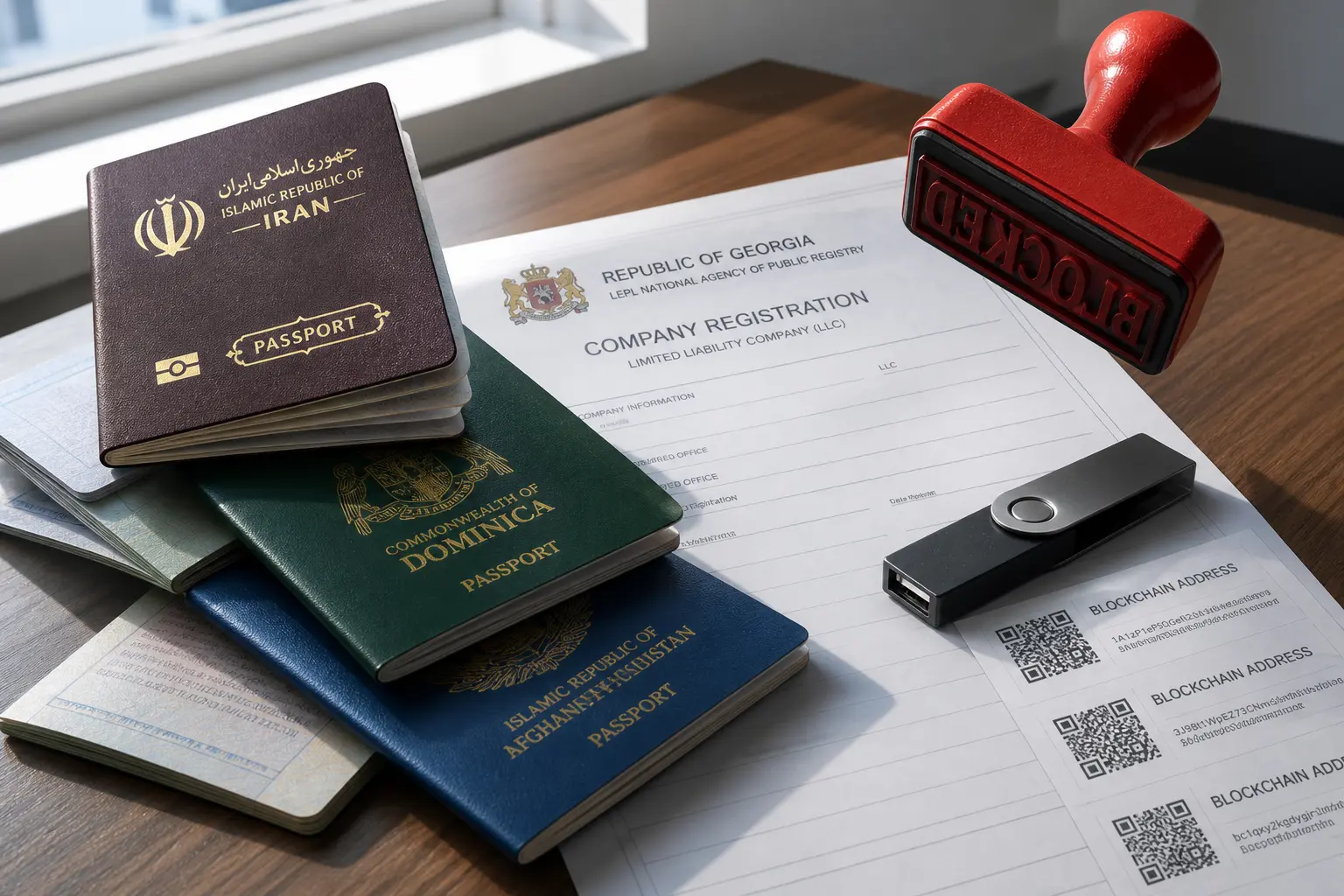
OFAC acted under Executive Order 13224, as amended, against Kayvanpour for material support to the IRGC and Nobitex. The Iranian-born operator holds Dominica and Afghanistan citizenship and has lived in the United Arab Emirates. Through SHPS Shelbit he ran the Shelbit Exchange.
Additional designations hit UAE-based Shelbit General Trading LLC (which trades as Shelbit Exchange), Poland-based Shelbit Technologies Ltd, UAE-based Crypto Home DMCC and NFT Home DMCC. Separate action under E.O. 13902 targeted Iran-based Aban Tether for operating in Iran’s financial sector and processing millions with previously designated exchanges including Nobitex, Wallex, Bitpin and Ramzinex.
- IRGC to Shelbit: over $1 million equivalent
- Shelbit to IRGC: over $2 million equivalent
- Kayvanpour wallets to Nobitex: over $2 million
- Gambling network through Shelbit: tens of millions of dollars
The flow list shows a two-way IRGC channel and a larger outbound leg into Nobitex. Gambling proceeds sit beside those transfers as a separate volume line, not a substitute for them.
Treasury Secretary Scott Bessent said the regime’s reliance on digital assets and shadow banking “is further evidence that Economic Fury is working” and that Treasury will pursue illicit networks “whether in dollars, rials, or crypto.” The action was coordinated with IRS Criminal Investigation. The State Department’s Rewards for Justice program continues to offer an up to $15 million reward for IRGC finance tips.
The Georgia Registration That Sat Unchecked
SHPS Shelbit was registered in the Republic of Georgia. Kayvanpour used it as the vehicle for the exchange even while operating commercially from the UAE. The National Bank of Georgia stated after the sanctions that the company never applied for registration as a virtual asset service provider, was never regulated by the central bank, and that its business registration had been canceled.
Georgia requires crypto service providers to register with the NBG and follow rules meant to keep illicit actors out. SHPS Shelbit sat outside that system. That gap is the hidden stake: a lightly supervised corporate registry supplied a European-adjacent legal address that the network could cite while the real activity ran through Dubai and online gambling rails.
The sequence is simple. A company appears on a national register. Counterparties see a Georgia address. The VASP gate that should have forced compliance never opened because no application was filed. Cancellation came later, after the vehicle had already served its purpose.
| Entity | Jurisdiction | Role per OFAC |
|---|---|---|
| SHPS Shelbit | Georgia | Operates Shelbit Exchange |
| Shelbit General Trading LLC | UAE | Commercial face of the exchange |
| Shelbit Technologies Ltd | Poland | Owned by Kayvanpour |
| Crypto Home DMCC / NFT Home DMCC | UAE | Managed by Kayvanpour; prior VARA action |
| Aban Tether | Iran | Processed millions with sanctioned exchanges |
UAE’s Virtual Assets Regulatory Authority had already issued enforcement actions against General Trading in January 2025 and July 2026, and against Crypto Home in January 2025. The exchange remained active until the U.S. step.
A $4 Billion Web Built on Gambling
A Reuters investigation published July 31, 2026, identified Shelbit as the hub of a roughly $4 billion Iranian sanctions-evasion scheme that moved crypto since May 2024. The exchange linked Iran’s central bank, bitcoin-mining flows, Nobitex and wallets the Israeli government had tied to the IRGC. It also served a vast Persian-language online gambling network of more than 2,000 sites.
Two Iranian influencers, Sasha Sobhani and Pooyan Mokhtari, fronted parts of that network. Both had been convicted in an Iranian illegal-gambling case in 2023 alongside Kayvanpour. Gambling is banned in Iran, yet the sites retained access to the tightly controlled domestic payments system. OFAC said tens of millions of dollars from the gambling operation were laundered through Shelbit.
The gambling layer and the IRGC layer shared infrastructure rather than competing for it. One exchange brand, several corporate shells, and the same operator tied both the banned betting rails and the Guard-linked wallets to outbound crypto routes.
Blockchain data reviewed by Reuters and analytics firms showed Shelbit sending hundreds of millions onward to major platforms, including Binance. Binance said it had investigated, frozen relevant accounts and reported them. The network kept operating even after Iranian strikes on the UAE earlier in 2026.
The Iranian regime’s reliance on digital assets and shadow banking networks is further evidence that Economic Fury is working.
Treasury Secretary Scott Bessent said in the official release.
Prior Crackdowns Already Pointed Here
Friday’s move sits inside a 2026 sequence. Analytics and enforcement had been narrowing on the same cluster of Iranian exchanges, wallets and facilitators for months before Shelbit itself was named.
- January 2026: OFAC hit Zedcex and Zedxion.
- June 2026: OFAC designated Nobitex and other Iranian exchanges.
- July 2026: OFAC sanctioned four wallets linked to Iran’s central bank; Tether then froze about $131 million. Maritime-insurance entities tied to IRGC oil flows were also targeted.
- July 31, 2026: Reuters published its Shelbit investigation.
- August 7, 2026: OFAC designated Shelbit, Kayvanpour and the linked firms.
OFAC guidance on Iranian digital asset risks and related FAQs have warned for months about secondary-sanctions exposure for anyone dealing with such exchanges. Analytics firm Elliptic immediately updated its tools so compliance teams could screen the new addresses; Elliptic labeled the new addresses for screening the same day.
Georgia itself had already drawn EU and UK attention over other crypto platforms accused of helping Russia evade restrictions. The Shelbit case adds an Iran vector to the same jurisdiction.
Political Heat Lands in Tbilisi
U.S. Representative Joe Wilson, a frequent critic of Georgia’s ruling Georgian Dream party, responded within a day. In Wilson’s post blaming Georgian Dream facilitation he wrote: “As suspected, Iranian terrorists are using Georgian companies to evade sanctions, launder money, and undermine American interests. Georgian Dream facilitates the illicit expansion of Iranian terror networks yet it makes demands of America?”
The National Bank’s quick clarification that it never regulated SHPS Shelbit is an attempt to wall off official responsibility. Yet the company existed on the Georgian register long enough for Treasury to treat it as the operating vehicle. That fact now feeds a narrative in Washington that Tbilisi’s corporate environment is too open to hostile actors, coming on top of earlier disputes over Iran ties and Russia-related crypto firms.
For Georgian authorities the messaging problem is structural. A canceled registration and a statement of non-supervision do not erase the period when the shell was available for use. Congressional language treats that availability as facilitation, whatever the NBG’s formal perimeter.
What the Sanctions Freeze and What They Leave Open
All U.S. property and interests of the designated persons are blocked. U.S. persons are generally prohibited from transactions with them. Entities 50 percent or more owned by blocked persons are also blocked. Non-U.S. persons risk secondary sanctions for causing U.S. violations or for material support. Civil penalties can be strict-liability.
What we know
- Exact flow figures cited by OFAC for IRGC-Shelbit and Kayvanpour-Nobitex transfers
- Full list of designated entities and the legal authorities used
- NBG confirmation of no VASP registration and canceled company status
- Prior VARA enforcement and the Reuters-documented gambling and central-bank links
What remains unconfirmed
- Precise ultimate beneficiaries of the bulk of the $4 billion processed
- Whether any Georgian residents or banks held residual exposure
- Full scope of any ongoing UAE criminal probes beyond the regulatory cease-and-desist
The designations close one documented channel. They also leave every other lightly regulated corporate registry under fresh scrutiny. Georgia’s National Bank has drawn a bright line that this firm was never under its watch. The political cost of having hosted the shell, however, is already being paid in congressional statements and in the broader U.S. pressure campaign.
OFAC’s August 7 designations of Shelbit make the next compliance step mechanical: screen the new names and addresses, cut residual ties, and treat any similar multi-jurisdiction pattern as high risk. For Tbilisi the harder task is proving that its company-formation system no longer supplies convenient addresses for the next network.
UAE Rules Hit the Same Firms Earlier
VARA did not wait for Treasury. Enforcement against Shelbit General Trading came in January 2025 and again in July 2026. Crypto Home drew a January 2025 action of its own. Those steps were local regulatory moves, not full U.S. blocking orders.
The exchange still ran. Commercial activity from the UAE continued until the August designations. Local cease-and-desist pressure and a Georgia shell cancellation were not enough, on the record available here, to shut the rails that OFAC later mapped to IRGC and Nobitex wallets.
That lag is the practical lesson for compliance teams. A prior VARA mark raised risk. It did not, by itself, equal a global freeze. Only the OFAC listing forced the full blocking and secondary-sanctions perimeter around the named parties.
How Downstream Platforms Absorb the Risk
Reuters and analytics firms traced hundreds of millions leaving Shelbit toward major platforms. Binance is the named example: it investigated, froze relevant accounts and reported them. The outbound path shows why exchange-level screening remains central even when the originator sits offshore.
- Origin wallets tied to IRGC, Nobitex or the gambling cluster
- Shelbit as the intermediate hub across Georgia and UAE entities
- Large platforms as the exit layer that must freeze and report
Elliptic’s same-day address update fits that chain. Once OFAC publishes names, screening vendors push labels so banks and exchanges can cut residual exposure before secondary risk attaches. The mechanical screen is the first response; the harder work is spotting the next multi-jurisdiction pattern before it is named.
Frequently Asked Questions
Who is Siavash Kayvanpour and what citizenships does he hold?
Siavash Kayvanpour was born in Iran and holds additional citizenship of Dominica and Afghanistan. He has resided in the United Arab Emirates and was designated for operating the multi-nation corporate network that ran Shelbit Exchange and supported IRGC and Nobitex activity.
How much crypto moved between Shelbit and IRGC addresses?
According to the Treasury, IRGC digital-currency addresses sent the equivalent of over $1 million to Shelbit Exchange addresses, while more than $2 million equivalent moved from Shelbit addresses back to IRGC addresses. Separate Kayvanpour-controlled addresses sent over $2 million to Nobitex.
Did the National Bank of Georgia regulate SHPS Shelbit?
No. The National Bank stated the company never applied for registration as a virtual asset service provider, was not regulated by the NBG, and that its enterprise registration had already been canceled by the time of the U.S. action.
What other companies were sanctioned alongside Shelbit?
OFAC also designated UAE-based Shelbit General Trading LLC, Poland-based Shelbit Technologies Ltd, UAE-based Crypto Home DMCC and NFT Home DMCC, all tied to Kayvanpour, plus the separate Iran-based exchange Aban Tether under a different executive order.
What is the connection to online gambling?
OFAC stated that Shelbit serviced a large Persian-language gambling website network and that tens of millions of dollars of that network’s digital assets were laundered through the exchange. A July Reuters investigation linked the same exchange to a network of more than 2,000 sites fronted by two convicted Iranian influencers.