Eighteen years after the night of 7 August 2008, Russian forces still control roughly one-fifth of Georgia’s internationally recognized territory and the ceasefire that ended the five-day war remains only partly kept. What began as fighting around Tskhinvali became a short, sharp conflict that killed hundreds, displaced more than 100,000 people, and fixed a pattern of limited war, proxy recognition and permanent occupation that later reappeared at larger scale.
Georgia marks the anniversary each August. The human losses, the fences that still expand, and the diplomatic process that has produced no political settlement all remain in place.
Five Days That Redrew the Map
Tensions had risen for months. Both sides traded accusations of ceasefire violations and shelling near the administrative boundary. International observers warned the situation was deteriorating. On the evening of 7 August Georgian officials announced a unilateral ceasefire and called for talks. Hours later, after further exchanges, Georgian forces launched an operation aimed at restoring control over South Ossetia.
Heavy fighting erupted in and around Tskhinvali. Russia moved troops, tanks and aircraft through the Roki Tunnel, stating it was protecting its peacekeepers and civilians. The fighting spread. Russian units advanced through Abkhazia and into Georgian towns beyond the breakaway regions, including Gori, Senaki and Poti. Air strikes hit military sites, roads and infrastructure. Civilians fled in large numbers.
The war lasted five days. A ceasefire brokered by French President Nicolas Sarkozy, then holding the EU presidency, halted the advance. Russia recognized Abkhazia and South Ossetia as independent states on 26 August 2008. Georgia and almost the entire international community still regard both as Georgian territory under occupation.
- 7-8 August 2008: Georgian artillery and ground push around Tskhinvali; Russian response begins
- 8-11 August: Russian forces move deep into Georgia proper; fighting around Gori and elsewhere
- 12 August: Medvedev-Sarkozy six-point plan accepted; hostilities wind down
- 26 August: Russia recognizes the two breakaway entities
- October 2008: Geneva International Discussions open; EUMM deploys
The sequence left Georgia with new occupation lines, thousands of people unable to return home, and a security problem that has never been resolved.
The Numbers the War Left Behind
Exact tallies still differ by source, yet the scale is clear from the principal independent inquiry. The EU fact-finding mission’s casualty totals put overall deaths near 850. Georgian official figures cited there listed 170 servicemen, 14 police and 228 civilians killed, plus 1,747 wounded. Russia reported 67 servicemen killed and 283 wounded. South Ossetian authorities spoke of 365 dead, likely mixing combatants and civilians.
| Side | Killed (approx.) | Wounded (reported) | Notes |
|---|---|---|---|
| Georgia | 170 military + 14 police + 228 civilians | 1,747 | Official Georgian claims to IIFFMCG |
| Russia | 67 servicemen | 283 | Russian claims |
| South Ossetia | 365 total | – | Likely mixed military and civilian |
| Overall | ~850 | Thousands | IIFFMCG synthesis |
Displacement peaked far higher. More than 100,000 civilians fled; around 35,000 had still not returned years later according to the same report. Many ethnic Georgian villages inside the conflict zones were emptied and remain so. Peak figures from other tallies reached nearly 192,000 at the height of the exodus. The long-term displaced population became a permanent feature of Georgian politics and social policy.
The human ledger did not close when the shooting stopped. Detentions near the lines, restrictions on movement, and the slow advance of physical barriers continue to generate new incidents every year.
How the Ceasefire Was Written
French mediation produced a short text. The six principles agreed on 12 August 2008 were straightforward on paper:
- No use of force
- Cessation of hostilities
- Access for humanitarian aid
- Georgian forces return to their usual bases
- Russian forces withdraw to pre-conflict positions in South Ossetia, with temporary additional security measures until an international mechanism is in place
- Opening of international discussions on security and stability in South Ossetia and Abkhazia
An implementation agreement followed in September. Point 5 was never fully carried out. Russian troops and bases remain inside both breakaway regions and, for a time, held positions deeper in Georgia. The sixth point produced the Geneva International Discussions, which still meet but have delivered no major political breakthrough on status or return of displaced people.
The text stopped the tanks. It did not restore the pre-war map or create a durable security arrangement both sides accept.
Occupation Lines the Monitors Cannot Cross
The European Union Monitoring Mission arrived in autumn 2008. Its unarmed civilian monitors along the boundary lines still patrol the areas adjacent to Abkhazia and South Ossetia day and night. The mandate covers stabilisation, normalisation, confidence-building and reporting. Access inside the two territories has been denied by the de facto authorities from the start.
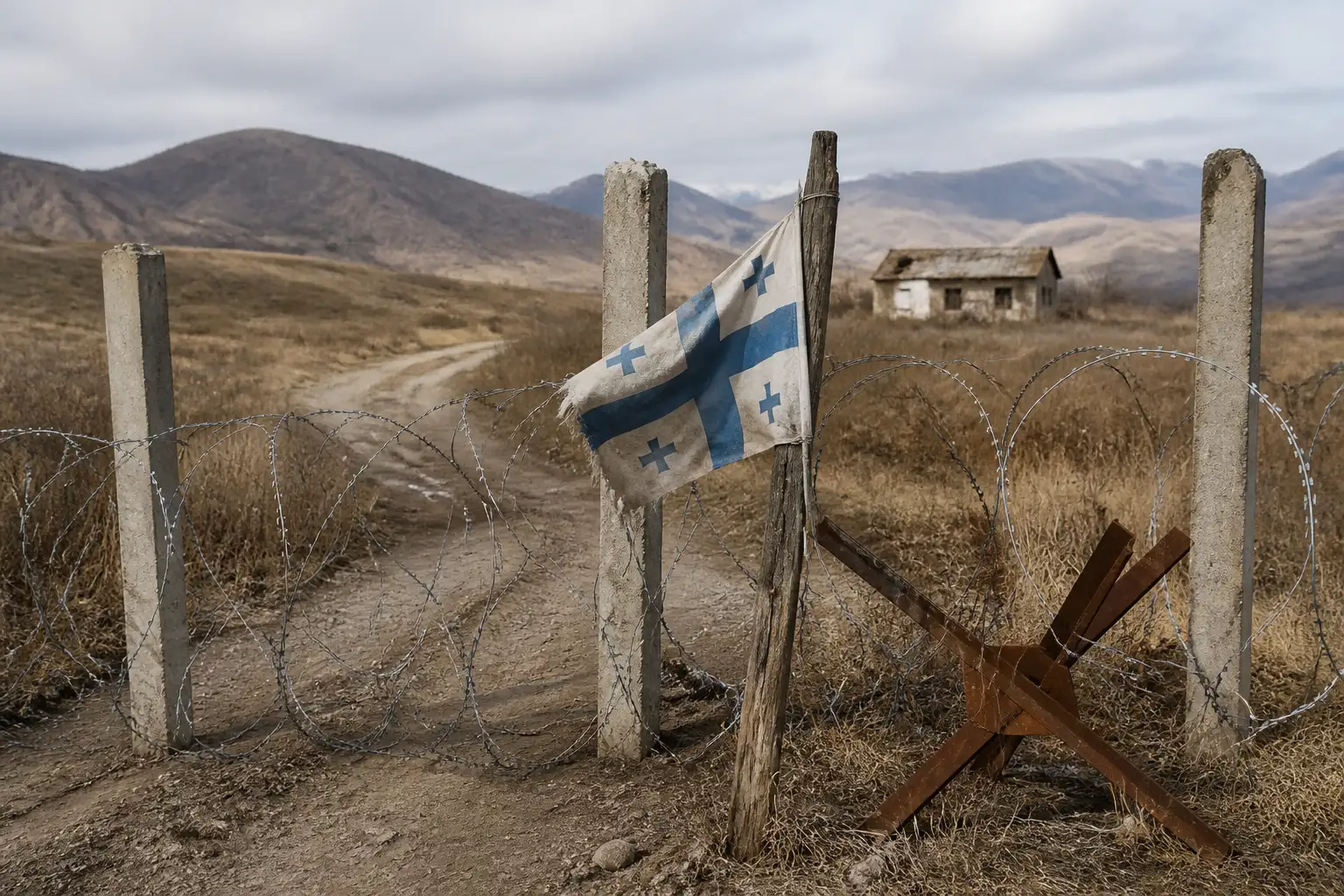
EUMM headquarters sits in Tbilisi with field offices in Mtskheta, Gori and Zugdidi. Monitors work under two memoranda with Georgian ministries that limit Georgian heavy equipment near the lines. Russia has not accepted reciprocal limits. An Incident Prevention and Response Mechanism and a hotline have reduced some flare-ups, yet the fundamental problems remain: the Russian military presence violates the unfulfilled fifth point of the 2008 agreement, and “borderization” (new fences, signs and barriers) steadily changes facts on the ground.
Residents on the Georgian-controlled side still face sudden closures, detentions and the risk of crossing an invisible line that moves. The small remaining ethnic Georgian populations inside the occupied zones report pressure, restricted rights and isolation. Eighteen years on, the monitors can watch the line but cannot enter the territory behind it.
The Recognition Club Shrinks to Four
Russia’s recognition on 26 August 2008 was followed by a short list of other states: Nicaragua, Venezuela, Nauru, and later Syria (with brief recognition from Vanuatu and Tuvalu that was later withdrawn). In July 2026 Nauru formally revoked its recognition and ended diplomatic ties. Only four UN members now treat the two entities as independent: Russia, Nicaragua, Venezuela and Syria.
Georgia and the large majority of the international community continue to regard Abkhazia and South Ossetia as occupied Georgian territory. Recent Western statements on the anniversary reiterated that position and noted deepening Russian integration measures, including a May 2026 “Agreement on Deepening Allied Cooperation” with the South Ossetian de facto authorities and the appointment of a Russian official in a senior local role. Those steps raise the prospect of further annexation in all but name.
The shrinking recognition list does not change the military reality on the ground. It does underline how isolated the original recognition decision remains.
Why Ukraine Keeps Naming 2008
Ukrainian Foreign Minister Andrii Sybiha stated on the anniversary that the 2008 aggression and occupation “directly paved the way for Russia’s aggression against Ukraine.” NATO’s Special Representative for the Caucasus and Central Asia, Kevin Hamilton, called the invasion and subsequent occupation “just as illegal and unacceptable today as they were in 2008” and demanded Russian withdrawal. The U.S. Embassy in Tbilisi, the EU spokesperson, and a joint statement from France, Germany, Italy and the United Kingdom all linked the unfinished business of 2008 to the broader pattern of Russian use of force against neighbours.
The parallel is not only rhetorical. The 2008 operation featured rapid armour thrusts, air power, cyber elements, information claims of genocide that later proved inflated, and the immediate creation of new “independent” entities under Russian protection. The West treated the war as a contained regional crisis. The same toolkit appeared in Crimea and the Donbas in 2014 and in the full-scale invasion of 2022. Estonian diplomat Jonatan Vseviov put it bluntly on the anniversary: Europe heard its first serious wake-up call of the post-Cold War era in Georgia, and “that alarm is still ringing.”
Inside Georgia the anniversary also exposes domestic fault lines. Opposition voices accuse the Georgian Dream government of downplaying the occupation and focusing on “Russophobia” charges against critics. Government figures have in past years shifted emphasis toward blaming the previous United National Movement administration for the outbreak. The external military facts, however, have not changed with the political calendar.
18 years ago today, Russia launched its invasion of Georgia. That attack and Russia’s subsequent occupation of Georgian territory remain just as illegal and unacceptable today as they were in 2008.
Kevin Hamilton of NATO wrote those words on the anniversary. They match the language used by most Western capitals this week.
Memory That Does Not Fade
Every August Georgia remembers the dead and the displaced. Families still cannot return to homes inside the occupation lines. The Geneva talks grind on without a status settlement. The physical barriers keep advancing in places. New generations learn the names of the soldiers and the villages that were emptied.
The pattern set in those five days in 2008 did not stay inside the Caucasus. It became a reusable method: create a crisis, strike hard and fast, freeze the new lines under the cover of a partial ceasefire, recognise proxies, and wait out international attention. Georgia still lives inside the first full version of that method. The rest of Europe has spent the years since discovering that the method travels.
The heroes of 2008 stand in the same long line as earlier Georgian figures who died defending the country. Their sacrifice is commemorated. The strategic problem they faced has simply grown older, not smaller.
Frequently Asked Questions
How many people died in the 2008 Russia-Georgia war?
The EU Independent International Fact-Finding Mission synthesized figures of roughly 850 total deaths. Georgian authorities reported 170 servicemen, 14 police officers and 228 civilians killed; Russia reported 67 servicemen killed; South Ossetian authorities cited 365 dead overall. Thousands more were wounded and more than 100,000 civilians were displaced at the peak.
What were the six points of the 2008 ceasefire?
The Sarkozy-mediated plan required no use of force, a halt to hostilities, humanitarian access, Georgian forces returning to bases, Russian forces withdrawing to pre-war positions in South Ossetia (with temporary security measures until an international mechanism arrived), and the opening of international talks on security and stability for the two regions. The fifth point on Russian withdrawal was never fully implemented.
Which countries still recognize Abkhazia and South Ossetia?
As of late July 2026 only four UN member states maintain recognition: Russia, Nicaragua, Venezuela and Syria. Nauru withdrew its recognition that month. Georgia and the overwhelming majority of the international community continue to regard both territories as part of Georgia under Russian occupation.
What does the EU Monitoring Mission in Georgia actually do?
EUMM is an unarmed civilian mission deployed since October 2008. It patrols areas adjacent to the administrative boundary lines, reports on incidents, supports confidence-building measures, and monitors compliance with the 2008 agreements. It has never been granted access inside Abkhazia or South Ossetia by the de facto authorities.
Did the EU fact-finding mission say Georgia started the war?
The Tagliavini report concluded that Georgia’s sustained artillery attack on Tskhinvali on the night of 7-8 August triggered the open war. It also found that Russia bore substantial blame for violations of international law, a disproportionate response, and actions that went well beyond any claimed peacekeeping role. Both sides were held responsible for different elements of the conflict and its aftermath.