
NEWS
Georgia’s Surprise Puberty Blocker Ban Never Became Law
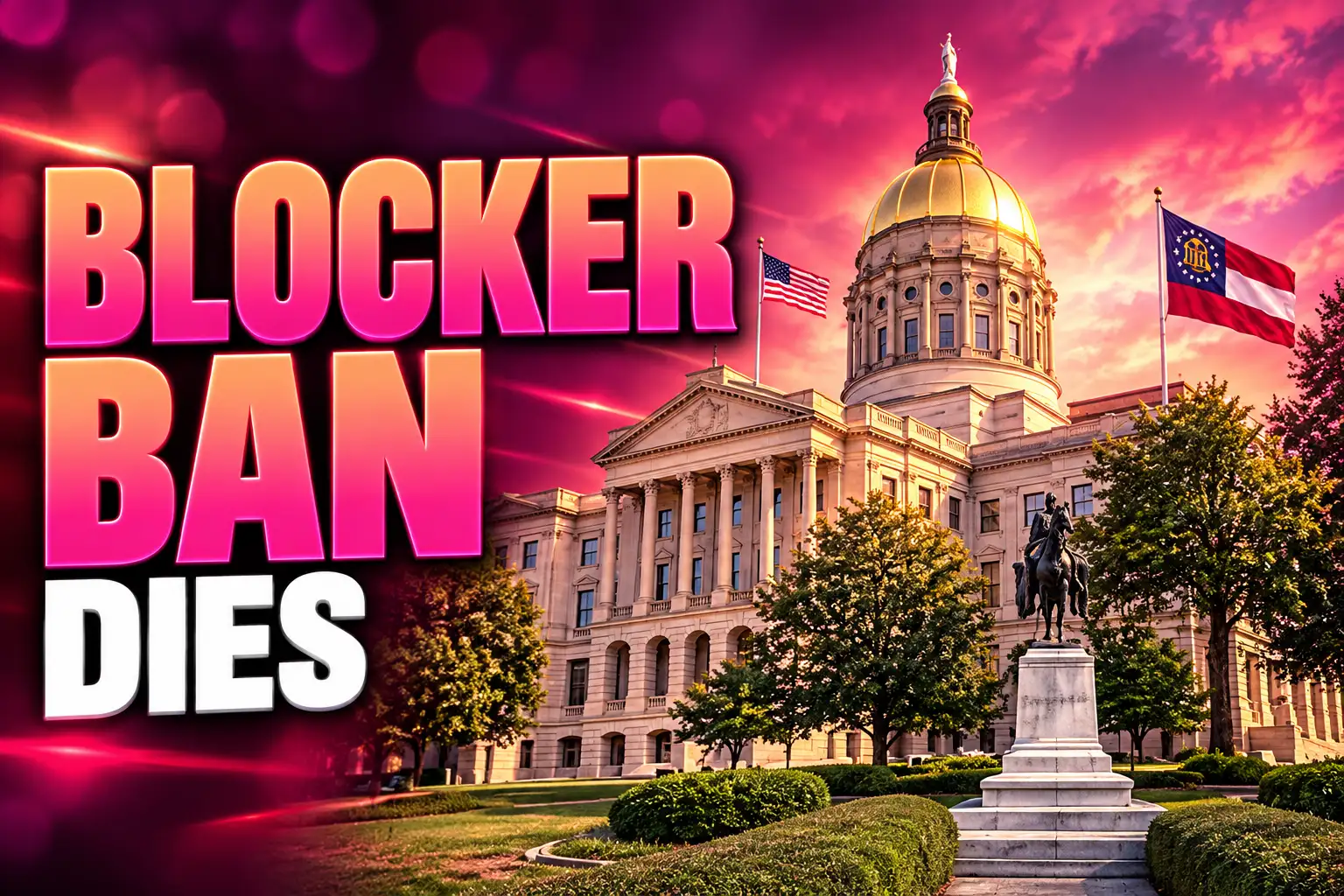
Georgia’s Senate bolted a puberty-blocker ban onto a home-health bill in February. The House never voted, and both measures died at sine die.

Georgia’s Senate voted 30-18 on February 10, 2026, to hang a puberty-blocker ban for minors on a home-health bill. The House never took the package up, and the whole thing died when the session ended on April 2, 2026.
House Bill 54 had already passed both chambers in 2025 as a nursing measure. Senate Republicans called it back, added two gender-care riders, and left Speaker Jon Burns a choice he declined to make.
House Bill 54 Started as a Nursing Measure
Rep. David Clark, a Buford Republican, dropped the bill in the hopper on January 14, 2025, with House Speaker Pro Tem Jan Jones of Milton among the co-sponsors. The text let advanced practice registered nurses and physician assistants order home-health services, write treatment plans, and judge whether equipment and supplies were medically needed, work that Georgia law had reserved for physicians.
It also set continuing education on death certificates and barred the ordering clinician from holding an ownership stake in the agency getting the referral. Rural patients whose care already sat with a nurse practitioner or a physician assistant were the people the sponsors said they were trying to reach.
The House passed that version 177-0 on March 6, 2025. The Senate passed a substitute 54-1 on April 2, 2025, and the House agreed 157-0 two days later. Then the clock ran out on the first year of the biennium, and the file sat in the Senate, still a nursing bill, until February 10.
HOW HOUSE BILL 54 MOVED, THEN STOPPED
| Date | Chamber | Action | Vote |
|---|---|---|---|
| January 14, 2025 | House | Introduced as a home-health bill | – |
| March 6, 2025 | House | Passed substitute | 177-0 |
| April 2, 2025 | Senate | Passed substitute | 54-1 |
| April 4, 2025 | House | Agreed to Senate substitute as amended | 157-0 |
| February 10, 2026 | Senate | Agreed as amended, with gender-care riders | 30-18 |
| April 2, 2026 | House | Session ended; no concurrence vote | – |
House Bill 54’s official status history still ends on that February 10 Senate action. Trackers marked the bill dead in chamber when the biennium closed.
Two Amendments Landed on an Off-Calendar Night
The bill was not on the day’s calendar when the Senate called it up. Sen. Ben Watson, a Savannah Republican who practices internal medicine and geriatrics, offered language inserting “puberty blocking medications” into the 2023 minor-care statute. Sen. Blake Tillery, a Vidalia Republican, added a second rider on state money and state hospitals.
Watson told colleagues the 2023 law had already covered surgery and hormones, and that blockers were “the only thing that lacks being put into the law.” He argued that minors kept on the drugs are “close to 95%” likely to continue a medical transition, and that those who go through puberty are “much less likely” to do so. That figure is his floor claim, not a finding in the bill text.
“If you’re an adult and you choose to do that, then that is on you,” Watson said, drawing the line at age 18.
Both riders passed 30-18, with eight senators not voting or excused. The amended bill then passed on the same split. Democrats called the move an election-year dodge. Sen. Elena Parent, an Atlanta Democrat, said culture-war bills are “the easy things to do, to pick on vulnerable populations.” Sen. Josh McLaurin, a Sandy Springs Democrat running for lieutenant governor, told Republicans the playbook “maybe it worked in 2024” and that “voters are tired of it.”
Sen. RaShaun Kemp, an Atlanta Democrat and one of two openly gay members of the chamber, warned that the fight would not stay cheap. “Legislative fear does not reduce the cost of Georgians’ everyday lives,” Kemp said. He pointed to discrimination claims involving transgender people that had already cost taxpayers at least $4.1 million since 2015.
WHAT THE TWO RIDERS WOULD HAVE DONE
- Watson’s amendment: Doctors would have been barred from prescribing puberty blockers to minors for gender dysphoria, by adding those drugs to the 2023 list of banned therapies.
- Tillery’s amendment: The state health benefit plan could not have covered gender-affirming care for employees or dependents, and state-owned hospitals and state-employed clinicians could not have provided it.
- Adults: Watson’s drug ban stopped at 18. Tillery’s funding and hospital ban did not, which is why state workers sat in the blast radius alongside minors.
Tillery’s text tracked Senate Bill 39, which the Senate passed in 2025 and the House pulled back on April 4, 2025, without a floor vote. The February maneuver tried to finish that job on a bill the House had already loved.
Georgia’s 2023 Law Still Allows Puberty Blockers
The hole Watson was trying to close is not a rumor. It is the statute Georgia has lived with since Gov. Brian Kemp signed Senate Bill 140.
That law, effective July 1, 2023, prohibits surgeries and hormone therapies for minors treated for gender dysphoria. It leaves puberty blockers off the banned list. Minors already on hormone therapy before July 1, 2023, may continue. There are exceptions for disorders of sex development, partial androgen insensitivity, and treatment of other medical conditions. A physician who breaks the rule answers to the Georgia Composite Medical Board.
A federal judge briefly blocked the hormone ban in August 2023, then stayed her own order after the 11th Circuit allowed Alabama to enforce a similar law. The Georgia statute has been in force since that stay.
Watson himself sold the 2023 package as a pause that gave families time. He came back in the 2024 and 2025 sessions with standalone blocker bills that cleared the Senate and died in the House. On February 10 he stopped waiting for a clean vehicle.
FROM THE 2023 COMPROMISE TO A DEAD BILL
- July 1, 2023: Senate Bill 140 takes effect, banning surgeries and new hormone therapy for minors and leaving puberty blockers legal.
- 2024 and 2025 sessions: Watson’s standalone blocker bills pass the Senate and stall in the House.
- April 4, 2025: The House withdraws Senate Bill 39, Tillery’s state-plan and state-hospital ban, after a committee report.
- February 10, 2026: The Senate loads both ideas onto House Bill 54 and sends the hybrid back across the rotunda.
- April 2, 2026: The General Assembly adjourns. The House has not voted on the amended bill.
Georgia still regulates youth gender medicine the way it did on July 1, 2023. The remaining legal path for a minor with gender dysphoria is the one Watson called unfinished business: blockers, then a wait until 18 for hormones or surgery, unless an exception in the 2023 law already applies.
Speaker Burns Never Brought the Bill Back
Lt. Gov. Burt Jones, a Republican running for governor, praised the vote in a written statement the same afternoon. He said the Senate had kept “radical medical procedures out of our children’s hospitals” and that House Bill 54 would now go to the House “for final passage.”
The House had a different calendar in mind. Kayla Green, communications director for Speaker Jon Burns, a Newington Republican, answered that night with a list that did not include the riders.
The House is going to remain focused on what Georgians have told us matters the most, and that’s delivering meaningful property tax relief, strengthening healthcare and expanding access to quality education.
Kayla Green, communications director for House Speaker Jon Burns, February 10, 2026
Burns did not have to vote the bill down. He only had to leave it off the floor. Between February 10 and adjournment, no House concurrence appears in the record. Jones had a clip. Watson had a roll call. Neither had a statute.
National posts treated the 30-18 vote as if the drugs were already gone. Months later the same question was still being asked of a Republican legislature and a Republican governor: why Georgia had not banned puberty blockers. The holdup was not a Democratic veto. It was a House that would not reopen a nursing file to finish a fight it had already ducked in 2024 and 2025.
Home-Health Patients Lost Their Vehicle Too
The people who needed House Bill 54 in January 2025 were not in the gender-care argument. They were patients whose home-health orders still had to run through a physician, and the nurses and physician assistants who wanted to write those orders themselves.
Jones of Milton had put her name on that original text. The House had passed it without a single no. Once Watson and Tillery rewrote the core, agreeing to the Senate version meant swallowing a blocker ban and a state-plan cutoff that House leaders had already set aside. Rejecting the riders meant killing the nursing language with them, unless someone peeled the bill back apart, which never happened in public.
WHO SANK WITH THE PACKAGE
- Home-health orders: APRNs and physician assistants still cannot order those services the way HB 54 would have allowed, because no later 2026 bill is on the books doing that job.
- State employees: The state health benefit plan was not rewritten. Tillery’s cutoff died with the vehicle.
- Transgender minors: The 2023 rules stay in place. Blockers remain available for gender dysphoria; new hormone therapy and surgery do not, with the exceptions already in statute.
A veteran Georgia nurse practitioner, writing after the Senate vote, called the rewritten file a twist of a measure that had been meant to speed care. That is the mechanic of a hostage bill: the original constituency cannot get its language without taking the riders, and the rider authors cannot get a House vote without the original constituency. In this case nobody got a law.
What the Medical Groups Still Dispute
Watson leaned on a February 3 statement from the American Society of Plastic Surgeons that cited “substantial uncertainty” about the long-term benefits and harms of hormone therapy and puberty blockers in children and adolescents. He has also said blockers change bone structure and that using them to interrupt a “natural process” breaks a physician’s duty to do no harm.
Major pediatric and mental-health groups do not share that reading. The American Academy of Pediatrics, in its pediatric policy on transgender youth care, treats puberty blockers, hormones, and surgery as care that can be appropriate for gender dysphoria. The Pediatric Endocrine Society and the American Psychological Association have taken the same position, describing those treatments as safe and effective when they are used that way.
Bentley Hudgins, Georgia state director of the Human Rights Campaign, put the Senate night in political terms. “They couldn’t get their divisive agenda across the finish line last year, so they doubled down on treating children and trans adults as less than,” Hudgins said. “Bullies don’t belong in government.”
The medical split is the same one the House has now declined to referee three times, if you count the 2024 and 2025 blocker bills and the February riders as one argument. Watson’s 95% line and the academy policies cannot both be the last word. In Georgia, the last word is still the 2023 statute, because the 2026 text never reached Kemp.
The Ban Jones Celebrated Never Reached Kemp
The 2026 session of the 159th General Assembly session convened in January and adjourned on April 2. It was the second year of the biennium, so a bill that did not pass cannot be carried into 2027. Anyone who wants a blocker ban, or who still wants nurses to order home health, starts over with a new number.
I am proud to stand with the majority of the country that is taking action to protect our youth. We listened to parents, doctors, and concerned citizens, who wanted to keep radical medical procedures out of our children’s hospitals. I will always fight for Georgia values and the safety of our kids.
Lt. Gov. Burt Jones, written statement, February 10, 2026
Jones was describing a Senate result. The House never sent him, or Kemp, a bill to match the statement. Puberty blockers for gender dysphoria remain legal for minors in Georgia, on the terms Senate Bill 140 left in place on July 1, 2023, and House Bill 54 is a closed file.
Frequently Asked Questions
Did Georgia Ban Puberty Blockers for Minors in 2026?
No. The Senate attached that ban to House Bill 54 on February 10, 2026, and the House never voted on the amended bill before sine die, so the text never reached the governor and never became law.
Can Lawmakers Revive House Bill 54 in 2027?
Not as the same bill. Georgia’s 2025-2026 biennium ended on April 2, 2026, and unpassed legislation dies with that cycle, so a blocker ban or the home-health orders would have to be introduced again under a new bill number.
What Does Georgia’s 2023 Law Already Prohibit?
Senate Bill 140 bars sex-reassignment surgeries and hormone replacement therapies for minors treated for gender dysphoria, with exceptions for disorders of sex development, other medical conditions, and patients already on hormones before July 1, 2023, and it leaves puberty blockers off that banned list.
Would the Tillery Rider Have Stopped Adults From Buying Their Own Coverage?
No. The adopted Senate language barred state funds and state facilities from covering or providing gender-affirming care, and it also said the new code section should not be read as stopping an individual, a private entity, or a local government from buying separate coverage.
What Home-Health Change Died With the Riders?
Advanced practice registered nurses and physician assistants still cannot order home-health services, write those treatment plans, or certify medical necessity for equipment the way the original House Bill 54 allowed, including the rule that the ordering clinician could not own a piece of the agency receiving the referral.
Disclaimer: This article is news reporting on Georgia legislation and medical-policy debates, and it is for information only. It is not medical advice about puberty blockers, hormone therapy, or any other treatment, and it is not legal advice about Georgia statutes, insurance coverage, or potential lawsuits. Readers who need care decisions or legal guidance should consult a licensed physician and a qualified attorney licensed in Georgia before acting on anything described here. Vote counts, bill statuses, and clinical-organization statements reflect the official records and source materials used for this report and can change if a future session revisits the same ground.

Greed Held After a $697 Million Crypto Long Flush

Fed Minutes Keep a Year-End Rate Hike Alive

A Nanny-Cam Tape Follows Tyreek Hill Into Free Agency

Star Wars Galactic Racer Makes a Crash End the Tour

Amazon Puts Apple’s June MacBook Prices Back on Sale

Sophia Wootten Turns the Miss Georgia Crown Toward Cleft Care

The iPhone 16 Pro Flipkart Cut Did Not Last

Microsoft Prints Azure’s $29.42 Billion Quarter and Shrinks the Map

UltraTech’s Ultravolt Launch Puts Cable Multiples on Trial

IXI Autofocus Glasses Still Lack a European CE Mark
-
 NEWS1 year ago
The iPhone 16 Pro Flipkart Cut Did Not Last
-
 ENTERTAINMENT4 months ago
Sophia Wootten Turns the Miss Georgia Crown Toward Cleft Care
-
 BUSINESS1 month ago
UltraTech’s Ultravolt Launch Puts Cable Multiples on Trial
-
 NEWS1 month ago
Microsoft Prints Azure’s $29.42 Billion Quarter and Shrinks the Map
-
 NEWS9 months ago
IXI Autofocus Glasses Still Lack a European CE Mark
-

 NEWS3 months ago
Little St. Simons Island Hatches Loggerheads at 72.4 Percent
-

 NEWS4 months ago
Georgia Beach Bacteria List Leaves Swim Areas Open
-

 NEWS3 years ago
Eyal Waldman Keeps a Two-State Bet After Gaza