
NEWS
A Child Drowned 10 Minutes Off a Lake Chatuge Rental
A Cumming 5-year-old drowned in Lake Chatuge after 10 minutes away from a rental, the kind of gap backyard pool fences are meant to stop.

A 5-year-old boy from Cumming, Georgia drowned in Lake Chatuge on July 15, 2025, after about 10 minutes away from a vacation rental. Deputies reached a house on Stonecrest Circle in Hiawassee around 12:30 p.m. and found a family member had just pulled him from the water.
The Towns County Sheriff’s Office ruled the death accidental. Home pools are told to sit behind a four-foot fence. A lake at the edge of a rented yard is not.
CPR on the Bank at Stonecrest Circle
The family was visiting from Cumming and staying in a rental on the Hiawassee side of the lake, the sheriff’s office said. Investigation found the boy had wandered into the water, where a relative found him.
Deputies started CPR with fire crews who arrived on the scene, then took the child to Chatuge Regional Hospital. He died that afternoon. Authorities did not release his name.
Towns County Coroner Tamela Cooper said the boy fell in and could not get out on his own.
They threw everything they had into saving him, but in the end, he was just down too long.
Tamela Cooper, Towns County coroner
Cooper also said EMS, Chatuge Regional Hospital, and the sheriff’s office “gave it their all.” The first public accounts stopped at those 10 minutes and the rental address. They did not ask whether a lake yard is held to the same barrier standard as a backyard pool.
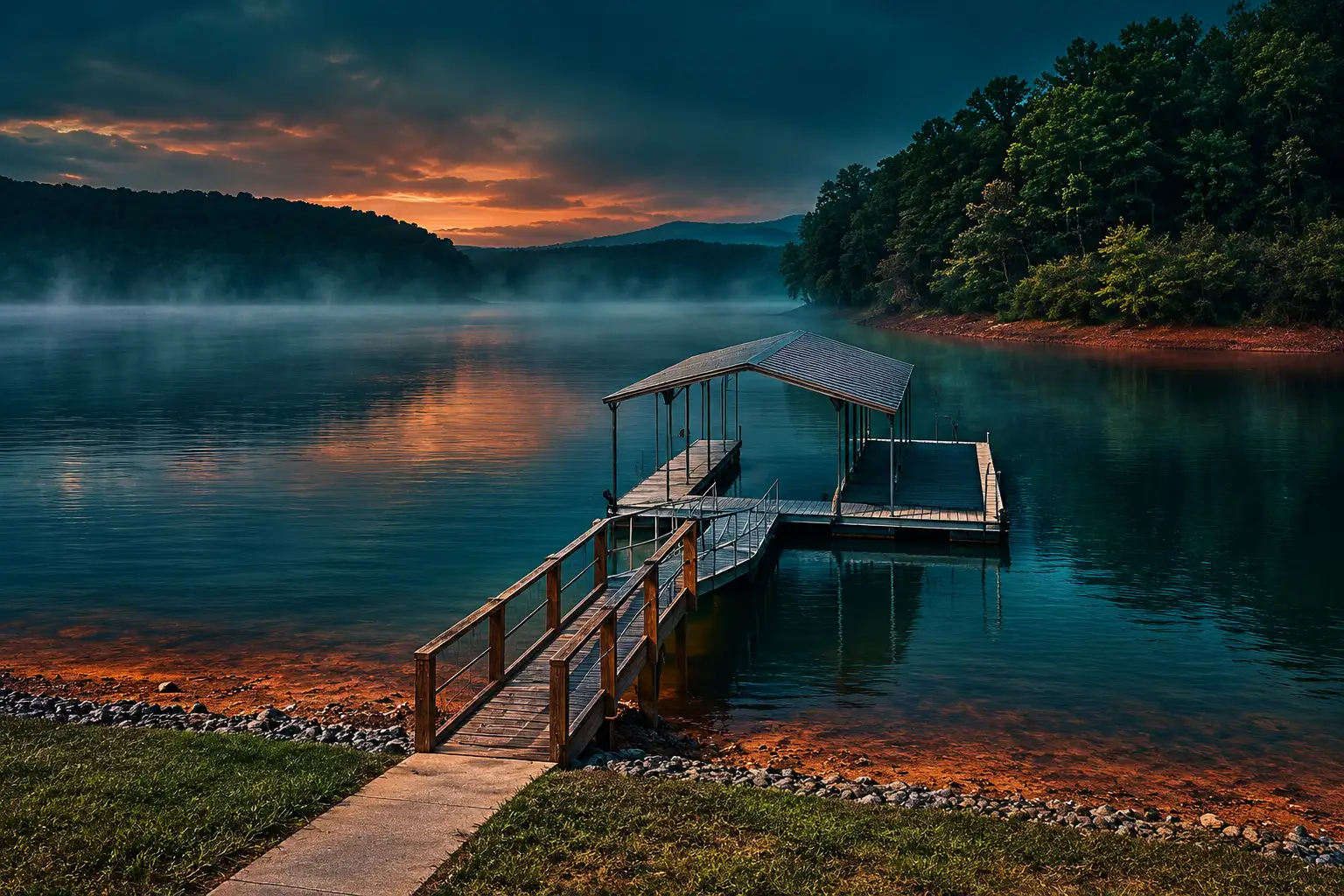
He Was Missing About 10 Minutes
The sheriff’s office said the child had been missing for about 10 minutes and had “apparently had wandered into the lake.” The 911 call came around 12:30 p.m., in the middle of a vacation day, from a house the family did not live in year-round.
THE AFTERNOON OF JULY 15, 2025
- Around 12:30 p.m.: Towns County deputies respond to a missing-child call at a rental on Stonecrest Circle in Hiawassee.
- On arrival: A family member has already pulled the 5-year-old from Lake Chatuge.
- At the bank: Deputies and fire crews begin CPR.
- Later that afternoon: The boy dies at Chatuge Regional Hospital. Cooper rules the drowning accidental. His name is not released.
The U.S. Consumer Product Safety Commission, writing about pools and spas, says most young victims had been missing for 5 minutes or less when they were found, and that searchers often waste time looking anywhere but in the water. This case ran longer than that pool average, on a lake, after a walk from a rented house.
The Fence Rule That Stops at Pools
The Centers for Disease Control and Prevention tells families that a home pool needs a four-sided fence at least four feet high, fully enclosing the water and separating it from the house, with a self-closing, self-latching gate. That is the physical answer to a child who slips out a door.
A natural lake at the foot of a rental lawn is not a pool. Georgia’s pool-barrier thinking does not automatically follow the grass down to a TVA shoreline. Safe Kids Worldwide, which writes for short-term rental hosts, treats the lake case as a recommendation, not a code inspection: consider a fence, say in the listing what is missing, and tell guests to check the waterfront first if a child vanishes.
THE POOL RULE AND THE LAKE YARD
| Safeguard | Backyard pool | Lakeside rental yard |
|---|---|---|
| Four-foot isolation fence | CDC standard for home pools | Safe Kids suggestion only |
| Self-latching gate | Part of the pool-barrier model | Optional for hosts |
| If a child is missing | Look in the pool first, CPSC says | Check the gate and waterfront first, Safe Kids says |
| Lifeguard | Some public pools | None on private Chatuge docks |
Nothing in the sheriff’s file, as released, describes a fence, a door alarm, or a locked gate at the Stonecrest Circle house. The point is the rule that was never written for that kind of yard, not a claim about one latch on one lot.
Why Children Drown When No One Expects Water
Safe Kids Worldwide puts the pattern in one line that matches this call time almost exactly. About 70% of fatal drownings happen when a child is not expected to be around the water, “such as after everyone has gone into the house for lunch and a child wanders outside.” Drowning is silent, the group says, and a child can drown in less than a minute. Boys account for almost 75% of fatal drownings.
The CDC’s summer swim guidance says drowning is the leading cause of death for children 1 to 4 and the second leading cause of unintentional injury death for children 5 to 14. It also says about 40 percent of drowning deaths among children 5 to 14 occur in natural water. An adult, the agency says, should stay within an arm’s length of a child who is in or near water, and should drop the phone.
WHAT THE DROWNING NUMBERS SHOW
- Ages 1 to 4: Drowning is the leading cause of death, the CDC says.
- Ages 5 to 14: It is the second leading cause of unintentional injury death, and about 40% of those deaths are in lakes, rivers, or other natural water.
- After a death: For every child under 18 who dies from drowning, another 7 reach an emergency department for a non-fatal drowning, and nearly 40% of those visits end in a hospital stay, about three times the follow-up rate for other unintentional injuries.
- Pool and spa cases: CPSC counts 379 fatal drownings a year among children younger than 15, about 75% of them younger than 5, more than half tied to a gap in adult supervision.
Floaties and water wings do not close that gap, the CDC says. A U.S. Coast Guard-approved life jacket, fitted and fastened, is the device the agency backs around open water. Touch supervision, meaning an adult close enough to grab, is the human layer. A rented kitchen with a new floor plan and a lake out the back door asks for both at once.
Most of Chatuge’s Shoreline Is Private
Lake Chatuge is a Tennessee Valley Authority reservoir on the Georgia-North Carolina line, marketed for boating, swimming, skiing, and fishing. Towns County’s tourism office counts 132 miles of shoreline against the Appalachian ridge. Most of that shore is in private hands, with docks, campgrounds, marinas, and tourist lodging, not a guarded public beach.
The county does run a recreational beach on Highway 76, with a roped swim area, a playground, and picnic tables. There is no lifeguard on duty. Private docks have even less. A child who walks out of a rental is not walking toward a chair with a whistle. He is walking toward open water that the listing sold as the view.
A month after the boy died, Georgia Department of Natural Resources game wardens recovered 25-year-old Brek Lewis Green of Woodstock from a Chatuge cove. Green had been on a float with a friend around 4 a.m. on August 16, 2025. The friend went inside; when he came back, Green was gone. Wardens found him around 11:45 a.m. in about 13 feet of water, 35 to 40 feet from a dock. That death was a night swim, not a midday wander from a rental, and it still happened on the same private shore with no public watch.
What Lakeside Hosts Are Told to Put in Writing
Safe Kids Worldwide writes separate checklists for pool rentals and for homes that open onto an ocean, lake, or river. For open water, the first item is to consider installing a four-foot fence with a self-latching gate. The rest of the list is cheaper, and it is aimed at the 10-minute hole this family fell into.
WHAT SAFE KIDS TELLS LAKESIDE HOSTS
- The listing: Say in welcome materials which safety features exist and which do not, including the absence of a locking gate or door alarms.
- The walkthrough: Ask guests, including children, to map every access point to the water on arrival.
- The gear: If the host provides kayaks or other water toys, stock Coast Guard-approved life jackets in several sizes. Water wings do not count.
- The missing-child rule: Tell guests to check the gate and the waterfront first, not the bedrooms and not the cars.
- The watcher: Hand over a Water Watcher card so one adult, off the phone and off alcohol, owns a short shift of eyes on the water.
Guests get a matching job: walk the lot on day one, keep weak swimmers in arm’s reach, and bring a jacket if the house does not stock one. That is not a substitute for a fence. It is what the rental trade offers instead of one.
The boy’s name was never released. Cooper’s finding still stands as an accident. The house on Stonecrest Circle sat on a lake that pool law does not fence, and about 10 minutes was enough.
Frequently Asked Questions
Who Built Lake Chatuge, and Where Is the Public Beach?
The Tennessee Valley Authority built the reservoir in 1942 for flood control, power, and recreation. Towns County’s public swim spot is the recreational beach at 908 U.S. Highway 76W in Hiawassee, about 2 miles from the town square, with a roped swim area and no lifeguard.
Does Georgia Require a Fence Between a Vacation Rental and a Lake?
No statewide rule copies the four-foot isolation fence used for home pools onto a natural shoreline. Paid overnight guests are generally treated as invitees, which means a host can still owe a duty to keep the property reasonably safe, but that duty is argued after an injury, not inspected like a pool gate before check-in.
How Many Georgia Children Cannot Swim on Their Own?
The Emory Center for Child Health Policy surveyed about 1,000 Georgia parents between October 30 and November 24, 2025, and reported in May 2026 that one in three Georgia children cannot swim on their own in deep water, even though nearly 90% of parents said learning to swim matters. The survey does not describe the boy who died on Chatuge.
When Does Georgia Require Children to Wear Life Jackets on a Lake?
Georgia law requires children under 13 to wear a life jacket on boats. That rule does not cover a child who walks from a rental yard into the water, which is why Safe Kids and the CDC separate boat law from shore supervision and fitted jackets for non-swimmers on the bank.

Greed Held After a $697 Million Crypto Long Flush

Fed Minutes Keep a Year-End Rate Hike Alive

A Nanny-Cam Tape Follows Tyreek Hill Into Free Agency

Star Wars Galactic Racer Makes a Crash End the Tour

Amazon Puts Apple’s June MacBook Prices Back on Sale

Sophia Wootten Turns the Miss Georgia Crown Toward Cleft Care

The iPhone 16 Pro Flipkart Cut Did Not Last

Georgia Beach Bacteria List Leaves Swim Areas Open

UltraTech’s Ultravolt Launch Puts Cable Multiples on Trial

IXI Autofocus Glasses Still Lack a European CE Mark
-
 ENTERTAINMENT4 months ago
Sophia Wootten Turns the Miss Georgia Crown Toward Cleft Care
-
 NEWS4 months ago
Georgia Beach Bacteria List Leaves Swim Areas Open
-
 NEWS1 year ago
The iPhone 16 Pro Flipkart Cut Did Not Last
-
 BUSINESS2 months ago
UltraTech’s Ultravolt Launch Puts Cable Multiples on Trial
-

 NEWS2 months ago
Microsoft Prints Azure’s $29.42 Billion Quarter and Shrinks the Map
-
 NEWS9 months ago
IXI Autofocus Glasses Still Lack a European CE Mark
-

 NEWS3 months ago
Little St. Simons Island Hatches Loggerheads at 72.4 Percent
-

 NEWS3 months ago
OnePlus Ends OxygenOS After Quitting US and Europe