
BUSINESS
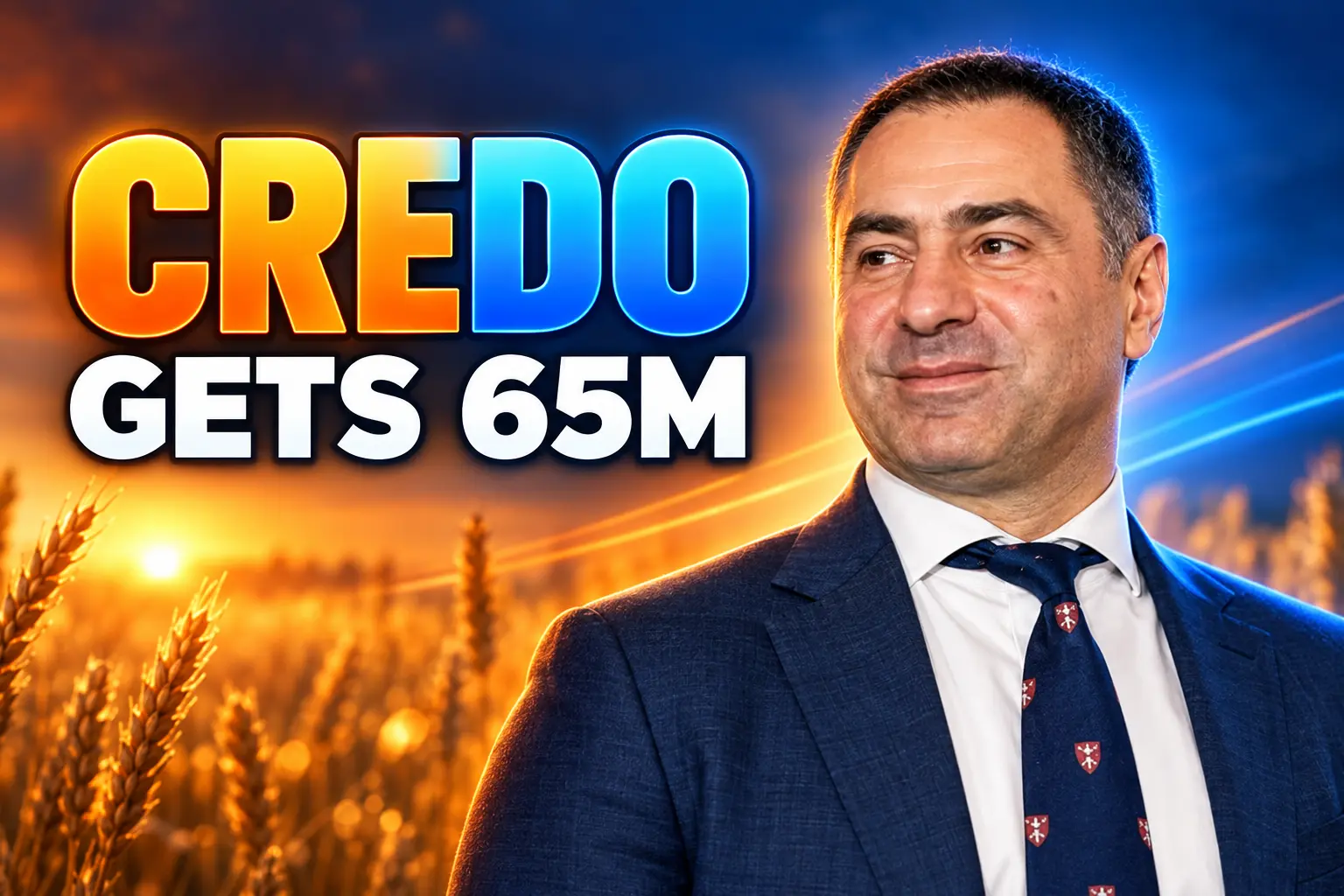
Credo Gets GEL 65 Million as Georgia Still Imports Wheat
ADB’s GEL 65 million Credo loan funds women-led farm credit in lari, while Georgia’s wheat self-sufficiency sits at 19% and a larger 2026 line follows.

The Asian Development Bank signed a GEL 65 million (about $25 million) loan with Credo Bank on 19 February 2024 for farm businesses led by women. The money is in lari, with a grant of up to $700,000 for rural outreach and climate-smart farming.
The line is real, and it is small next to Georgia’s food import bill. Credo already booked hundreds of thousands of women borrowers. Two years later ADB approved a larger lari loan to the same bank, while official wheat output still covers only a fifth of what the country eats.
A GEL 65 Million Line for Village Farms
ADB’s board paper, project 57137-001, put a senior loan of up to GEL 65 million to Credo Bank JSC in front of directors in November 2023. The public signing was in Tbilisi on 19 February 2024, later than the paper’s fourth-quarter 2023 target. Onlending is meant for micro, small and medium firms in farm production, processing and trade, with a stated focus on women.
THE 2024 CREDO FACILITY
| Item | Term |
|---|---|
| Amount | GEL 65 million (about $25 million) |
| Tenor | Two equal 3-year and 5-year tranches |
| Currency | Georgian lari |
| Grant | Up to $700,000 |
| Use | Agri production, processing, trade, women borrowers |
Suzanne Gaboury, then ADB director general for private sector operations, tied the loan to a financing gap she said still sits in front of women who already work the land. Zaza Pirtskhelava, Credo’s chief executive, called the deal a landmark in a partnership he put at more than GEL 185 million of earlier ADB money.
Women account for over a third of the country’s agricultural employment and agricultural holdings ownership but remain underserved in terms of accessing financial assistance. Credo is uniquely focused on closing this financing gap.
Suzanne Gaboury, ADB Director General for Private Sector Operations, Tbilisi signing
ADB’s own announcement on X framed the same package as support for domestic food production and women-led firms.
#ADBNews: We have joined forces with Credo Bank to promote domestic food production in Georgia and support lending activities to small and medium-sized enterprises, with a focus on women-led companies. https://t.co/wcFTyjCWbV pic.twitter.com/PZellurR0k
— Asian Development Bank (@ADB_HQ) February 19, 2024
Agriculture Gets 2.3% of Bank Credit
The board paper’s food-security case was written against the grain shock after Russia’s 2022 invasion of Ukraine. Households were already putting 46% of 2022 income on food. ADB put Georgia’s overall food self-sufficiency at 17% from 2015 to 2021, a blended figure that is not the same as the crop-by-crop ratios the statistics office publishes.
The credit math is harsher than the press line. From 2017 to mid-2023, agriculture’s 2.3% share of bank credit was about one-third of the sector’s 7.5% average share of GDP in 2017-2022. Farm work still provided 19% of jobs in 2021. Women were 35% of that farm workforce, owned 32% of holdings, and held 18% of the land those holdings operated. The land figure is the collateral problem in one number: banks want title, and women hold less of it.
National Statistics Office tables show how little a village loan book can move the import bill. The 2025 wheat self-sufficiency ratio of 19% is below the 22% reading for 2024. Dairy and vegetables have drifted the wrong way for a decade.
GEORGIA FOOD SELF-SUFFICIENCY
| Product | 2014 | 2024 | 2025 |
|---|---|---|---|
| Wheat | 7% | 22% | 19% |
| Vegetables | 66% | 49% | 48% |
| Meat | 43% | 47% | 47% |
| Milk and dairy | 90% | 74% | 68% |
Maize covered 78% of need in 2025, poultry meat 30%, grapes 158%. The loan cannot be blamed for a one-year wheat dip. It also cannot be credited with closing a gap that is measured in hundreds of thousands of tonnes. At Credo’s average loan size of GEL 3,900, GEL 65 million funds about 16,700 loans of that size, equal to 3.6% of the bank’s then GEL 1.8 billion book.
Credo Already Lends to Women Farmers
Credo is Georgia’s fifth-largest commercial bank, built as a social-impact lender rather than a Tbilisi corporate shop. The source deal note put 87 rural branches on the map. ADB’s paper, using mid-2023 figures, counted 360,000 borrowers, 53% of them women, and a book of GEL 1.8 billion. Rural clients were 47% of that book, and 85% of those rural loans were farmers.
CREDO AT THE TIME OF THE DEAL
- Borrowers: 360,000 clients, 53% women, on a GEL 1.8 billion loan book.
- Farm reach: 223,000 farmer clients as of June 2023, beside 188,000 women-owned or led firms that ADB counted as 53% of the total client base.
- Ticket size: Average loan GEL 3,900, typical of smallholder production, processing and trade.
- Later footprint: By December 2024, after a shareholder sale, the bank was described with 94 service centers and more than 480,000 customers.
Those figures are why the “women get access” headline understates the bank ADB chose. Credo was already the rural women-and-farm pipe. The 2024 line buys more of the same balance sheet, with longer lari tenor and a training budget, not a new client class from scratch.
Ownership matches that job. At 31 December 2025, Access Credo GmbH held 50.26%, Gojo & Company 33.23%, France’s Proparco 14.69%, and the management board 1.83%. Access Credo pools development investors including British International Investment, the European Investment Bank, the International Finance Corporation and KfW. Gojo, a Japanese impact group, bought a 16.8% stake in December 2024 and then raised it as Dutch Triodos funds left. This is a DFI-owned lender taking another DFI liability.
Why the Loan Is in Lari
The product that changes borrower risk is the currency, not the press photo. ADB said it would raise lari in Georgia and onlend those proceeds so Credo does not pass dollar or euro risk to farm households that earn in lari. The board paper found foreign-currency loans still made up 66% of business lending, a mismatch for firms with no hedge.
Natia Turnava, then acting governor of the National Bank of Georgia, attended the signing and treated the funding method as a capital-markets event as much as a farm-credit event. She pointed to ADB’s local-currency bonds to fund the loan as support for the domestic market, and linked the facility to the regulator’s push to steer money into environmental and social aims.
The fact that the Asian Development Bank issues bonds denominated in local currency is further proof of its support for Georgia’s capital markets as an advanced driver of development.
Natia Turnava, Acting Governor, National Bank of Georgia, 19 February 2024 signing
A public print of a 2024 dual-tranche ADB lari issue tied to this exact GEL 65 million line was not posted as a completed auction in the records reviewed for this article. ADB has used that method with Credo before, including a GEL 60 million housing loan in 2019 split into three-year and five-year pieces. The 2024 paper copies that tenor split. Until a new auction notice appears, the borrower protection is the lari denomination of the bank loan, not a confirmed bond sale.
That is also why this file never became a farm-gate fight. A wholesale line of this size moves through funding desks and a gender action plan. The live constraint ADB named is still title, paperwork and small tickets, not a rate Georgian Twitter argued about.
Village Agents and a $700,000 Grant
The grant of up to $700,000 is the part of the package that outlasts a five-year tranche if Credo actually spends it. The attached technical assistance, project 57137-002, is listed as active. ADB said it would widen digital rural coverage, push climate-resilient practices, and raise women’s financial and digital literacy in remote villages.
The gender action plan in the board paper is more operational than the signing quotes. It builds on earlier Credo gender plans rather than starting from zero.
WHAT THE GENDER PLAN TOLD CREDO TO DO
- Portfolio: Raise the outstanding stock of loans to women-owned or led farm firms.
- Headcount: Raise the number of those women borrowers and the yearly sum paid out to them.
- Village agents: Hire new agents, half of them women, with recruitment slated from the first quarter of 2025.
- Skills: Give women borrowers digital business training and train women staff on mixed branch and phone banking.
- Climate: Train women farm clients in climate-resilient methods.
The paper also scheduled loan payout to Credo by the fourth quarter of 2024. Those dates are now in the past. ADB has not posted a public completion note that confirms how many agents were hired or how much of the GEL 65 million reached farm ledgers. The plan is the record. The scorecard is not.
ADB Came Back With GEL 120 Million
The 2024 line sits in a stack, not a one-off. On 29 January 2021 ADB and Credo signed a $4 million loan for farm MSMEs, low-income farm households, women-owned firms and agri-tourism. In 2019 ADB put GEL 60 million into Credo for rural home and mortgage products, again in lari. An earlier women-focused rural inclusion grant ran beside those loans.
On 25 May 2026 ADB approved a GEL 120 million inclusion loan to Credo, project 59276-001, approval number 4782. That sequel aims at a shortage of longer-term lari and at MSMEs outside Tbilisi, including women. ADB tagged it “some gender elements,” a lighter gender label than the 2024 project’s gender-equity theme. On 19 June 2026 the Council of Europe Development Bank approved a €12 million MSME loan to Credo, again with a rural and women-owned emphasis.
CREDO’S DEVELOPMENT-BANK DATES
- 8 November 2023: ADB President Masatsugu Asakawa recommends the GEL 65 million senior loan.
- 19 February 2024: ADB and Credo sign the GEL 65 million facility in Tbilisi.
- Fourth quarter 2024: Board paper schedules ADB payout of the loan to Credo.
- First quarter 2025: Board paper schedules hiring of new village agents, half of them women.
- 25 May 2026: ADB approves a GEL 120 million inclusion loan to Credo.
- 19 June 2026: The Council of Europe Development Bank approves €12 million for Credo MSMEs.
GEL 120 million is almost double the 2024 farm line and is not reserved for agriculture. That is the tell. ADB’s repeat business with Credo is long lari for a rural MSME bank whose owners already are development institutions. The women-and-food wrapping on the 2024 paper was accurate about the client base. It overstated what 16,700 tickets of GEL 3,900 can do to a wheat ratio that was 7% in 2014 and 19% in 2025.
Geostat’s 2025 wheat ratio is 19%. The May 2026 GEL 120 million line to the same bank is already approved.
Frequently Asked Questions
How Did ADB Structure the GEL 65 Million Credo Loan?
The November 2023 board paper describes a senior loan from ADB ordinary capital resources, split into two equal 3-year and 5-year tranches, under project 57137-001. President Masatsugu Asakawa signed the recommendation on 8 November 2023. The attached grant is listed in that paper’s monitoring framework at $700,000 from the Technical Assistance Special Fund.
Who Owns Credo Bank After the 2024 and 2025 Share Sales?
Credo’s 31 December 2025 accounts list Access Credo GmbH at 50.26%, Gojo & Company at 33.23%, Proparco at 14.69%, and the management board at 1.83%. Access Credo was set up to hold stakes for investors that have included British International Investment, the European Investment Bank, the International Finance Corporation, KfW, LFS Advisory, the Omidyar-Tufts Active Citizen Trust, and funds once managed by responsAbility and Triodos.
Did Georgia Produce More of Its Own Wheat After 2014?
The statistics office’s wheat ratio rose from 7% in 2014 to 22% in each year from 2021 through 2024, then printed 19% for 2025. That is a climb from a very low base, not a path to covering the country’s bread wheat, which still arrives mostly as imports.
What Did ADB and Credo Sign Before the 2024 Farm Loan?
On 29 January 2021 they signed a $4 million loan for agricultural MSMEs, low-income farm households, women-owned firms and agri-tourism. In April 2019 ADB announced a GEL 60 million lari loan and a $500,000 grant for rural home-improvement and mortgage products. A 2018 technical assistance project on rural financial inclusion for women, TA 9687, closed on 13 December 2024.

Greed Held After a $697 Million Crypto Long Flush

Fed Minutes Keep a Year-End Rate Hike Alive

A Nanny-Cam Tape Follows Tyreek Hill Into Free Agency

Star Wars Galactic Racer Makes a Crash End the Tour

Amazon Puts Apple’s June MacBook Prices Back on Sale

Sophia Wootten Turns the Miss Georgia Crown Toward Cleft Care

Georgia Beach Bacteria List Leaves Swim Areas Open

The iPhone 16 Pro Flipkart Cut Did Not Last

Little St. Simons Island Hatches Loggerheads at 72.4 Percent

IXI Autofocus Glasses Still Lack a European CE Mark
-
 ENTERTAINMENT4 months ago
Sophia Wootten Turns the Miss Georgia Crown Toward Cleft Care
-
 NEWS4 months ago
Georgia Beach Bacteria List Leaves Swim Areas Open
-
 NEWS1 year ago
The iPhone 16 Pro Flipkart Cut Did Not Last
-
 NEWS3 months ago
Little St. Simons Island Hatches Loggerheads at 72.4 Percent
-
 NEWS10 months ago
IXI Autofocus Glasses Still Lack a European CE Mark
-
 BUSINESS2 months ago
UltraTech’s Ultravolt Launch Puts Cable Multiples on Trial
-

 NEWS2 months ago
Microsoft Prints Azure’s $29.42 Billion Quarter and Shrinks the Map
-

 NEWS3 years ago
Eyal Waldman Keeps a Two-State Bet After Gaza