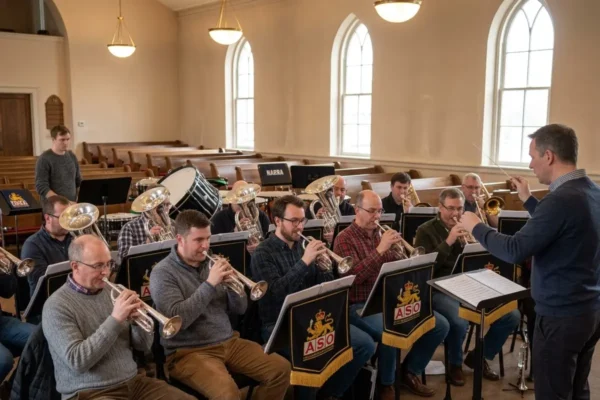
UNICEF Georgia has taken two of the country’s leading writers into small-town libraries, pairing Mark Twain with a homegrown novel to open conversations about children’s rights. The sessions unfolded in Tsalenjikha and Zugdidi, two towns in Georgia’s western Samegrelo region, under a project called Creative Voices for Children’s Rights.
Georgia’s government suspended the country’s own European Union (EU) accession talks in November 2024. The EU is still funding grassroots children’s programs in Georgian towns anyway, this one among them.
Two Writers Carry Children’s Rights Into Samegrelo
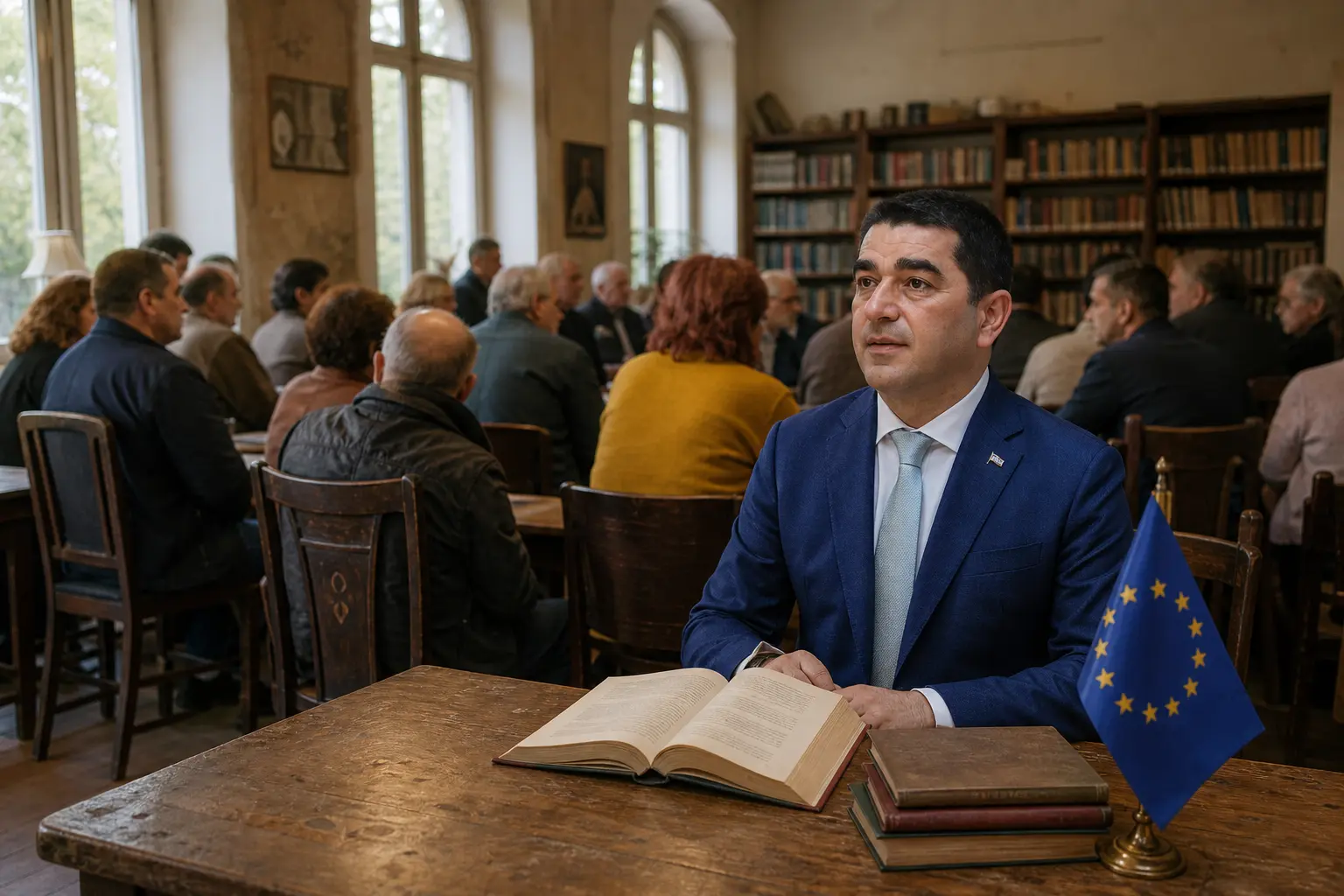
In Tsalenjikha, poet and longtime library administrator Giorgi Kekelidze discussed Mark Twain’s The Adventures of Huckleberry Finn, drawing on Huck’s flight from an abusive father to talk about protecting children from violence. In Zugdidi, novelist Zviad Kvaratskhelia spoke about his own book, Form N100, pulling the same themes out of his own fiction.
UNICEF, the United Nations Children’s Fund, said the discussions in both towns covered a specific set of rights:
- Protection from violence
- The right to education and development
- Equality
- Freedom
- Growing up in a safe family environment
Creative Voices for Children’s Rights uses literature and public discussion to open these conversations in communities that rarely get direct outreach from Tbilisi. The European Union funds the project, and UNICEF Georgia runs it.
A Border Region Shaped by Displacement
Tsalenjikha and Zugdidi sit in Samegrelo, the Georgian region bordering Abkhazia, the breakaway territory Georgia lost control of in a war fought between 1992 and 1994 against separatist forces. When Abkhaz forces took the regional capital, Sokhumi, in September 1993, Zugdidi absorbed the first wave of people fleeing the fighting, more than 200,000 of them, according to humanitarian accounts of the war.
Roughly 240,000 people were displaced by that war in total, most of them ethnic Georgians. Many settled permanently in and around Zugdidi and never went home. Georgian and international assessments describe most of them as still living in a kind of limbo more than three decades later, unable to return to Abkhazia and never fully resettled elsewhere.
Academic research on displaced young people living in Zugdidi and Tbilisi has examined how displaced youth weigh returning to Abkhazia, finding that where they grew up shapes whether they still see themselves going back. A program built around child protection and safe family life reaches an audience in Zugdidi that has lived those questions directly.
Brussels Freezes the Bigger Relationship
Georgia applied for EU membership in March 2022 and was granted candidate status in December 2023. Then the relationship stalled.
- March 2022: Georgia formally applies for European Union membership.
- December 2023: The European Council grants Georgia candidate status.
- November 28, 2024: Prime Minister Irakli Kobakhidze announces that Georgia is suspending its own EU accession negotiations until the end of 2028.
- December 2024: The European Council formally states its regret over Georgia’s decision.
- November 2025: The European Commission’s enlargement report describes Georgia as a candidate country in name only, citing democratic backsliding.
The Council of the EU still lists Georgia’s place on its enlargement agenda, even with accession talks paused at Tbilisi’s own request.
The Poet a Parliament Speaker Pushed Out
Kekelidze is one of Georgia’s most visible literary figures. He has published poetry collections, detective novels and autobiographical work, including Gurian Diary, and has taught Georgian language and literature as a university professor since 2017. He ran the National Parliamentary Library of Georgia for more than a decade, building it into a hub for public readings, digitization projects and literacy campaigns.
That ended on January 11, 2024, when Parliament Speaker Shalva Papuashvili removed him from the post. Konstantine Gamsakhurdia, son of Georgia’s first post-Soviet president, Zviad Gamsakhurdia, took over the library.
It’s a personnel decision. It has nothing to do with politics.
Papuashvili told reporters, declining to elaborate further, according to Georgia Today’s coverage of the dismissal. Kekelidze later said the speaker told him “11 years is too much” and that it was “time for renewal.” Two years on, Kekelidze is still touring Georgia’s regions with a book in hand, now under a UNICEF banner instead of a parliamentary one.
How Does EU Funding Still Reach Georgian Towns?
Georgia’s national government suspended EU accession talks in November 2024, but that freeze sits at the state level. Money for programs like Creative Voices for Children’s Rights moves through UNICEF and municipal partners instead of Tbilisi’s ministries, a channel that has kept EU-backed child welfare projects running in Zugdidi, Batumi, Tbilisi and Akhaltsikhe regardless of the diplomatic standoff.
UNICEF Georgia runs at least two other EU-backed projects on the same model. One is a social innovation program for teenagers aged 14 to 18, built around Child Rights Centers at state universities. The other focuses on redesigning how municipalities deliver child welfare services.
| Program | Focus | Locations |
|---|---|---|
| Creative Voices for Children’s Rights | Literature discussions on violence protection, education and family safety | Tsalenjikha, Zugdidi |
| UPSHIFT Social Innovation and Entrepreneurship | Teen-led local problem solving, ages 14 to 18 | Tbilisi, Batumi, Zugdidi, Akhaltsikhe |
| Municipal social programme reform | Redesigning child welfare delivery at the local level | Multiple municipalities |
These programs run through city halls, university partnerships and UNICEF’s own country office, not through the ministries whose EU negotiations are currently frozen.
UNICEF Georgia has not announced dates for further Creative Voices sessions. The European Union’s funding commitment to programs like it does not depend on when accession talks themselves resume.
Frequently Asked Questions
Who Replaced Giorgi Kekelidze at Georgia’s National Library?
Konstantine Gamsakhurdia took over as director of the National Parliamentary Library of Georgia in January 2024. He is the son of Zviad Gamsakhurdia, Georgia’s first president after independence from the Soviet Union.
How Many People Remain Displaced From Abkhazia Today?
More than 300,000 people remain internally displaced across Georgia, a total that includes those uprooted by both the 1992 to 1994 Abkhazia war and the 2008 conflict with Russia over South Ossetia, according to humanitarian assessments of the country’s displacement crisis.
What Does the EU Say Is Driving Georgia’s Backsliding?
The European Commission’s 2025 enlargement report points to a rapid erosion of the rule of law and severe restrictions on fundamental rights, including legislation limiting civic space and undermining freedom of expression and assembly. The Commission says Georgian authorities need to show a clear commitment to reverse course before accession talks can resume.