Three of the Tata Group’s newest and biggest wagers, Air India, Tata Electronics and Tata Digital, lost a combined Rs 28,823 crore (roughly $3.3 billion) in the year ended March 2026, up from Rs 15,539 crore a year earlier. Chairman N Chandrasekaran wants shareholders to judge the businesses over decades, not quarters.
The number that goes unmentioned in his address is who is actually writing the checks while everyone waits. That answer runs through Tata Consultancy Services (TCS), the group’s IT services giant, and lands on Tata Trusts, the charitable network that owns 66 percent of Tata Sons and depends on its dividends to fund hospitals, research and scholarships across India.
Three Bets, One Rs 28,823 Crore Loss
The figures come from individual results disclosed in Tata Sons’ latest annual report, first reported by Moneycontrol. Combined revenue across the three businesses rose nearly 35 percent to Rs 2.39 lakh crore, powered almost entirely by Tata Electronics. Air India was the outlier: its revenue fell even as its loss more than doubled.
| Business | FY26 Revenue | FY26 Loss | FY25 Loss |
|---|---|---|---|
| Air India | Rs 71,870 crore (down 9%) | Rs 22,238 crore | Rs 10,859 crore |
| Tata Electronics | Rs 1.31 lakh crore (up 97%) | Rs 1,611 crore | Rs 70 crore |
| Tata Digital | Rs 35,990 crore (up 12%) | Rs 4,974 crore | Rs 4,610 crore |
| Combined | Rs 2.39 lakh crore (up 35%) | Rs 28,823 crore | Rs 15,539 crore |
Chandrasekaran told shareholders the group measures itself by more than “near-term financial performance.” On the scale of these three businesses alone, the loss climbed about 85 percent in a single year.
Air India Alone Erases Three-Fourths of the Loss
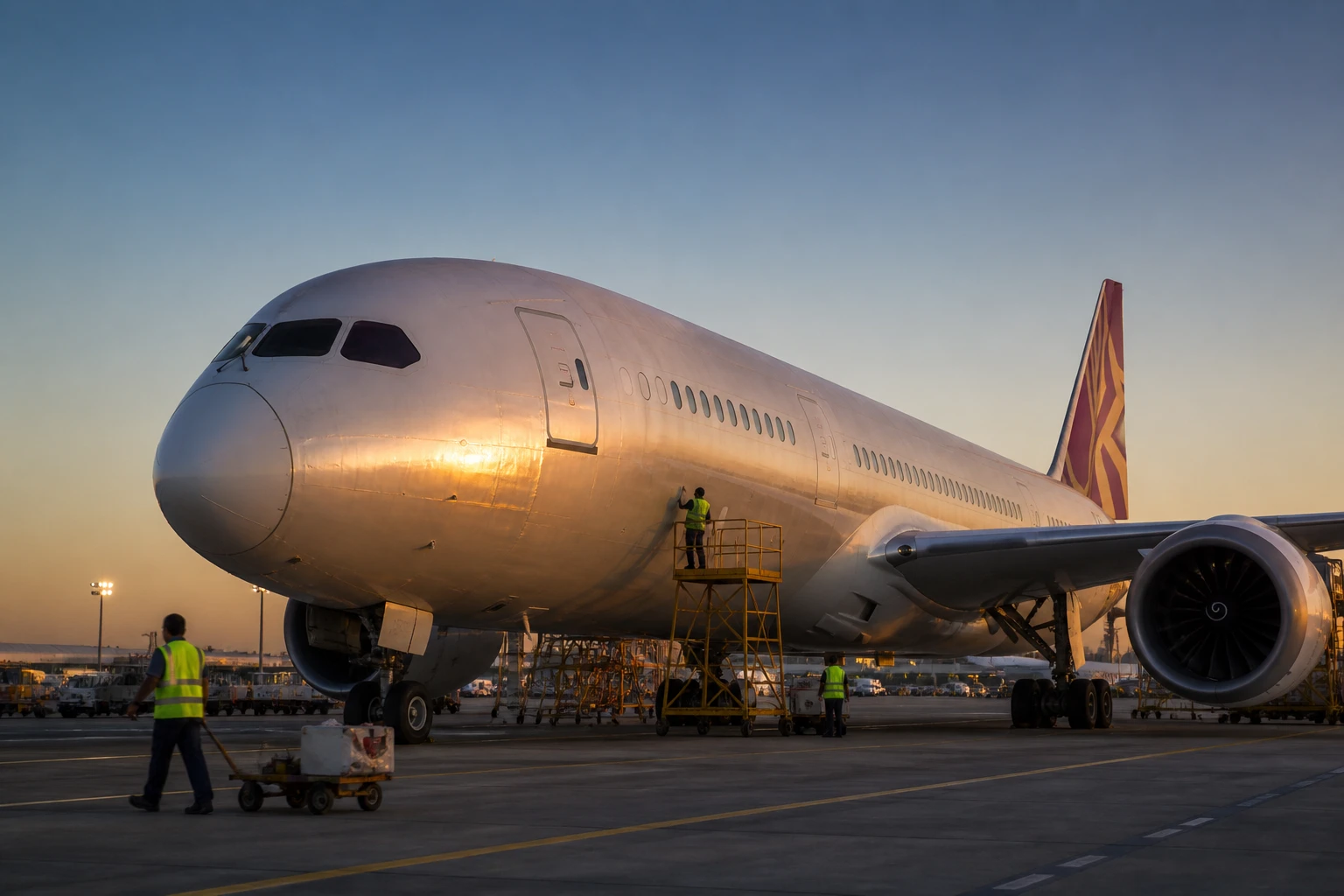
Air India accounted for more than three-fourths of the combined FY26 loss. Chandrasekaran called it the airline’s most difficult year yet, citing airspace closures, a fuel-price spike tied to the West Asia conflict, currency swings and the June 2025 crash of flight AI171.
“Rebuilding Air India is a long journey: fleet renewal, training, service transformation, network expansion,” he said. “Every great airline in history was built over decades, not quarters.”
He pointed to operating gains beneath the headline loss. Air India’s Net Promoter Score, a customer-loyalty gauge, rose from negative 35 in FY23 to positive 42 by June 2026, and the airline posted the best on-time arrival record among Indian carriers that month. Its domestic narrow-body fleet has been refurbished; wide-body cabins are due to finish by the end of FY28.
Air India was not the only Indian carrier bruised by FY26’s currency swings. Market leader IndiGo, which controls the bulk of India’s domestic air traffic, booked its own ₹2,394 crore forex-driven FY26 loss, a fraction of Air India’s but a sign the whole sector paid for a weaker rupee.
Tata Electronics Doubles Revenue While Its Losses Multiply
Tata Electronics was the fastest-growing of the three. Revenue nearly doubled to Rs 1.31 lakh crore, and Chandrasekaran said the unit reached operating-profit break-even, becoming the fourth-largest Tata company by revenue within four years. Its net loss, though, multiplied more than 23 times over, to Rs 1,611 crore from Rs 70 crore, as expansion and semiconductor spending outran operating gains.
The company manufactured 12 percent of the global volume of phones made in 2025 for what Chandrasekaran called the “global leader,” without naming the customer, widely understood to be Apple. “Chips are the new steel,” he told shareholders. “A nation that cannot make its own semiconductors will always depend on others for the most fundamental input of the modern economy.”
The bet behind that line is a fabrication plant under construction in Dholera, Gujarat. Tata’s own newsroom describes it as a facility built for 50,000 wafer starts a month, with first chips targeted before the end of 2026. The project also carries government backing: the India Semiconductor Mission signed a fiscal support agreement with Tata Electronics and Tata Semiconductor Manufacturing to help fund the plant.
Croma, BigBasket and 1mg Carry Tata Digital’s Pivot to Neu
Tata Digital’s loss widened to Rs 4,974 crore from Rs 4,610 crore, pushing its two-year cumulative loss to close to Rs 9,600 crore. Revenue grew nearly 12 percent to Rs 35,990 crore. Chandrasekaran acknowledged the unit had “navigated multiple complexities,” as BigBasket adjusted to the rapid Indian shift toward quick commerce.
The portfolio still generated real scale:
- Croma, the electronics retail chain, posted gross merchandise value of Rs 25,539 crore
- BigBasket reworked its delivery model as quick-commerce rivals reshaped grocery shopping
- Tata 1mg holds the top rank among India’s e-pharmacy and e-diagnostics platforms
- Tata Neu is refocusing on financial services and loyalty, targeting a tenfold jump in monthly transacting users for payments in FY27
That Neu pivot marks a retreat from the app’s original ambition as an everything-super-app toward a narrower payments-and-lending role, a strategy shift Chandrasekaran called “decisive.”
Who Is Funding the Bet
Tata Sons itself does not absorb these operating losses the way a conventional parent would. As the family’s unlisted holding company, its standalone profit comes overwhelmingly from dividends on its stakes in group companies, above all TCS, which alone supplied close to nine-tenths of Tata Sons’ dividend income from listed firms in a recent year. That income stream is what lets Chandrasekaran keep funding new bets while asking for patience.
- 89.6 percent – the share of Tata Sons’ dividend income from listed companies that TCS alone supplied in FY25
- Rs 31,961 crore – Tata Sons’ own standalone profit in FY26, up 21.8 percent
- 66 percent – the stake Tata Trusts holds in Tata Sons, its principal income source
- Rs 3,000 crore-plus – Tata Sons’ FY26 dividend payout to the Trusts, more than double the prior year
That last figure matters beyond the balance sheet. Tata Trusts is lifting its own philanthropic outlay to Rs 2,000 crore in FY26 from about Rs 1,600 crore a year earlier, according to its chief executive’s public defense of that spending against criticism of internal disorder. The same dividend pool that covers hospitals and scholarships is also, indirectly, the cushion under Air India’s refurbishment bills and Tata Electronics’ chip ambitions. At the wider Tata Group level, aggregate profit across nearly 30 operating companies still jumped 51.9 percent to Rs 1,70,525 crore in FY26, which is why Chandrasekaran can call it, in his own words to shareholders, “a good year in terms of financial metrics” even as three of his newest bets bled cash.
The Listing Deadline Tata Sons Has Already Missed
Why does an Indian company this large still not trade on any stock exchange? Tata Sons was classified an upper-layer non-banking financial company, a core investment company under Reserve Bank of India (RBI) rules, in September 2022. Regulation gave such companies three years to list. That clock ran out in September 2025, and Tata Sons has not listed.
Tata Sons applied to the RBI in 2024 to deregister as an NBFC entirely, aiming to sidestep the listing rule altogether. The central bank has not settled the matter. On June 24, 2026, the RBI issued amended scale-based regulation directions for NBFCs, restating that any company with assets of Rs 1 lakh crore or more is automatically pulled into the upper layer. Tata Sons’ asset base, estimated near Rs 1.75 lakh crore, clears that bar easily. The same amendment dropped a clause defining indirect receipt of public funds, a change several Indian business outlets say could strengthen Tata Sons’ case for deregistering rather than listing.
Until that fight resolves, the Rs 28,823 crore in new-bet losses reaches the public only once a year, inside a voluntary annual report, rather than in the quarterly filings a listed company would owe its shareholders.
The Milestones Chandrasekaran Has Already Promised
Chandrasekaran has attached specific dates to his patience. Air India’s wide-body refurbishment is due by the end of FY28. Tata Electronics expects its Dholera fab to produce first chips before this year is out, having already lined up lithography tools through a strategic partnership with ASML for the plant’s ramp-up. Tata Neu’s tenfold user target lands in FY27.
“We are building for the India of 2047,” Chandrasekaran told shareholders, “so that, when she looks back, she finds that the foundations were laid well and in time.” The bill for that foundation, for now, is being paid one TCS dividend at a time.