Google launched the Pixel 11 family in New York on August 12 with Trevor Noah hosting, Samsung’s Z Fold8 range posted record preorders across Europe and Korea, Honor put its dancing gimbal Robot Phone on sale in China, and the Play Store began hosting a rival app store for US users. The week’s hardware and policy moves point past brighter screens toward devices that claim attention, health data and distribution in quieter ways.
Pixel’s new rear lights, the Watch’s trend sensors, foldable volume and a companion robot all reduce the need to pick up the phone. That second layer is already reshaping what buyers measure when they choose Android.
Pixel 11 Pro Puts Lights Where Eyes Do Not Go
The Pixel 11, Pixel 11 Pro and Pixel 11 Pro XL arrived with the Tensor G6 chip, upgraded cameras and seven years of updates. Preorders opened at $899, $1,099 and $1,299. Shelves open August 20.
| Model | Preorder price | Base storage |
|---|---|---|
| Pixel 11 | $899 | 256 GB |
| Pixel 11 Pro | $1,099 | 256 GB |
| Pixel 11 Pro XL | $1,299 | 256 GB |
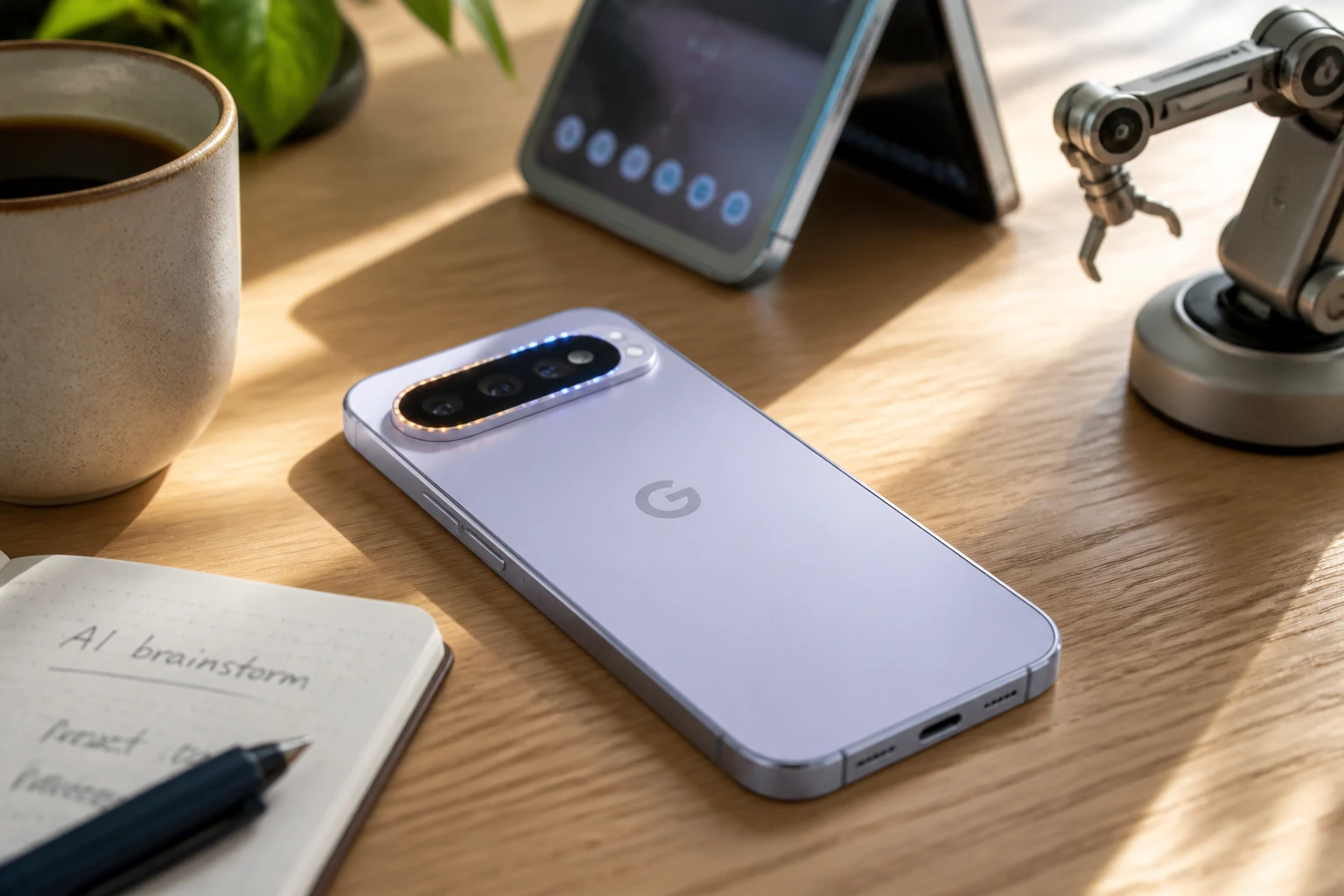
The feature drawing the most notice sits on the back of the Pro models. Google calls it HiLight: a HiLight LED cluster around the flash that glows in colored patterns when the phone lies face down. It signals Gemini listening or thinking, incoming calls from assigned contacts, and later message alerts. The goal is glanceable status without unlocking the screen or turning the device over.
Tensor G6 brings a 25 percent faster web browse and 15 percent quicker app launches versus the prior generation. On-device AI tasks run up to 3.5 times faster while using up to 3.5 times less energy. Night Sight captures up to 4.5 times faster. Pro Zoom reaches 120x on the Pro models. The base model thins its camera bar by 40 percent. All three start at 256 GB storage and add Qi 2.2 support.
- HiLight exclusive to Pro and Pro XL for face-down colored alerts
- Tensor G6 with 50 percent more TPU compute and latest Gemini Nano
- Cameras new larger sensors, 30x Super Zoom on base, Portrait Mode at 5x on Pro
- Durability brightest Super Actua display to 3,600 nits and double scratch resistance
That package continues Google’s Tensor G6 efficiency bet at higher prices. Buyers get more on-device help and a physical cue that the phone is working without demanding a full look.
The efficiency gains matter because HiLight and Gemini both lean on sustained on-device work. Faster launches and lower energy use keep those background cues viable without draining the battery that buyers still judge first.
Watch 5 Tracks Trends Without a Cuff
Google also showed the Pixel Watch 5, starting at $399. Hardware stays familiar. The software layer expands.
Monthly trend summaries cover blood pressure patterns, sleep breathing quality and insulin resistance. Sensors and machine learning spot upward blood-pressure trends over weeks without an inflatable cuff. Google stresses the feature is for wellness only, not a clinical reading or medication guide. It was trained on large opted-in datasets and checked against standard monitors. Breathing Emergency Detection can contact services in select regions if oxygen stays low.
- First month of continuous wear builds the baseline the model needs
- Monthly summaries then surface blood pressure, breathing and insulin-resistance patterns
- Emergency path can reach services in select regions when oxygen stays low
Gemini runs with lower latency on the wrist. A Health Coach built on the model acts as fitness and sleep advisor. The watch still needs a month of wear for the first full summary. The shift is from single readings to long-horizon pattern alerts that live on the body rather than the phone screen.
That design keeps health context on the wrist so the phone can stay face down. Trend alerts replace the habit of opening an app for every check, which matches the same quieter posture HiLight tries to create on the desk.
Fold8 Family Turns Preorders Into Scale
Samsung’s Galaxy Z Fold8, Z Fold8 Ultra and Z Flip8 set the highest European foldable preorder mark, beating the prior record by more than 17 percent with one day left. Non-flip models posted a 70% jump in non-flip pre-orders year on year versus the Z Fold7. The new Fold8 form factor alone took over 40 percent of European preorders.
In South Korea the three models moved about 1.44 million units in the first seven days of preorders, with the Fold8 carrying the bulk. Some colors sold out and delivery windows slipped. On-sale started August 7 in many markets.
| Metric | Figure | Scope |
|---|---|---|
| European Z series preorder record | Over 17% above prior high | Fold8 Ultra + Fold8 + Flip8 |
| Non-flip YoY growth | 70% | Fold8 + Fold8 Ultra vs Fold7 |
| Fold8 share of European preorders | Over 40% | New form factor |
| Korea 7-day volume | ~1.44 million | All three models |
The numbers show foldables moving past novelty. Samsung’s multi-size approach is landing with buyers who want a cover screen for quick tasks and a main panel for deeper work. That volume also feeds the company’s broader AI push across devices.
Cover-screen tasks and inner-panel work split attention across two surfaces on one device. That split is another way to cut full-phone pickups, and the preorder mix shows buyers paying for it at scale.
Samsung Treats AI as Daily Infrastructure
Forbes contributor David Phelan spoke with Samsung CEO TM Roh about Galaxy AI on the new foldables. Roh said AI will become “a core and basic component of our daily lives and experiences.” The company aims to understand customers more deeply and offer richer experiences across the full Samsung product range, not only phones.
Galaxy AI features ride the Fold8 family’s larger canvases and multitasking. The same software layer appears on other Galaxy devices. The preorder success gives Samsung more units in the field to refine those models. The Samsung display strategy on Fold8 also keeps panel technology inside the house while Apple still sources elsewhere.
The practical result is an Android competitor treating AI less as a demo feature and more as the default operating layer that follows the user from phone to tablet to TV.
Record foldable volume supplies the installed base that kind of layer needs. More units mean more multitasking sessions on which Galaxy AI can prove it belongs in daily use, not only in launch demos.
Honor’s Robot Phone Moves and Dances
Honor opened sales of the Robot Phone in China. The standout is a retractable 4-DoF titanium agile gimbal that houses a 200 MP main camera. It tracks subjects, responds to voice commands, and works with the Yoyo AI assistant as a companion.
Yoyo Robot Mode lets the gimbal nod, peek, express over 100 facial reactions on screen, and dance to music. It can observe surroundings, execute tasks, and follow gestures. The phone also carries a 200 MP periscope telephoto, 50 MP ultrawide, Snapdragon 8 Elite Gen 5, up to 16 GB RAM, a 7,060 mAh battery, and a 6.3-inch bright OLED. Starting price is CNY 9,999 (about $1,482) for 12/512 GB; the top trim reaches CNY 12,999. Open sales were set for mid-August after early preorders topped 200,000 units in some tallies. No global launch has been confirmed.
- Gimbal: 4-DoF titanium module with 200 MP main sensor
- Yoyo Robot Mode: nods, peeks, 100-plus on-screen reactions, dances to music
- Supporting kit: 200 MP periscope, 50 MP ultrawide, Snapdragon 8 Elite Gen 5
- Capacity: up to 16 GB RAM, 7,060 mAh battery, 6.3-inch bright OLED
- Price band: CNY 9,999 to CNY 12,999 after 200,000-plus early preorders
The gimbal is not only for video. It turns the rear module into a physical character that reacts in the room. That is a different bet from Google’s discreet LEDs or Samsung’s bigger screens: the phone itself becomes an animated presence.
Play Opens the Door to Rival Stores in the US
After the Epic antitrust case, Google began letting third-party app stores appear inside the Play Store for US users. Aptoide Games is the first. Users download it like any other app. Once installed, games and titles install with a standard prompt and no extra sideloading warnings.
What We Know
- US-only for now; Aptoide Games is the initial listing
- Install flow matches normal Play apps
- No additional security hurdles once the store is present
What’s Unconfirmed
- Timeline for more stores or other regions
- How Google will handle security or billing conflicts at scale
- Whether major publishers will treat the new channel as primary
The change follows years of legal pressure. It also sits beside the company’s own third-party stores inside Play coverage on this site. Distribution is no longer a pure monopoly gate. That alters the economics for developers who disliked the prior cut and for users who want alternate catalogs.
A second storefront one tap from Play lowers the cost of trying catalogs Google does not feature first. That softens the hold of a single grid of icons and fits the week’s wider theme: less forced attention on one official surface.
Each Brand Places Signals Off the Main Display
The launches share a practical pattern even though the hardware looks nothing alike. Each brand moves a slice of status, health or discovery away from the primary screen users unlock all day.
- Google puts call and Gemini cues on rear HiLight LEDs and multi-week health trends on the Watch 5
- Samsung splits quick tasks onto Fold8 cover screens while Galaxy AI rides the larger inner canvas
- Honor turns the rear gimbal into a room-facing actor that tracks, nods and dances with Yoyo
- Play lets a rival store install like a normal app so alternate catalogs sit one prompt away
None of those moves requires a brighter panel to work. They ask for trust in lights, wrists, hinges, motors and secondary storefronts instead. Buyers still compare cameras and chips, yet the week’s standout claims target how often the glass must come on at all.
Preorder Heat Meets Software Loyalty Questions
Crowd reaction on X already sketched the tension under the sales curves. HiLight drew praise as a practical presence tool for calls and Gemini sessions. Fold8 demand climbed even as some buyers still weighed One UI against Pixel software purity. The robot drew delight at the companion act and skepticism that it stays a China-only curiosity.
Those threads matter because preorder records and 200,000-plus early robot tallies prove willingness to try new forms. They do not settle whether software feel or companion novelty keeps the devices in daily rotation after the first week. Samsung’s volume gives Galaxy AI more field data; Google’s seven-year update promise and on-device efficiency bet aim to keep Pixel habits sticky; Honor still lacks a confirmed global path.
The near-term test is simple. Colored lights, monthly wrist summaries, cover-screen tasks and a dancing gimbal only win if they stay useful after the launch demos fade.
Ambient Signals Replace Constant Screen Time
Taken together the week’s launches share a direction. Pixel HiLight and Gemini patterns keep the phone face down yet still informative. The Watch 5 surfaces health trends over weeks instead of demanding a cuff or open app. Fold8 volume proves buyers will pay for devices that change shape with the task. Honor’s gimbal turns the camera into a social actor that dances and tracks. Play’s opening reduces the friction of finding apps outside Google’s own catalog.
Crowd reaction on X treated HiLight as a practical presence tool for calls and Gemini sessions. Some Fold8 buyers still weighed One UI against Pixel software purity even while sales climbed. The robot drew both delight at the companion act and skepticism that it stays a China-only curiosity.
None of these moves erase the screen. They do reduce how often a user must stare at one. Health data moves onto the wrist with monthly summaries. Alerts move to colored light. Content creation moves to a motorized lens that follows without hands. App discovery moves to a second storefront one tap away. The second-order effect is an Android that competes less on peak brightness and more on how little it interrupts while still knowing what matters.
Google, Samsung and Honor are all selling that quieter utility this month. The preorder and launch numbers show buyers are ready to test it.