Motorola’s Edge 70 Max launched in India this week as only the third Android phone ever built with native Qi2 magnetic charging, a feature Samsung’s newest Galaxy still cannot manage without a case. The phone pairs that with a 7,100mAh silicon-carbon battery packed into an 8.29mm frame, priced from ₹54,999 (about $570).
Three days before the India sale date, Motorola’s own product pages started contradicting each other over how long the phone will actually get software updates. The company had to issue a public correction just to say how long it stands behind its newest flagship.
Motorola Beats Samsung to a Feature Only Apple and Google Had
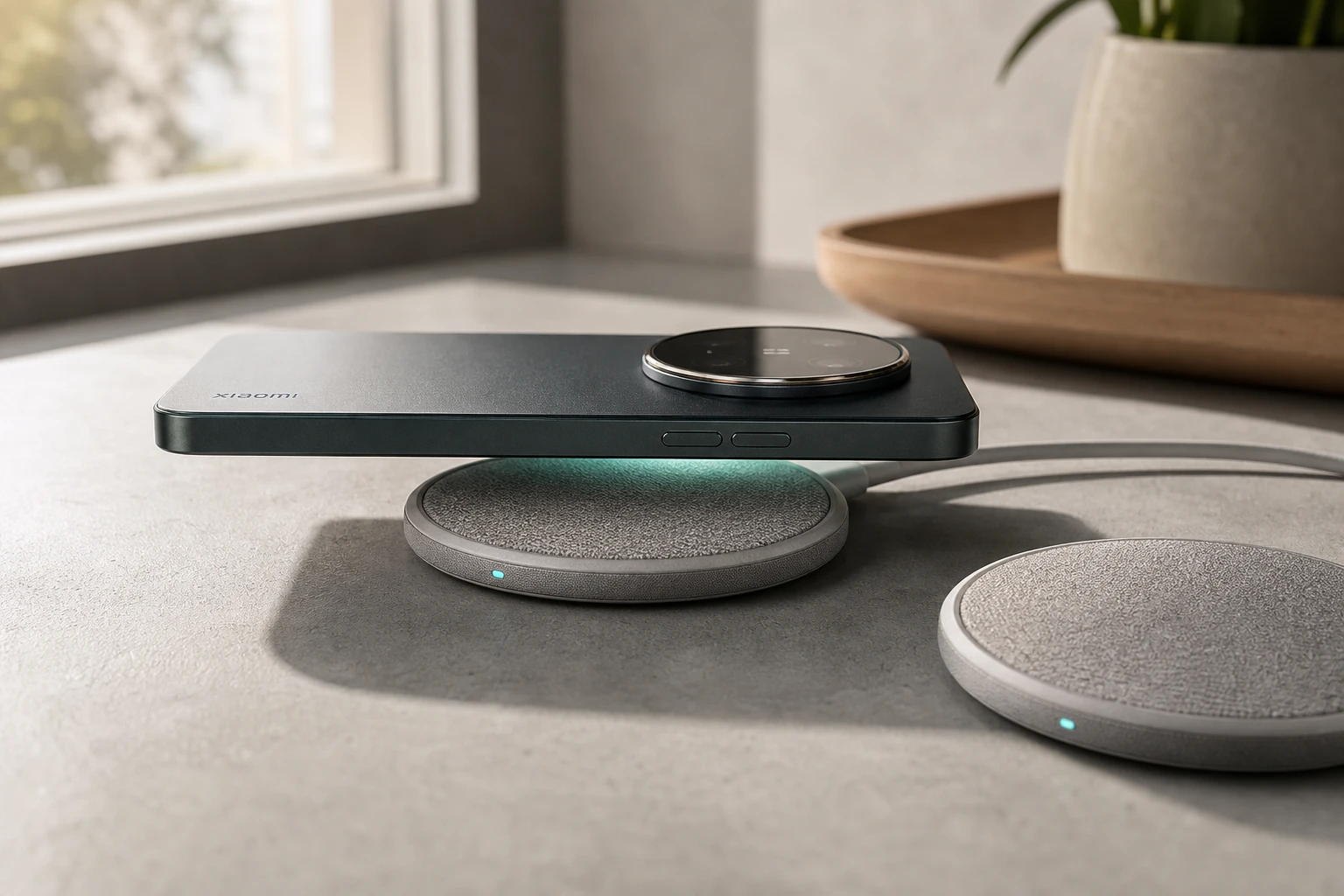
For years, built-in magnets for wireless charging belonged to one phone maker. Apple’s MagSafe let iPhones snap onto chargers, wallets and car mounts without an adapter, while Android phones needed a special magnetic case to fake the same trick.
That changed slowly. Google’s Pixel 10 series became the first Android phones with native Qi2 magnets built into the chassis. Then came the Edge 70 Max.
Motorola’s phone appeared in the Wireless Power Consortium (WPC) certification database weeks before launch, listing support for the Qi 2.2.1 standard under a Magnetic Power Profile (MPP), the spec that requires built-in alignment magnets rather than a bolt-on case. The listing also pointed to 25W wireless speeds, the fastest tier Qi2 currently allows.
Samsung has not caught up yet. The Galaxy S26 carries a “Qi2 Ready” label, but it still needs an add-on magnetic case before any Qi2 accessory will actually snap into place.
- Google Pixel 10 series – the first Android phones with native Qi2 magnets, built around Google’s Pixelsnap accessory ecosystem.
- HMD Skyline – launched in 2024 with built-in Qi2 magnets, though on the slower original wireless tier rather than the newest 25W speed.
- Motorola Edge 70 Max – the newest entrant, matching the Pixel’s built-in magnets while adding the faster Qi 2.2.1 tier at a lower price than either rival.
Samsung and OnePlus, the two brands most often cross-shopped against Motorola in India’s price bracket, have not shipped that combination yet.
A 7,100mAh Battery in an 8.29 Millimeter Body
Motorola built the Edge 70 Max around a 7,100mAh silicon-carbon battery, a chemistry that swaps the graphite anode found in most lithium-ion cells for a silicon-carbon composite, packing more energy into the same space. The company says the change let it fit the cell into a phone that is just 8.29mm thick and weighs 221 grams.
Charging relies on 90W wired TurboPower, which Motorola’s own marketing promises a day of power in six minutes, on top of the 25W Qi2.2 wireless tier. That combination puts Motorola ahead of the broader industry curve, where OnePlus and Honor have pushed silicon-carbon capacity past 7,000mAh over the last year.
The table below lines up Motorola’s cell against the silicon-carbon batteries rivals have shipped this year, and against the lithium-ion Samsung is still using while it tests the newer chemistry.
| Phone | Battery Capacity | Chemistry | Notable Detail |
|---|---|---|---|
| Motorola Edge 70 Max | 7,100mAh | Silicon-carbon | 8.29mm thick, 221g, priced from ₹54,999 (~$570) |
| OnePlus 15 | 7,300mAh | Silicon-carbon, 15% silicon | Company’s highest silicon content to date |
| Honor Magic V6 (global) | 6,660mAh | Silicon-carbon, 25% silicon | Foldable, rated at 921 Wh/L energy density |
| Xiaomi 17 Ultra | 6,800mAh | Silicon-carbon | Lasted over 22 hours in a web browsing test, per PhoneArena |
| Samsung Galaxy S26 Ultra | Not disclosed | Lithium-ion | Samsung confirms it is still evaluating silicon-carbon cells |
Samsung executives told Android Headlines the company is evaluating silicon-carbon batteries for a future Galaxy, but has not committed to a launch date.
Flagship Chip, a Camera That Skips the Zoom
Under the display sits a 3nm Snapdragon 8 Gen 5 from Qualcomm, paired with 8GB or 12GB of LPDDR5X RAM and 256GB of UFS 4.1 storage. Motorola built a cooling system it calls ArcticMesh around the chip, combining a 5,500 square millimeter vapor chamber with liquid metal to manage heat during long gaming or camera sessions.
The screen is a 6.8-inch flat AMOLED panel running at Quad HD+ resolution (3168 x 1440) and a 144Hz refresh rate, with Motorola claiming a peak brightness of 7,000 nits. An aluminum frame, Gorilla Glass 7i on front and back, IP68 and IP69 water and dust resistance, and MIL-STD-810H durability testing round out the build.
The camera is where the price shows. Motorola paired a 50MP Sony LYT-710 main sensor with optical image stabilization to an 8MP ultrawide lens that doubles as a macro camera, skipping the telephoto lens found on pricier rivals. The company added telephoto zoom to last year’s Edge 60, which makes its removal here look like a deliberate trade against the price tag rather than a technical step back.
The Edge 70 Max sits above the periscope-equipped Edge 70 Pro Plus that Motorola launched in India in June, taking the top spot in a lineup that now spans five models. Three Pantone-validated colors, Dark Shadow, Ice Melt and Aqua Gray, are available at launch.
Pricing starts at ₹54,999 for 8GB of RAM and climbs to ₹59,999 for the 12GB configuration. Both go on sale July 20 through Flipkart, Motorola’s own India store and retail outlets, with the UK and European rollout already underway at £699.99 and €799.99, comfortably under $950 at current exchange rates.
Why Won’t Motorola Say How Long This Phone Gets Updates?
Because Motorola’s own paperwork disagreed with itself. The Edge 70 Max’s product pages promised one update timeline in the main text and a shorter one in a footnote, then a third figure showed up on the EU’s regulatory label, forcing the company to issue a public clarification just days before the phone went on sale.
Three Numbers for the Same Promise
Motorola’s product pages advertised the phone with “up to 3 Android OS updates and 5 years of security patches,” with that security window said to run through July 2031. A footnote on the same pages told a different story: “Includes 2 OS upgrades and up to 3 years of security updates starting from the global launch date.”
The EU’s EPREL energy label for the phone reportedly lists seven years of update coverage, a number that matches none of Motorola’s other statements. Regional listings added more confusion still. Motorola’s Sweden page promised just three years of coverage for both OS and security updates, a mismatch that 9to5Google and GSMArena both documented independently.
Edge 70 Max arrives with up to 3 OS upgrades and up to 5 years of SMR.
A Motorola spokesperson gave that statement to GSMArena on July 17, using the company’s internal shorthand for Security Maintenance Release, or SMR. The wording still leaves room for fewer updates than it implies. “Up to three” describes a limit, not a guarantee of three.
A Recurring Problem for Motorola
This is not new territory for the company. GSMArena says it has previously found the same kind of contradictions on the Razr 70, the Razr 70 Ultra and the Edge 70 Pro, where regional websites, support pages and energy labels disagreed with each other or left out details entirely.
Motorola can do better when it chooses to. Its Signature and Razr Fold models, both released this year, carry a full seven years of OS and security updates on the same Snapdragon 8 Gen 5 chip found in the Edge 70 Max. The shorter commitment on the Max looks like a decision about where to draw the line on a cheaper phone, not a technical limit.
India First, With the US Nowhere in Sight
The Edge 70 Max launched in India first, as Motorola’s higher end Edge phones usually do, with the UK and European rollout following within days. Motorola has not announced a US variant, continuing a pattern of keeping its priciest Edge phones out of the American market entirely.
Part of that pattern traces back to the battery itself. Silicon-carbon battery production remains concentrated among suppliers in Asia, which limits how quickly any phone maker can scale the technology into new markets regardless of demand. Samsung and Apple have both moved cautiously on the same chemistry, leaving the current race to Motorola, OnePlus, Honor and the supply chains behind them.
The Edge 70 Max goes on sale in India on July 20, three days after Motorola finally confirmed the update numbers it had spent a week failing to state clearly on its own website.
Frequently Asked Questions
Does the Motorola Edge 70 Max Have a Headphone Jack?
No. The phone drops the 3.5mm jack in favor of dual stereo speakers tuned with Dolby Atmos and Hi-Res Audio support. Audio and data both run through a single USB-C 2.0 port.
Can I Use Two SIM Cards in the Edge 70 Max?
Yes. The phone supports two physical nano-SIM slots alongside eSIM, plus 5G, Bluetooth 6.0, tri-band Wi-Fi 7, NFC and GPS, giving it the same connectivity most 2026 flagships carry.
Is There a Launch Discount on the Motorola Edge 70 Max in India?
Motorola is offering up to ₹5,000 off through instant bank discounts or exchange bonuses, bringing the effective starting price down to about ₹49,999. No-cost EMI is also available on select cards through Flipkart and Motorola’s own India store.
How Many Android Updates Will the Edge 70 Max Get?
It ships with Android 16, and Motorola’s confirmed commitment of up to three OS upgrades would carry it through Android 19, though the company’s own “up to” wording leaves room to stop earlier.
What Happened to the Telephoto Camera on Motorola’s Edge 70 Line?
Motorola reserved telephoto zoom for pricier siblings. The Edge 70 Pro Plus, which launched in India in June, carries a 50MP periscope camera with 3.5x optical zoom, a feature the Max skips to hit its lower price.