A car bomb in a Moscow suburb on Tuesday killed a senior Russian military official identified by independent outlets as the head of a directorate responsible for supplying missile and artillery ammunition to the front. The June 9 attack came on the same day that Ukrainian drone strikes hit fuel and energy sites across southern Russia, gasoline queues formed in the Krasnodar region, and the European Commission unveiled a new sanctions package targeting Moscow’s oil revenues and shadow fleet. The explosion, near an apartment block in Balashikha, is the latest in a string of high-profile killings of figures tied to Russia’s war effort.
The blast added Damir Davydov to that list, though Kremlin spokesman Dmitry Peskov declined on June 10 to confirm his identity, citing an ongoing investigation. The Russian Investigative Committee opened a criminal case but did not name the victim or specify the charges. The silence in Moscow is the first time Russian authorities have declined to publicly identify a high-ranking military official killed in an attack, according to the independent Russian outlet Agentstvo. The same Tuesday, European governments moved in opposite directions on Kyiv: Estonia signed a fresh security pact with Ukraine, while Bulgaria announced it would stop sending weapons.
The Car Bomb in Balashikha
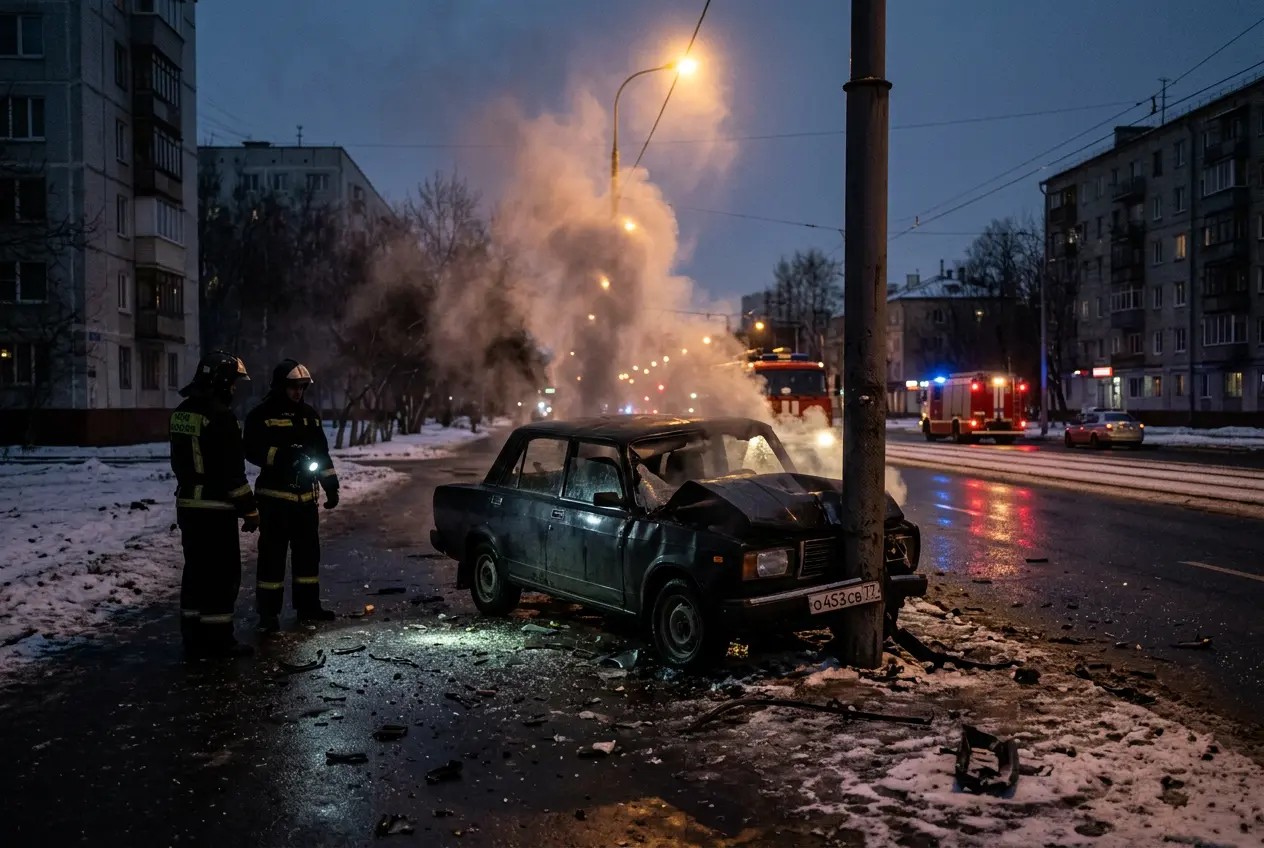
A BMW X3 exploded around 5:30 a.m. on Koldunova Street in Balashikha’s Aviatorov district, roughly 10 kilometers east of the Russian capital, the Russian Investigative Committee said. The driver, identified by the independent Russian outlet The Insider and the Telegram channels VChK-OGPU and 112, died from injuries sustained in the blast. A source cited by the independent Russian outlet Astra also confirmed Davydov’s death, saying an improvised explosive device had been placed under the vehicle.
The Investigative Committee and the Moscow regional prosecutor’s office confirmed an explosion in Balashikha but did not name the victim. The committee opened a criminal case but did not specify the charges. Russian Telegram channel 112 reported an explosive device with the yield of 300-400 grams of TNT had been placed beneath the driver’s seat, and the Russian business daily Kommersant put the yield at up to 500 grams. The Aviatorov district was built as a residential area for Russian military retirees, combat veterans, and their relatives, with apartments distributed through the Defense Ministry, according to Agentstvo. Peskov said on June 10 that President Vladimir Putin had been briefed on the incident, but declined to identify the victim, citing the ongoing investigation.
Per Ukrainian sources cited by Meduza, Davydov was 57 and grew up in the closed city of Penza-19, also known as Zarechny, where his father Rafail Davydov worked at the Start production association that manufactured nuclear missiles. A 2009 article in the Defense Ministry newspaper Krasnaya Zvezda identified him as commander of the Central Test Technical Bureau attached to the 51st Arsenal of GRAU, and a 2019 article placed him in a Russian Defense Ministry delegation to Kazakhstan, by then serving as head of a GRAU directorate.
A Pattern in the Senior Ranks
The Balashikha site sits in a neighborhood where another senior Russian officer was killed in a car bombing less than one kilometer from the June 9 scene, according to Astra and the Kyiv Independent. In April 2025, Lieutenant General Yaroslav Moskalik, deputy chief of the Main Operations Directorate of Russia’s General Staff, was killed when a bomb destroyed his car in the same Aviatorov district. The Investigative Committee opened a terrorism case, alleging the attack was carried out on the orders of Ukraine’s Security Service, and arrested the alleged perpetrator, Ignat Kuzin. In November 2025, Kuzin was sentenced to life in prison.
The pattern of senior Russian military and security figures killed in bombings goes back further. In December 2024, a Russian chemical weapons chief was killed in an explosion in southeastern Moscow, an attack linked to Ukraine. The Insider, Russian state media, and Russian independent outlets have separately reported on the Balashikha bombing. As of publication, Ukrainian authorities had not commented, and no evidence has emerged linking Kyiv to the attack.
Why Are Russian Gas Pumps Running Dry?
The same day, Ukrainian drones hit fuel and energy sites across at least four Russian regions, sharpening a gasoline crisis that has spread from occupied Crimea into mainland southern Russia. A drone attack on the night of June 5 to 6 set a major oil depot in Ust-Labinsk, in Krasnodar Krai, on fire, the Russian outlet Astra reported, and the Telegram channel Exilenova+ claimed the drones struck the depot.
In Krasnodar, residents reported shortages of AI-92 and AI-95 gasoline and queues forming at gas stations, with cars from occupied Crimea arriving to fill up, Mezha reported. Governor Veniamin Kondratyev said on the evening of June 8 that the problem was “artificial demand” caused by people rushing to stock up, and that there was no real shortage in his region. The Russian Ministry of Energy acknowledged on June 8 that supply problems had arisen due to attacks by Ukrainian drones. In occupied Crimea, cash sales of gasoline have been completely banned, with fuel available only through a voucher system that is itself in short supply.
Further east, a Ukrainian drone strike sparked a fire at a fuel storage facility in the Millerovsky district of Rostov region, Governor Yuri Slyusar said, with no immediate reports of casualties. Three explosions hit a 1,200 mm trunk gas pipeline in the town of Kizilyurt in Dagestan, the regional emergency ministry told TASS, sending flames 15 meters into the air and prompting the evacuation of around 300 homes. Authorities in Samara closed airspace temporarily after drones targeted the city of Novokuibyshevsk, which hosts a major Rosneft oil refinery.
Recent strikes on Russian fuel and energy infrastructure, June 2026:
- Ust-Labinsk, Krasnodar Krai: drone attack and fire at a local oil depot, night of June 5 to 6
- Krasnodar city: AI-92 and AI-95 gasoline shortages, queues at stations, June 8
- Millerovsky district, Rostov region: Ukrainian drone strike on a fuel storage facility, June 9
- Kizilyurt, Dagestan: three explosions on a 1,200 mm trunk gas pipeline, ~300 homes evacuated, June 9
- Novokuibyshevsk, Samara region: drones target Rosneft refinery, airspace closed, June 9
Ukrainian strikes on Russian refining have been intensifying for months. In May, Ukraine’s Defense Forces carried out long-range strikes against 18 facilities connected to Russia’s oil refining industry and fuel logistics network across more than 10 regions, with a maximum strike range of approximately 1,700 kilometers from the border.
The 21st EU Sanctions Package
Brussels moved on a parallel track. The European Commission proposed a 21st sanctions package against Russia on June 9, targeting oil sales, the shadow fleet, banks, cryptocurrency firms, metals, fish products, and soldiers who have taken part in the invasion of Ukraine. Commission President Ursula von der Leyen unveiled the 21st package in Brussels. “Russia has clearly failed to subjugate Ukraine. The price Russia pays is heavier by the day, and it is paid primarily by the people of Russia,” von der Leyen said. The package’s main element is a delay of the scheduled July 15 review of the cap on Russian crude, which would otherwise rise from its current level of $44.10 per barrel because of the average-price mechanism.
Von der Leyen attributed the proposed delay to a market shock, not a softening on Russia. “Because of the disruption in the Strait of Hormuz, Urals oil has gone from $58 per barrel in February to $87 per barrel today,” she said, adding that the pause until January 2027 “will give oil markets time to stabilise, while preserving pressure on Russia’s revenues.” If the cap review goes ahead as scheduled, Moscow would receive the temporary relief of an upward adjustment to the cap.
The package also blacklists 30 vessels from Moscow’s shadow fleet, 31 Russian banks, and 20 cryptocurrency firms, platforms, and oil traders outside Russia accused of helping Moscow evade restrictions. More than 600 shadow-fleet vessels have already been denied access to EU ports and services. For the first time, the proposal includes a ban on imports of Russian fish products. It also bars Russian soldiers who have served in the invasion of Ukraine from entering the Schengen area, an initiative Estonia put forward earlier this year. Approval requires unanimity among the 27 EU member states.
At a glance: the proposed 21st EU sanctions package
- 30: shadow-fleet vessels to be blacklisted
- 31: Russian banks targeted
- 20: cryptocurrency firms, platforms, and oil traders added
- $44.10 per barrel: current price cap on Russian crude
- $87 per barrel: Urals price, up from $58 in February
- First-ever ban on Russian fish product imports
Estonia Says Yes, Bulgaria Says No
President Volodymyr Zelensky and First Lady Olena Zelenska arrived in Estonia on June 9 for the Ukraine-Nordic-Baltic Eight summit and a stack of bilateral meetings with regional leaders, including Finnish Prime Minister Petteri Orpo, Latvian Prime Minister Andris Kulbergs, Swedish Prime Minister Ulf Kristersson, and Estonian President Alar Karis. The meetings came as Kyiv prepares for the EU, G7, and NATO summits later this summer.
Zelensky and Karis signed a Tallinn defense cooperation declaration on security and defense cooperation, with air defense, military experience sharing, and the “Drone Deal” format as the main planks. “The exchange of experience, cooperation in the defense industry, and air defense are important areas covered by this document, which consolidates all of these directions,” Zelensky said, adding that “June and July this year may determine a lot.” Estonia is a contributor to the PURL program, which lets NATO allies finance U.S. weapons for Ukraine, and has weathered earlier Ukraine drone barrages over Moscow with growing alarm.
The Baltic convergence stood in contrast with a new break in the Balkan wing of the European coalition. Bulgaria, a NATO and EU member that has been providing mostly Soviet-era weapons to Ukraine since 2022, will stop. Defense Minister Dimitar Stoyanov announced the shift at a press conference in Sofia on Tuesday, framing the war as a war of attrition that cannot be won on the battlefield. “Ukraine needs more people, not more weapons. It has enough weapons, so we do not envisage providing more weapons to the Ukrainian army,” Stoyanov said. The shift is part of a longer trajectory set by Prime Minister Rumen Radev, whose government took office after an April landslide and has long opposed arming Ukraine.
We have already made it clear that the war in Ukraine will not be resolved on the battlefield. What we are witnessing is a war of attrition, and no matter how much weaponry is amassed, its only result is the loss of human lives.
Stoyanov also said Bulgaria plans to raise defense spending to 5% of GDP by 2030, and added that it was “time to sit down at the negotiating table to seek a just peace that is defined by both sides.” The position is a rare public breach inside a NATO and EU member that had been a quiet logistical hub for Soviet-era weapons shipped to Ukraine, mostly through third countries. A Sofia press conference carried the announcement, and Bulgarian outlets including The Sofia Globe reported Stoyanov’s remarks.
The Kremlin Holds the Line
The Kremlin held the diplomatic line on Tuesday. Kremlin spokesman Dmitry Peskov said there are currently no plans for a phone call between U.S. President Donald Trump and Russian President Vladimir Putin, telling reporters that “there is no call on the agenda for the moment.” Peskov added that American intermediaries Steve Witkoff and Jared Kushner continue to maintain contacts with both Russia and Ukraine. He said mediation efforts between the two countries were suspended in February after the United States and Israel began military actions against Iran.
Asked about European mediation, Peskov said initiating such efforts “by presenting Russia with certain conditions is hardly logical or correct,” and that “Europeans are much more inclined to focus on continuing the war than on peaceful negotiations.” The European Commission pushed ahead regardless, with von der Leyen saying Brussels will “in the coming days” open the first negotiating cluster with Ukraine and Moldova, marking the start of formal accession talks focused on rule of law and democratic reforms. “Ukraine is implementing reform after reform, despite its cities being attacked. Ukraine has done its part,” she said.
Frequently Asked Questions
Who was Damir Davydov, the official killed in the Moscow car bombing?
Russian independent outlets identified Damir Davydov as the head of a department inside the Main Missile and Artillery Directorate (GRAU) of Russia’s Defense Ministry, a directorate responsible for supplying missile and artillery ammunition to the front. He was 57, per Ukrainian sources, and grew up in the closed city of Penza-19, also known as Zarechny, where his father worked at a nuclear missile production facility. The Kremlin has declined to officially name him, marking the first time Russian authorities have refused to publicly identify a high-ranking military official killed in an attack.
Why are Russian regions reporting fuel shortages?
A gasoline crisis that began in occupied Crimea, where cash sales have been replaced with a voucher system in short supply, has spread into the Krasnodar region, where residents reported shortages of AI-92 and AI-95 gasoline and queues at stations. The Russian Ministry of Energy acknowledged on June 8 that supply problems arose due to attacks by Ukrainian drones, and regional authorities blamed panic buying for the queues. A drone attack on a major oil depot in Ust-Labinsk, in Krasnodar Krai, on the night of June 5 to 6 is one of dozens of strikes Ukrainian forces have carried out against Russian refining and fuel logistics in recent months.
What is in the EU’s proposed 21st sanctions package on Russia?
Announced by European Commission President Ursula von der Leyen on June 9, the proposed package would delay a scheduled July 15 review of the cap on Russian crude and keep the cap at $44.10 per barrel. It would also blacklist 30 shadow-fleet vessels, 31 Russian banks, and 20 cryptocurrency firms and oil traders, introduce a first-ever ban on imports of Russian fish products, and prohibit Russian soldiers who served in the invasion of Ukraine from entering the Schengen area. Approval requires unanimity among the 27 EU member states.
What did Bulgaria announce on June 9 about weapons to Ukraine?
Bulgarian Defense Minister Dimitar Stoyanov said at a press conference in Sofia on June 9 that Bulgaria will not send any more weapons to Ukraine, calling the war a “war of attrition” that “will not be resolved on the battlefield.” Bulgaria, a NATO and EU member, had been providing mostly Soviet-era weapons to Kyiv since 2022, shipped largely through third countries. Stoyanov also said Bulgaria plans to raise defense spending to 5% of GDP by 2030.