Mean Pittsburgh Sleep Quality Index scores stayed above the clinical cutoff for significant disturbance in both October 2021 and March 2022 among 2,390 UK adults. Fatigue scores barely moved either. Ending lockdown restrictions changed almost nothing about the sleep debt many people still carry.
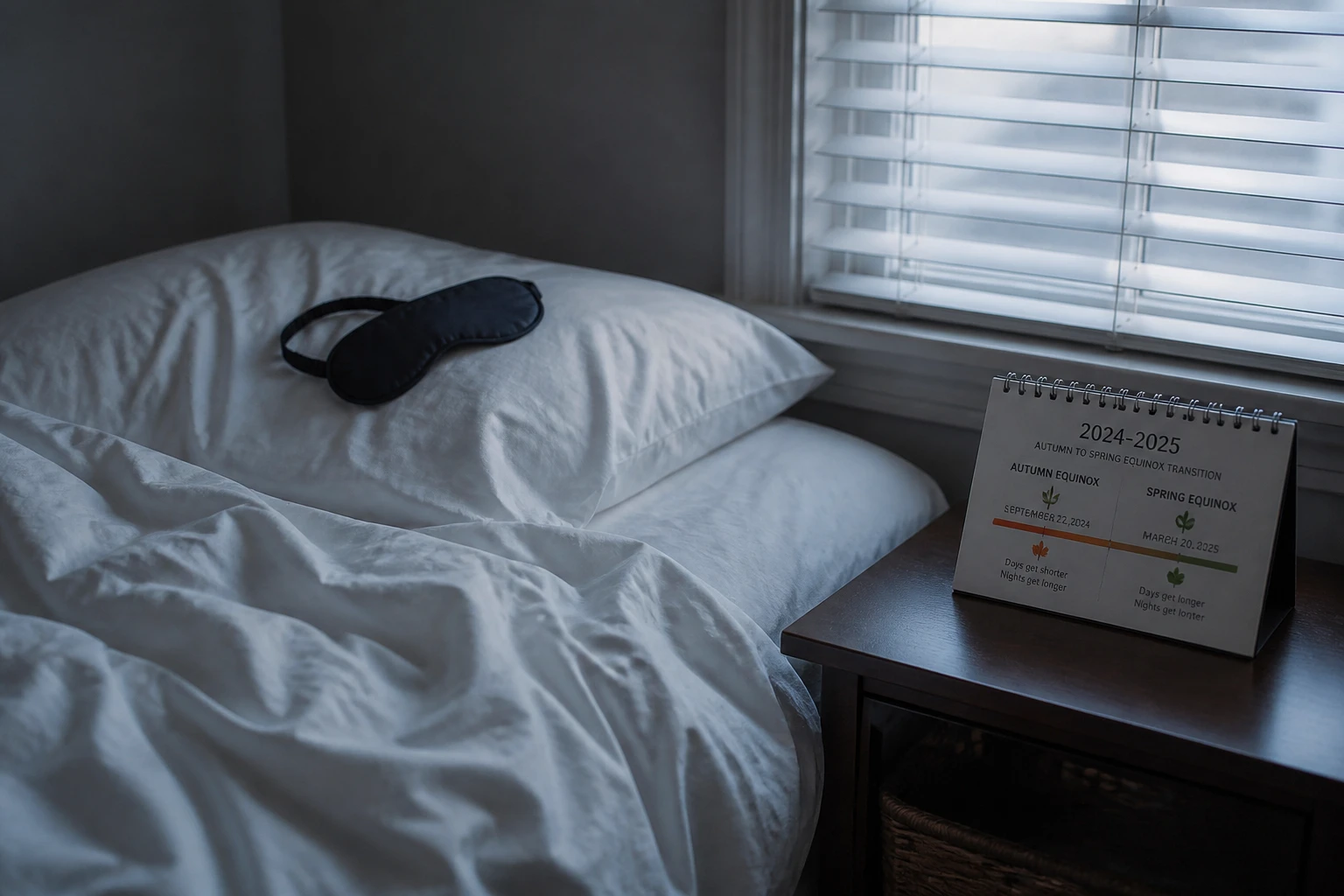
The prospective study, drawn from the UK COVID-19 Symptom Study Biobank and published as longitudinal findings in the Journal of Sleep Research, tracked the same people across the final stretch of restrictions and the months after they lifted. Researchers timed the surveys near the autumn and spring equinoxes so daylight hours stayed comparable.
Scores That Barely Shifted After Restrictions Lifted
Participants completed a battery of validated tools: the Pittsburgh Sleep Quality Index (PSQI), Sleep Condition Indicator, STOP-Bang for apnea risk, Epworth Sleepiness Scale, a single-item restless legs screen, Chalder Fatigue Scale, plus short anxiety and depression screens.
Despite the sharp social change, mean scores showed no clinically or statistically meaningful improvement. Mean PSQI sat at roughly 7.0 at baseline and 7.1 at follow-up. Both figures sit above the threshold of 5 that marks clinically significant poor sleep.
| Measure | Baseline (Oct 2021) | Follow-up (Mar 2022) | Change |
|---|---|---|---|
| PSQI mean (all) | 7.0 | 7.1 | +0.1 |
| Restless legs symptoms | 29.8% | 32.6% | Rise |
| Chalder Fatigue | Elevated | Elevated | Negligible |
| New RLS cases vs resolved (paired) | – | – | More new than resolved |
Other scales stayed below usual clinical cutoffs for concern, yet the overall picture was of disturbance that refused to ease once daily life reopened.
Infection Status Made Almost No Difference
Persistent sleep problems showed no independent link to baseline SARS-CoV-2 infection, a new infection during the follow-up window, or reported post-COVID-19 syndrome. The strongest predictor of follow-up scores was simply the person’s own baseline result.
- Baseline sleep and fatigue scores carried coefficients of 0.73 to 0.84 for later values.
- A new infection produced only a small rise in STOP-Bang scores, well below any clinically meaningful shift.
- Booster vaccination tracked with slightly lower daytime sleepiness (B = -0.53) but higher odds of restless legs symptoms (OR 2.45).
The pandemic experience itself, not the virus, appears to have locked many of these patterns in place. King’s College London and Flinders University researchers noted that global data already pointed the same way: the social and stress load of the pandemic disrupted sleep worldwide.
Restless Legs Kept Climbing
Restless legs syndrome symptoms stood out. Prevalence rose from an estimated 29.8% at baseline to 32.6% at follow-up. Among the 2,071 paired weighted cases, 208 people developed new symptoms while only 148 saw resolution. That net increase reached statistical significance.
Typical population rates for RLS sit far lower, often cited in the 5-10% range for any symptoms and around 3% for clinically significant cases. The study cohort therefore carried a several-fold elevation that showed no sign of spontaneous recovery.
Key snapshot
- PSQI ≥5 both waves: clinically significant disturbance
- RLS prevalence: 29.8% → 32.6%
- Paired shift: more new RLS cases than resolved
- Baseline RLS: odds ratio near 19 for later symptoms
Fatigue, already the most common long-COVID complaint, stayed tightly linked to these sleep measures.
Baseline Scores Predicted Nearly Everything
Once sleep disturbance takes hold, clinical experience has long held that it rarely improves without deliberate help. The new data vindicate that view. Initial scores dominated every model even after adjustment for age, sex, BMI and comorbidities.
Barbara Toson, research fellow at Flinders and first author, put the common assumption bluntly: many people expect sleep to return to normal once major life disruptions end. The numbers show otherwise. The same individuals who struggled in late 2021 were still struggling in early 2022.
We knew from pre-pandemic clinical experience that once sleep disturbance is present, it is unlikely to improve without intervention.
Professor Sutapa Mukherjee of Flinders, co-senior author, said that line of thinking now carries direct clinical weight for anyone presenting with lingering fatigue.
A Cohort That Skews Female, Middle-Aged and White
The 2,390 people with paired data were 80.7% female, mean age around 57-58 years, and 96.8% White. They also skewed toward less-deprived areas. Just over half had a positive SARS-CoV-2 test at baseline by design of the biobank sampling.
All outcomes were self-reported. No pre-pandemic sleep data existed for the group, so the study cannot measure absolute change from 2019. These limits mean the results best describe people who look like the sample rather than the full UK population. Still, the internal consistency across two waves and the strength of baseline prediction remain hard to dismiss.
Professor Emma Duncan of King’s College London, co-senior author and co-founder of the biobank, noted that poor sleep and fatigue remained widespread after restrictions ended, independent of infection or post-COVID syndrome status. The pattern fits worldwide observations that the pandemic experience itself drove sleep disruption.
Why Fatigue Clinics Now Need Sleep Screens
Fatigue remains the single most reported symptom among people with post-COVID-19 syndrome. An estimated 1.9 million people in the UK were living with self-reported long-COVID symptoms lasting more than four weeks as of earlier ONS figures. If sleep disturbance feeds that fatigue, proven sleep treatments become a practical lever even while virus-specific therapies remain limited.
Mukherjee’s group recommends routine sleep assessment for anyone presenting with persistent post-pandemic fatigue, including those with long COVID. The logic is straightforward: sleep problems that started or worsened during the disruption years are unlikely to melt away on their own. They also connect to downstream risks that go well beyond tiredness, including inflammation, mood changes and, in some cases, cardiac arrest risks tied to sleep disruption.
The researchers close with a practical note: sleep disturbance can persist long after major pandemic disruptions end. Addressing it may form part of long-term recovery for a large slice of the population that still feels the after-effects.
The observational design cannot prove causation. Yet the longitudinal design, the size of the sample, and the near-total absence of spontaneous improvement after a major societal reopening make the clinical message hard to ignore. Sleep that broke during lockdown often stayed broken. Waiting for it to fix itself has already failed for most of these participants.
Frequently Asked Questions
What exactly did the UK sleep lockdown study measure?
Researchers used validated questionnaires covering sleep quality (PSQI), insomnia symptoms, daytime sleepiness, apnea risk indicators, restless legs symptoms, fatigue, anxiety and depression. Surveys went out near the 2021 autumn equinox while restrictions were still in force and again near the 2022 spring equinox after all UK lockdown measures had ended, giving 2,390 paired responses after weighting.
Did COVID infection itself drive the lasting sleep problems?
No independent association appeared with baseline infection, infection acquired between surveys, or post-COVID-19 syndrome. Baseline sleep and fatigue scores remained the strongest predictors of later results by a wide margin. A new infection produced only a tiny STOP-Bang rise far below clinical meaning.
How high were the restless legs rates compared with normal?
Symptoms affected roughly 30% of the cohort at both time points and rose slightly overall, with more new cases than resolutions. General-population figures typically sit between 5% and 10% for any symptoms and closer to 3% for clinically significant cases, so the study group carried a several-fold elevation.
What do the authors recommend for people with lingering fatigue?
Routine assessment of sleep should become part of work-ups for persistent post-pandemic fatigue, including long COVID. Once sleep disturbance is established it rarely improves without targeted intervention, and treating it may ease the fatigue that remains the commonest long-COVID complaint.
What are the main limits of the findings?
The sample was predominantly White, middle-aged women living in less-deprived areas. All data were self-reported and no pre-pandemic baseline existed. The observational design cannot establish causation, so results generalize most cleanly to people who resemble the cohort.
Disclaimer: This article summarizes published research for general information and is not medical advice. Consult a qualified clinician for personal sleep or fatigue concerns.