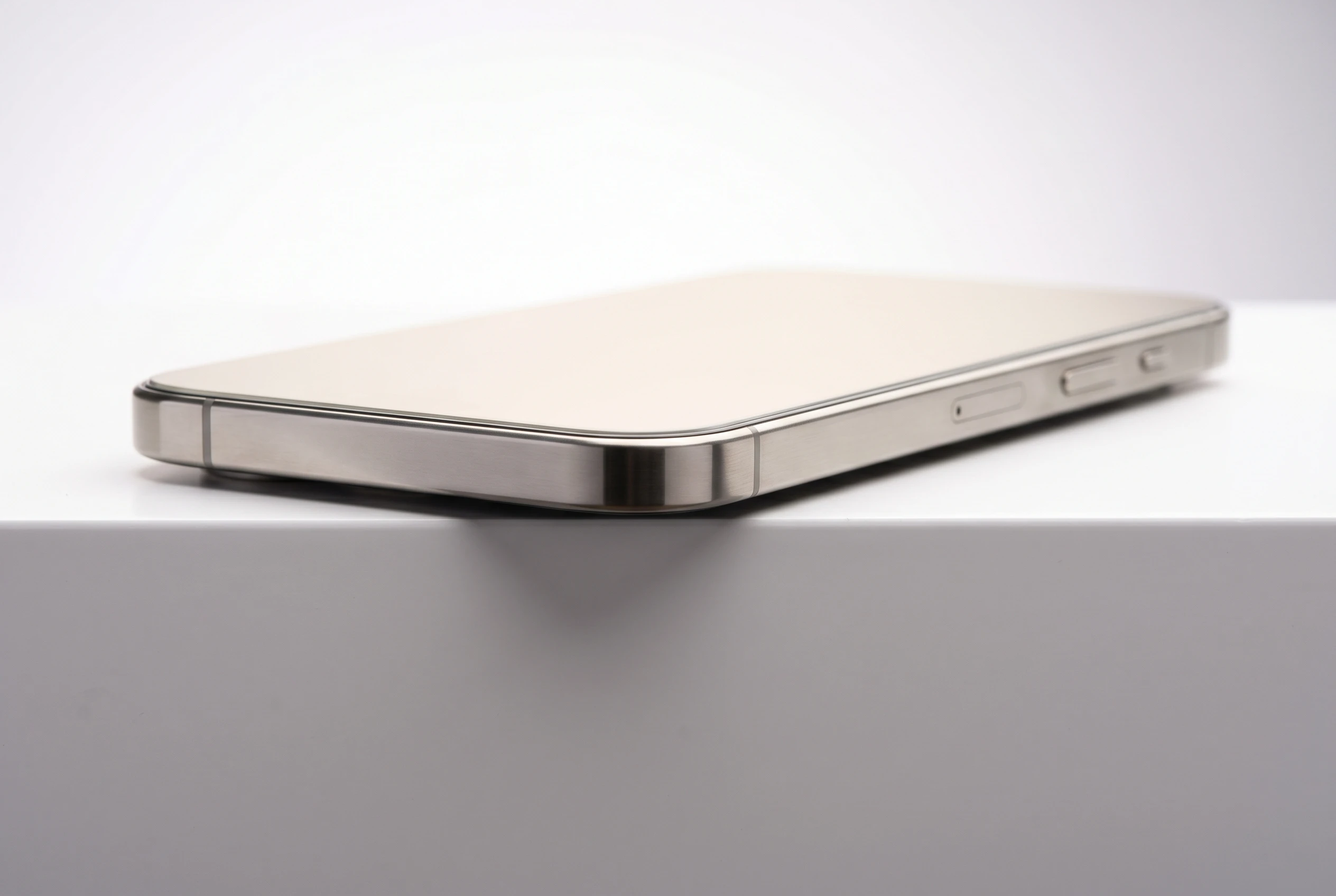
The iPhone 18 Pro Max dimensions appear set to match its predecessor exactly, measuring 8.75mm thick, according to a Weibo post published June 4 by leaker Ice Universe. That figure matches the iPhone 17 Pro Max precisely, suggesting the outward profile of Apple’s largest flagship won’t change before its expected September 2026 launch alongside the company’s first foldable phone.
Ice Universe’s post attached an explanation to the figure: Apple has directed most of its engineering resources toward the foldable iPhone, referred to in leaks as the iPhone Ultra, leaving the Pro lineup to iterate within an established chassis. Months of iPhone 18 Pro leaks have been notable for their absence of structural hardware surprises, and the thickness tip fits that pattern.
The Tip and Its Own Contradiction
The 8.75mm figure comes from a Weibo measurement post published June 4, and it carries a specific complication: the same leaker said the opposite three months earlier. In March, the account had suggested the iPhone 18 Pro Max would land slightly thicker than the iPhone 17 Pro Max. A November 2025 tip from Weibo-based leaker Instant Digital pushed further, placing the phone above 240 grams and claiming it would become the heaviest iPhone since the iPhone 14 Pro Max.
| Source | Date | Claim |
|---|---|---|
| Instant Digital (Weibo) | November 2025 | Over 240g; heaviest since iPhone 14 Pro Max |
| Ice Universe (Weibo) | March 2026 | Slightly thicker than iPhone 17 Pro Max |
| Same account | June 4, 2026 | 8.75mm; flat versus current Pro Max |
Thickness and mass aren’t the same variable. Instant Digital’s November claim targeted weight specifically, and a phone can maintain its chassis depth while gaining mass if internal components are denser or if a battery cell fills the same physical volume through more efficient chemistry. The June thickness reading and the November weight estimate don’t necessarily cancel each other out. Both could prove accurate if Apple reconfigured the internals at 8.75mm while still arriving at a heavier total mass than the current generation.
What’s harder to reconcile is a single leaker contradicting his own reading on the same dimension across a three-month window. Apple tests multiple hardware configurations before locking a specification, and the March reading could reflect a prototype that didn’t survive into production. A Weibo account tracking early supply-chain data in one quarter and updated data in the next could be observing a genuine revision rather than issuing a correction. That framing reduces the contradiction without dismissing either reading, but neither carries certainty until Apple announces the device.
Ice Universe’s track record on hardware dimensions leans strongest on Samsung hardware, where the account has correctly called chassis measurements months before announcements across multiple Galaxy S and Z Fold generations. On Apple devices, the record is more mixed, and a three-month gap between a thicker-than-predecessor call and a flat-versus-predecessor call on the same device is an outlier even for a source that typically tightens its estimates as production data matures and supply-chain access deepens.
How the iPhone Ultra Pulled Apple’s Focus
Apple reportedly pursued eliminating the fold crease regardless of cost for the iPhone Ultra, developing a new flexible display material that makes it nearly invisible when open, per supply-chain reports cited by multiple outlets. The device is built around a crease-free 7.8-inch inner display in a book-style 4:3 design, with an outer screen around 5.5 inches, and a liquid metal hinge that no competing foldable currently uses. That combination of engineering ambitions has no prior example in the foldable smartphone market.
Reaching the target dimensions also required a hardware trade-off unusual at this price point. The TrueDepth array required for Face ID couldn’t fit across two separate screens at the Ultra’s target thinness, so the foldable reverts to Touch ID in the power button, the same authentication Apple uses on the iPad Air and iPad mini. At a starting price expected around $2,000 per Weibo leaker Fixed Focus Digital and analyst Ming-Chi Kuo of TF International Securities, that’s a concession driven entirely by physical constraint.
Manufacturing confirms the project’s scope. DigiTimes, citing supply-chain sources, reported mass production was pushed from June to August 2026, putting the device still adjusting its production schedule three months before the planned launch, consuming factory qualification resources that run in parallel with everything else in Apple’s fall pipeline.
The 18 Pro Max holds at $1,199, matching the current model’s starting price. Apple has also reshaped its annual release calendar: the standard iPhone 18 and iPhone 18e wait until spring 2027, clearing the fall window for the Pro lineup and the foldable. The WWDC 2026 developer conference, running June 8 through 12, is expected to debut iOS 27 with foldable-specific interface optimizations, giving developers a first look at the software weeks before any hardware ships.
Pro Max Thickness Through the Generations
The iPhone 14 Pro Max came in at 7.85mm. The 15 and 16 Pro Max models both measured 8.25mm, a reading that held through two consecutive annual cycles before the prior generation jumped 0.5mm to 8.75mm, with a larger battery and camera hardware upgrades as the cited reasons. The current tip, if accurate, marks the second straight year at that depth and mirrors the 15-to-16 plateau before the last jump.
| iPhone Model | Chassis Thickness |
|---|---|
| iPhone 14 Pro Max | 7.85mm |
| iPhone 15 Pro Max | 8.25mm |
| iPhone 16 Pro Max | 8.25mm |
| iPhone 17 Pro Max | 8.75mm |
| iPhone 18 Pro Max (tipped) | 8.75mm |
Apple’s official specifications for the current Pro Max list the phone at 8.75mm and 233 grams, with a video playback rating of up to 39 hours. The side-by-side dimension comparison of the 2024 and 2025 Pro Max models shows in concrete terms how that 0.5mm shift changed the phone’s in-hand presence. For buyers carrying over from the current generation, an 18 Pro Max at the same depth means the same cases fit, the same pocket feel carries over, and there’s no physical adjustment period for a new chassis footprint.
What the 18 Pro Max Still Gets This Fall
Six upgrades have built consistent support across leakers and supply-chain sources since early 2026, each appearing in at least two independent reports.
- A20 Pro chip (2nm): Apple’s first processor on TSMC’s 2-nanometer production node, expected to deliver roughly 15% faster CPU and GPU throughput with 30% better power efficiency than the A19 Pro. The chip’s supply-chain cost and India pricing implications are covered in the iPhone 18 Pro Max India launch and A20 chip cost breakdown.
- Variable aperture on the main camera: The 48-megapixel Fusion lens will physically adjust its opening between settings, per Weibo leaker Digital Chat Station. Every iPhone Pro from the 15 through the 17 has used a fixed f/1.78 aperture. This would be the first mechanical iris in iPhone history.
- LTPO+ display: Upgraded panel technology on both the 6.3-inch and 6.9-inch Pro models, contributing to better battery efficiency through more adaptive refresh-rate control than the current LTPO panels provide.
- Smaller Dynamic Island: Face ID’s flood illuminator is expected to move under the screen, narrowing the pill cutout by roughly 25% compared to the current design.
- C2 modem: Apple’s second in-house modem adds mmWave 5G connectivity and, per multiple reports, support for the 3GPP NR-NTN satellite cellular standard, which enables a phone to connect via low-earth-orbit satellites as a coverage backbone.
- Battery at 5,100-5,200mAh: A marginal increase from the 5,088mAh in the current eSIM Pro Max. The confirmed iPhone 18 Pro color lineup runs to Dark Cherry, Light Blue, Dark Gray, and Silver.
The variable aperture carries the clearest competitive pressure. Huawei shipped it on the P60 Pro in 2023, and Xiaomi followed on the 13 Ultra. Apple arrives in September with reviewers who already hold a two-cycle benchmark, and integration with Apple’s computational photography pipeline will face direct comparison from the first review day. The fixed f/1.78 aperture has been constant across three Pro generations. A mechanical iris that opens wider in low light or narrows for depth of field precision addresses one of the more persistent gaps cited in flagship iPhone-versus-Android camera reviews.
The Weight Question Left Unanswered
The June post covered thickness and stopped. Weight wasn’t mentioned, and that absence is where the current picture has its largest gap.
Instant Digital’s November 2025 estimate placed the 18 Pro Max above 240 grams, a figure that would exceed the iPhone 14 Pro Max’s 240-gram record, which Apple’s specifications confirm as the heaviest in the Pro Max series. The iPhone 17 Pro Max weighs 233 grams per Apple’s published data, seven grams lighter than the 14’s record. An 18 Pro Max clearing 240 grams would be the heaviest Pro Max Apple has shipped, reversing a trend toward lighter annual flagships that has held since 2022. The iPhone 14 Pro Max drew consistent commentary from reviewers who found single-hand use at that weight genuinely difficult.
Digital Chat Station noted that Apple may have miniaturized aspects of the internal layout to fit the marginal battery increase at the same chassis depth. The weight impact of that reconfiguration depends on which components changed, a detail no supply-chain source has confirmed. Samsung Display and LG Display are both expected to supply the LTPO+ panels, according to reporting from The Elec, a South Korean display trade publication. LTPO+ panels carry additional lamination layers compared to current LTPO designs, and any change in panel stack adds mass even in fractions of a gram.
Apple’s fall event brings both phones to market together; the 18 Pro Max’s weight is the one specification no leaker has pinned down ahead of September.