A consumer court in Chhattisgarh has ordered Maruti Suzuki to swap a customer’s Grand Vitara for a fresh, E20-compatible model, or refund the full ₹20,50,494 (roughly $23,300) purchase cost within 45 days. The District Consumer Disputes Redressal Commission in Raipur ruled this week. Maruti sold the SUV without telling the buyer it could not safely run on India’s ethanol-heavy fuel blend.
The case is the first of its kind built around E20 fuel, and it lands at an awkward moment. Most petrol vehicles on Indian roads were never built for the blend now sold at nearly every pump in the country.
A Fuel Tank Cleaned Twice Could Not Stop the Stalling
Dr. Premraj Devta, a Raipur physician, bought the Maruti Suzuki Grand Vitara Strong Hybrid on June 3, 2024, paying ₹18.29 lakh. The SUV had been manufactured seventeen months earlier, in January 2023.
Within five months of the purchase, it began stalling. Mechanics at the authorised service centre found contamination in the fuel tank and cleaned it out. The problem came back. They cleaned it a second time, telling Devta the first job may not have been thorough enough.
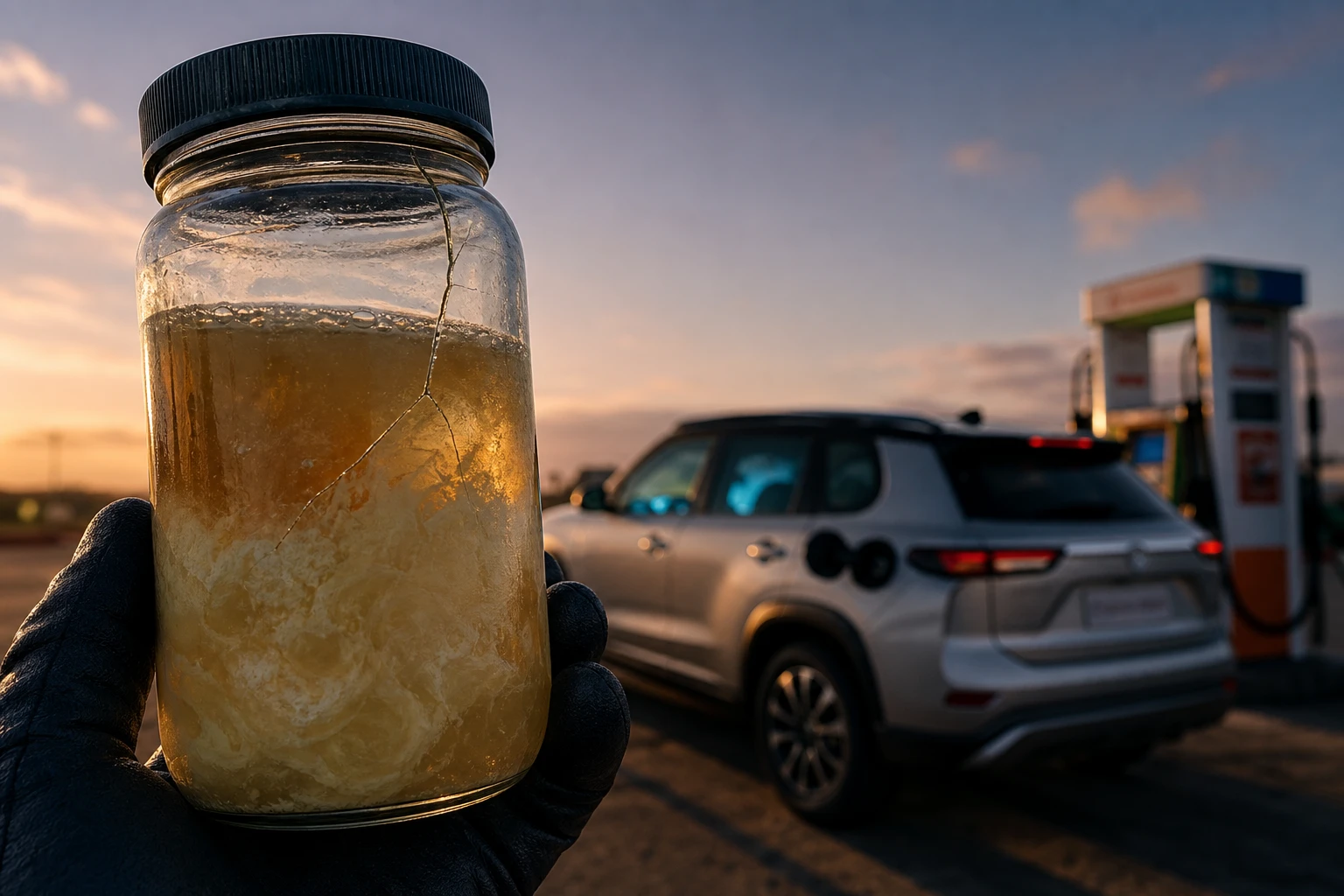
A sample of the fuel had turned a curd-like consistency. Tested at a government-recognised laboratory, it came back positive for ethanol. The stalling continued regardless, forcing Devta to file a complaint under Section 35 of the Consumer Protection Act, 2019.
Maruti Suzuki and its dealer, Nexa Magneto, told the commission the SUV had no manufacturing defect and that contaminated fuel, an external factor outside the vehicle’s warranty, was to blame. The commission was not convinced.
It found that simply repairing the vehicle again and again was not an adequate fix. The Grand Vitara had not been built with an E20-compatible engine, the order said, and neither Maruti nor the dealer disclosed that at the time of sale. That combination amounted to a deficiency in service and unfair trade practice.
The order breaks the ₹20,50,494 figure into three parts: the vehicle’s ₹18,29,000 price, ₹1,86,850 in RTO registration charges and ₹34,644 in insurance premium. On top of that, the commission awarded ₹1 lakh for mental agony and ₹10,000 in litigation costs, both due within the same 45 days. Miss that window, and the whole amount starts collecting 7% annual interest from the date of the order.
Fuel availability factored directly into the ruling.
Where no other alternative is available, drivers cannot be expected to completely avoid using E20 fuel.
The Raipur commission wrote that in its July 14 order, addressing the shrinking range of fuel choices available to ordinary drivers today.
Why Maruti’s Own Compliance Date Came Three Months Too Late
Maruti Suzuki has said its entire India portfolio, including the WagonR, Swift, Baleno and Grand Vitara, has been E20-compliant since April 2023. Devta’s car missed that cutoff by three months.
The mismatch is not unique to one buyer. E20 became the mandatory nationwide fuel from April 2025, and complaints from vehicle owners have piled up ever since.
India reached its 20% ethanol blending target in 2025, five years ahead of the original 2030 deadline set out in the National Policy on Biofuels. Blending climbed from 1.5% in 2014 to 20% within roughly a decade, a pace few countries have matched.
Brazil, by contrast, took decades to reach comparable levels, phasing in tax breaks and subsidies as it went, according to the International Energy Agency. India compressed that same journey. That speed left little time for the existing fleet to adjust.
How Many Indian Cars Are Actually Built for E20?
Roughly one in five new petrol vehicles sold in India over the past fifteen years can safely run on E20 fuel, according to an analysis of government and industry data. That leaves the vast majority of the fleet, cars and two-wheelers alike, built for older, lower-ethanol blends.
More than 250 million new vehicles were sold in India in that period, according to the Society of Indian Automobile Manufacturers. Two-wheelers all run on petrol, and roughly 30% of cars on Indian roads run on diesel instead. That leaves an estimated 234 million petrol cars and bikes only built for 5% or 10% ethanol blends, not the 20% now sold at most pumps.
Only Maruti Suzuki has committed to an upgrade kit for older cars so far, priced at up to ₹7,000 (about $79). No manufacturer has announced a recall or a free retrofit programme for engines built before the E20 shift.
| Automaker | E20-Compatible Since | What The Company Says |
|---|---|---|
| Honda Cars India | January 2009 | Vehicles built in India from that date are materially compatible, with no major part changes required. |
| Mercedes-Benz India | 2018 | Shifted to Euro 6 emissions norms two years ahead of the industry, covering all BS6 cars sold since. |
| Maruti Suzuki | April 2023 | Entire portfolio certified from this date; the Grand Vitara at the centre of the Raipur case was built three months earlier. |
| Hyundai and Toyota | 2023 | Both automakers upgraded their India model lineups to E20 standards that year. |
Hero MotoCorp, which sells two-wheelers, says bikes built before April 2023 have been tested extensively on E20 with no major issues, though it acknowledges a marginal mileage impact on some older models.
Automakers Say Their Service Data Shows No Damage
Union Road Transport Minister Nitin Gadkari has pushed back hard on the backlash. When a journalist told him on ABP News that her car’s mileage had dropped from 11 km per litre to 7 km per litre since switching to E20, he was blunt. “You and I can’t check the mileage,” Gadkari said.
Maruti Suzuki’s Rahul Bharti, the company’s executive director of corporate affairs, has made a similar case using the company’s own service network. “E10 cars were tested on E20 fuel and we have not found any concerns,” Bharti said, citing data from 1.4 crore E20-run vehicles monitored over 15 years that showed no evidence of ethanol-induced corrosion. Maruti says the mileage penalty is small too. “Compared to E10, E20 has a 3-3.5% loss of mileage,” the company said.
Not every viral claim has held up. A widely shared post blamed E20 for damage to a Mercedes-Benz G-Wagon worth more than ₹4 crore, but Mercedes-Benz India has said all its BS6 cars sold since 2018 are E20-compatible, undercutting the claim. Toyota Kirloskar Motor made a similar correction after a video of an Innova Hycross breaking down went viral, saying its own inspection traced the fault to contaminated fuel rather than the ethanol blend itself.
Mechanics on the ground describe a messier picture. Workshop owners in Tamil Nadu and Kerala have reported rubber seals wearing faster and rust appearing on older cars left standing for long stretches on E20, along with a noticeable mileage hit.
What Owners of Older Cars Should Check Before Their Next Fill-Up
For anyone driving a car built before the compliance wave of 2023, a few checks can settle the question before it becomes an expensive one.
- Check the owner’s manual for a fuel specification page that names E10 or E20 compatibility directly.
- Look at the fuel filler cap, where some manufacturers now stamp compatibility information.
- Call the dealer with the vehicle’s VIN for a model year specific answer, rather than relying on the trim name alone.
- Watch for early warning signs, including rough idling, hard cold starts or a sudden mileage drop, and get the tank inspected before it turns into a full stall.
Estimates for the mileage hit on non-compliant vehicles vary widely, from roughly 3% on newer E10 engines up to 10% on older, carburetted ones. The government maintains the drop is minor and driven mostly by driving habits and maintenance, not the fuel itself.
The Government’s Own E20 Roadmap Runs Out in October
Even as officials defend the rollout, the policy’s own paperwork shows it is not settled. The government’s roadmap commits it to E20 only through October 31, 2026. What comes after depends on a still-unfinished Inter-Ministerial Committee report, followed by stakeholder consultations and a final government decision.
The next phase is already taking shape regardless. About 48 retail outlets began selling E85 fuel in June 2026, and the Ministry of Road Transport and Highways has drafted rules to formally recognise flex-fuel vehicles that can run on blends up to nearly pure ethanol. Existing E20 engines cannot handle that jump without further changes to fuel systems and engine calibration.
Maruti Suzuki has already tested that future in a small way, with its flex-fuel WagonR launch to a limited network of ethanol pumps. Tata, Hyundai and Mahindra have shown similar concepts without a firm sales date.
What We Know:
- The Raipur commission ordered Maruti Suzuki to replace the Grand Vitara or refund ₹20,50,494 within 45 days of the July 14 order.
- The order also awards ₹1 lakh for mental agony and ₹10,000 in litigation costs, with 7% annual interest if payment runs late.
- The vehicle was manufactured in January 2023, three months before Maruti’s stated April 2023 compliance cutoff for its full range.
What’s Unconfirmed:
- Whether Maruti Suzuki will appeal the order to a higher consumer forum.
- Whether the government will extend the E20 mandate past its current commitment window, which runs only through October 31, 2026.
For now, the Raipur order is the country’s first legal test of who pays when a fuel mandate outruns the fleet it was sold to.
Frequently Asked Questions
What Is E20 Petrol and Why Did India Roll It Out So Fast?
E20 is petrol blended with 20% ethanol, up from the 10% blend most of the country used before. It carries a research octane number of around 108.5 against 84.4 for pure petrol, part of why blending lifted the average pump octane from 91 to about 95. India pushed the rollout to cut crude oil import bills, lower emissions and route more money to sugarcane and grain farmers.
Will Using E20 Petrol Void My Car’s Warranty or Insurance?
Officials have publicly rejected the idea that insurers can reject a claim simply because a car was filled with E20. Coverage still depends on the specific policy terms and the proven cause of any damage, and manufacturers say cars certified as E20 compatible face no warranty risk from using it.
Can I Still Buy Ethanol-Free Petrol in India?
Yes, but only at select outlets in large cities, and at a steep premium. Near-pure petrol grades like Indian Oil’s XP100, HPCL’s Power100 and BPCL’s Speed100 sell for around ₹167 to ₹170 a litre in Delhi, roughly 60% more than standard petrol.
Is Maruti Suzuki Appealing the Raipur Court’s Order?
Maruti Suzuki has not publicly confirmed an appeal, though at least one report expects the company to challenge the ruling in a higher consumer forum. Until any appeal is decided, the Raipur order remains India’s first major consumer verdict linking E20 compatibility directly to manufacturer liability.
What Should I Do If My Older Car Starts Stalling on E20?
Get a fuel sample tested and keep every service record from the visit, exactly as Devta did before filing his complaint. Confirm the vehicle’s compatibility status with the manufacturer first, since a documented mismatch between the car’s build date and its fuel rating was central to how the Raipur commission ruled.
Disclaimer: This article is for informational purposes only and does not constitute legal, financial or automotive repair advice. Vehicle compatibility and warranty terms vary by model and manufacturer, so consult your dealer or a qualified professional before making decisions about fuel use or legal claims. Figures are accurate as of publication on July 16, 2026.