Black Sea Petroleum has started processing Kazakh crude at Georgia’s only oil refinery in Kulevi and expects its first Libyan cargo between 20 and 30 August under a contract running to the end of 2027. The company aims to clear all Russian feedstock by early September, ahead of an EU transaction ban that takes effect in late January 2027.
The move follows the plant’s inclusion in the bloc’s latest sanctions round and turns a short-term compliance race into a longer test of whether a facility built on discounted Russian barrels can keep running once that supply is cut.
Kazakh Barrels Already Running, Libyan Cargo Next
In its crude oil supply diversification statement dated 31 July, Black Sea Petroleum confirmed the Kulevi Oil Refinery began handling Kazakh-origin crude at the start of July. Remaining volumes continue through August.
A supply agreement signed 3 July with an unnamed international trader covers Libyan crude. The first shipment is scheduled for late August. The deal lasts until the end of 2027 and carries an extension option.
- Target date: entirely non-Russian feedstock by early September 2026
- H1 2026 throughput: more than 650,000 tonnes, already past half the first-phase annual design
- Contract horizon: Libyan volumes secured through 2027 with extension option
- Prior plan: earlier statements had also named Turkmen crude as a candidate
BSP said the steps match the European Commission’s six-month window and that it remains in active contact with Brussels, supplying verifiable progress updates.
The July start on Kazakh barrels and the late-August Libyan window leave little slack. Full clearance by early September would give the plant roughly four months of verifiable non-Russian runs before the deferred ban date. That buffer matters because the Commission’s assessment and the Council’s later decision both turn on documented continuity, not a single clean cargo.
Earlier company statements had floated Turkmen crude as another candidate. The signed path now runs through Kazakhstan and Libya instead. The Libyan contract’s end-2027 horizon, plus its extension option, is the longest firm cover the operator has made public for any non-Russian grade.
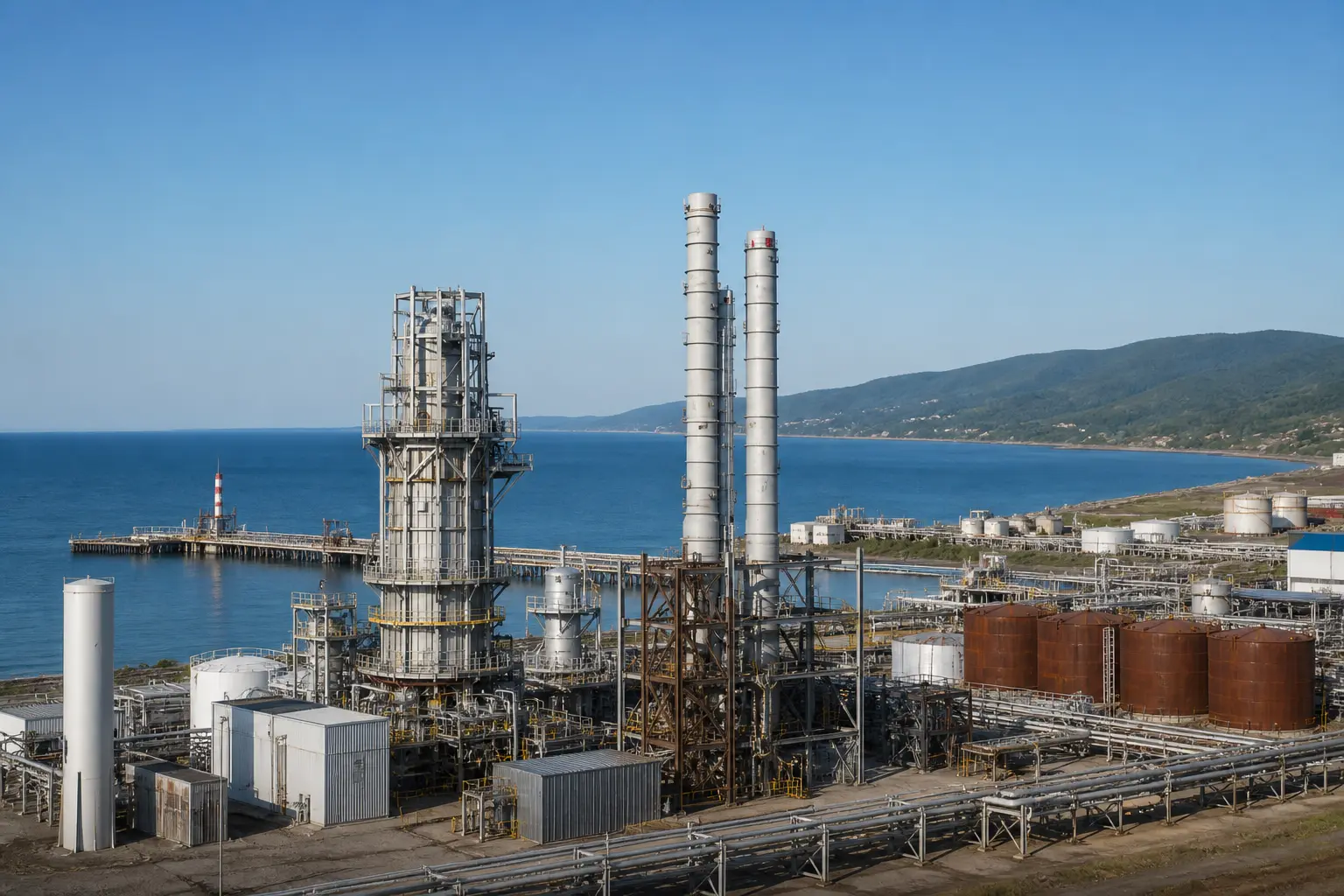
How a Brand-New Plant Became a Russian Processing Hub
Kulevi opened in October 2025 as Georgia’s first domestic refinery. Its initial design capacity sits at about 1.2 million tonnes a year, or roughly 24,000 barrels per day. The stated goal was lower reliance on imported fuels from Russia, Turkey, Azerbaijan and elsewhere.
In practice the plant ran exclusively on Russian crude from the start. The first cargo, 105,340 tonnes of Siberian Light from Russneft, arrived 6 October 2025 on the vessel Kayseri from Novorossiysk. Five more Russian shipments followed through May 2026. No other origin was documented at the connected Kulevi port in that period.
- 6 October 2025: first Russneft Siberian Light cargo unloaded
- October 2025-May 2026: six Russian crude shipments total; 100 percent feedstock share
- 26 January 2026: PyGas cargo leaves for Barcelona days after the EU ban on Russian-origin products takes effect
- 14 March 2026: ULSD shipment arrives at Burgas, Bulgaria
- 14 May 2026: further Russian crude arrives after an earlier public pledge to replace it
- 23 July 2026: EU lists the refinery in its 21st sanctions package
Refined products moved out through the adjacent terminal. CREA tracking of product exports put Kulevi port shipments of oil products to the EU and United States at 1.46 million tonnes worth EUR 811 million in the three years after the original EU ban on Russian refined fuels. Investigators flagged the refining step as a classic loophole: Russian molecules entered a non-sanctioned country, left as Georgian-origin products, and reached markets that had barred direct Russian oil.
The pattern held for months after the plant’s public pledges to change course. A further Russian cargo still arrived in mid-May 2026. Only the July listing and the six-month compliance clock appear to have locked the diversification timetable to physical barrels rather than statements of intent.
The EU’s New Tool Reaches Outside Russia
On 23 July the Council adopted its 21st package of restrictive measures. Beyond listings inside Russia and Belarus, the package created a mechanism to prohibit transactions with named refineries in third countries that process or refine Russian crude or that facilitate circumvention.
Kulevi became the first such listing. The transaction ban is deferred six months, until approximately 25 January 2027, expressly to give the operator time to diversify. After the European Commission assesses evidence of a complete phase-out, the Council decides whether to keep or lift the restriction.
BSP has said its timetable is consistent with that window and that it will keep supplying regular updates. The company frames the shift as both regulatory necessity and a route into higher-margin markets that refuse Russian-linked barrels.
The design of the tool is deliberate. Listing reaches the refinery rather than the crude’s country of origin alone. The deferred start separates the political signal from the operational cut-off, and the Commission-to-Council sequence puts the burden of proof on documented feedstock change. For any later third-country case, Kulevi now supplies the template: name the plant, grant a fixed window, then judge the exit on evidence.
Capacity Numbers and the Private Bet Behind Them
The plant is Georgia’s largest private industrial investment. Company materials and contemporary reports put the outlay above USD 700 million, with some figures citing more than 800 million once final costs are tallied. Black Sea Petroleum LLC owns and operates it. Georgian businesswoman Maka Asatiani is the principal owner; Davit Potskhveria serves as CEO and co-founder.
| Phase / Metric | Value | Notes |
|---|---|---|
| First-phase capacity | 1.2 million tonnes per year | ~22,000-24,000 bpd |
| H1 2026 actual throughput | >650,000 tonnes | Already over half annual design |
| Planned second phase | up to 4-4.5 million tonnes per year | Expansion target mid-to-late decade |
| Investment scale | >USD 700 million | largest private investment exceeding 700 million in Georgia |
The commercial logic was straightforward while Russian crude traded at a deep discount. Cheap feedstock plus Black Sea location plus access to European product markets produced rapid volume growth. That same logic made the plant an obvious target once Brussels decided to close the third-country refining channel.
First-half throughput already cleared half the annual design figure, which shows the units can run hard when barrels are available. The planned jump to 4-4.5 million tonnes in a second phase assumes that feedstock security and market access both hold. Losing the discount on Russian crude tests the first assumption; the January ban decision tests the second.
Georgia’s Petroleum Export Boom Now Faces a Stress Test
The refinery’s output has already reshaped national trade figures. Petroleum products shot up the export rankings in early 2026. January alone saw domestic petroleum-product exports near USD 56 million, a multi-thousand-percent rise from the prior year. Later months continued the pattern.
Those gains appear in the petroleum-driven export jump in June and in the broader record domestic exports led by oil. Growth data for spring also carried a refinery-linked growth patterns in April that mixed strong overall numbers with underlying industrial caution.
- Rapid rise of oil products as a top export earner after the plant started
- Shipments reaching Spain, Bulgaria and other EU ports under Georgian origin claims
- Domestic fuel supply and industrial employment tied to continued operations
- Risk that loss of cheap Russian feedstock raises costs or cuts margins
- Opportunity to lock in non-Russian supply chains and keep Western market access
On social platforms the switch is widely read as one less revenue stream for Moscow and a concrete step toward energy options that do not run through the Kremlin. Earlier public pledges to drop Russian crude had been followed by fresh Russian cargoes; the sanctions timetable appears to have converted words into physical barrels from Kazakhstan and, soon, Libya.
The export spike and the compliance race are now the same story. Product that reached Barcelona and Burgas under Georgian origin claims depended on a feedstock slate that Brussels has since moved to cut off at the refinery gate. Keeping those routes open means proving the molecules match the new paperwork.
What Still Has to Be Proven Before January
The six-month clock is running. BSP must show the Commission a complete, verifiable exit from Russian crude. Physical evidence already includes the Kazakh volumes processed since early July and the contracted Libyan cargo due later this month. Full elimination is planned for early September, leaving roughly four months of clean operations before the ban activates.
What We Know
- Kazakh crude is already in the units; Libyan cargo window is 20-30 August
- Contractual cover for Libyan supply runs to end-2027 with extension option
- EU transaction ban deferred to ~25 January 2027 pending assessment
- Company and Commission are in active communication
What’s Unconfirmed
- Exact volumes and pricing of the new non-Russian contracts
- Whether any residual Russian molecules remain in tanks or lines after September
- Final Commission recommendation and Council decision on delisting
- Long-term margin impact once discounted Russian feedstock is gone
The open items are not minor. Residual volumes in tanks or lines could undercut an otherwise clean run log. Pricing on the Kazakh and Libyan barrels will decide whether the higher-margin product story survives contact with real feedstock costs. The Council’s final call remains political as well as technical.
Discounted Barrels Built the Original Margin
Every public figure attached to Kulevi points back to the same wager. An outlay above USD 700 million, and on some tallies more than 800 million, was justified while Russian crude arrived at a deep discount and products could still move into European ports as Georgian-origin barrels.
| Advantage while Russian crude flowed | Pressure after the phase-out |
|---|---|
| Deeply discounted feedstock | Replacement grades without that discount |
| Full use of 1.2 million tonne first-phase capacity | Throughput tied to new contract volumes |
| Product access to EU and US buyers | Access contingent on delisting after review |
| Rapid H1 2026 run above 650,000 tonnes | Margins recalculated on non-Russian slate |
Black Sea location and the adjacent terminal remain fixed assets. The variable that changes is the cost of the barrel entering the units. BSP presents non-Russian supply as the route into markets that refuse Russian-linked product. That route only pays if the new crude can be refined and sold at spreads that still service an investment of this size.
The second-phase ambition of 4-4.5 million tonnes a year sits further out. It depends on the first phase clearing the January test. Without a clean Commission assessment and a Council decision to lift the restriction, the expansion case loses its main high-value outlet.
The Loophole Closes When Feedstock Changes
CREA’s tracking framed the core issue in simple terms. Russian crude entered a non-sanctioned country, left as Georgian-origin products, and reached buyers that had barred direct Russian oil. The refining step was the hinge.
Swap the feedstock and the hinge works the other way. Kazakh barrels already in the units, and Libyan barrels due between 20 and 30 August, break the molecule path that made the origin claim controversial. A full exit by early September would leave a multi-month record of clean runs before the transaction ban’s approximate 25 January 2027 start.
- Before listing: six Russian crude shipments, exclusive feedstock share, products moved to EU and US ports
- After 23 July listing: six-month deferral tied to verifiable diversification
- July-August 2026: Kazakh processing under way, Libyan cargo window open
- Early September 2026 target: zero Russian feedstock on site
- Late January 2027: ban activates unless Council lifts the restriction
The EU instrument is built for exactly this sequence. It names the plant, sets the clock, and reserves the final decision until evidence of phase-out is in. Kulevi is the first live case; the same steps can be applied to any later third-country refinery that Brussels judges to be processing Russian crude or aiding circumvention.
If the paperwork and the molecules both check out, Kulevi stays open for European and other high-value product markets. If not, the transaction ban freezes dealings with EU operators and the commercial model that justified an 800-million-dollar bet collapses. The second-order effect is already visible: a new EU instrument that can reach any third-country refinery feeding on Russian crude now has its first live test case on the Black Sea.
Georgia’s newest industrial flagship is rewriting its supply map in real time. The next cargoes and the Commission’s verdict will decide whether that rewrite is permanent.