Leaked marketing materials for the Pixel 11 series claim the thinnest camera bar yet, up to 30 hours of battery life on the base model, and a charge to 55% in five minutes. The images, shared by reliable leaker evleaks, also lock in several Pixel 11 Pro Fold specs just a week before Google’s August 12 Made by Google event.
Pre-orders open the morning of the event. The polish is real. So is the immediate pushback on the flashiest number.
What the Marketing Cards Say
Android Authority published the fresh set on August 4. The Pixel 11 cards highlight three hardware talking points and one camera feature. The Fold cards confirm storage, RAM, durability and a named software feature called HiLight.
- Thinnest camera module bar yet on the base Pixel 11
- Up to 30 hours of battery life on the base model
- 55% charge in five minutes, with speeds based on the 30W USB-C charger for the Pixel 11 Pro and the 45W USB-C charger for the Pixel 11 Pro XL
- 30x Super Zoom on the Pixel 11 camera
- Pixel 11 Pro Fold: stated 24-hour battery, 16GB RAM, 1TB storage, IP68, HiLight feature
An earlier July set from the same leaker leaned harder on Gemini Intelligence cross-app tricks and the same 30x zoom jump from the Pixel 10’s 20x Super Res Zoom ceiling. Hardware shape stays familiar. Software and endurance claims carry the sell.
Quick snapshot from the cards
- Base Pixel 11 battery claim: up to 30 hours
- Fold battery claim: over 24 hours
- Fast-charge window: 55% in five minutes (charger-dependent)
- Zoom step: 30x Super Zoom on base model
These are marketing statements, not lab results. Google has used similar language before.
The Camera Bar Gets a Slimmer Pitch
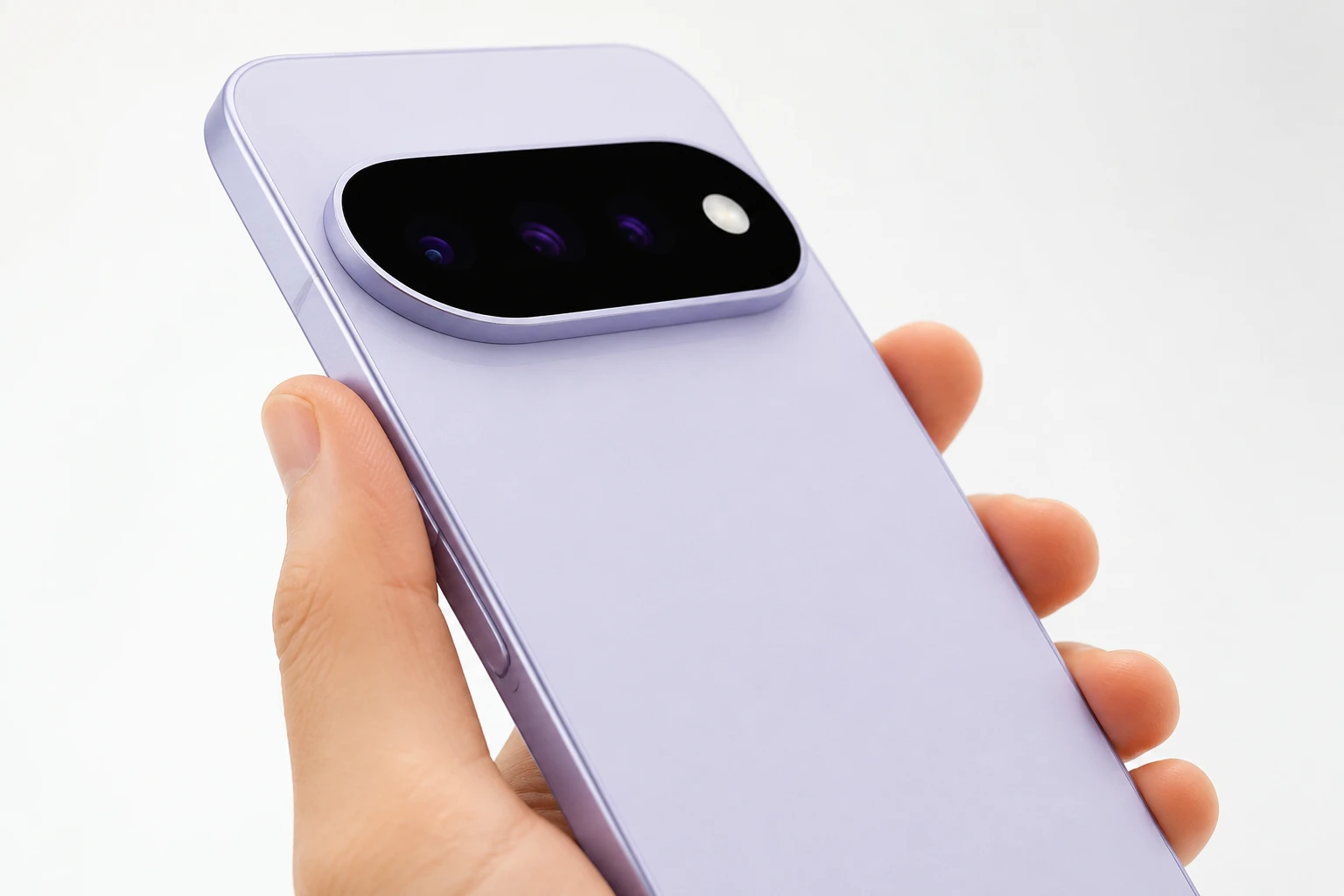
Google is calling the module the thinnest yet. Earlier CAD and case renders from spring already pointed to a uniform all-glass, all-dark bar that drops the Pixel 10’s two-tone look and trims overall thickness by a tenth of a millimeter on the Pro. The bar itself stays the raised pill carrying the lenses, flash and sensors.
Designers have chased a cleaner bar for years. The Pixel 6-era rectangle gave way to more complex treatments that added visual weight. A thinner, single-finish bar is a refinement buyers will feel in cases and pockets. It is not a new silhouette. The phone still reads as a Pixel from across a table.
That evolutionary path matches the rest of the hardware story. Slimmer bezels appeared in earlier leaks. Body thickness barely moves. The marketing focus on “thinnest yet” turns a small physical win into a headline feature.
Thirty Hours Meets Google’s Own Track Record
The 30-hour claim for the base Pixel 11 sits on top of leaked battery sizes from a late-July retailer dump: roughly 4,985 mAh for the base model, 4,850 mAh for the Pro, and 5,115 mAh for the Pro XL. The Pro figure is a slight dip from the prior generation’s 4,870 mAh. The others edge up.
Google has leaned on efficiency rather than raw capacity for years. Across Tensor-era Pro XL models the cell stayed in a narrow band near 5,000 mAh while software and silicon tried to stretch runtime. Pixel 10 marketing used “24+ hour” and, in some placements, over-30-hour language. Independent tests later found uneven results, especially under weak signal and sustained camera or gaming loads.
| Model | Leaked capacity | Marketing claim | Prior note |
|---|---|---|---|
| Pixel 11 (base) | ~4,985 mAh | up to 30 hours | Pixel 10 base ~4,970 mAh, 24+ hour language |
| Pixel 11 Pro | ~4,850 mAh | not stated in this set | slight drop vs 4,870 mAh |
| Pixel 11 Pro XL | ~5,115 mAh | not stated in this set | up vs prior XL |
| Pixel 11 Pro Fold | not in this dump | over 24 hours | prior Fold carried IP68 and large cells |
The Tensor G6 is expected to bring a MediaTek modem swap aimed at the weak-signal drain that hurt Pixel 10 consistency. Bigger cells alone will not fix the pattern. The 30-hour number is therefore a bet on silicon and software more than chemistry. Google’s rated charge cycles and capacity retention guidance already treats batteries as consumables that lose capacity over hundreds of cycles, so day-one claims matter less than year-three behavior.
The Five-Minute Charge Number Draws Fire First
The 55% in five minutes line is the one that landed hardest on X. Replies under the evleaks images called it unrealistic on the stated 30W and 45W chargers. One user wrote “55% in 5 minutes? No shot.” Another asked whether the batteries were shrinking.
55% in 5 minutes? on a 45W Charger!? Are they shrinking the size of these batteries? Holy crap
That reply under the Pixel 11 marketing post captured the mood. Android Authority flagged the claim as suspicious on arrival and pointed to much higher-wattage systems such as OPPO’s 240W SuperVOOC full-charge timing that can hit 50% in roughly three and a half minutes on smaller cells. Google’s own fine print ties the figure to specific higher-watt chargers for the Pro models, not necessarily a bundled brick for the base phone.
Pixel charging has long trailed the fastest Android rivals. Even with a 45W brick the real-world curve often plateaus well below peak. A five-minute window that delivers more than half a charge would reverse years of conservative power delivery. Until review units arrive, the number functions more as aspirational marketing than settled fact.
Fold Specs Firm Up Around Familiar Strengths
The Pixel 11 Pro Fold cards confirm several points that match the direction of earlier leaks. Marketing states over 24 hours of battery life, 16GB of RAM, up to 1TB of storage, an IP68 rating, and the HiLight feature. Android Authority’s write-up also lists an 8-inch external display; other reports have consistently described an 8-inch inner panel with a roughly 6.3- to 6.5-inch cover display, so the external figure may simply reflect marketing wording rather than a dimension change.
The prior generation already delivered an IP68 rating and 8-inch inner display plus a larger outer screen. Continuity on durability and size keeps the Fold competitive with Samsung’s lineup. 16GB of RAM and 1TB storage push it toward the high end of foldable memory. HiLight remains undefined in the leak but sits alongside Gemini Intelligence branding that dominated the July marketing set.
- Stated battery: over 24 hours
- RAM: 16GB
- Storage: up to 1TB
- Durability: IP68
- Feature callout: HiLight
Foldables still live or die on hinge feel, crease visibility and software continuity. The marketing materials do not address those. They simply lock the checklist items Google wants highlighted on stage.
Pre-Orders Open Before the Stage Lights Hit
Countdown clocks on Google’s site point to pre-order availability the morning of August 12, ahead of the main presentation. That window lets early buyers lock configurations while the keynote still runs. UK pricing leaks from July already showed 256GB as the new floor across the core lineup, with the base model at £879 (technically a small drop versus last year’s equivalent storage) and higher tiers climbing. U.S. pricing is expected to rise as well; Google has publicly tied increases to memory-market conditions and has framed efficiency fixes tied to higher prices as the justification.
Color options already circulating include Frost and Pistachio alongside darker finishes. An earlier leak put a starting price near $899 for the base model with those Frost and Pistachio color options at $899. The Watch 5 is also in the same event window, completing the usual hardware stack.
Buyers who pre-order on the strength of these cards are betting that the thinnest-bar claim feels good in hand and that the 30-hour and rapid-charge numbers survive independent testing. The Pixel 10 series official hardware specs page still carries the previous generation’s endurance language for comparison once the new pages go live.
What Lands in Hands on Day One
The materials give Google clean slides: thinner camera hardware, a round 30-hour number, a dramatic five-minute charge window, and a Fold that checks every modern durability and memory box. The same materials hand skeptics an easy target. The charge claim arrived with an asterisk about specific chargers and drew the sharpest online doubt within hours. Battery-life language has outrun real-world consistency before.
Hardware changes remain incremental. The bar is cleaner and slightly thinner. Capacities move by tens of milliamps, not hundreds. The modem swap and Tensor G6 efficiency work carry the heavier lift for endurance. Gemini Intelligence branding continues the software-first pitch that earlier marketing images already previewed.
August 12 will turn the cards into official product pages and stage demos. Until then the leak functions as both preview and stress test. The thinner bar is easy to believe. The 30-hour claim is plausible if the silicon delivers. The five-minute 55% figure is the one that has to prove itself first.
Pre-order clocks are already ticking.