OnePlus confirmed in mid-July 2026 that it will stop launching new phones in North America and Europe after more than a decade. Existing stock will sell through; software, security and after-sales support continue. The move immediately raised a sharper question for US Android buyers already short on choices: is Nothing next?
The surface parallels are obvious. Both brands chase enthusiast and value-conscious buyers. Both share Carl Pei in their founding stories. Both never fully cracked US carrier retail. Yet the structural differences matter more than the shared friction, and Nothing’s own co-founder has already rejected the exit narrative in public.
What OnePlus Shut Down
On July 16 OnePlus posted its official business adjustment notice and briefed reporters. No new products will launch in North America or Europe. Remaining inventory keeps selling. India and China stay active markets. Parent OPPO plans heavier investment in Europe under its own brand.
The company framed the exit as a joint long-term strategy decision, not a sudden OPPO order. “The right brand does the right thing in the right market,” executives said. OxygenOS will give way to ColorOS for eligible devices later in the year, with a voluntary update path. The US community site is set to close August 16; users were told to save their own posts before then.
Last major US device was the OnePlus 15. The brand that once sold “flagship killers” by invite now leaves a market it helped open for Chinese Android makers.
- Support locked in: software updates, security patches and warranty service continue on the original schedule.
- Software shift: ColorOS 17 becomes the path forward; older ineligible models keep maintenance.
- Community wind-down: North America/Europe forum content goes offline mid-August.
- Inventory only: no fresh SKUs after the current pipeline clears.
Related coverage on this site already tracked the OnePlus exit clearing a lane and earlier OnePlus 16 design leak signals of global retreat.
The Carrier Trap Both Brands Hit
Most US buyers still get phones through Verizon, AT&T or T-Mobile. Unlocked devices need full band support and carrier whitelisting or they become a support headache. OnePlus spent years chasing that access, eventually landing uneven T-Mobile retail time and a short Verizon window before both faded.
Nothing has never tried the same push. Its phones support many common bands yet miss some critical ones. Verizon effectively blocks many models over missing LTE band 13. AT&T has whitelisted only select devices. T-Mobile works best for 5G and VoLTE, though visual voicemail and other extras can still glitch. Activation often needs workarounds.
That pattern matches early OnePlus. Missing carrier ads and store demos keeps a brand invisible to casual shoppers. Tech-savvy buyers find it anyway. Everyone else assumes “not in the store” means low-tier.
Carrier reality check for Nothing in the US
- T-Mobile: strongest fit; 5G and core features usually work.
- AT&T: partial whitelist; hit-or-miss without deeper setup.
- Verizon: frequent hard blocks over band 13 and policy.
- Unlocked retail: Best Buy now stocks select models in 500+ stores since June 2026, still no big-three carrier deals.
How Thin the US Android Shelf Already Is
Remove OnePlus and the practical list shrinks further. Apple and Samsung own the vast majority of the market. Google and Motorola hold the next meaningful slices. Everything else is noise or specialty.
| Vendor | US share (June 2026) | Notes |
|---|---|---|
| Apple | 58.35% | Dominant premium |
| Samsung | 21.31% | Main Android rival |
| 4.68% | Pixel line | |
| Motorola | 3.82% | Value and fold growth |
| Xiaomi | 3.31% | Limited official presence |
| Nothing | Not listed | Niche unlocked + Best Buy |
Data from June 2026 US vendor shares show why each remaining Android option carries outsized weight for buyers who refuse the iPhone or Galaxy default. TCL, Blu and a few others fill budget gaps. Nothing’s Glyph design and cleaner software sit in a different lane: mid-range price, distinctive hardware, less bloat.
Where Nothing Diverges From the OnePlus Script
Carl Pei co-founded OnePlus with Pete Lau under the OPPO umbrella. He left in 2020 after strategy clashes and launched Nothing from London as an independent company. Manufacturing still ties to Asia, as it does for nearly every phone maker, but there is no Chinese parent waiting to absorb or rebrand the line if growth stalls.
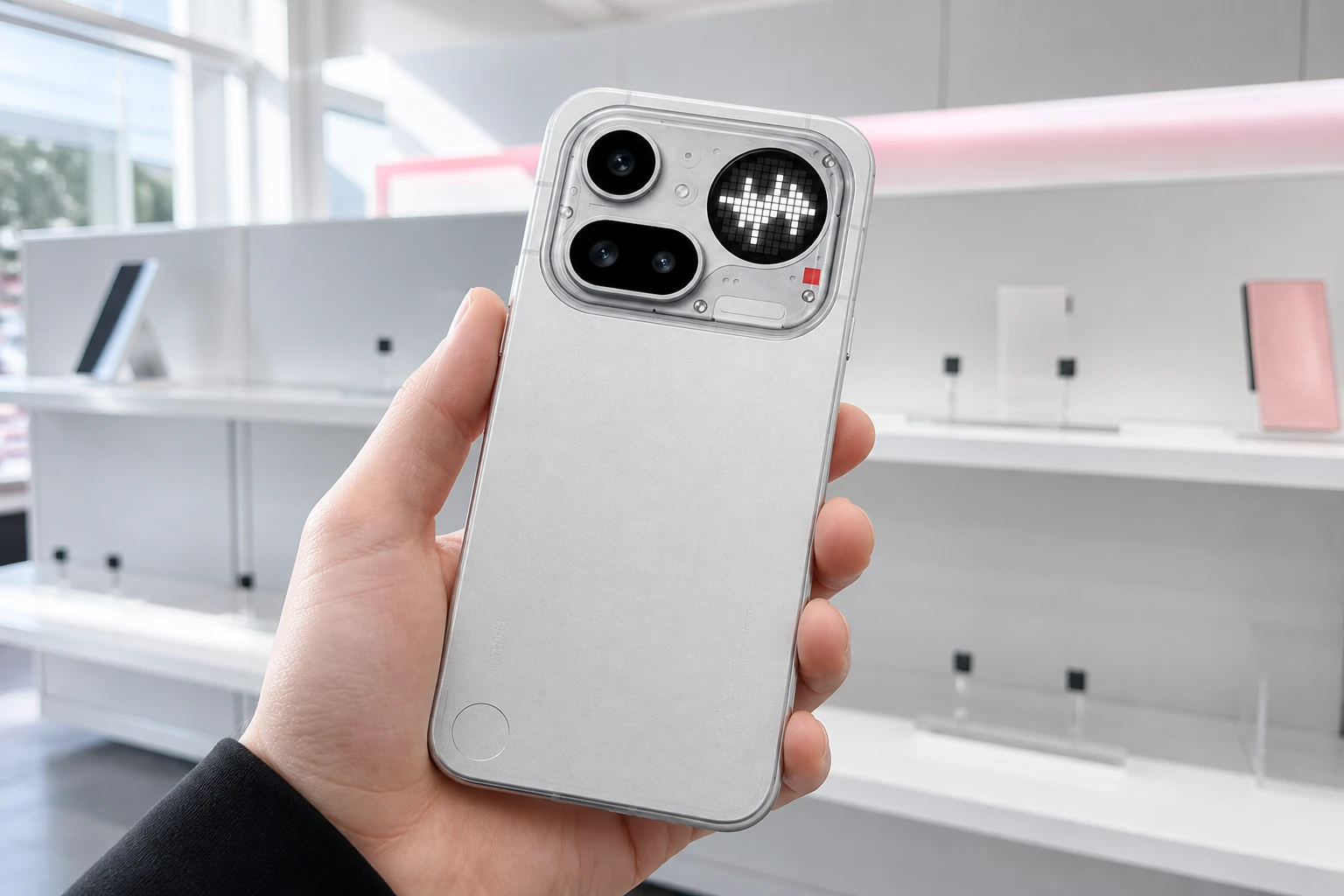
OnePlus eventually chased mainstream volume and carrier deals. That diluted the original “Never Settle” edge and tightened the product range. Nothing has stayed selective. The Phone 3 was its last serious flagship attempt, still using a slightly detuned chipset. This year’s focus is the mid-range A series. Only the Nothing Phone 4a Pro at $499 comes to the US; the 4a and 4b stay out. Specs mix mid-tier silicon (Snapdragon 7 Gen 4) with standout pieces such as a 50 MP periscope zoom and the enlarged Glyph Matrix.
The company treats itself as a lifestyle brand that sells direct and through limited retail rather than chasing every carrier store. That keeps costs lower and the audience narrower. It also removes the exact over-expansion trap that pulled OnePlus into OPPO’s global consolidation.
- Independent London HQ, no OPPO-style parent override.
- Deliberate skip of major US carrier retail after six years.
- Selective market SKUs instead of full global lineups everywhere.
- Mid-range focus with distinctive design over pure flagship specs.
- CMF sub-brand and audio products broaden the lifestyle pitch.
The Rumor, the Denial, and the Echo
In late July an Indian report claimed Nothing planned to exit a dozen markets, cut headcount sharply and was seeing weak global shipments outside India. Co-founder Akis Evangelidis answered within hours.
FAKE NEWS… We are not shutting down any markets. Inaccurate reports are being circulated; Phone (4b) sold 29,537 units on Day 1 only, breaking records in its price segment. What we are doing is reorganising our teams to prepare for our next phase of growth. We are introducing dedicated business units – including an AI-native business unit – and consolidating individual countries into regional hubs to operate much more efficiently.
That Akis Evangelidis denial on X drew tens of thousands of views. He called layoff figures “way overblown,” confirmed some positions were affected, and framed the changes as efficiency steps for the next phase. The Digit outlet that broke the original story said it stood by its reporting and that Nothing had not denied specifics during a week of contact.
The language lands in a familiar register. OPPO and OnePlus also spoke of reorganization and resource focus while walking back Western ambitions. Skeptics on X immediately noted the echo. Fans countered with the day-one sales claim and the Best Buy expansion as proof of continued US commitment. Both readings can sit side by side: Nothing is under real cost pressure from memory prices and mid-range competition, and it is also still shipping distinctive phones into the US and denying any market shutdown.
Why the Easy Parallel Breaks
OnePlus grew inside a larger Chinese group that ultimately decided Western scale was not worth the regulatory, tariff and competitive cost. Its carrier experiments never became durable. Its software identity slowly merged with ColorOS. When the parent needed cleaner global lines, OnePlus Western ops became expendable.
Nothing faces the same thin US margins and carrier cold shoulder. Component inflation hits its price band hard; Carl Pei has said RAM can now account for half a phone’s cost. Yet it has no parent forcing a brand merge. It never promised mass-market carrier ubiquity. Its buyers already know they are choosing an unlocked niche device. That audience is smaller, more loyal, and more aware that every extra Android brand that disappears further locks the market.
The US market share numbers make the stakes plain. After Apple and Samsung, the next four or five names fight over scraps. Losing another distinctive option does not free up volume for Google or Motorola in any automatic way. It simply leaves fewer reasons for power users to stay off iOS.
What Keeps Nothing in the Game
Best Buy placement gives physical try-before-you-buy access that pure online brands lack. The Glyph Matrix and transparent design language still cut through a sea of black rectangles. Software stays closer to clean Android than most Chinese skins. The $499 4a Pro undercuts many flagships while offering a periscope camera and 144 Hz display that mid-rangers rarely match.
That does not guarantee survival. A smaller company cannot buy its way out of a prolonged sales drought the way Apple or Samsung can. Reorgs and hub consolidations can precede quiet market exits even when executives deny them. The Digit claims and the OnePlus precedent keep the risk live.
For now the public record shows continued US product, a direct denial of shutdowns, retail expansion, and a founder who left OnePlus precisely to avoid the integration path that later erased the brand in the West. The parallel that scared fans after the OnePlus announcement is incomplete. The remaining pressure is real. Buyers who want another option left on the shelf are the ones who decide which story ends up true.