OnePlus has stopped selling new phones in the United States and Europe, closing the book on two markets it spent twelve years fighting to win. The company confirmed the exit this week, ending new product launches across both regions while promising that existing owners will keep getting updates and support.
The retreat clears the exact lane once held by OnePlus’s own co-founder. Carl Pei left the company in 2020 to start Nothing, and his London based phone maker is now the closest thing the West has to a replacement, sitting on shelves OnePlus itself used to occupy.
The Flagship Killer Locks Its Western Doors
OnePlus confirmed the pullout in a post on its community forums this week, breaking months of denials.
Today, our hearts are undoubtedly heavy and mixed with emotion.
OnePlus wrote, describing the move as a proactive global strategy adjustment rather than a sudden collapse.
No new OnePlus phones, tablets or wearables will launch in the United States, Canada or Europe going forward. The current lineup, including the OnePlus 15, is the last new hardware the brand will bring to either region. Here is what changes for people who already own one.
- Software and security updates continue on the existing release schedule for devices already sold.
- Warranty and after-sales support stay active through OnePlus’s normal customer service channels.
- OxygenOS keeps receiving maintenance support, but eligible phones also get an optional, reversible switch to Oppo’s ColorOS 17.
- The North American community site and app close for good on August 16, 2026, at 11:59 PM Eastern time, while Europe’s community and stores stay open for now.
India is unaffected. Executives told Android Authority the country remains a priority, pointing to the recent OnePlus N6 launch and more devices in the pipeline.
How a 1.8% Sliver Became 0.1%
OnePlus never came close to challenging Apple or Samsung in America. Its best stretch came in 2021, when budget friendly Nord phones pushed its US market share to a peak of 1.8%, according to research firm IDC.
| Year | US Market Share | What Happened |
|---|---|---|
| 2021 | 1.8% (peak) | Nord budget phones drive growth through T-Mobile and Metro |
| 2023 | Falling | T-Mobile drops OnePlus from its retail lineup |
| 2025 | 0.1% | Share bottoms out, per IDC |
| 2026 | 0% | OnePlus exits the US and Europe entirely |
Losing that carrier shelf space mattered more than any single phone review. Most US buyers still purchase through a carrier storefront, and once T-Mobile dropped OnePlus in 2023, the brand had almost nowhere left to be discovered. OnePlus had spent years building that same carrier and retail network, and prices rose steadily into premium territory along the way, eroding the exact price gap that made it famous in 2014.
TechRadar’s reporting on the announcement pointed to a second squeeze hitting the whole industry: a global shortage of memory chips that has driven up component costs and hit budget phone lines especially hard, on top of tougher competition from other Chinese brands and a shrinking pool of enthusiast buyers willing to shop outside Apple and Samsung.
Oppo and Realme Redraw the BBK Map
OnePlus and Oppo are both owned by BBK Electronics, the private Chinese conglomerate that also controls Realme, Vivo and iQOO. That shared ownership is why this exit reads less like a shutdown and more like a reshuffle.
“It wasn’t a decision made in a rush,” Oppo’s Shuang Chen explained in a briefing. “This was neither a case of Oppo instructing OnePlus nor a unilateral decision by OnePlus. Being a responsible brand means knowing when to go all in and when to make a choice.”
Oppo is doubling down on Europe as OnePlus steps back. Executives outlined plans for a new UK online store, expanded retail partnerships and a heavier push into flagship phones. “Europe is a really strategically important market for Oppo,” said James Paterson, the brand’s Senior PR Manager in Europe, pointing to the recent Find X9 Ultra and Reno 16 launches.
Sister brand Realme is moving the opposite direction, scaling back its home business in China to concentrate entirely on markets overseas. And in a smaller but telling move, OnePlus co-founder Pete Lau has already returned to Oppo as its Chief Product Officer, folding his old company’s product thinking back into the parent brand.
The Co-Founder Who Left Before the Fall
Carl Pei and Pete Lau founded OnePlus in Shenzhen in late 2013. The OnePlus One arrived in 2014 at $299, promising Samsung Galaxy S5 level performance for roughly half the price under the “flagship killer” banner.
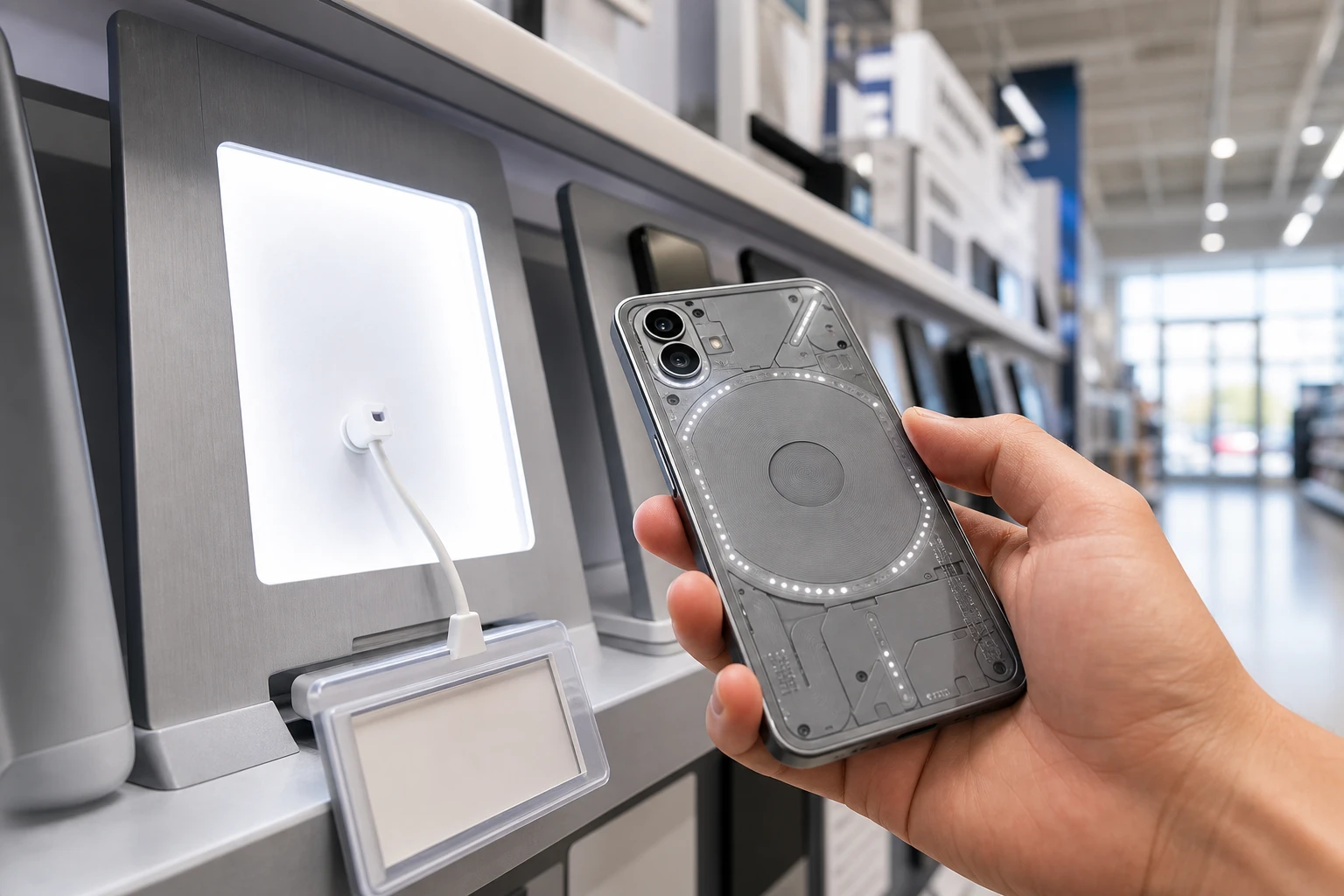
Pei left OnePlus in 2020 after seven years to start Nothing, building a design led brand known for transparent phone backs and a distinctive dot matrix light pattern. The company has since generated more than $1 billion in revenue across smartphones, earbuds and smartwatches, built largely on the same community first playbook Pei first tested at OnePlus.
Nothing Already Has the Shelf Space
The overlap is not just symbolic. As How-To Geek noted in its coverage of the exit, when OnePlus left Best Buy’s shelves, Nothing hardware took its place. That is the plainest evidence yet of who actually inherits OnePlus’s old spot in Western retail.
Nothing now sells five phone models in the US, with the Phone 3 and the newer Phone 4a Pro available as standard unlocked retail devices through Nothing’s own site, Amazon and, since June 2026, more than 500 Best Buy stores nationwide. The rest of the lineup, from Carl Pei’s earliest ambitions, has scaled into real numbers.
- 100% year over year growth in Europe, Pei told Euronews in February.
- Over $300 million raised in venture funding since 2023, according to company records reviewed by BGR.
- A US volume target of 30% to 50% of total sales within the next couple of years, Pei says.
- Five phone models now sold in the US, up from a beta only lineup a year earlier.
Can Nothing Dodge OnePlus’s Carrier Trap?
Not entirely. Nothing has finally landed real shelf space and a Best Buy deal, but Verizon still will not certify any of its five US phones, the exact carrier wall that helped shrink OnePlus down to almost nothing before this week’s exit.
Buyers who want a Nothing phone on Verizon still have to manually register the device’s IMEI with the carrier before it will activate, a workaround rather than a real partnership. T-Mobile and AT&T support is solid; Verizon, the largest US carrier by subscribers, remains a lottery.
Nothing is also hedging its own bet. Instead of chasing a flagship halo every year, the company confirmed it is skipping a new flagship for this year to focus on its midrange Phone 4A series, a bet on the exact price segment where OnePlus first made its name.
Asked directly where displaced OnePlus buyers in North America should turn, Oppo Europe chief executive Elvis Zhou did not point to Nothing or anyone else. “I’m sure there are other excellent products out there in the market for the consumers to choose from,” he said. Nobody at Oppo or OnePlus has crowned a successor. The shelf space already has.
Nothing’s newest flagship still cannot activate on Verizon without a phone call and a manual IMEI check, the same carrier wall that helped shrink OnePlus’s decade long American business down to a rounding error before this week.
Frequently Asked Questions
Will My Current OnePlus Phone Stop Getting Updates?
No. OnePlus says every eligible device keeps its scheduled software and security updates, and the OnePlus 15 specifically is covered for four years of OS upgrades and six years of security patches. Owners can move to Oppo’s ColorOS 17 once it arrives, or stay on OxygenOS, which keeps receiving version maintenance support. Warranty and customer service claims continue as before.
Is OnePlus Planning to Leave India Too?
Not officially. OnePlus told Android Authority that India remains a priority market, with more launches, including the OnePlus N6x, on the way. Bloomberg has reported that OnePlus could eventually retreat from every market outside China, including India, by 2027, though OnePlus has not confirmed those reports and describes its Indian operations as running as usual.
Who Owns OnePlus, and How Is Oppo Involved?
OnePlus and Oppo are both owned by BBK Electronics, the private Chinese conglomerate that also controls Realme, Vivo and iQOO. The two brands have shared research and software resources for years, and recent OnePlus phones have increasingly been built on Oppo’s own hardware designs underneath.
Will Oppo Sell Phones in the US Instead of OnePlus?
Not for now. Oppo Europe chief executive Elvis Zhou said the company currently has no product plans for North America, even as it expands its lineup and retail partnerships across Europe. That leaves the US as the one major Western market where BBK Group has no active phone brand at all.
Is Nothing the Official Replacement for OnePlus?
Oppo has not named one. When pressed on where displaced OnePlus buyers should turn, Zhou said only that other excellent products exist for consumers to choose from, without naming Nothing or any other brand. The comparison is coming from analysts, retailers and reviewers, not from Oppo or OnePlus itself.