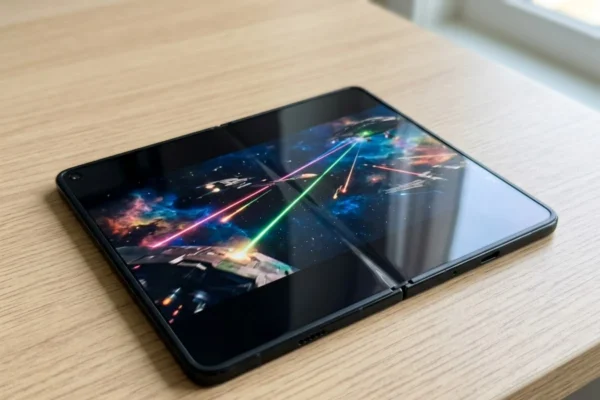
The Samsung Galaxy Z Fold 8 launches July 22 in London without the privacy display that has been the Galaxy S26 Ultra’s signature hardware feature. Tipster Ice Universe confirmed on X that none of the three 2026 foldables, the Z Fold 8, Z Fold 8 Ultra, and the Z Flip 8, will carry the filter. The omission arrives with Samsung’s largest foldable screens to date and an expected price that climbs past the Galaxy Z Fold 7’s $1,999.99 launch.
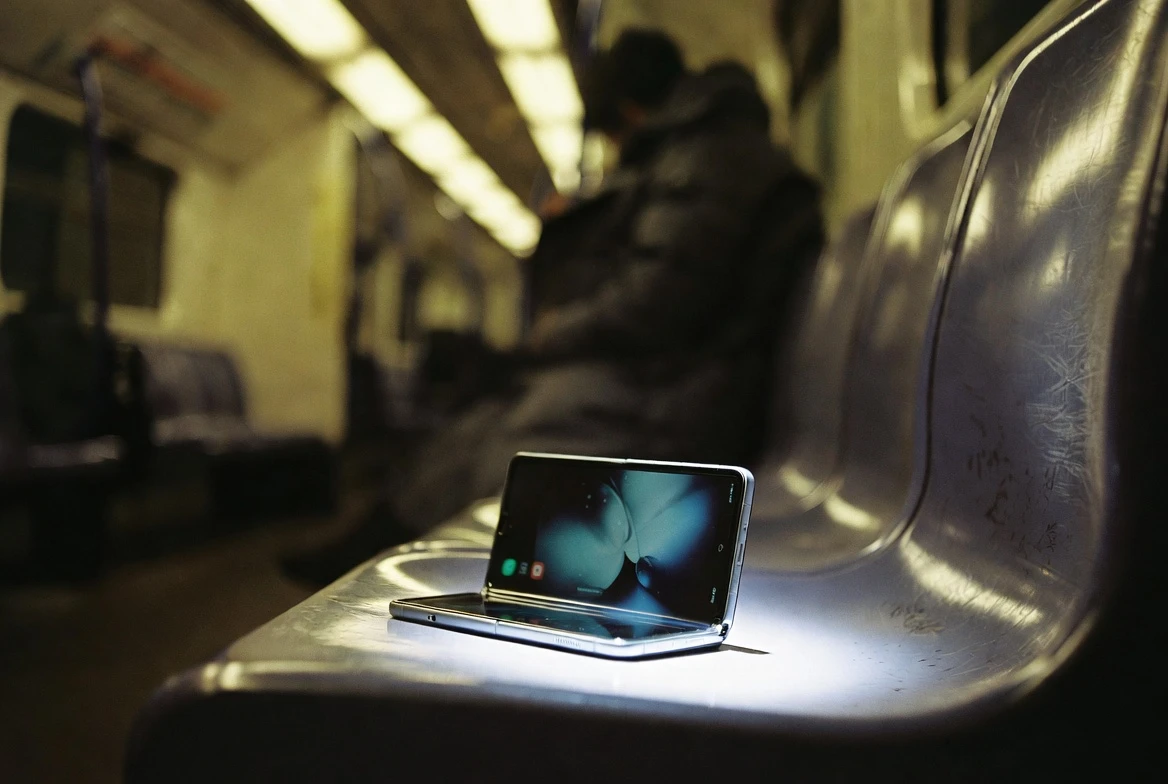
The S26 Ultra’s privacy display works through a hardware filter layer inside the OLED panel that physically blocks light from travelling sideways, like vertical blinds sitting in the stack. It can be set to hazy, full blackout, or localised to a single notification, so a PIN pad hides without blanking the whole screen. The very use case the Fold 8 invites in a crowded train carriage or airport gate is the one Samsung has, for now, declined to extend to its biggest phones.
Ice Universe Drops the News
The leak is one line long and direct. Responding on X to a Korean user asking whether the Fold 8 would carry the feature, Ice Universe delivered the answer in a single sentence. The comment, first published in a June 28 report on the Fold 8 privacy screen omission, arrived the same day Samsung’s regulatory filings for the three foldables cleared at the FCC.
The Fold 8, Fold 8 Ultra, and Flip 8 do not have privacy screens.
Ice Universe has a long track record on Samsung hardware leaks, including accurate details on the Z Fold 7’s dimensions ahead of launch. The same tipster said this week that Samsung has significantly enhanced the screen resolution on the Z Fold 8 Ultra, a sign the phone is still adding display hardware, just not the privacy filter. Samsung has not publicly responded to the claim, and the Unpacked reveal on July 22 is the first chance for an official line.
The Filter That Blocks Shoulder-Surfing
Samsung introduced Privacy Display on the Galaxy S26 Ultra in March 2026 as a hardware feature, not a screen protector overlay. The system adds a filter layer to the OLED panel that physically constrains light output to a narrow viewing cone. The S26 Ultra implementation can dim selected regions of the display rather than the whole screen.
That matters, as a teardown that explains the half-pixel dimming shows, in a different way from the static privacy films sold on Amazon. For a phone with a 6.9-inch panel, PIN entry, banking apps, and message threads became legible only when the user was directly in front. For a foldable, the stakes shift. An open Galaxy Z Fold 8 Ultra presents a near-tablet canvas in a public space, and the cover screen sits at an angle that almost invites sideways glances.
The Privacy Display filter, if the technology could be made to work on the ultra-thin glass used in foldable panels, would arguably matter more on the Z Fold 8 than on the S26 Ultra. Samsung has chosen to ship the larger screen without it.
- Hardware filter layer inside the OLED panel, not an adhesive film
- Adjustable intensity, from hazy to full blackout
- Can be localised to specific apps or notifications
- Debuted on the Galaxy S26 Ultra in March 2026
What the Fold 8 Brings Instead
Samsung has not used the silence around privacy to cut costs elsewhere. The Z Fold 8 Ultra, according to Ice Universe and a June 27 specs breakdown for the 2026 foldables, carries a 200MP camera with OIS, a 50MP ultrawide, a 10MP telephoto with 3x optical zoom, and a Snapdragon 8 Elite Gen 5 chipset. The phone measures 4.1mm unfolded and weighs approximately 215g, the same as the Z Fold 7, with a 5,000mAh battery and 45W wired charging.
The Z Fold 8 Wide is a different shape and weighs 201g per an Ice Universe leak. It uses a 5.4-inch cover screen and a 7.6-inch inner display, both wider than the Ultra’s, in a 4:3 aspect ratio designed to look more like a tablet when unfolded. The Wide has a 4,800mAh battery, a dual 50MP camera system, and no S Pen slot. ZDNet Korea reported this week that the Wide uses 60μm ultra-thin glass, up from 45μm on the Z Fold 7, a sturdier specification that complicates any simple “foldables can’t fit it” theory.
The Price Tag Sitting Underneath
No credible source has published a confirmed US price for any of the three foldables. The pieces available line up as follows. The Galaxy Z Fold 7 launched at $1,999.99 for the 256GB model in the US, before a price hike in April raised the 512GB tier to $2,199.99 and the 1TB tier to $2,499.99.
The Galaxy S26 Ultra starts at $1,299, a $700 gap below the Z Fold 7 base. The Fold 7 1TB at $2,499.99 marks the recent ceiling for what Samsung asks for a top-spec book-style foldable. The Z Fold 7 launched at $1,999.99, then went up by $80 across the 512GB and 1TB tiers in April, while the 256GB base stayed at $1,999.99. The pattern hints at where the Fold 8 family will land, but Samsung has not confirmed the numbers.
Tipster Lanzuk, posting on the Naver blog in Korea, has said a price increase across the Fold 8 family is confirmed without specifying which storage tiers. PhoneArena, citing Lanzuk, has reported the wider Fold 8 may land near $1,800 and the Z Fold 8 Ultra past $2,100. The Z Fold 8 Wide would then undercut the Z Fold 7 base price while the Ultra would set a new high for Samsung’s mainstream foldable line. Samsung’s official numbers arrive at the London launch event.
The combination of a missing privacy filter and a higher price tag leaves Samsung arguing for the foldable’s value on hardware the S26 Ultra does not need and cannot match. Whether that pitch holds depends on what the stage presentation confirms.
| Model | Price (US) | Privacy Display |
|---|---|---|
| Galaxy S26 Ultra | $1,299 | Yes |
| Galaxy Z Fold 7 (256GB) | $1,999.99 | No |
| Galaxy Z Fold 8 Wide (rumored) | around $1,800 | No |
| Galaxy Z Fold 8 Ultra (rumored) | past $2,100 | No |
Why Samsung May Have Held Back
Three explanations sit on the table, and none is confirmed. The first is engineering. The privacy filter works by adding a layer to the OLED stack, and the Z Fold 8 Ultra’s inner panel is already one of the thinnest Samsung has built at 4.1mm unfolded, a thickness that could rule out the filter. The Z Fold 8 Wide uses 30% thicker UTG on its inner panel than the Ultra, a complication for any theory that foldables simply cannot fit the filter.
The second is the cover screen shape. The S26 Ultra’s privacy filter works best on a wider, more tablet-shaped panel, and Samsung’s tall narrow cover gives the filter little surface to protect. Samsung may have judged the feature less useful on the cover and chosen not to fit it to the inner screen either. The third is price. A Z Fold 8 Ultra past $2,100, on top of the 200MP camera and Snapdragon 8 Elite Gen 5, leaves little room to add another premium component without a sharper jump in cost. The foldable pitch has always been premium hardware at premium prices, and adding the privacy filter would harden that climb.
- Engineering constraint: filter layer may not fit the 4.1mm Ultra or UTG stack
- Cover screen shape: tall narrow cover gives the filter little surface to protect
- Price pressure: another premium component on top of an already climbing foldable price
What Lands at Unpacked Next Month
Samsung’s summer Unpacked event is scheduled for July 22 in London. The regulatory filings at the FCC, including a listing under model SM-F971U, cleared the Z Fold 8 Ultra (model SM-F976U) and Z Flip 8 alongside it, lining up with the July 22 date.
Samsung typically opens pre-orders on the day of announcement and ships devices about two weeks later, putting the three foldables on sale in early August. Ice Universe’s claim is a single-source leak, and Samsung has not confirmed or denied it. The same tipster’s earlier posts have been right on Samsung hardware details before, including the Z Fold 7’s dimensions and the S26 Ultra’s display tech. Buyers waiting for confirmation will get it on July 22 when Samsung takes the stage in London, and Samsung’s production target jump for the Z Fold 8 Wide suggests the company has already made its bet.
For now, the trade-off is sharp. The Galaxy Z Fold 8 line will be Samsung’s largest, thinnest, and most camera-capable foldables, on a chipset the company is positioning as its most powerful mobile silicon. The one feature it will not bring, on Ice Universe’s account, is the hardware filter that makes the smaller S26 Ultra the most private phone in Samsung’s lineup.
Frequently Asked Questions
When does the Samsung Galaxy Z Fold 8 launch?
Samsung’s Galaxy Unpacked event is set for July 22 in London, based on Forbes reporting and corroborating leaks from Korean tipsters. Pre-orders usually open on the day of the announcement, with shipping roughly two weeks later. The June FCC certifications of all three foldables cleared the way for a US launch on that schedule.
How much will the Galaxy Z Fold 8 cost?
Samsung has not announced pricing for any of the three foldables. Tipster Lanzuk’s Naver blog posts point to a confirmed increase across the line without naming which tiers move. PhoneArena, citing Lanzuk, has reported the Z Fold 8 Wide near $1,800 and the Z Fold 8 Ultra past $2,100. Samsung typically reveals final US prices at Unpacked, where the company is expected to outline storage tiers for each model.
Will the Galaxy Z Fold 8 have S Pen support?
Neither Z Fold 8 model is expected to ship with an S Pen, according to Ice Universe’s reporting summarised by Forbes. The Z Fold 7 dropped S Pen support to deliver its thinner build, and the Z Fold 8 Ultra keeps that direction. Buyers who want a Samsung stylus on a foldable will need to look at the older Galaxy Z Fold 6, which retains S Pen support.
What is Samsung’s Privacy Display and why isn’t it on the Fold 8?
Privacy Display is the hardware filter built into the Galaxy S26 Ultra’s OLED panel that physically constrains sideways light output, narrowing the viewing angle so a face-on user is the only one who can read the screen. It can be set to hazy, full blackout, or localised to specific notifications. Tipster Ice Universe has said the feature will not appear on the Z Fold 8, Z Fold 8 Ultra, or Z Flip 8. Samsung has not commented on the omission, and the official explanation will arrive at Unpacked on July 22.