Atlanta data centers’ water use has become a public flashpoint in drought-stricken Georgia. Metropolitan Atlanta planners on Monday asked developers to cut consumption, the same week the city cemented its place as the No. 2 US data center market with more gigawatts under construction than any market outside Northern Virginia.
Celine Benoit, principal planner for the Atlanta Regional Commission and the Metropolitan North Georgia Water Planning District, told attendees at the American Water Works Association’s annual conference in Washington that the math does not yet add up. “There’s no easy answer for how much water data centers are requesting,” she said.
A ‘No Easy Answer’ on Stage in Washington
Benoit spoke Monday at ACE26, the American Water Works Association’s four-day annual gathering running June 21 to 24 at the Walter E. Washington Convention Center in Washington, D.C. Her message was aimed at both her own region’s developers and at planners watching the same water squeeze arrive in their own backyards.
The Atlanta Regional Commission is asking developers to heed community demands to reduce water use, even as it acknowledges that water consumption across data centers “ranges widely.” Benoit, who co-authored an October 2025 ARC board briefing on data center water trends with the commission’s Danny Johnson, P.E., framed the ask as one piece of a longer regional water-resiliency push.
There’s no easy answer for how much water data centers are requesting.
The conference is the year’s biggest gathering of drinking-water professionals, with sessions on reuse, drought planning, and what utilities should ask of large industrial users. This year’s program leans heavily on the question Benoit put on stage: how a region built around one water source absorbs thousands of acres of new compute without pricing out the next glass of drinking water.
Atlanta Has Climbed to the No. 2 US Data Center Market
The ask arrives against a backdrop of runaway growth. Atlanta ended 2025 with 1,459.2 megawatts of total data center inventory, up 458.8 MW year over year, making it the second-largest US data center market behind Northern Virginia, according to the 2025 data center trends report for North America.
Mike Lash, a senior vice president with CBRE Data Center Solutions, called the move “from high growth into true strategic scale.” The market recorded 456 MW of net absorption in 2025 and vacancy tightened to just 2%, even as 2,076 MW remained under construction. Long-term power commitments exceed 3 gigawatts, and recent Georgia Public Service Commission approvals clear the way for more than 10 GW of future data center growth across the state.
| Market | Total inventory | YoY change | Net absorption | Vacancy | Under construction |
|---|---|---|---|---|---|
| Northern Virginia | 4,039.6 MW | 37% | over 1 GW delivered in 2025 | 1.4% national | about 3.5x all secondary US markets combined |
| Atlanta | 1,459.2 MW | 458.8 MW added | 456 MW | 2% | 2,076 MW |
The two markets now anchor a North American map in which demand is outrunning supply. CBRE’s national primary-market vacancy fell to a historic low of 1.4% even as total capacity rose 36% to 9,432 MW, reflecting how quickly new buildings fill up. Dallas-Fort Worth has become the third North American market to surpass 1 GW of total supply, joining the two leaders.
Lake Lanier Sits Below Full Pool as Drought Deepens
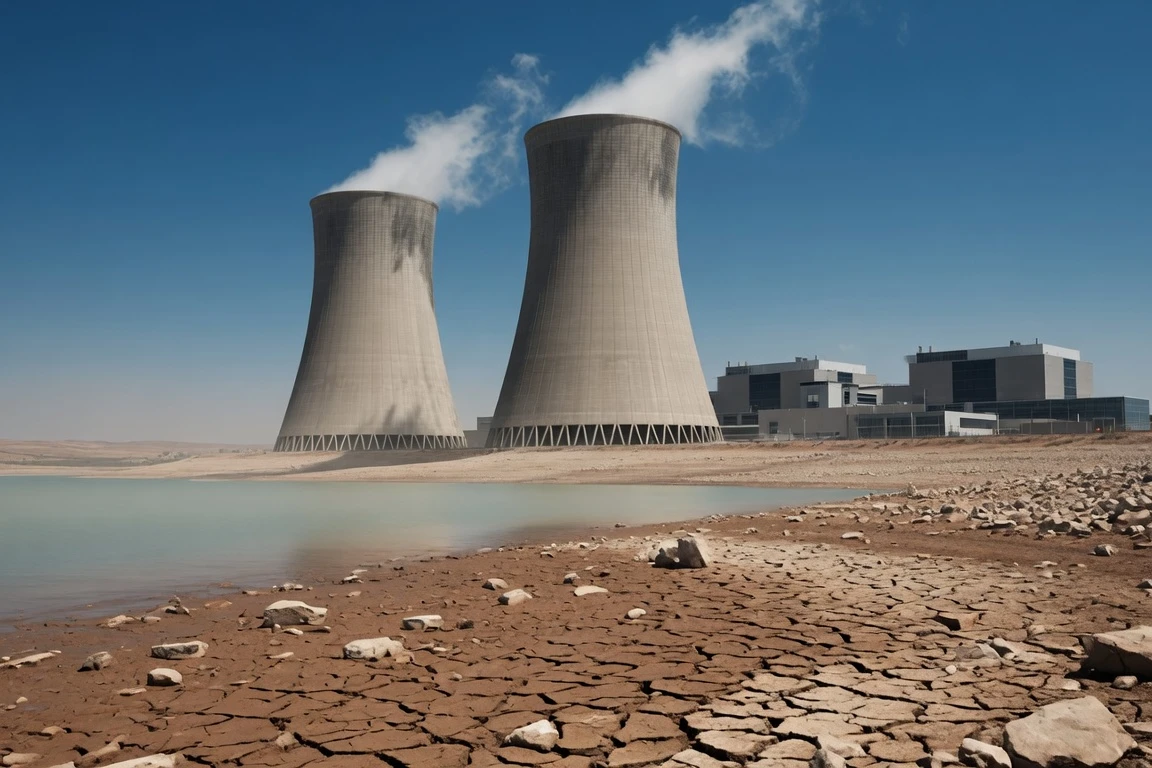
Atlanta’s data center cluster sits inside a watershed that is unusually thin for a major US metro. Lake Lanier, the reservoir the Atlanta Regional Commission calls the region’s largest source of drinking water, stood at 1,066.56 feet above mean sea level on June 8, about 4.44 feet below its full pool elevation of 1,071 feet, the Atlanta commission’s June 8 drought update showed.
Over the previous 12 months, the region had received 35.5 inches of rain, about 14 inches below normal. Georgia EPD declared a Level 1 drought across metro Atlanta in late April, and most of the region still sat in severe drought on the US Drought Monitor as of June 8, with extreme drought in southeast Georgia. NOAA’s most recent outlook expects drought conditions to remain through June.
The footprint extends past Georgia. More than 60% of the contiguous United States sat under some level of drought this spring, the largest expanse in modern records, according to an analysis of US drought and AI data center plans. Of 809 planned US data centers, 517 are in locations that have been in drought throughout the past year.
The Trade-Off Hiding in Closed-Loop Cooling
The industry’s preferred technical fix is closed-loop cooling, in which the same coolant is piped through server racks and recaptured instead of evaporating away. It uses less water. It also uses more energy. ARC board materials presented in October 2025, co-authored by Benoit, note that closed-loop cooling’s water footprint is smaller but the water capacity it requires is still larger than most other water uses, and the energy demand pushes the burden onto power plants that themselves need water.
The trade-off is moving from a slide deck to a permitting fight. Meta’s proposed Hyperion data center in Louisiana will use closed-loop cooling but will require the energy input of 10 gas-fired power plants. Meta has said the campus will draw as much as 1 billion gallons of water a year from an aquifer currently used by farmers.
Atlanta’s planners are telling local leaders to support policies that ease the water burden, while telling water utilities to consider the benefits of closed-loop cooling, update drought plans, and communicate clearly. The Data Center Coalition, the industry’s main trade group, said operators work with local authorities to ensure compliance with all applicable rules and that the industry is “actively prioritizing responsible water use through operational best practices and innovative development strategies.”
The Water Numbers Planners Cannot Pin Down
Benoit’s answer lands where it does because water consumption at data centers is, in practice, all over the map. A single large US data center can use up to 5 million gallons of water a day, the equivalent of the daily use of up to 50,000 people, according to the Guardian analysis. The Bloomberg Law report on Benoit’s remarks noted that water consumption across data centers “ranges widely,” which makes any single rate or ceiling a moving target.
- 517 of 809 planned US data centers are in locations that have been in drought throughout the past year (Guardian analysis)
- 5 million gallons per day at the largest US data centers, the daily water use of up to 50,000 people (Guardian analysis)
- 73 billion gallons projected US data center water demand by 2028, up from about 17 billion gallons in 2023 (Guardian analysis)
- 2% vacancy in Atlanta’s data center market at the end of 2025 (CBRE)
- 10 GW of future data center growth cleared by the Georgia Public Service Commission (CBRE)
Inside the broader build-out, US data centers could account for 9% of Texas’s total water use by 2040, researchers have calculated. Data Center Coalition data points to a national figure in which data centers remain a small fraction of industrial water use compared with agriculture, but that share is rising fastest exactly where the rain isn’t.
What the Atlanta Build-Out Still Has to Solve
For Atlanta, the next test is whether the 10 GW of future growth cleared by the Georgia Public Service Commission can be permitted, cooled, and powered without crossing the drought thresholds the ARC has flagged. Developers have largely picked the region for its power availability and tax breaks, not its water surplus. Google, Meta, Microsoft and Amazon are pouring billions of dollars into new campuses in part because they can lock in long-term land and power deals there.
State lawmakers elsewhere are already tightening the rules. South Carolina and Kansas are weighing requirements that developers use closed-loop cooling. New York is moving toward an outright moratorium on new data centers. California, Michigan and Iowa are considering bills to require regular water-use reporting. None of those steps binds Atlanta, but regional planners who convened in Washington this week now have a public record of asking developers to cut water use as Lake Lanier sat 4.44 feet below full pool.
The ARC’s October briefing ends with a list of next steps for water providers, local leaders, and developers. Benoit closed her conference remarks with the same message she brought to Atlanta’s board: there is no easy answer, only choices about which user gets cut first when the next dry spell lands.
The conference runs through June 24 at the drinking water conference running through June 24. Benoit’s remarks are documented in the Bloomberg Law write-up of the panel, the planners’ call to cut data center water use.
Frequently Asked Questions
How much water does an Atlanta data center use?
Consumption varies widely by site and cooling method. A single large US data center can use up to 5 million gallons a day, the equivalent of up to 50,000 people’s daily water use, the Guardian reports. The Atlanta Regional Commission has not published a single average figure for the metro, and Bloomberg Law’s report on Benoit’s remarks said water consumption across data centers “ranges widely.”
Why are data centers being built in drought-prone areas?
Developers favor sites with lower land cost, generous tax breaks, and abundant power, the Guardian reports. Arid climates also reduce corrosion on equipment. Many of those same sites sit in regions with thin water supplies, a mismatch that has become the focus of regional planners in Atlanta, Austin, and Salt Lake City.
What is closed-loop cooling?
Closed-loop cooling pipes the same coolant, often water or glycol, through server racks and recaptures it instead of letting it evaporate. It uses less water than traditional evaporative cooling but uses more electricity, which itself draws water at the power plant, ARC board materials note.
What are Atlanta planners asking developers to do?
The Atlanta Regional Commission is asking developers to heed community demands to cut water use and to consider closed-loop cooling, drought-ready plans, and clearer public communication. The commission has not imposed a binding cap, and state-level restrictions on data center water use have not been adopted in Georgia.