Georgia plans to build a single national registry that records the entry, residence status, and public services use of every foreigner in the country. Deputy Minister of Internal Affairs Aleksandre Darakhvelidze announced the proposal on June 22 during a meeting of the parliamentary Legal Issues Committee. The new database would sit under the Public Service Development Agency of the Ministry of Justice, the same agency that runs the existing registry of Georgian citizens.
Darakhvelidze cast the proposal as a way to close an information gap that has left the government unable to say with confidence how many people are in the country without legal status. The framing fits a wider package of migration reforms the Ministry of Internal Affairs has been steering through parliament since 2025. The earlier phase overhauled work permits and tightened fines for overstaying, with full implementation of the new work permit rules taking effect on March 1, 2026. The June 22 announcement is the opening of the second phase of that program, pairing the new database with tighter rules for marriage-based residency and educational permits.
What Darakhvelidze Told Parliament on June 22
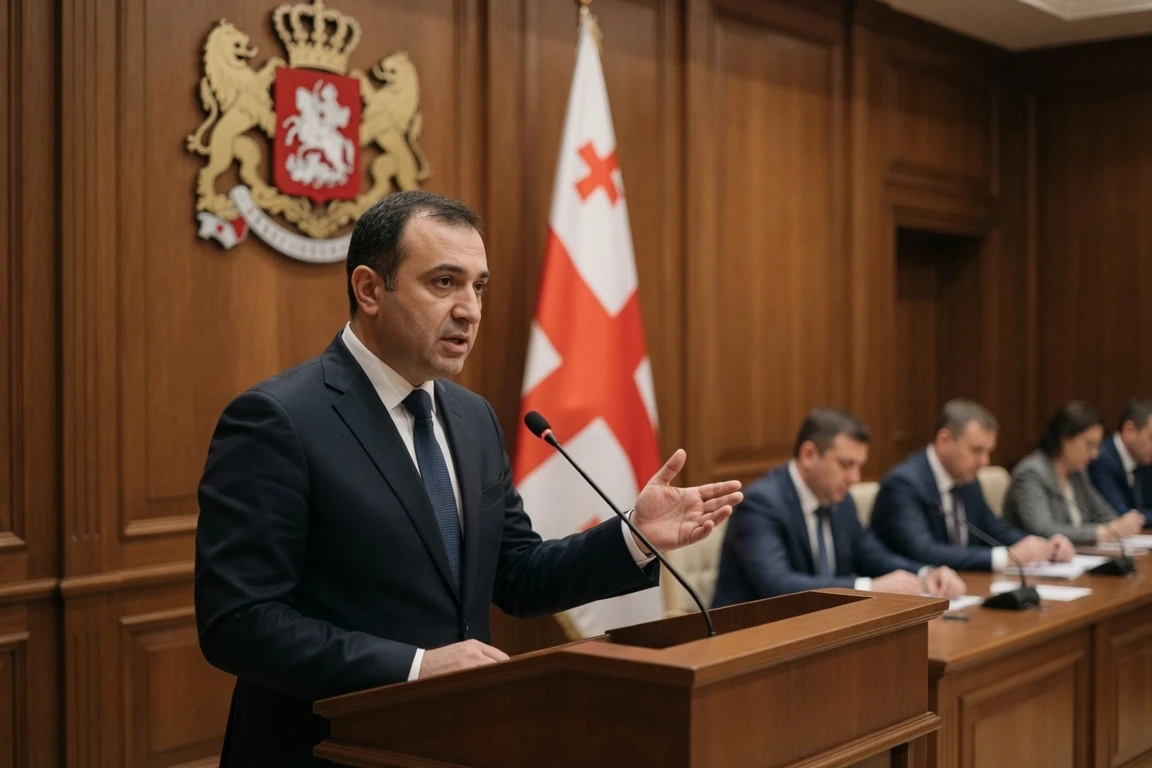
Darakhvelidze laid out the registry proposal at a session of the Legal Issues Committee on June 22, 2026, in the June 22 announcement to parliament. The Ministry of Internal Affairs’ deputy minister said the new database would give authorities a continuous view of who is in the country, on what basis, and what state services they are using. The June 22 statement is the public face of an internal legislative package the ministry has been preparing since 2025.
The deputy minister framed the registry as a counterpart to the existing Georgian citizens’ database. In his remarks, Darakhvelidze said the new system would let the state monitor entry, track public service access, and flag stays that have run past their legal basis. The proposal is tied to a package of amendments to the Law on Foreigners that the ministry has been working on alongside other agencies. A separate public broadcaster interview on the same day detailed the parallel reforms the ministry is moving in the same legislative package.
The June 22 comments form the second phase of the ministry’s migration reform program. The first phase ran through 2025 and overhauled work permits and fines for overstaying.
The proposal is part of a longer legislative package the ministry has been preparing. The June 22 presentation to the Legal Issues Committee was the first time the registry plan was detailed publicly. Darakhvelidze did not name a launch date for the registry in his remarks.
Where the Registry Will Live
The registry will be housed at the Public Service Development Agency, a body under the Ministry of Justice. The agency already operates the registry of Georgian citizens, civil acts, and identity documents. Putting the foreigners’ registry in the same shop means the new database can be cross-referenced against existing marriage, citizenship, and document records. The June 22 announcement did not detail the technical architecture of the new system.
Darakhvelidze told the committee that the agency was the natural home for the new system, given its existing role and the precedent of the citizens’ registry. He did not give a launch date for the new database in his June 22 remarks. The deputy minister proposed placing the registry under the Public Service Development Agency.
Just as there is a registry of Georgian citizens, we believe a unified registry of foreigners should be established under the Public Service Development Agency of the Ministry of Justice. This will make monitoring the entry of every foreigner into the country, their use of services, and the fight against illegal migration more effective.
Aleksandre Darakhvelidze, Deputy Minister of Internal Affairs of Georgia, parliamentary Legal Issues Committee, June 22, 2026.
The Data Gap the New System Aims to Close
In April 2025, Darakhvelidze told a joint session of three parliamentary committees that there were between 20,000 and 25,000 illegal migrants in Georgia. The deputy minister said the number was a rough estimate and could be higher. The reason for the imprecision, he told the lawmakers, was that migrants are recorded by various agencies and a single name change can produce duplicate files.
Darakhvelidze gave the lawmakers a concrete example: some foreigners carry five- or six-word first and last names, so even a minor change in transliteration can break a match. That makes the existing records, he added, unreliable for counting, and the category he cited includes people in the asylum system as well as those on residence permits and visas.
Georgia’s 2024 population census made the underlying scale of the population movement harder to ignore. The National Statistics Office of Georgia, known as Geostat, said in its August 2025 update that foreign nationals permanently residing in the country account for 6.6% of the population, more than 250,000 people, according to the 2024 census’s preliminary foreign-resident figures. The 2014 census had recorded 22,131 foreign residents, or 0.6% of the population, a tenfold jump over the decade. The final 2024 figures are due to be released in 2026.
A legal guide to the reform package published in 2025 cited a similar gap on the labor side: in the first six months of 2024, nearly a quarter of a million foreigners entered Georgia, but only a few thousand were ever registered as labor migrants over an eight-year period. The mismatch, the guide said, left policymakers without reliable data and helped an informal labor market grow. Darakhvelidze framed the June 22 proposal as a way to close that gap.
How the Reform Program Got Here
The registry sits at the end of a two-year sequence of migration law changes. The first phase, rolled out in 2025 and 2026, replaced the old labor migrant registration system with a Right to Engage in Labor Activity that must be in place before any foreigner can work for a Georgian company.
On March 1, 2026, the work permit framework reached full implementation, according to the work permit and residence permit rules in effect. The same set of amendments raised the minimum real-estate investment for a short-term residence permit to USD 150,000, up from USD 100,000. The penalty for hiring a foreigner without the right to work is GEL 2,000 per violation, with double and triple penalties for repeat offenders.
The June 22 announcement is the opening of the second phase. Darakhvelidze’s framing on the day, and the parallel changes the ministry is pushing in the same package, point to a state that is moving from piecemeal enforcement to a centralized data layer. The shift is paired with stepped-up removals. Prime Minister Irakli Kobakhidze said the government expelled 1,131 illegal migrants in 2025, mostly over an 11-month window, and has set a 2026 target of at least 3,500 more.
- November 14 – December 31, 2024: Geostat conducts the national population census.
- April 30, 2025: Darakhvelidze tells the European Integration, Foreign Relations, and Health Committees that the absence of a unified registration system is why irregular migrant counts are imprecise, citing 20,000-25,000.
- August 2025: Geostat’s preliminary 2024 census update reports foreign nationals make up 6.6% of the population, more than 250,000 people, up from 22,131 in 2014.
- September 1, 2025: First phase of work permit reforms begins; new Right to Engage in Labor Activity and three-year IT residence permit take effect.
- March 1, 2026: Full implementation of the work permit framework; investor-residence real-estate threshold raised to USD 150,000.
- June 22, 2026: Darakhvelidze tells the Legal Issues Committee that a unified registry of foreigners will be built under the Justice Ministry’s Public Service Development Agency; the same day he outlines a commission interview mechanism for marriage-based residence permits.
The Numbers Behind the Push
Darakhvelidze used his June 22 comments to put rough numbers on the population the new registry would track. Around 30,000 foreign nationals hold permanent residency in Georgia, the deputy minister told reporters, and nearly 35,000 educational residence permits have been issued to foreigners. As of April 2025, between 20,000 and 25,000 foreigners in the country were estimated to be in breach of stay rules.
The enforcement side is moving at the same pace, according to the legal engine behind Georgia’s enforcement push. Prime Minister Kobakhidze said the government expelled 1,131 illegal migrants in 2025 and has set a 2026 target of at least 3,500 more, while the public broadcaster reported 232 foreign nationals were expelled in January 2026 alone.
- 20,000 to 25,000: irregular migrants in Georgia, per Darakhvelidze (April 2025 estimate)
- 6.6%: share of population that are foreign nationals, per Geostat’s preliminary 2024 census (August 2025 update)
- 250,000+: foreign nationals permanently residing in Georgia, per Geostat (2024 census preliminary)
- around 30,000: foreign nationals with permanent residency, per Darakhvelidze (June 22, 2026)
- nearly 35,000: educational residence permits issued, per Darakhvelidze (June 22, 2026)
Other Measures in the Same Package
The June 22 package is broader than the registry alone. Several parallel reforms were laid out in the same set of parliamentary sessions and ministry briefings that day. The ministry framed them as a single move from fragmented enforcement to a centralized system.
Darakhvelidze said the goal is to keep pathways like student permits and marriage-based residency for those who genuinely need them. The deputy minister also pointed to “positive results” from 2025’s first-phase amendments, with the public regularly seeing “illegal foreign nationals being expelled from Georgia after using various mechanisms to remain in the country for extended periods.” He framed the new package as a way to ensure that “only those who genuinely need such documentation will receive the right to live in Georgia.” A new article in the Criminal Code criminalizes fictitious marriages whose purpose is to obtain the right to live in the country.
The amendments to the Law on Foreigners and the new Criminal Code article are still moving through parliament. Several of the supporting measures are already in effect.
- Marriage-based residency: applicants must attend a commission interview before a permit is issued, with suspicious cases referred to investigative authorities (see Georgia’s marriage-permit interview plan).
- Fictitious marriages: criminalized under a new article in the Criminal Code, with the criminal purpose defined as obtaining the right to live in the country.
- Educational residence permits: tighter rules for the nearly 35,000 currently issued, designed to keep permits with people who are actually studying.
- Work permits: the Right to Engage in Labor Activity took full effect on March 1, 2026, replacing the old labor migrant registration system.
- Investor residence: the minimum real-estate investment for a short-term residence permit is set to rise to USD 150,000 from March 1, 2026.
Frequently Asked Questions
What is Georgia’s unified registry of foreigners?
A single national database that would record the entry, residence status, and public services use of every foreigner in Georgia, according to Deputy Minister of Internal Affairs Aleksandre Darakhvelidze, who announced the plan to the parliamentary Legal Issues Committee on June 22.
Who would run the new registry?
The Public Service Development Agency, a body under Georgia’s Ministry of Justice that already runs the registry of Georgian citizens, civil-status records, and identity documents. Putting the foreigners’ registry in the same agency lets the state cross-check entries against existing marriage, citizenship, and document records.
When will the registry go live?
The June 22 announcement did not give a specific launch date. Darakhvelidze told parliament only that the registry should be established under the Public Service Development Agency, framing it as the second phase of a reform program that began in 2025.
Who would the registry cover?
Every foreigner entering the country, in Darakhvelidze’s words on June 22, including people on visas, residence permits, and in the asylum system, as well as those in breach of stay rules. The category would include students, workers, and family members applying through marriage.