Walking 15,000 steps a day burns roughly 450 to 750 calories for most adults and covers six to seven and a half miles of ground, depending on stride and pace. Orthopedic doctors who treat overuse injuries see a predictable pattern: sedentary people reach for a step target, hit it hard, and arrive in clinic weeks later with knee pain or ankle strain.
Dr. Sarang Deshpande, consultant in orthopaedics and joint replacement at KIMS Hospitals, Thane, says walking at that volume “can definitely help with weight loss, especially for people who start from a sedentary lifestyle,” adding that diet, sleep, stress, age, and hormonal factors all determine whether the calorie burn actually translates to weight on the scale.
The Calorie Math at 15,000 Steps
At a standard walking pace of three miles per hour, 15,000 steps takes the average adult about two hours and 17 minutes to complete. The standard method for estimating calorie burn uses the MET (metabolic equivalent of task) formula: MET multiplied by body weight in kilograms, multiplied by hours walked, with a walking MET value of 3.5. For a 155-pound (70 kg) adult at a normal pace, that works out to roughly 559 calories per session.
- 559 calories burned per session for a 155-lb (70 kg) adult at a normal 3 mph walking pace
- 450 to 700+ calories per session across the typical adult weight range, shifting with body weight, pace, and terrain
- Approximately 7.1 miles of ground covered per 15,000 steps for an average adult
- Roughly two hours and 17 minutes of walking time at 3 mph; a four-mile-per-hour pace shortens that to about one hour and 47 minutes
Because 3,500 calories equals approximately one pound of body fat, walking 15,000 steps daily creates a deficit that could produce roughly one pound of loss per week for most adults, assuming food intake stays stable. As body weight falls, calorie burn per step decreases because the body becomes more efficient at the same activity, which explains the weight-loss plateaus many walkers hit after the first few months. Increasing pace, adding incline, or extending daily distance are the standard ways to push past it.
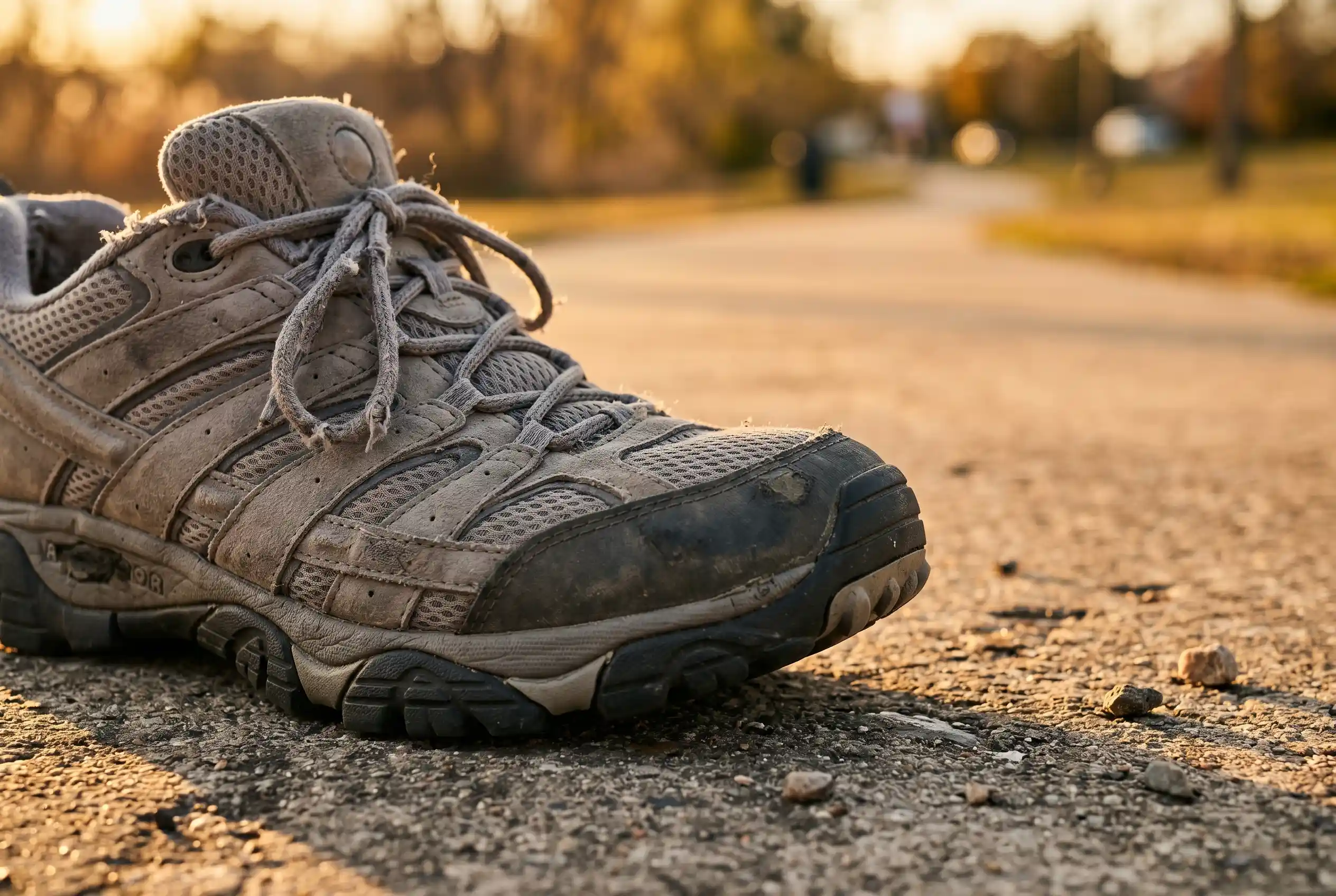
Who Gets Hurt and Why
The typical American adult walks between 3,000 and 4,000 steps per day. Moving from that baseline to 15,000 over a week or two puts cumulative loading on knees, ankles, and heels that the surrounding musculature has not yet built up to absorb.
Dr. Deshpande identifies three groups at elevated risk from a sudden jump to high step counts: people who are overweight, those with early-stage arthritis, and anyone with a history of joint injuries. In all three, repetitive impact tends to trigger inflammation before cardiovascular or metabolic benefits arrive.
Research drawn from the Osteoarthritis Initiative, a large multicenter U.S. cohort study, found that walking at or above 10,000 steps per day was associated with a higher risk of worsening bone marrow lesions, meniscal damage, and cartilage defects among adults with pre-existing structural joint abnormalities. That finding applies to a specific clinical population rather than generally healthy adults, but it signals that high walking volume interacts with underlying joint condition in ways no step counter can detect.
Knee pain that persists beyond a day of rest, visible joint swelling, or breathlessness disproportionate to effort are the warning signs he says warrant medical evaluation before continuing a high-step-count routine.
Walking vs. High-Impact Exercise on Joint Load
Running burns more calories per minute and can drive weight loss faster. The relevant tradeoff for anyone with joint concerns is the force load each stride places on cartilage and bone.
Walking absorbs roughly 1.0 to 1.5 times body weight at each footstrike. Running involves a flight phase in which both feet leave the ground simultaneously; landing forces climb to 2.5 to 3.5 times body weight per stride. For a 70-kilogram person, that means up to 245 kilograms of force through the knee on every running step, per biomechanical analysis published by Mayo Clinic Press.
| Walking (15,000 steps) | Running (equivalent distance) | |
|---|---|---|
| Joint load per step | 1.0-1.5x body weight | 2.5-3.5x body weight |
| Calorie burn | ~450-750 kcal | ~700-1,000+ kcal |
| Time to complete | ~2-3 hours | ~45-90 minutes |
| Annual overuse injury rate | Low for most healthy adults | 30-79% among recreational runners |
| Suitable for osteoarthritis | Yes, across most OA stages | With healthy joints only |
Walking also carries a mechanical benefit for cartilage. The repetitive moderate loading pumps nutrients into cartilage tissue through synovial fluid, the lubricant inside the joint. A study of 1,788 adults (average age 67, average BMI in the obese range) found that even 1,000 steps per day reduced the risk of functional mobility loss by 16 to 18 percent among those at risk of knee osteoarthritis (OA, a degenerative joint disease affecting cartilage).
Strength training alongside the walking plan matters for joint longevity at higher step counts. Stronger quadriceps, hamstrings, and hip abductors reduce the force transmitted to cartilage with each step, which becomes more important as daily volume climbs.
Adding Steps Without Overloading Joints
Starting From a Sedentary Baseline
The overuse injury risk in high-volume walking concentrates at the transition point. An 18-month British Journal of Sports Medicine cohort study of more than 5,200 adult runners found that exceeding a 10 percent increase above the longest recent single session raised overuse injury risk by 64 percent. That study covered running, but the tissue adaptation biology applies to any repetitive loading activity: tendons, ligaments, and bone need time to adjust before volume increases.
A graduated approach over two to three months gives the body time to adapt:
- Weeks 1-2: Establish a daily base of 5,000 to 7,000 steps consistently. Maintaining the routine matters more than the specific number at this stage.
- Weeks 3-4: Add 1,000 to 1,500 steps, keeping at least one lower-volume recovery day per week.
- Weeks 5-8: Continue incremental weekly increases while monitoring for knee soreness, shin pain, or heel discomfort that does not clear overnight.
- Months 2-3: Consolidate around 10,000 to 12,000 steps before pushing higher, pairing high-volume days with supportive footwear and adequate hydration.
- Ongoing: Avoid single-session spikes above the recent baseline; distributing steps across the day rather than completing them in one concentrated block reduces peak joint load.
When 7,000 Steps Is Enough
A meta-analysis of 57 studies spanning more than ten countries, published in The Lancet Public Health in July 2025, found that 7,000 steps per day cuts the risk of early death by roughly 47 percent, with broad additional benefits across heart disease, type 2 diabetes, dementia, and depression.
Aiming for 7,000 steps is a realistic goal based on our findings, which assessed health outcomes in a range of areas that hadn’t been looked at before.
Professor Melody Ding, from the University of Sydney School of Public Health and the study’s lead author, made that comment at publication. The findings put most of the mortality and cardiovascular benefit below 15,000 steps, which shapes how aggressively a new walker should chase the higher number.
What Steps Can’t Do Alone
Diet, sleep, stress, age, and hormonal status all interact with daily step count to determine weight outcomes. Someone logging 15,000 steps daily in a calorie surplus will see little or no change on the scale regardless of what the tracker displays. Sleep deprivation raises ghrelin, the hormone that drives hunger, and suppresses leptin, which signals fullness, tending to increase food intake enough to erase a walking session’s calorie burn.
Strength training two to three times per week serves two functions alongside a high-step walking routine. It builds the quadriceps, hamstrings, and glutes that absorb impact in the knee joint, reducing overuse injury risk. It also raises basal metabolic rate slightly, adding calories burned at rest between walking sessions.
Walking at a manageable pace tends to stay in a person’s routine for months and years. High-intensity programs see much higher dropout rates, particularly among new exercisers. Dr. Deshpande’s guidance ends there: “Even 7,000 to 10,000 steps daily can offer major health benefits if done regularly.”
Frequently Asked Questions
Does walking 15,000 steps a day guarantee weight loss?
No. Walking 15,000 steps burns roughly 450 to 750 calories for most adults, creating a calorie deficit that can produce weight loss. If food intake rises to compensate, the deficit closes and the scale may not move. Diet, sleep quality, stress levels, age, and hormonal factors all affect whether the step count translates to weight reduction.
How long does it take to walk 15,000 steps?
At a standard walking pace of about three miles per hour, 15,000 steps takes roughly two hours and 17 minutes for an average adult; picking up to four miles per hour shortens that to about one hour and 47 minutes. Stride length affects the distance covered per step, so shorter adults may take slightly longer at the same pace.
Can people with knee problems walk 15,000 steps daily?
It depends on the severity of the knee condition. For most people with mild knee issues or early-stage osteoarthritis, moderate walking is beneficial and can improve joint function by stimulating synovial fluid circulation. Those with pre-existing structural joint damage may face elevated risk at very high step volumes. A consultation with an orthopedic or sports medicine specialist is advisable before targeting 15,000 steps with any active joint condition.
Is 15,000 steps better than 10,000 steps for health?
Research shows diminishing additional returns above certain thresholds. A 2025 Lancet Public Health meta-analysis of 57 studies found that 7,000 steps per day reduces early mortality risk by about 47 percent, capturing most of the cardiovascular and metabolic benefit documented in the research. Reaching 15,000 steps extends calorie burn and can accelerate weight loss, but the incremental health gain above 10,000 is smaller than the gain from 3,000 to 7,000 steps.
What is the safest way for a beginner to reach 15,000 daily steps?
Start with a consistent daily base of 5,000 to 7,000 steps and add 1,000 to 1,500 steps per week. Spreading steps across the day rather than completing them in a single session reduces peak joint loading. Supportive footwear and at least one lower-volume recovery day per week lower the risk of overuse injuries, which are most common in the first two to three months of a new high-volume walking routine.
How many calories does walking 15,000 steps burn by body weight?
Calorie burn scales with body weight using the standard MET formula (MET 3.5 for moderate walking pace). A 130-pound adult burns roughly 470 calories per session; a 155-pound adult burns approximately 559 calories; a 185-pound adult burns around 670 calories. Pace, terrain, and individual fitness level all shift these estimates, with heavier individuals burning more per step because of the additional effort required to move greater body mass.
Disclaimer: This article is for informational purposes only and does not constitute medical advice. Walking programs and fitness goals carry physical health risks, particularly for individuals with joint conditions, cardiovascular disease, or other underlying health issues. Consult a qualified healthcare or orthopedic professional before starting or significantly changing any exercise routine. Figures are based on published research and expert consultation accurate as of the date of publication.