President Donald Trump declared the Strait of Hormuz open on Sunday during an interview on NBC’s Meet the Press, hours after US Central Command posted on X that the waterway was open and that traffic was flowing. Iran’s Islamic Revolutionary Guard Corps Navy said the same day that the Strait of Hormuz was closed.
By Sunday night, the fight over the strait had already moved past words. CENTCOM completed a new wave of strikes against Iran earlier in the day, hitting air defenses, coastal radar, missile sites and small boats. An Indian-crewed commercial ship burned east of Oman after being hit, and one sailor was still missing. Iran retaliated with missiles and drones at US bases in Kuwait, Bahrain, Qatar and Jordan.
Trump on NBC: “We Bombed the Hell Out of Them”
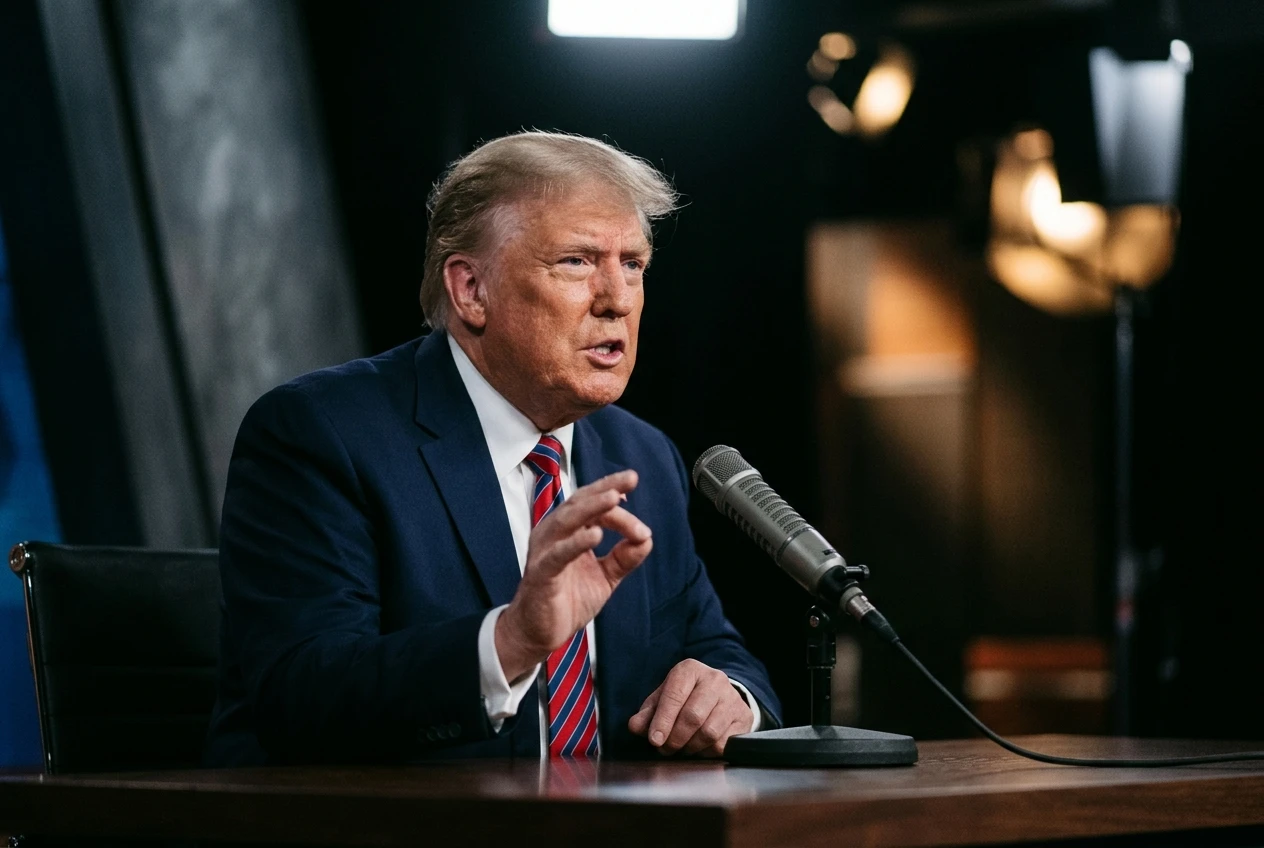
Trump’s interview on Sunday opened with extended tributes to Senator Lindsey Graham, who died the night before, before the conversation turned to Iran. The president told NBC the Strait of Hormuz is “open” and accused Tehran of violating the memorandum signed in June. He told CNN separately that Iran had been hit “very hard last night.” Asked about the strikes themselves on Meet the Press, Trump said, “We bombed the hell out of them.” The interview aired hours after the US launched its third wave of strikes on Iran in a week.
Trump’s reading of the deal was blunt. “They were giving up everything,” he told NBC, “and then all of a sudden two hour after they hit a ship with a drone. These people, there is something wrong with them.” Iran struck the Cyprus-flagged container ship GFS Galaxy in the same window that Trump said a deal was close. 10 Indian crew were rescued; one remained missing Sunday night.
The US naval posture behind Trump’s claim has hardened in plain sight. CENTCOM’s official X account posted Sunday that “Iran does not control the strait. Traffic is flowing,” rejecting Iran’s declaration of closure. The same post said US forces were “positioned and prepared” against “unwarranted Iranian aggression, harassment, threats, and arbitrary declarations.” Those are the same four words an adversary uses to claim authority over a waterway, posted from a CENTCOM account at the same hour Iran posted its own version of the same line. Read CENTCOM’s post declaring traffic is flowing.
What CENTCOM Says It Did Overnight
CENTCOM’s press release dated July 12 described strikes on Iranian military air-defense systems, coastal radar sites, missile and drone capabilities, and small boats. For the first time in the campaign, US forces used one-way attack sea drones alongside fighter aircraft and naval vessels. Iranian state media reported an army officer, Lieutenant Hamidreza Dehghan, was killed at the southern port of Jask in the strikes. The pro-government Mehr news agency said the head of the Hormozgan province telecommunications authority was also killed on Qeshm Island. See CENTCOM’s report on the July 12 strikes.
The targets CENTCOM named are exactly the systems Iran uses to threaten the southern shipping lane near Oman. Blasts were reported on Qeshm, Jask, Sirik and west of Bandar Abbas through Sunday night. Iranian state media said more than ten projectiles struck Qeshm, the largest Iranian island in the Persian Gulf.
Why Iran Reopened the Closure on Sunday
Iran’s IRGC Navy announced the Strait of Hormuz was closed “until further notice” on Saturday, state media reported, accusing foreign powers of ignoring its shipping arrangements. The IRGC said it had fired a warning shot at the GFS Galaxy on an “unauthorized route” before the ship was struck east of Oman. Iran then fired missiles and drones at US bases in Jordan, Kuwait, Bahrain and Qatar, claiming to have destroyed a command-and-control center at Qatar’s Al Udeid Air Base. Iran’s foreign ministry called the US strikes a “flagrant violation” of the UN Charter. Follow the running account of Iran’s Sunday closure.
The Iranian parliament’s speaker, Mohammad Bagher Qalibaf, posted a screenshot of the June memorandum on Sunday. He highlighted the clause saying Iran “will make arrangements” for the safe passage of commercial vessels.
The era of one-sided deals is OVER. We told you: keep your word or pay the price. Reality is knocking.
Qalibaf’s post framed the rest of Iran’s negotiating position. He added that Hormuz “will only open with ‘Iranian arrangements,’ not American threats.” Iranian officials told reporters the situation would not return to what it was before the war, and that any transit through the strait must now be coordinated with Iran. Iran’s lead negotiator has separately said the country will charge fees for passage after August 17.
The pattern of attacks has narrowed to a single rule. Iran has been striking commercial vessels that use the Omani coastal lane rather than the lane Iran has authorized. The Qatari LNG tanker Al Rekayyat was hit off Oman on July 7 and caught fire. Three ships were struck on July 7 and 8 in the same waters, all using the route close to Oman’s shore. The targeting pattern is how Iran enforces its claim that transits must be coordinated with it.
Two Readings of the Same Memorandum
The disagreement over Hormuz runs through a single document. The 14-point memorandum was signed by Trump and Iranian President Masoud Pezeshkian on June 17, brokered by Qatar and Pakistan. It set a 60-day interim ceasefire. Both sides still describe the document as the framework for talks.
The two governments read the strait clause differently. Tehran holds that all commercial traffic during the 60-day window must be coordinated with Iran while a permanent deal is negotiated. Washington reads “open” as a permission for ships to use either the Iranian or the Omani lane without asking Iran. The IRGC has enforced its reading by attacking ships that use the southern corridor near Oman. CENTCOM has enforced Washington’s reading by widening that route on June 27 and striking the systems Iran uses to police it. The structure of that disagreement echoes the 1988 Tanker War comparison.
Each side keeps accusing the other of breaching the same paragraph. Iran says US oil-license revocations and naval posture violate the agreement. The US says Iranian attacks on shipping and on Gulf-state oil platforms violate the agreement. Neither side has formally declared the memorandum dead. The 60-day window does not expire until mid-August.
What the Traffic Data Actually Shows
The clearest test of whether the strait is open is not the rhetoric. It is the number of ships moving through it. The Strait of Hormuz, 21 miles wide at its narrowest point, links the Persian Gulf to the Arabian Sea and carried about a fifth of global oil consumption before the war. In a normal month like January 2025, roughly 90 to 100 commercial vessels transited the strait each day.
The Hormuz Strait Monitor reported 20 vessels passed through the strait over the 24 hours ending Sunday, roughly one-sixth of normal commercial traffic. The dashboard lists the strait as “CLOSED” since February 27, 2026, and notes that commercial traffic has been resuming at around 35 to 40 ships per day in recent weeks. The Monday count sits below even that recent run rate.
| Metric | Vessels per day |
|---|---|
| January 2025 baseline | 90 to 100 |
| Recent run rate (per Hormuz Strait Monitor) | 35 to 40 |
| Past 24 hours, ending Sunday | 20 |
Oil, LNG, and the Gulf Beyond the Strait
Markets read the contested status as contested. Brent crude futures rose $2.67, or 3.51 percent, to $78.68 a barrel on Monday. The rally reflected growing concern that the fighting could disrupt shipments through the strait. Oil prices were still well below the $126 peak reached in March during the worst of the war, and well below the levels that followed the oil price slump after the June deal.
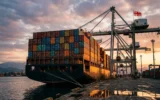
About 25 percent of seaborne oil and 20 percent of LNG passed through the strait before the war. LNG is the harder pinch: roughly 25 percent of global LNG flows through Hormuz, and Qatar’s volumes feed Europe, Japan and South Korea. Major container lines including Maersk, MSC, Hapag-Lloyd and CMA CGM have rerouted or suspended Hormuz transits. The Hormuz Strait Monitor estimates about 147 containerships (roughly 470,000 TEU) are stuck in the strait region.
Iran’s strikes have now spread past the shipping lane. The IRGC targeted US bases and radar sites in Kuwait, Bahrain, Qatar and Jordan with missiles and drones on Saturday. An Iranian drone attack injured a Kuwaiti oil company worker at an offshore drilling platform and damaged three border posts. Qatari air defenses intercepted an Iranian missile, with falling debris injuring three on the ground. Oman, the usual mediator, summoned the Iranian ambassador over Iranian drone attacks on its territory.
Mediators and the UN Press for Restraint
The diplomatic machinery has not stopped, only slowed. Pakistani Foreign Minister Ishaq Dar called his Iranian counterpart Abbas Araghchi on Sunday and “underscored that dialogue and diplomacy remain the only viable path” to stability. Iran and Oman agreed on July 11 to continue technical talks on Hormuz navigation, with Oman drafting a tentative proposal for two separately controlled shipping routes. Qatar’s transport ministry, meanwhile, suspended all maritime activities “until further notice.”
Qatar had previously said it would not mediate while under attack. On Sunday Doha said it reserves the right “to respond” and that Tehran bears the consequences of its actions.
The United Nations added its voice to the calls for de-escalation. Secretary-General Antonio Guterres said Sunday: “These attacks must stop.” His statement came as Iran’s foreign ministry accused him of a “biased” position toward Washington. Both sides kept returning to the same dispute over what “open” means. The 60-day clock is still running.
The Hormuz Strait Monitor still lists the waterway as CLOSED since February 27, 2026. Trump’s interview language, CENTCOM’s X post and Iran’s IRGC declaration now coexist on the same Sunday news cycle. The 20 vessels that moved through the strait in the past 24 hours have done so without anyone in the region agreeing on what that means.