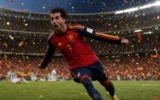
Ferran Torres settled Spain’s second World Cup final in the 106th minute of extra time on Sunday, beating Argentina 1-0 at New York/New Jersey Stadium in East Rutherford, New Jersey. Fans packed streets from Madrid to Barcelona for hours afterward, waving red and gold flags and chanting “Campeones! Campeones!”
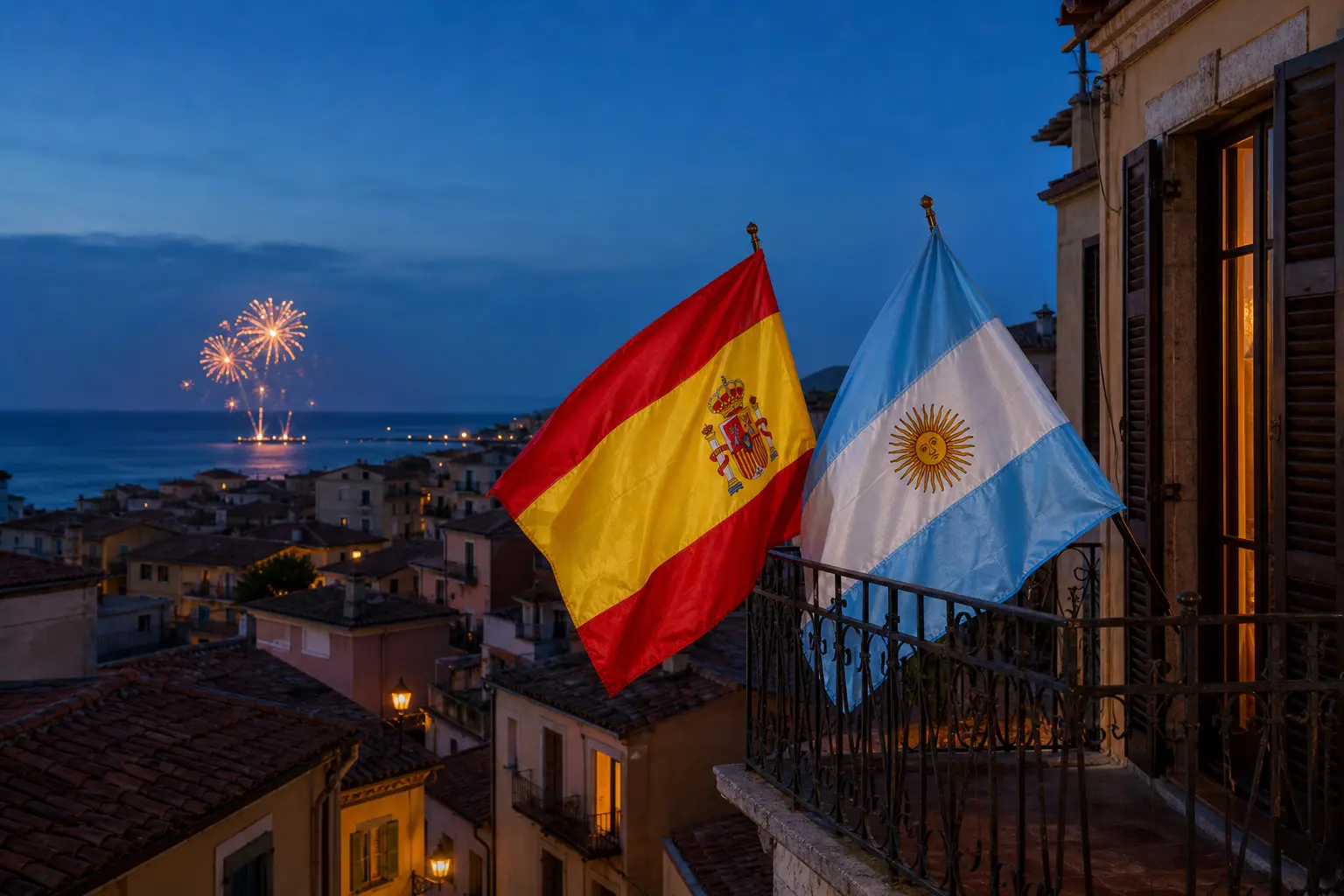
In Castelldefels, a Catalan seaside town of 70,000 people south of Barcelona where Lionel Messi built his life during his years at Barça, Spanish and Argentine flags hung side by side from the same balconies Sunday night. The party there split down the middle.
Torres, a Second-Half Substitute, Delivers the Only Goal
Torres, a Barcelona forward, entered as a 62nd-minute substitute for Mikel Oyarzabal and struck from close range in the 106th minute for his first goal of the tournament. It held up. Spain won its second men’s World Cup, 16 years after its first in 2010.
Argentina goalkeeper Emiliano Martínez kept the game level for as long as he could, finishing with 11 saves and breaking the previous championship match record of eight. Argentina’s best look came four minutes from the end of extra time, when a Messi corner kick deflected to substitute Giuliano Simeone, whose header sailed over the bar.
“When you have Messi on the other side, well, you are nervous,” Torres said afterward. Argentina played the final stretch with 10 men after midfielder Enzo Fernández, who plays for Chelsea, was shown a second yellow card and a red for a reckless foul on young Spain defender Pau Cubarsí in second-half stoppage time.
“The goal belonged to 47 million people,” Torres said. “It wasn’t just mine or the 26 players. Destiny was written, and it was meant for us to win far away from our people.”
- One goal allowed in all eight matches, a new World Cup record for a champion’s defense.
- Two titles in 16 years, after Spain’s first triumph in 2010.
- First nation to hold the men’s and women’s World Cup at the same time, joining the women’s team’s 2023 title.
- 11 saves from Martínez in the final alone, breaking the previous title-match record of eight.
For Argentina, the tournament had already produced tension well before Sunday’s final whistle.
A Falklands Banner Trailed Argentina Into the Final
Argentina’s run to New Jersey had already gone through a tense quarterfinal escape against Switzerland and a bad-tempered semifinal win over England in Atlanta on July 15. That 2-1 victory set off a diplomatic dispute that outlasted the celebration.
Moments after the final whistle in Atlanta, Argentina defender Lisandro Martínez and unused substitute Giovani Lo Celso held up a banner reading “Las Malvinas son Argentinas,” meaning “The Falklands are Argentine.” FIFA opened an investigation, according to Al Jazeera, ruling the display a possible breach of its stadium code of conduct, which bars political, offensive or discriminatory banners.
British officials reacted fast. Business Secretary Peter Kyle called the banner “entirely inappropriate” and told the BBC that politics “needs to be separate from football.” A Downing Street spokesperson put it more bluntly: “The World Cup might not be ours, but the Falkland Islands definitely are.”
Argentina’s President Javier Milei called the players’ celebration “perfectly valid,” saying it reflected a sentiment shared by all Argentinians, even as he predicted a fine. “What the players do is understandable; they get carried away by their emotions, they act on impulse, and that will likely lead to discussions about a fine,” Milei told a Buenos Aires radio station.
FIFA had precedent to draw on. Argentina’s federation was fined 30,000 Swiss francs, about $37,000, over a similar banner shown before a warm-up match ahead of the 2014 World Cup, Al Jazeera reported. Milei’s government has also drawn friction with Spain over his support for Israel, in a country where opinion polls show a majority of the public backing the Palestinian cause.
In Castelldefels, Two Flags Flew From One Balcony
Thousands of kilometers from Buenos Aires and London, those disputes barely registered in Castelldefels on Sunday night. Al Jazeera found fans gathered around a giant screen the town council had set up, the same way they had for every match of the tournament.
Gio Gonzalez immigrated from Buenos Aires to Spain in 2000. He met his wife, Gema, in Barcelona, and the couple settled in Castelldefels in 2007. Spanish and Argentine flags fly outside their apartment, a daily marker of a mixed household.
“I am a mad, keen Argentina fan, so I was dreaming that we would win again, but it was not to be. It was a tough match, but I am happy for my wife that Spain could win,” said Gio Gonzalez, 54, a research scientist.
Gema Gonzalez, 46, a housewife, felt for her husband, if only a little.
I think Spain were the better side, and we deserved to win. I know I would say this, but I think we were the best side in this tournament.
Gema Gonzalez laughed as she said it, delighted despite her husband’s disappointment.
Messi’s Decade in the Hills Above Town
The reason so many people in Castelldefels feel two ways about a Spanish title traces back to one former neighbor. Messi made his home in Bellamar during his trophy-filled years at Barcelona. The neighborhood sits in the hills above town.
He still owns a luxury complex there, complete with its own football pitch, reported to be worth $8m. He used to walk his children to school at the town’s British school while passersby watched in awe, and he would stop for quiet drinks at seaside bars with his wife, signing autographs without complaint.
Local businesses still trade on the memory. La Pampa, one of several Argentinian steak restaurants in town, quietly displays photos of Messi smiling for the camera. At Ankara Burger, the walls are lined with the shirts of Argentinian clubs like Boca Juniors, River Plate and Independiente.
Barça fans in town still talk about the day Messi might come home for good. That talk got louder this year.
Why This Corner of Catalonia Wears Argentina’s Colors
Catalonia holds the largest Argentine community in Spain, with 37,980 Argentine-born residents, according to figures reported by Al Jazeera. The affinity runs deeper than shirt sales. For a region where support for independence from Spain has cooled but never disappeared, backing Argentina over the national team carries its own quiet meaning.
The Catalan sovereignty movement, known as the procés, dominated regional politics between 2012 and 2021 and at its height divided roughly 5 million Catalan voters in half. Messi played through that entire period at Barcelona without ever taking a public side. A peer-reviewed study of Catalan press coverage found Messi became a symbolic proxy in the region’s independence-era debates, precisely because his global fame carried weight neither side could ignore.
| Population Group | Region | Estimated Number |
|---|---|---|
| Argentine-born residents | Catalonia | 37,980 |
| Argentine-born residents | Spain (nationwide) | 148,585 |
| Argentina-born or dual-citizen residents | Spain (nationwide) | 450,883 |
| Catalan-descended residents | Argentina | About 188,000 |
The traffic runs both directions. Catalonia sent its own wave of emigrants to Argentina more than a century ago, and their descendants there still outnumber the Argentine community now living in Catalonia.
Messi’s Newest Investment Sits Ten Minutes From Home
Messi’s ties to the region are no longer just sentimental. In April, he bought Unió Esportiva Cornellà, a fifth-tier club in the Tercera RFEF based in Cornellà de Llobregat, about 13 kilometers from Barcelona and a short drive from Castelldefels.
The club’s Instagram following jumped from 40,000 to nearly 200,000 within 24 hours of the announcement. “Leo Messi’s arrival marks the beginning of a new chapter in the club’s history, aimed at driving both sporting and institutional growth, strengthening its foundations, and continuing to invest in talent,” the club said in a news release.
Cornellà, founded in 1951, has a track record of developing talent well past its size: Arsenal goalkeeper David Raya, former Barcelona defender Jordi Alba and current Barça defender Gerard Martín all came through its academy. Financial terms of Messi’s purchase were not disclosed.
Argentina’s flag flew defiantly from balconies across Castelldefels on Sunday night. Messi’s financial stake in Catalan football had already grown months earlier, regardless of how his national team fared in New Jersey.
What Comes Next for Messi and Argentina
Messi, 39, was in tears when Torres scored, and he made no declaration about his international future afterward, focusing his post-match comments on gratitude toward his teammates and the fans who followed Argentina through the tournament.
Asked about Messi’s long-term plans, Argentina coach Lionel Scaloni did not pretend to know. “I don’t know,” he said. “I have no idea. He never stops surprising us.”
Argentine journalist Gastón Edul of TyC Sports reported that Sunday’s final would not be Messi’s last appearance in Argentina colors, indicating he is expected to keep playing at least through the 2026 Copa América.
What we know:
- Messi’s contract with Inter Miami runs through the 2028 MLS season.
- Scaloni has said Messi will always have a roster spot if he wants one.
- TyC Sports’ Gastón Edul reports Messi is expected to continue playing for Argentina at least through the 2026 Copa América.
What’s unconfirmed:
- Whether Sunday’s final was Messi’s last World Cup appearance.
- Whether he will attempt a run at the 2030 World Cup. He will be 42 when it begins and would turn 43 partway through it.
- Any timeline for an official retirement announcement from Messi himself.
Back in Castelldefels, the framed photos of Messi still hang behind the counter at La Pampa. The Boca Juniors and River Plate shirts still cover the walls at Ankara Burger, waiting for the next customer who wants to talk about the man who used to live up in the hills.