Brent crude jumped back above $90 a barrel this week, its highest level in a month. Iran declared its ceasefire with Washington dead, and Yemen’s Houthi rebels opened a second front by declaring a naval blockade against Saudi Arabia on Monday. U.S. Central Command (CENTCOM) answered with its tenth consecutive night of airstrikes on Iranian targets.
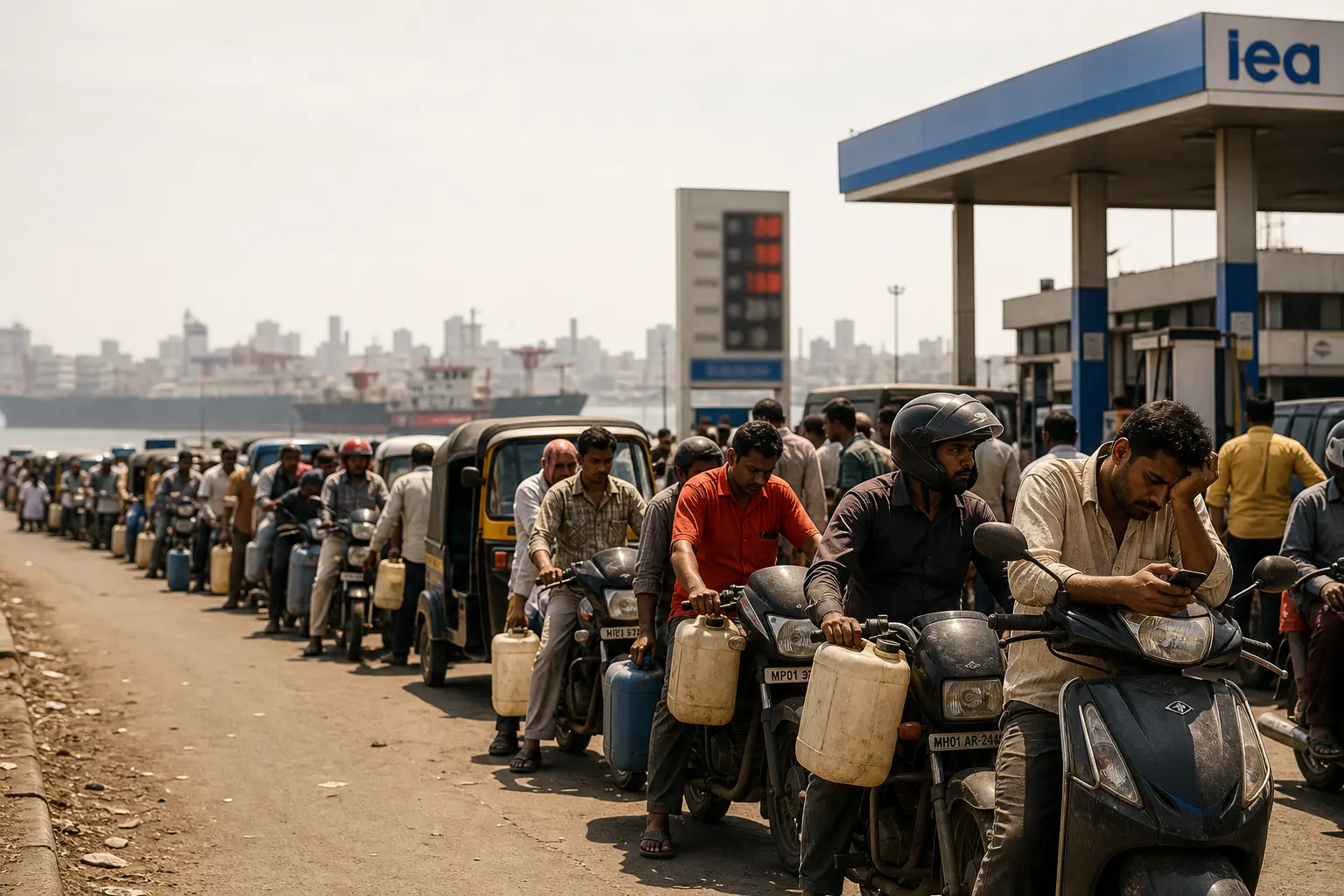
The swing barely touches America’s own economy, which now buys only a sliver of its crude through that waterway. It lands far harder on refiners, currency traders and drivers in New Delhi, Dhaka, Tokyo and Manila, capitals with no seat at the table where the next month of this fight gets decided.
Washington and Tehran Both Broke the June Truce
CENTCOM and President Trump say Iran started the unraveling by firing on commercial vessels in the strait, enforcing its own pre-approved shipping lanes and threatening to charge tankers a transit toll. Washington says all three violated the memorandum of understanding (MOU) the two governments signed on June 18 to end the war that began in late February.
Washington’s own response, restarting and expanding nightly airstrikes on Iranian soil, broke the same document from the other side. Tehran’s answer was to scrap the MOU outright. Mohammed Ghalibaf, Iran’s top negotiator, said the country was now in “an essential and existential war with America.” Secretary of State Marco Rubio said “they can’t have an MOU that’s alive if they’re violating the terms of it.”
By Sunday, CENTCOM had carried out nine consecutive nights of strikes, saying on X that the goal was degrading Iranian capabilities used to attack commercial vessels in the strait. The count reached ten by Monday evening, as Iranian media reported explosions in several cities and Trump vowed Iran would pay for every American service member it kills. At least 17 U.S. service members have died since the war began, CENTCOM said. Trump has also floated targeting Iran’s oil infrastructure directly, including a possible seizure of Kharg Island, the hub that ships most of Iran’s crude exports.
Iran has struck targets in Bahrain, Kuwait, Oman, Qatar and Syria in retaliation, and Kuwait’s state oil company reported Iranian strikes hit a power and desalination plant and, separately, one of its oil facilities. Iran’s Revolutionary Guard Corps claimed it also struck two oil tankers attempting to use what it called the strait’s “unsafe” southern route, though Reuters said it could not immediately verify the claim.
Traders had already started repricing the risk. Brent’s front month contract traded $8.92 above the six month contract on July 14, the widest such premium since June 10, Reuters reported. Brent averaged $85 a barrel in June before dropping below $70 on July 1, according to the U.S. Energy Information Administration (EIA), before this month’s fighting pushed it back past $90. Oil had already slipped to a three month low once Hormuz reopened in June, a decline that has now fully reversed.
The war gained a second front on Monday, when the Houthis declared a naval blockade against Saudi Arabia, threatening to shut the Bab-el-Mandeb Strait in retaliation for a Saudi blockade of Yemen and a strike on Sanaa’s airport. A full closure would strip out roughly 7% of global oil supply on top of the estimated 10% already lost to the Hormuz disruption, according to Reuters reporting carried by Nikkei Asia.
Why Is the United States Barely Exposed to Its Own Crisis?
The United States takes only about 2.5% of the oil that flows out of the Strait of Hormuz, while pumping crude domestically at a record pace, so a closure would barely touch its own supply. Almost all of what actually transits the strait belongs to someone else’s economy.
Total oil flows through the strait averaged 20.9 million barrels a day in the first half of 2025, a quarter of all seaborne traded oil, according to EIA data. China, India, South Korea and Japan absorb the overwhelming majority of it between them. That imbalance is why a fight over gasoline politics in Iowa and Ohio ends up deciding fuel bills in Karachi and Dhaka instead.
The Four Economies With the Least Room Left
The gap between the countries that buy the most Hormuz oil and the countries most vulnerable to losing it is wide. Zero Carbon Analytics, a UK based research group, scored each country’s exposure to a Hormuz shock by weighing its share of flows against its reliance on imported fossil fuels. China buys the most oil that passes through the strait. Japan is the most exposed to losing it.
| Country | Share of Hormuz Crude Flows | Hormuz Risk Score | Reserve Cushion |
|---|---|---|---|
| China | 37.7% | 4.4 | About 104 days of stockpiled cover, narrowing by roughly 41 million barrels a month |
| India | 14.7% | 4.9 | Roughly 30 days against a prolonged shock |
| South Korea | 12.0% | 5.3 | LNG reserves cover only two to four weeks |
| Japan | 10.9% | 6.4 | 254 days of oil reserves, but LNG cover of just two to four weeks |
| United States | 2.5% | Minimal (net exporter) | Record domestic output absorbs most of the shock |
China’s share of the flow is the largest by far, but Beijing also holds the deepest stockpile and the most diversified pipeline options, which is why its risk score lands lowest of the four. Japan buys less of the oil that moves through Hormuz but has almost nowhere else to turn for it, and Kpler data cited by CNBC show its LNG reserves would cover only two to four weeks if Qatari supply stopped moving. Bangladesh, India and Pakistan import nearly two thirds of their LNG via Hormuz, which is why a natural gas shock there hits power plants and fertilizer plants as hard as it hits gas stations.
What the First Shutdown Already Cost
The region already lived through this once this year. The war that closed the strait began on February 28 and did not end until the June 18 MOU. In between, Brent spiked past $140 a barrel at its worst point, the highest since 2008, and daily tanker transits through Hormuz collapsed from about 130 to roughly six by March, a drop of about 95%, according to an analysis by Discovery Alert.
- Qatar declared force majeure on its LNG contracts after Iranian drones struck its Ras Laffan and Mesaieed facilities, CNBC reported.
- Japan carried out the largest release from its strategic oil reserves in the country’s history.
- Bangladesh’s economy slid toward recession-like conditions as the LNG crunch squeezed its gas fired power plants.
- The Philippines stood up a crisis committee under President Ferdinand Marcos Jr. to manage fuel and school supplies.
- Ship traffic through the strait stayed far below pre-war levels even after the two sides announced their first ceasefire on April 8.
Those costs landed almost entirely on countries that never sat across a table from Washington or Tehran. The same pattern is repeating now, only this time the countries footing the bill have less cushion left than they did in March.
India and China Are Fighting Over the Same Barrels of Russian Crude
India and China are now competing directly for the same scarce cargoes, mainly Russian crude and, to a lesser extent, Saudi barrels, as Hormuz linked supply tightens again, CNBC reported. Almost all sanctioned Iranian crude, about 98%, still finds its way to China, with smaller volumes reaching India.
India is absorbing the worse of the squeeze. Its oil imports fell in March, and industry estimates put its buffer against a prolonged shock at only around 30 days. New Delhi has not raised pump prices even as the shock has driven up the price of every barrel it can find, so demand has not eased at all.
“India has been more exposed to the recent disruptions than China, given its heavier reliance on Middle Eastern crude and comparatively lower inventory levels,” Lin Ye, vice president of oil commodity markets at Rystad Energy, told CNBC.
That exposure is already visible in currency markets, where the rupee has slid to a record 96.38 to the dollar as the oil shock drains India’s reserves. China is better cushioned. Its stockpiles, built up for a moment like this, can cover three to four months of demand even with Hormuz constrained, giving Beijing room that New Delhi does not have.
Futures traders had been positioning for calmer months ahead. Even after June’s truce, many were still betting Brent would settle near $60 a barrel once a final deal replaced the framework agreement, a bet this month’s collapse has undercut entirely.
Washington’s November Deadline Doesn’t Apply to Asia
The clock that matters most inside the Trump administration has nothing to do with tanker traffic. U.S. midterm elections fall on November 3, and a senior Washington based source who works closely with the Treasury told OilPrice.com that Trump wants a decisive result in Iran without gasoline prices wrecking his party’s chances.
Since 1896, the sitting party has won re-election in all eleven elections where the economy avoided recession within two years of the vote. It won just once out of seven when the economy was already in recession, according to the same analysis. Every $10 move in crude works out to roughly 25 to 30 cents at the pump, and every one cent rise in the average gallon drains more than $1 billion a year from consumer spending. Presidents get nervous once the national average clears $4 a gallon; OilPrice.com put it at $3.85 this week.
Few things terrify an American president more than a spike in fuel prices.
Bob McNally, a former energy adviser to President George W. Bush, made that point in remarks carried by OilPrice.com.
Tehran knows all of this, which gives it an incentive to keep escalating just short of the line that would force a full U.S. assault on civilian infrastructure, according to the Washington source. The Houthi blockade adds exactly that kind of pressure without Iran crossing that line itself. Saudi Arabia has rerouted more than 70% of its exports to the Red Sea port of Yanbu since the Hormuz disruption began, and Kpler data show crude loadings through Bab-el-Mandeb have already fallen 36% in two weeks, from a peak of 9.5 million barrels a day to 6.1 million.
“Right now we are facing two pressures on two critical choke points for energy security,” Noam Raydan, a senior fellow at the Washington Institute for Near East Policy, said.
A separate clock is ticking in Beijing that has nothing to do with the U.S. ballot. China has been drawing down pre-accumulated stockpiles rather than buying at today’s elevated prices, and that cushion, roughly 104 days of cover in early 2026, was narrowing by about 41 million barrels a month as of June, according to Discovery Alert’s analysis. If Hormuz stays constrained and Beijing has to re-enter the market at scale before that buffer runs out, that alone could become the biggest upward push on prices in the second half of the year.
Saudi Arabia and the UAE hold the only pipelines able to bypass Hormuz entirely, and both are running well under full capacity, but together they cannot replace more than a fraction of what either strait carries on a normal day.
What we know:
- Brent has surged roughly 30% from its July lows and traded above $90 a barrel this week.
- CENTCOM carried out its tenth consecutive night of strikes on Iranian targets on Monday.
- Houthi rebels declared a naval blockade against Saudi Arabia on Monday, targeting the Bab-el-Mandeb Strait.
- The MOU signed June 18 has less than a month left before its 60 day window lapses in mid-August.
What’s unconfirmed:
- Whether the Houthis can actually enforce a full closure of Bab-el-Mandeb rather than just disrupting traffic.
- Whether Trump follows through on threats to strike Iranian oil infrastructure directly or seize Kharg Island.
- Whether China’s narrowing stockpile forces it back into the spot market before votes are counted on November 3.
The countries footing today’s bill get no vote in either outcome. The Washington source who spoke to OilPrice.com left little doubt about where Trump goes next once the politics clear: “After the mid-terms, however they go, all the shackles will be off Trump, and I don’t think he’ll stop until he gets the deal he really wanted, including regime change.”
Until then, the clock that started on June 18 keeps running, and so does the price of every barrel that has to pass through the Strait of Hormuz to reach a refinery in Asia.
Frequently Asked Questions
Is the Strait of Hormuz the world’s single busiest oil route?
No. The Strait of Malacca, which links the Indian and Pacific oceans, actually carries more oil by volume, an estimated 23.7 million barrels a day in 2023 against Hormuz’s roughly 20 million. Hormuz matters more because so little of what flows through it has any alternative route, while Malacca traffic has more options if it were ever disrupted.
What is the Bab-el-Mandeb Strait, and why is Iran threatening it?
It is a narrow waterway between Yemen and the coasts of Djibouti and Eritrea, known in Arabic as the Gate of Grief, linking the Red Sea to the Gulf of Aden. Oil flows through it averaged 9.3 million barrels a day in 2023, but Houthi attacks had already cut that to around 4.2 million barrels a day by early 2025, before this week’s blockade declaration threatened to cut it further.
Could Saudi Arabia and the UAE’s pipelines replace Hormuz oil flows?
Only partly. Saudi Arabia’s Petroline system and the UAE’s Fujairah pipeline are the only routes that bypass Hormuz entirely, and combined they have an estimated 3.5 to 5.5 million barrels a day of spare capacity, against total Hormuz flows of around 20 million barrels a day. That leaves most of the strait’s traffic with nowhere else to go if it closed.
How high could U.S. gas prices climb if the war fully reignites?
Using a ratio of about 25 to 30 cents at the pump for every $10 move in Brent, a return toward the war’s earlier peak near $140 a barrel from today’s price near $90 would likely add more than a dollar to the average gallon. That would push the U.S. average well past the $4 mark that makes the White House nervous.
Which countries actually benefit from higher oil prices right now?
Exporters, not importers. Brazil and Venezuela have booked revenue windfalls from the higher global prices this year, and Malaysia has been flagged as a likely relative beneficiary in Asia because it exports more energy than it consumes, unlike its oil importing neighbors.