Realme spent six years climbing to sixth place among the world’s smartphone brands. It took about six weeks in 2026 to fall out of China entirely. On July 16, Realme Vice President Xu Qi published an open letter telling users the brand would pause its domestic operations and pour everything into overseas markets. Its China share had slipped to 0.7 percent.
The timing is the strange part. Realme’s retreat landed two days before the World Artificial Intelligence Conference, where Stepfun, Nubia and Honor each unveiled an AI agent phone built to save the very industry that just spat Realme out. The chips squeezing Realme’s margins and the AI boom funding its rivals’ comeback bets trace back to the same source: a memory shortage caused by the exact technology everyone at WAIC was there to sell.
Realme Presses Pause on a Six Year China Run
Xu Qi called it pressing the pause button. After-sales support and system updates for existing Chinese owners move fully to OPPO’s team, and when a Beijing Business Daily reporter dialed Realme’s customer service line, OPPO’s automated system picked up.
The signs were there for months. Rumors of a domestic pullback surfaced in March, and Realme denied them. Then its online store services got folded into OPPO’s, after-sales moved into OPPO’s network, and the org chart shifted piece by piece until the July letter just confirmed what had already happened operationally.
The collapse was steep by any measure. Third party monitoring put Realme’s contribution to OPPO’s group share at just 1.2 percentage points of OPPO’s 16.7 percent total in the first quarter of 2026. By the 23rd week of the year, Realme’s own domestic share had fallen to 0.7 percent. Separate full year figures for 2025 already showed Realme at 1.26 percent domestically and 3.6 percent globally, down from a 2021 peak when Counterpoint ranked it sixth in the world and it had gathered roughly 300 million users on cost and design alone.
Realme is not improvising its next act. According to reporting on the brand’s overseas pivot, it plans to lean harder into performance and gaming phones in markets including India, Southeast Asia and the Nordic countries of Denmark, Finland, Iceland, Norway and Sweden, while OPPO folds Realme UI into a single ColorOS platform across its whole brand family. And it is not the first casualty this year. Meizu halted domestic phone hardware development back in February, pivoting to AI software, and its longtime China marketing chief left the company four months later.
None of this happened in a vacuum. Conventional DRAM contract prices were already set to jump 58 to 63 percent quarter over quarter heading into the same period Realme’s share cratered, according to TrendForce, the Taiwan based memory market research firm. For a brand built entirely on razor thin margins, that kind of cost shock does not leave much room to hide.
The Memory Squeeze Behind Every Retreat
Strip away the brand names and the industry’s problem is a spreadsheet problem. Global smartphone shipments fell 11 percent year over year in the second quarter of 2026, the weakest second quarter since 2013, according to Counterpoint Research. The culprit is not weak demand. It is a memory chip shortage that has nothing to do with phones at all.
DRAM and NAND suppliers are steering their best capacity toward AI data centers, which pay more and sign longer contracts than any phone maker can match. Memory and storage now eat up more than 60 percent of the bill of materials on budget phones and over 30 percent on flagship models, a cost structure that barely existed two years ago.
The global memory crisis has now overtaken every other factor as the single biggest drag on the smartphone industry. What started as a components issue last year is now a full blown demand issue. The entry and mid tier devices, which account for a majority of the world’s smartphone volumes and are the most exposed to bill of material economics, become structurally unfeasible at previous price points.
That is Shilpi Jain, senior analyst at Counterpoint Research, describing why 2026 broke differently than past downturns. TrendForce’s own tracking backs her up in raw numbers: conventional DRAM contract prices surged roughly 93 to 98 percent quarter over quarter in the first three months of 2026, helping push the entire memory industry’s revenue up 81 percent in a single quarter to 97 billion dollars. Phone brands are not the customer that pricing was built for.
The brands most exposed are exactly the ones that just posted the worst numbers. Xiaomi, OPPO and vivo, whose lineups sit in the mid range and budget tiers where every extra dollar of memory cost actually matters, all recorded double digit year over year shipment declines in the same quarter Realme walked away.
Three Companies, Three Bets on the AI Agent Phone
While the low end bleeds out, WAIC 2026 turned into a showcase for a different kind of phone entirely. Stepfun, Nubia and Honor each picked a different technical path to the same destination: a phone that acts for you instead of waiting to be tapped.
| Phone | Maker | Core Approach | Signature Feature | CAC Filing Status |
|---|---|---|---|---|
| STEPX Neo | Stepfun | Ground up agent native operating system (Step AOS) | Step Amoo personal agent runs the whole device | Not filed, reveal stage only |
| NaviX Ultra | Nubia (ZTE) | Cross app protocol integration (MCP and A2A) | Direct agent to agent links with Meituan and Alipay, no simulated clicks | Filed, runs CAC cleared Doubao model |
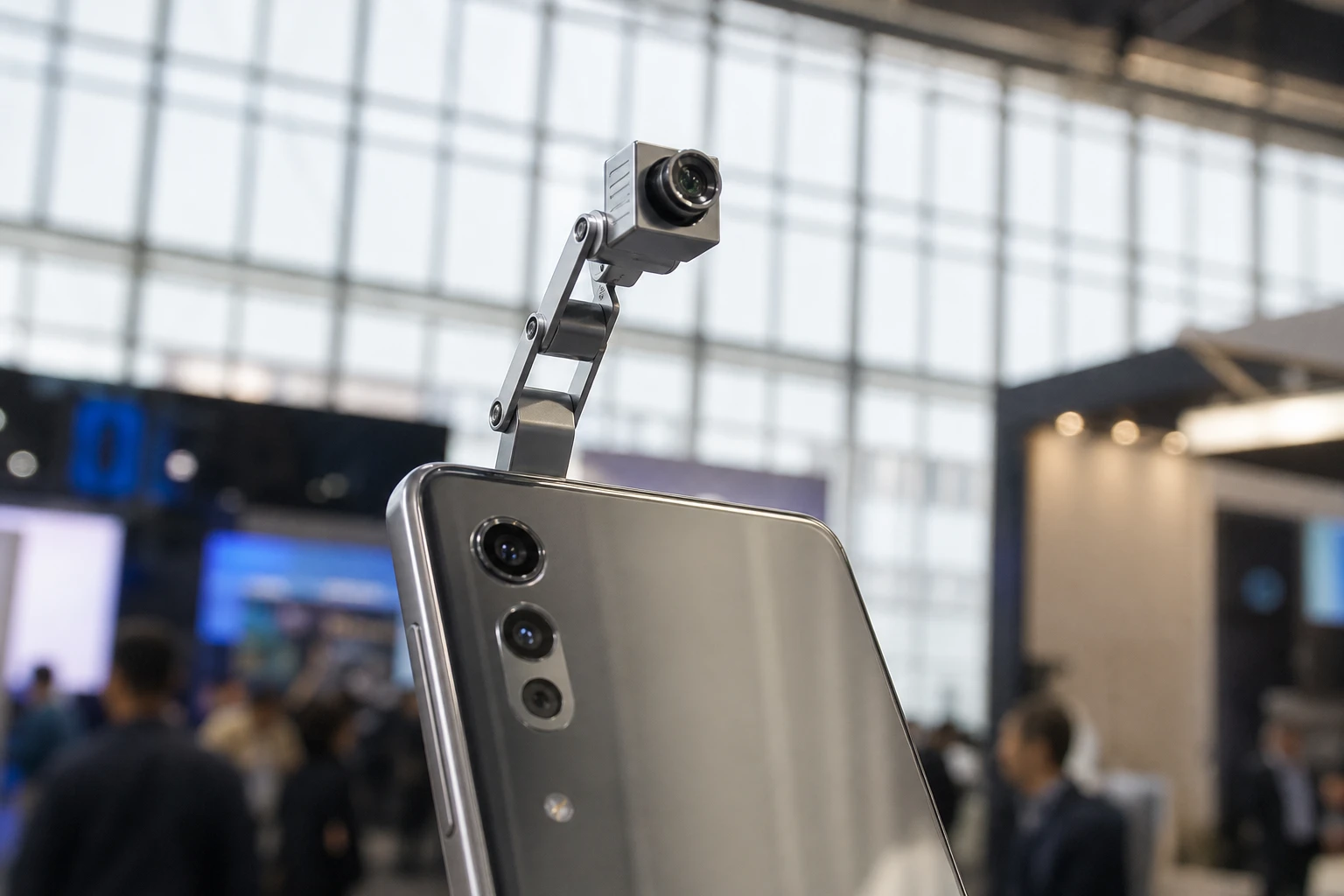
| RobotPhone | Honor | Physical form factor innovation | Retractable four axis titanium gimbal pops out in 0.8 seconds, tracks 360 degrees | Not filed as of July 15 |
Stepfun’s chairman, Yin Qi, frames the difference as building a house instead of opening a door. Bolt an agent onto an existing operating system and it stays a guest with limited permissions. Rebuild the operating system around the agent, as Step AOS attempts, and it becomes a resident that can reach every function on the phone.
Nubia is running the opposite experiment. Its first generation M153 sold out 30,000 units but ran into trouble when its GUI based approach, essentially simulating taps and clicks on other apps, bumped against the privacy boundaries of the apps it was operating. The NaviX Ultra scraps that method for direct protocol level handshakes with app makers instead, backed by a Qualcomm Snapdragon processor, a 6000mAh battery and 90W charging, hardware specs that hint at how much power on device agent inference actually burns.
Honor skipped the software argument and changed the hardware instead. Its RobotPhone uses voice, gesture, gaze and motion as inputs, with the mechanical gimbal acting as a physical sensor that lets the phone track objects in real space rather than just parsing what is on screen. Honor CEO Li Jian has confirmed the product is ready, with supply chain sources pointing to an August launch.
Beijing Picks Its Winners Before the Race Starts
Two days before WAIC opened, on July 15, the Cyberspace Administration of China published its first ever standalone list of on device generative AI services approved for smartphones. Seven companies made the cut.
- Apple – Apple Intelligence, filed July 8 after a two year wait since its 2024 unveiling
- Huawei – Xiaoyi AI large model
- Xiaomi – HyperOS AI on device features
- OPPO – AndesGPT large model
- vivo – BlueLM on device model
- Samsung – Galaxy AI
- Nubia (ZTE) – Doubao Phone Assistant, built on ByteDance’s Doubao model
Honor and Stepfun are absent from that list. Analysts point to a simple explanation for Stepfun: the STEPX Neo remains in a reveal phase with no confirmed hardware specs, pricing or sale date, putting it well short of the paperwork a filing requires. Filing is also only step one. Manufacturers still need network access certification from China’s Ministry of Industry and Information Technology before any AI feature can legally reach a retail shelf.
Wu Zewei, a special researcher at SuShang Bank, told Beijing Business Daily that market saturation, brutal homogenization and shrinking margins from rising costs are what finally forced traditional players to retrench, and that AI native entrants reflect a shift in where phone value actually sits: less in the hardware, more in the intelligence running on it.
Zhang Xinyuan, research head at Kefangde Think Tank, offered the harder test. If new entrants can prove AI genuinely rebuilds how people use a phone, incumbents will be forced to move faster. If AI turns out to be marketing dressed as substance, the whole category may need a trial and error phase before it settles.
Samsung and Apple Pull Away From the Pack
Zoom out to the global shipment numbers and the split gets starker. Samsung reclaimed the top spot worldwide with a 24 percent share in the second quarter of 2026, Counterpoint’s strongest year over year growth among the top five brands, driven by Galaxy S26 demand and lighter price hikes in markets like India and the Middle East.
Apple grew shipments 3 percent year over year to a record 20 percent global share, and it was the only major brand that did not raise prices during the quarter. In China specifically, Apple’s shipments jumped roughly 24 percent year over year to an 18.1 percent share, trailing only Huawei’s 22.6 percent, itself up 19.4 percent on the back of its own vertically integrated chip supply.
Xiaomi, OPPO and vivo could not say the same. All three, concentrated in price sensitive mid and low tiers, posted double digit declines as the same memory costs that broke Realme’s economics worked their way through healthier balance sheets too. Scale and chip independence, not AI features, decided who grew and who shrank this quarter.
Who Gets to Define the AI Agent Phone?
Nubia’s president, Ni Fei, has proposed the yardstick the whole category will be measured against: whether a phone understands you, gets things done, remembers, and is secure enough. Every AI agent phone at WAIC is chasing that bar from a different angle, and none has fully cleared it yet.
What we know:
- Stepfun’s product launch is set for late October, the first real test of whether Step AOS can attract outside developers.
- Honor’s RobotPhone is targeting Q3 mass production, with Li Jian calling the product finished.
- Nubia’s second generation flagship has already shed the app permission fights that limited its first model.
What’s unconfirmed:
- Exact RobotPhone pricing and its firm on sale date, both still resting on supply chain sourcing rather than an official announcement.
- Whether Honor or Stepfun will complete CAC filing before their commercial launches, or launch first and file later.
- Whether Step AOS or the MCP and A2A protocol route wins over the app makers whose cooperation both approaches actually need.
Counterpoint expects generative AI phones broadly, a much wider category than true agent phones, to reach 45 percent global penetration in 2026. That gap between a phone with AI features and a phone that acts as an agent is exactly the space Stepfun, Nubia and Honor are fighting to own before Samsung’s Gemini powered Galaxy S26 experiments, Google’s Pixel agent work or OpenAI’s planned 2027 agent phone get there first.
As one consumer electronics investor put it, the question facing phone makers in 2026 is what story they can tell if they skip AI altogether, since the agent is the one selling point big enough to matter that nobody has proven yet.
Frequently Asked Questions
Is Realme leaving India, Europe and other overseas markets too?
No, the opposite is happening. Realme is pulling only out of mainland China, while shifting more resources into performance and gaming phones for India, Southeast Asia and Europe, including a stated push into the Nordic countries of Denmark, Finland, Iceland, Norway and Sweden.
What is the difference between a GenAI phone and an AI agent phone?
A GenAI phone is any device with generative AI features bolted on, such as photo editing or text summarizing, and Counterpoint expects that category to reach 45 percent global penetration in 2026. An AI agent phone goes further, autonomously completing multi step tasks across different apps without a person tapping through each step.
Has Apple Intelligence actually launched on iPhones in China?
Not yet. Apple filed for regulatory clearance on July 8, 2026 and the Cyberspace Administration of China confirmed the filing on July 15, ending a wait that dated back to Apple’s original 2024 unveiling. Filing only clears one hurdle. Apple still needs separate network access certification, and its China version will run on Alibaba’s Qwen model for general tasks and Baidu for search, rather than Apple’s own foundation models.
Why are DRAM and NAND memory chip prices rising so fast in 2026?
Because AI data centers are outbidding everyone else for the same factories. TrendForce’s 2026 outlook describes a structural price surge driven by cloud providers reallocating capacity toward server memory, and even as price increases are now forecast to moderate into the third quarter, the firm still expects the shortage itself to persist into 2027.