A Weibo leaker known as Fixed Focus Digital says Apple resolved early scaling problems and finished the iPhone Ultra production line setup by the end of July, clearing the path for the first foldable iPhone to go on sale Friday, Sept. 18 alongside the iPhone 18 Pro models. That date sits less than two months away.
The report, covered by 9to5Mac, ends months of whiplash between delay warnings and on-track claims. Base iPhone 18 models look set for spring 2027, leaving the Pros and the Ultra to share the September spotlight.
The Leak That Ended the Delay Whiplash
Fixed Focus Digital, a frequent supply-chain poster on Weibo, stated there has been no delay to the iPhone Ultra. An initial issue scaling production was fixed. The production line itself reached completion late in July.
There’s been no delay to the iPhone Ultra. Though there was an issue scaling production initially, that has reportedly been resolved. And very recently, at the end of July, the production line setup was completed.
That summary comes via 9to5Mac’s reporting of the post. Earlier Chinese outlets and Foxconn hiring signals already pointed to mass production under way. Apple has told suppliers to prepare roughly 10 million units this year, up from earlier 7-8 million forecasts.
Bloomberg’s Mark Gurman had flipped from a later shipping window to an on-track September debut or soon after. Analyst Ming-Chi Kuo still sees possible Q4 sales for some units even if the device is unveiled in September. The newest leaker note tilts the balance toward simultaneous availability with the Pros.
What the Handset Is Expected to Deliver
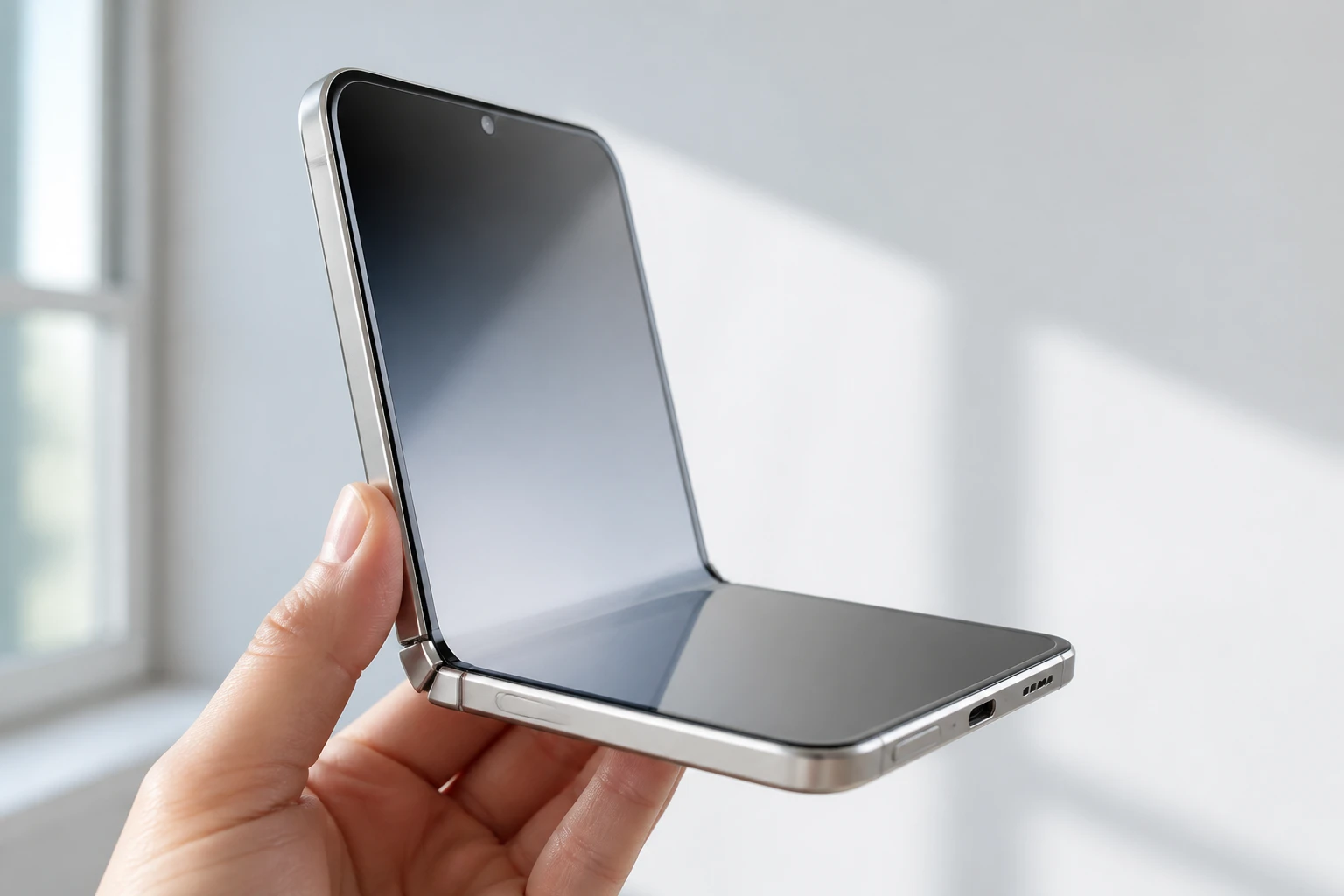
Consensus specs paint a book-style device positioned above the Pro lineup. Inner display lands near 7.8 inches, cover screen around 5.5 inches. Thickness targets 9-9.5 mm folded and under 5 mm open. The A20 chip and 12 GB of RAM appear across multiple reports. Touch ID returns in the side button because the thin chassis leaves little room for Face ID hardware.
| Feature | iPhone Ultra (rumored) | Galaxy Z Fold typical |
|---|---|---|
| Inner display | 7.7-7.8 inch | ~7.6-8 inch |
| Cover display | 5.3-5.5 inch | ~6.2-6.5 inch |
| Battery | 4,800-5,500 mAh | ~4,400 mAh |
| Starting price | $2,000-$2,500 | Under $2,000 often |
| Biometrics | Touch ID side button | Ultrasonic fingerprint |
Battery capacity could hit 5,500 mAh according to the same Fixed Focus Digital account earlier this year, which would top the iPhone 17 Pro Max. A near crease-free panel remains a core claim, helped by advanced adhesives and possible liquid-metal hinge elements. Dual 48 MP rear cameras and a front camera usable open or closed round out the package. Price starts north of $2,000 and can climb past $2,500 for higher storage.
September Calendar Now Looks Firm
Event timing points to Sept. 8 or 9 at Apple Park. Several analysts and Apple watchers, including David Phelan at Forbes, favor Wednesday the 9th after the Labor Day holiday. Pre-orders would open days later. Sale date of Friday, Sept. 18 matches the usual post-keynote cadence for the Pro models.
- Late July 2026, Production line setup completed per Fixed Focus Digital.
- Early August, Supply-chain checks and Foxconn hiring confirm mass production pace.
- Sept. 8 or 9, Expected keynote unveiling of iPhone 18 Pro, Pro Max and Ultra.
- Sept. 18, Projected first sale date for Pros and foldable.
That schedule recalls the iPhone X playbook only in reverse. In 2017 the X arrived more than a month after the iPhone 8 pair. This time the radical new form factor rides with the Pros while the standard models wait until 2027. The iPhone 18 Pro and foldable timing bet now looks less risky on the calendar side.
Scarce First Wave and the 10 Million Target
- 10 million units, Apple’s raised full-year production goal for the foldable.
- $2,000-$2,500, Expected starting price band across analyst notes.
- Limited early stock, Multiple reports still flag tight initial supply even with mass production.
- Q4 spillover, Kuo’s view that some shipments may slip past September.
Mass production does not equal instant volume. Hinge complexity and yield rates have dogged every foldable maker. Early buyers will face wait times or store lotteries. The raised 10 million target shows confidence, yet the first weeks will feel like a constrained drop.
Crowd reaction on X treats the production news as real progress while still expecting scarcity. Posts noting the 10 million figure sit beside jokes that “maybe September” is the new “definitely September.” The practical takeaway is simple: pre-order the moment it opens or plan on October or later delivery.
Samsung Keeps the Lead as Apple Claims Premium Ground
Foldable shipments are forecast to grow roughly 21 percent year over year in 2026. Samsung projected 32 percent foldable share still tops the category. IDC has separately projected Apple could take more than 22 percent unit share and 34 percent of market value in its first year thanks to an average selling price near $2,400.
That revenue tilt matters more than raw volume. Apple enters late on purpose, after years of watching crease, durability and software problems. The Ultra name signals a tier above Pro rather than a peer to mid-range foldables. Samsung foldable sales growth ahead of Apple has already prepared the Korean giant. Its recent move to split the Fold lineup into standard and Ultra variants looks like a direct answer. Samsung’s split Fold flagship response now faces an Apple product priced and named the same way.
The second-order effect is a premium arms race. Samsung must defend both volume and the high end. Chinese makers gain a clearer mid-tier lane. Carriers and retailers gain a new $2,000-plus SKU that moves the average selling price upward.
How Leasing Changes the Sticker Shock
Gurman noted that a $2,000-plus phone looks far more approachable at $60-$70 a month under Apple’s expanding Upgrade leasing options. That program turns a once-in-four-years purchase into a continuous subscription. For the Ultra it softens the jump from a Pro Max.
Design continuity also helps. Lessons from the thinnest iPhone design lessons on materials and battery density feed directly into the foldable’s thin open profile. Buyers who already accepted the Air’s trade-offs may see the Ultra as the logical next step rather than a science project.
Software will carry equal weight. iPad-style multitasking on the inner pane and seamless handoff between cover and main displays will decide daily usefulness. Early software polish has been Apple’s historical strength once hardware ships.
The next 90 days will test three numbers: how many units hit store shelves by late September, how quickly the $2,000 starting price converts into upgrades, and whether the crease-free claim survives real-world folds. Production is ready. Demand is not yet measured. Friday, Sept. 18 is the first real answer.