Google’s Pixel 11 series landed this week with the Tensor G6 chip, larger camera sensors on the base model, and starting prices of $899, yet the louder hardware stories came from China. Honor shipped a phone with a motorized titanium gimbal that pops out to carry a 200MP camera, while Xiaomi’s Redmi line dropped endurance monsters including a 9,070mAh flagship.
Sales for most of these open in the next few days. The irony is sharp: the wildest physical innovations stay locked to China or carry premium tags that blunt their reach, leaving Google’s familiar refinement as the one most buyers can actually order.
Pixel 11 Family Sticks Close to the Script
Google unveiled the Pixel 11, 11 Pro, 11 Pro XL and 11 Pro Fold on August 12 alongside the Pixel Watch 5. All four phones use the new Tensor G6 SoC on a 3nm process, not the 2nm node that dominated pre-launch rumors. A Google hardware VP later confirmed the node choice in an interview.
The Pro and Pro XL keep 6.3-inch and 6.8-inch Super Actua LTPO OLED panels that reach higher peak brightness. Camera hardware is largely carried over with small sensor gains. The Pro pair share a 50MP 1/1.3-inch main, 48MP ultrawide and 48MP 5x telephoto. The vanilla Pixel 11 gets a bigger main sensor at 1/1.56-inch versus the prior 1/2.0-inch. The Pro Fold also gains a larger main sensor but drops to a 4,806mAh battery from 5,015mAh.
That Fold battery trim is the clearest trade inside the family. More sensor area costs volume, and the hinge already claims space a slab phone can give to the cell. The rest of the lineup holds steadier capacity while Google leans on software claims instead of raw milliamp hours.
Pre-orders are open. US pricing starts at $899 for the Pixel 11 (256GB), with the Pro Fold at $1,899. In Europe the Pro opens at €1,199 and the Pro XL at €1,399. General availability hits August 20. Base storage is now 256GB across the board after Google dropped 128GB.
| Model | Starting Price | Key Camera Note | Battery |
|---|---|---|---|
| Pixel 11 | $899 / 256GB | Larger 1/1.56″ main | ~4,985mAh class |
| Pixel 11 Pro | €1,199 / $1,099 class | 50MP 1/1.3″ + 5x | Typical 4,850mAh |
| Pixel 11 Pro XL | €1,399 | Same Pro system, brighter panel | Typical 5,115mAh |
| Pixel 11 Pro Fold | $1,899 | Larger main sensor | 4,806mAh |
Early Geekbench chatter on X puts the Tensor G6 multi-core around 18-20% ahead of the prior chip with a 50% faster TPU for on-device Gemini work, while GPU gains look milder. The phones also add HiLight, a notification LED system that lets users stay present without staring at the screen. That ambient approach builds on earlier Pixel HiLight notification and Fold advances.
The TPU jump matters more than the multi-core figure for how these phones will feel day to day. On-device Gemini work is the pitch, and a half-step faster tensor unit is the part of the silicon story that lines up with that pitch. Milder GPU gains leave gaming and heavy graphics closer to last generation.
Full Pixel 11 Pro Super Actua display and camera specs list 30+ hour battery claims, Qi2 wireless charging up to 25W, 7 years of OS updates and Android 17 out of the box.
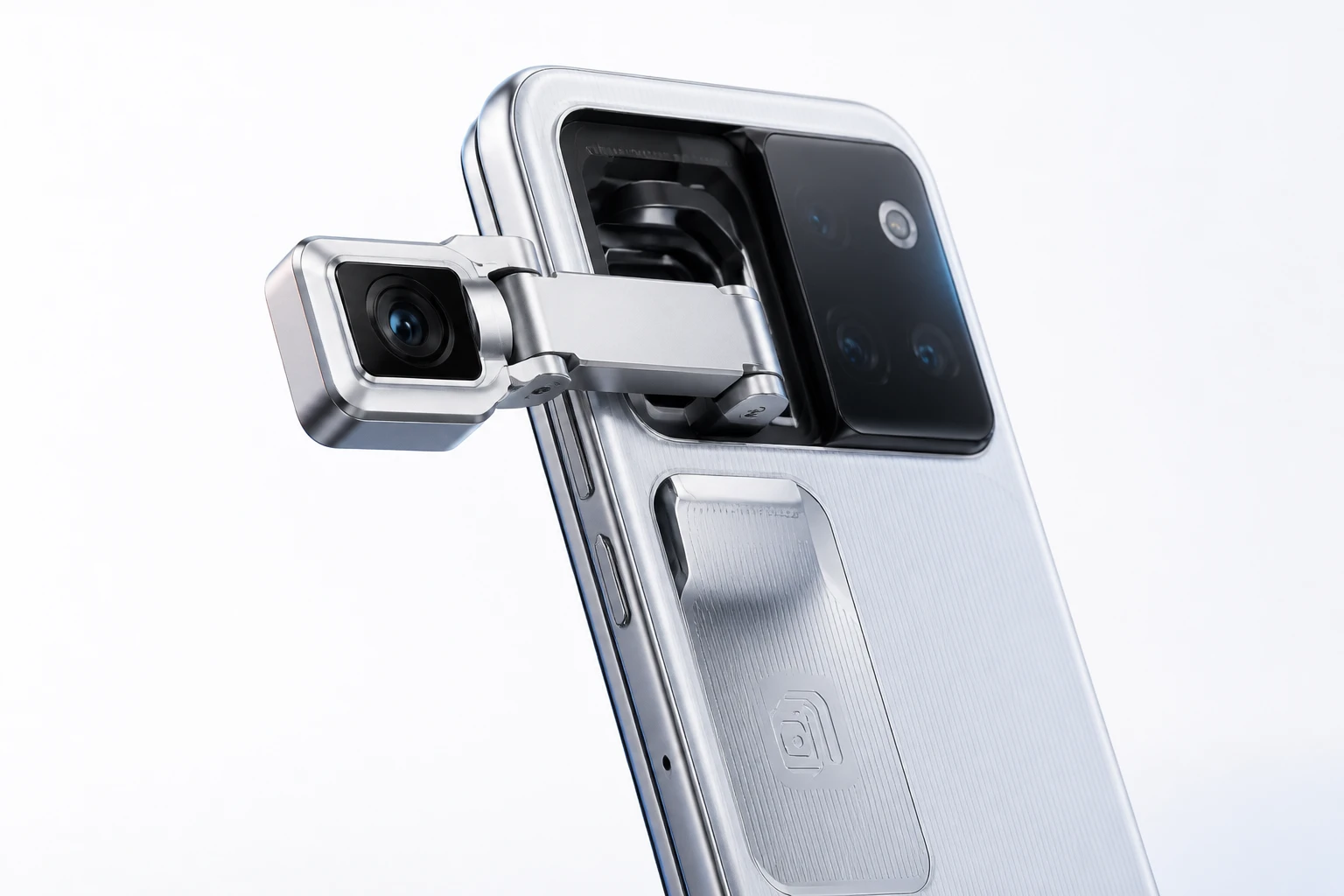
Honor Deploys a Real Camera Arm
Honor’s Robot Phone went official in China on August 12 with the feature that defined its long teaser tour: a motorized 4-DoF titanium gimbal that deploys from the rear and carries the main camera. The arm uses more than 100 precision parts and over 100 patents. Honor says the system is 65% smaller than mainstream gimbals yet 200% stronger, with motors that hit 360 degrees per second.
The main camera is a 200MP 1/1.28-inch f/1.6 unit. It pairs with a 200MP 2.7x periscope telephoto and 50MP ultrawide. Honor partnered with ARRI for 10-bit ARRI LogC3 recording, ARRI Wide Gamut 3 and ARRI Looks. The pipeline keeps more data in 14-bit RAW-domain processing before outputting LogC3 for tools like DaVinci Resolve.
Looking back at a century of imaging, every major leap has come from the evolution of both light capture and intelligent processing. Hardware sets the foundation for image quality, while algorithms deliver the leap.
James Li, CEO of Honor, said that at the launch. ARRI’s chief product officer David Bermbach added that the companies share one ambition: expand what creators can achieve with the tools they already carry.
- Snapdragon 8 Elite Gen 5 platform
- 6.31-inch 1-120Hz LTPO OLED peaking at 6,800 nits
- 7,060mAh silicon-carbon battery with 120W wired and 50W wireless charging
- YOYO Robot Mode for AI subject tracking, gesture deploy and hands-free cinematic moves (Tilt Lock, FPV, SpinShot)
- IP-rated metal unibody, 9.59mm thick, 248g
The mechanical claim and the software claim work as a pair. The arm supplies motion the hand cannot hold steady. YOYO Robot Mode then turns that motion into named shots so the user is not freestyling every pan. Tilt Lock, FPV and SpinShot are the productized version of what a separate gimbal operator would dial in on a set.
The 4-DoF titanium gimbal and ARRI partnership marks the first commercial fruit of their cinematic imaging deal. Pricing starts at CNY 9,999 (about $1,485) for 12GB/512GB and CNY 12,999 for 16GB/1TB. Sales open in China on August 18. No international plans have been announced, a limit that echoes earlier Chinese brands AI robot concepts at MWC.
On X, reactions mixed awe at the mechanical execution with jokes about pulling the arm out for selfies and questions about long-term reliability of a moving part on a daily driver.
Redmi 17 Pair Hits Europe Early
Xiaomi made the Redmi 17 5G and Redmi 17 4G official well ahead of the usual cadence. Both target the affordable end with big screens and batteries.
The 5G model uses Snapdragon 6s Gen 4. The 4G version runs Helio G200 Ultra. Shared traits include 6.9-inch 144Hz LCDs, 50MP main cameras, side fingerprint readers and IP64 ratings. Both carry 7,000mAh batteries with 33W charging and ship HyperOS 3 on Android 16.
Redmi 17 5G starts at €249. Redmi 17 4G starts at €199. Availability is rolling across European markets. The early soft launch in places like Poland already showed demand for the large-cell formula at this price.
At these openers the 7,000mAh cells land in a different conversation than the China flagships. Buyers who will never see a Robot Phone or a K100 Pro Max can still order multi-day capacity in Europe this month without crossing into premium brackets.
K100 Pro Max Pushes Battery Extremes
Also from Xiaomi’s Redmi sub-brand, the K100 Pro and K100 Pro Max launched in China as Snapdragon 8 Elite Gen 5 flagships aimed at performance and endurance.
Both run 185Hz OLED panels. The Pro uses a 6.59-inch screen and 8,580mAh battery. The Pro Max steps to 6.9 inches and an enormous 9,070mAh cell. Charging is 100W wired and 50W wireless on both. Main cameras are 200MP with OIS. The Max upgrades the secondaries to a 50MP 5x periscope and 50MP ultrawide, while the Pro sticks with a 50MP telephoto and 8MP ultrawide.
Other shared features: up to 16GB RAM and 1TB storage, IP66/IP68/IP69 protection, and HyperOS. The Pro starts at CNY 3,699 for 12GB/256GB. The Pro Max opens at CNY 4,499. They remain China-only for now, though reports point to possible Poco F9 Pro and F9 Ultra names later. Earlier coverage of the Redmi K100 Pro gaming pitch details already flagged the binned V-series chip angle.
- K100 Pro battery: 8,580mAh
- K100 Pro Max battery: 9,070mAh
- Shared charging: 100W wired / 50W wireless
- Display peak: 185Hz OLED on both
These numbers make the endurance race the quiet story of the week. While camera gimbals grab headlines, multi-day batteries change daily use more for most people.
How the Week’s Batteries Stack Up
Put the cells side by side and the split is obvious. Google’s global models cluster near five thousand milliamp hours. The China launches and the Europe-bound Redmi 17 pair clear seven thousand and keep climbing.
| Device | Battery | Market note |
|---|---|---|
| Pixel 11 Pro Fold | 4,806mAh | Global, August 20 |
| Pixel 11 Pro | Typical 4,850mAh | Global |
| Pixel 11 | ~4,985mAh class | Global, from $899 |
| Pixel 11 Pro XL | Typical 5,115mAh | Global |
| Redmi 17 5G / 4G | 7,000mAh | Europe, from €199 |
| Honor Robot Phone | 7,060mAh | China, from CNY 9,999 |
| Redmi K100 Pro | 8,580mAh | China-only for now |
| Redmi K100 Pro Max | 9,070mAh | China-only for now |
Charging speed does not track capacity in a straight line. The Robot Phone pairs 7,060mAh with 120W wired. The K100 pair pairs larger cells with 100W. The Redmi 17 duo holds at 33W. Pixel wireless tops out at 25W Qi2 on the listed Pro specs. Larger cells still win the overnight and multi-day case even when the wall brick is slower.
For most buyers the practical question is not which peak number wins a chart. It is which of these packs can be ordered where they live, at a price that matches how they already shop.
HyperOS 4 Brings Glass and Preload AI
Xiaomi also detailed HyperOS 4, built on Android 17. The interface leans hard into translucent glass-like elements. Lock screen customization expands so users can rearrange clocks and notifications freely. Folders become resizable and widgets can group. Portrait and landscape apps switch more seamlessly, and floating windows rotate to match orientation.
AI features include predictive resource loading: the system guesses what apps or data will be needed next and preloads them into RAM. Rollout starts on Xiaomi’s newest devices. An open beta in China was already teed up around the same window as these phone launches. Summer 2026 timing matches earlier reports.
Preload is a bet on idle RAM. With up to 16GB on the K100 pair, the OS has room to stage the next app before the tap. On thinner memory configs the same idea has to stay conservative or it fights the user for headroom.
Sony Holds the Jack and Slot Line
In a quieter note, Sony said the Xperia 1 VIII is selling strongly despite its premium pricing. Demand is especially high for higher-storage versions in the new gold color. The company credits the cameras and calls the microSD card slot plus 3.5mm headphone jack “integral” to the Xperia identity. No new compact Xperia 5 appeared, dashing some hopes.
That stance reads as a deliberate counterweight to this week’s folding arms and record cells. Sony is not chasing the same physical extremes. It is defending ports and expandability that the rest of the market treated as settled losses.
Launch Windows Cluster in Mid August
The calendar itself explains why the comparison feels forced into one news cycle. Unveilings and first sales land inside a single stretch of days, so global and China-only stories arrive on the same feeds.
- August 12: Google unveils the Pixel 11 family; Honor makes the Robot Phone official in China.
- August 18: Honor Robot Phone sales open in China.
- August 20: Pixel 11 general availability begins for buyers who can order globally.
Redmi 17 availability is already rolling across European markets rather than locking to one day. The K100 pair and HyperOS 4 beta activity sit in the same China window as the Robot Phone sales start. Summer 2026 remains the broader HyperOS 4 timing already on the record.
Clustered dates inflate the sense that every buyer faces the same menu. They do not. Ship-to address still decides which of these launches is a product and which is a spectacle viewed from abroad.
Spectacle Meets the Buy Button
The week’s pattern is clear. Honor and Xiaomi pushed physical extremes: a deployable cinematic arm and batteries that rewrite all-day expectations. Google delivered a cleaner, more available package with real but measured sensor and AI silicon gains. Pre-orders and sales windows open this week for most models. The Robot Phone and K100 Max look like category statements. Whether they travel beyond China or survive daily pocket life will decide if the spectacle becomes the new normal or stays a regional flex.
For now the accessible choice still sits with the Pixels that ship globally on August 20.