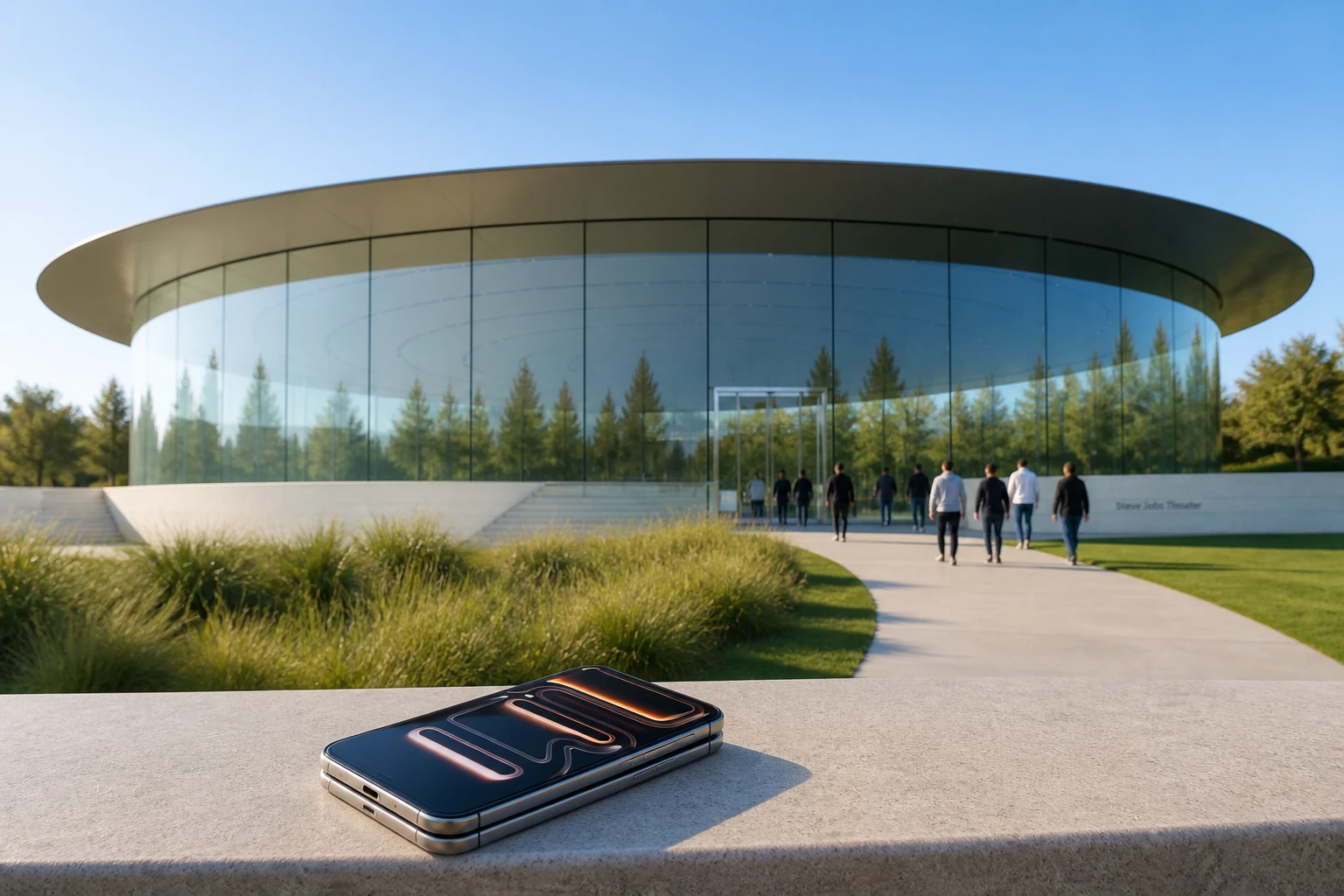
Apple’s iPhone 18 Pro keynote is tracking for Wednesday, Sept. 9 at 10 a.m. Pacific in the Steve Jobs Theater, with pre-orders sliding to Saturday, Sept. 12 and sales on Friday, Sept. 18. The dates land just days after John Ternus becomes CEO on Sept. 1, turning a routine calendar tweak into his first public test with the Pro models and Apple’s first foldable iPhone.
David Phelan at Forbes has argued for weeks that Sept. 9 fits history better than the Sept. 8 date floated by Australia’s Channel News. Bloomberg’s Mark Gurman has also shifted toward the Wednesday slot. The real pressure sits behind the schedule.
What looks like a one-day calendar shuffle is really three constraints stacked at once: Labor Day media travel, the 9/11 anniversary on a Friday, and a CEO handoff timed to the same product cycle. Each force alone has moved Apple before. Together they lock the week into a narrow shape.
The Dates That Now Look Locked
Labor Day falls on Monday, Sept. 7. Apple has never staged an iPhone keynote the day after that holiday. Media travel logistics push the company to Tuesday or Wednesday. Phelan and others now treat Sept. 9 as the working assumption. The invitation itself is expected around Wednesday, Aug. 26.
| Milestone | Expected Date | Note |
|---|---|---|
| Keynote | Wed, Sept. 9 | 10 a.m. PT, Steve Jobs Theater |
| Pre-orders open | Sat, Sept. 12 | Skips Friday Sept. 11 |
| On-sale | Fri, Sept. 18 | Standard Friday pattern |
| CEO change | Sept. 1 | Ternus takes over |
Pre-orders usually hit the Friday after the event. This year that Friday is Sept. 11, the 25th anniversary of the attacks. Apple has avoided the date before. In 2015 the company moved iPhone 6s pre-orders to the following Saturday. The same move is expected now.
The invitation window in late August gives reporters and carriers a short final stretch to lock travel and store plans. Once that note lands, the rest of the table becomes operational rather than speculative.
Why the Calendar Had to Bend
Apple’s September rhythm is rigid for a reason. Journalists need time after a holiday weekend. A Tuesday after Labor Day has happened, but the day-after slot has not. Channel News still lists Sept. 8, yet most other reporting has coalesced on the 9th. Gurman’s Power On notes and Phelan’s 15-year timeline both point there.
The 9/11 anniversary adds a second constraint. Apple treats the date carefully for major commercial activity. Saturday pre-orders keep the traditional short window between announcement and order without landing on the anniversary itself. Sales then settle on the usual Friday one week later.
Skip either constraint and the week opens up. Honor both and Wednesday becomes the only mid-week slot that still leaves a clean pre-order gap and a Friday sales day. That is why the Sept. 8 holdout has steadily lost ground in the broader reporting.
Ternus Steps In With Everything on the Line
On April 20 Apple announced that Tim Cook to executive chairman and Ternus to CEO effective Sept. 1. Cook stays through the summer for a clean handoff. Ternus, who spent 25 years rising through hardware engineering, joins the board the same day.
John Ternus has the mind of an engineer, the soul of an innovator, and the heart to lead with integrity and with honor. He is a visionary whose contributions to Apple over 25 years are already too numerous to count.
Cook said that in the official statement. Ternus replied that he had worked under Steve Jobs and learned from Cook, and that he would lead with the company’s established values. Arthur Levinson moves to lead independent director.
The timing is deliberate. Gurman noted the timing ties to the foldable that Ternus drove through development. The September event becomes the new CEO’s first stage appearance. Cook is expected to stay out of the presentation. For the hardware chief who oversaw iPhone, Mac, Watch and AirPods generations, the foldable is the signature product of the handoff.
Eight days separate the CEO change from the keynote. That gap is long enough for a clean title shift and short enough that the same product plan still belongs to the executive who shepherded it. The stage therefore reads as continuity of hardware leadership rather than a break from it.
Supply Snags Cloud the Foldable Debut
Channel News, citing a Chinese component supplier and Australian carriers, reports that Apple will show the foldable (called iPhone Ultra or Fold in various accounts) on stage but may not ship it in volume immediately. Mass production slipped from June plans into August and beyond. Hinge and display issues surfaced in verification tests. Foxconn was still adjusting lines in late July.
What We Know
- Initial H2 2026 build targeted around seven million units, a tight figure for global demand.
- US allocation comes first; China next; Australia and similar markets could wait two to three months.
- Pricing is not expected at the keynote; estimates run $2,000-$2,500, well above Pro models.
What’s Unconfirmed
- Exact ship date for non-US markets and whether any units reach shelves on Sept. 18.
- Final name and whether Touch ID replaces Face ID due to thickness limits.
Gurman has said there is “no doubt” the foldable ships after the Pro models in some capacity. The low volume and testing hurdles mean early buyers outside the US may face long waits. That pattern echoes the original iPhone X, which was announced in September 2017 and reached stores later. Samsung’s latest Fold lineup already sits on shelves, giving the Korean maker a temporary window if Apple’s ramp stays slow. Readers tracking Apple’s foldable launch risk profile will recognize the same production warnings.
A seven-million-unit H2 target leaves little slack once hinge and display yields wobble. Every week of line adjustment at Foxconn compresses the pool available for the markets further down the allocation list. The stage demo can still land on time while the shipping calendar stretches.
Who Feels the Squeeze First
US customers stand to see the full lineup first. Pro and Pro Max models should follow the classic Friday sales cadence. The foldable’s limited early run concentrates inventory where Apple can control messaging and service. Carriers and retailers in Australia have already been told not to expect stock with the iPhone 18 range. China gets priority after the US, leaving smaller markets further back.
| Market | Early Foldable Position | Pro Model Cadence |
|---|---|---|
| United States | First allocation | Friday sales pattern |
| China | Second priority | With global Pro wave |
| Australia and peers | Two to three month wait | With global Pro wave |
Price pressure hits everyone. Memory costs and advanced components are expected to push Pro pricing up by as much as $100-$300 over the 17 generation. The foldable sits in a different tier entirely. No standard iPhone 18 arrives in September. The base model, 18e and next Air slide to spring 2027. That leaves the fall lineup premium-only and raises the average selling price while narrowing the entry point for upgraders.
Samsung benefits from any Apple delay. Its new foldables are already selling. A staggered Apple rollout keeps the competitor’s devices as the only premium fold option in many stores for weeks or months. Component suppliers face their own squeeze: Apple’s volume target is modest, yet yields must improve quickly or the shortfall grows.
How Apple Has Handled These Calendar Collisions Before
Apple’s archive of past September events shows a clear preference for Tuesdays and Wednesdays. Labor Day has forced adjustments before without breaking the September window. The 2015 pre-order shift off Sept. 11 is the direct precedent for this year’s Saturday move. Keynotes almost never land on a Friday or a major US holiday.
- 2015: iPhone 6s pre-orders moved to Saturday after Sept. 11 fell on Friday.
- Recent years: Multiple Sept. 9 events, including 2024 and 2025 cycles, reinforcing the mid-week preference.
- 2017: iPhone X announced in September but shipped later, the closest parallel to a possible foldable stagger.
The pattern holds: protect media logistics, avoid solemn anniversaries for commercial peaks, and keep sales on Friday. This year’s combination of Labor Day plus the 9/11 anniversary simply stacked two familiar constraints on top of each other.
None of those earlier moves required a new product category to absorb the delay. The foldable adds that extra variable. The calendar tools are the same; the hardware risk is not.
What Arrives on Stage
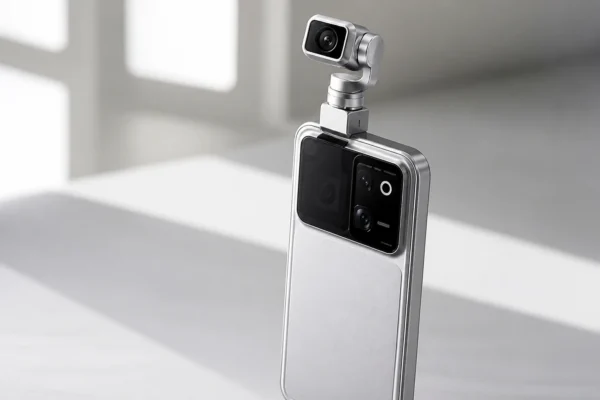
Expect the iPhone 18 Pro and Pro Max with a smaller Dynamic Island, variable-aperture wide camera, A20 Pro on 2nm, improved battery and modem options, and a Dark Cherry color among others. The Pro Max may run slightly thicker for a larger battery. Prices rise. Watch Series 12 and Ultra 4 refresh with faster chips but limited design change. The foldable brings a roughly 5.5-inch closed cover and 7.8-inch 4:3 inner display, dual batteries, two-lens rear camera and likely Touch ID.
- Pro models: A20 Pro, variable aperture, smaller Dynamic Island, possible $100-$300 price lift.
- Foldable: Book-style, ~7.8-inch open, high price tier, supply-constrained start.
- Watches: Incremental S-series and Ultra updates, bigger battery focus.
- Missing: Standard iPhone 18, SE-class Watch, any spring-cycle devices.
Some home products and a possible smart hub remain candidates for a later event. The September show stays iPhone-centric. Reports that a path cleared for a September foldable sale still leave open whether that sale is same-day or delayed for most markets.
The split is deliberate. Pros carry the volume and the familiar upgrade path. The foldable carries the narrative of a new form factor under a new CEO. Watches fill the accessory lane without competing for the headline.
The Handoff and the Foldable Move Together
Gurman’s note that the CEO timing ties to the foldable is the through-line for the whole week. Ternus drove the product through development while he still ran hardware. He takes the top job on Sept. 1 and, eight days later, owns the first public telling of that same device.
Cook’s expected absence from the presentation sharpens the signal. The engineer who oversaw iPhone, Mac, Watch and AirPods generations now stands alone with the riskiest hardware bet in the room. The Pro models still matter for revenue. The foldable matters for how the handoff is read.
- Sept. 1: Ternus becomes CEO and joins the board; Cook becomes executive chairman.
- Sept. 9: First keynote under the new title, foldable on stage beside the Pros.
- Sept. 12-18: Pre-order and sale window that will reveal how far supply reaches.
If early units stay scarce outside the United States, the story becomes one of staged ambition rather than instant scale. That is still a launch. It is simply a launch measured in phases, much as the iPhone X was after its own September unveil.
Why a Premium-Only Fall Changes the Upgrade Math
With the base iPhone 18, the 18e and the next Air held until spring 2027, September offers no low rung. Buyers who usually wait for the standard model either stretch to a Pro, look at last year’s leftovers, or sit out until spring. That narrows the on-ramp and lifts the average selling price in the same motion.
The foldable’s $2,000-$2,500 estimate widens the gap further. It is not an upsell from a Pro so much as a separate tier aimed at a thinner slice of demand. Seven million units of targeted H2 supply match that thinner slice only if yields hold and the US-first pipe stays full.
Samsung’s presence on shelves while Apple ramps gives fence-sitters a live alternative in the foldable category. Apple’s counter is brand, service continuity and the promise that the staggered markets will fill in. How fast that promise turns into stock is the part of the story the keynote cannot settle from the stage.
Foxconn has already raised signing bonuses to pull workers back to Zhengzhou, a sign the production ramp is real even if yields remain imperfect. Ternus inherits both the spotlight and the shortfalls. The calendar gives him a clean Wednesday stage and a short runway to first sales. How many foldables leave the US in the first weeks will tell whether the second-order bet pays off on schedule or stretches into the holidays.