Georgia Power spent nine months playing matchmaker between OpenAI and Effingham County, sealing a $20 billion data center deal on 1,400 acres near Rincon that county leaders say can wipe out residential homestead taxes. The utility, not the county, opened the door last fall and kept three parallel negotiations moving until the Industrial Development Authority voted yes on July 21.
Residents of the 75,000-person county learned the details only after the fact. They now face a campus that will draw 3.2 gigawatts of power phased through 2032, enough electricity for more than 2 million homes, while the core power contract remains under review and largely confidential.
Georgia Power Turns Data Centers Into Its Growth Engine
Georgia Power has treated hyperscale data centers as its new business model since at least early 2025. Company representatives briefed counties on economic upside and revenue models. In October 2025 a utility executive was the only non-elected person at the Effingham commissioners’ annual retreat on St. Simons Island and delivered a tailored pitch with hypothetical tax numbers.
On Oct. 30 the utility arranged the first meeting between OpenAI and the Effingham County Industrial Development Authority. “They were meeting with all the hyperscalers,” one person familiar with the talks said. “Data centers are their new business model.”
Six weeks later the Republican-majority Public Service Commission approved Georgia Power’s large expansion plans aimed at serving exactly this load. Two newly elected Democrats joined the commission days afterward, after campaigning against residential cost overruns from earlier nuclear projects.
- Georgia Power reviews large-load contracts with PSC staff before finalizing them.
- OpenAI will pay the full infrastructure and electric service costs under a 25-year agreement.
- The company has committed up to 1,000 MW of flexible demand response so the utility can cut its draw during peak stress.
- Base rates are frozen through 2028 and a later plan projects $102 annual savings for a typical residential customer starting in 2029.
Aaron Mitchell, Georgia Power’s senior vice president of Strategic Growth, called the OpenAI arrangement a demonstration that large users can bring “higher reliability and lower prices.” The utility’s earnings path now runs through these customers.
How the Authority Kept the Vote Quiet
Georgia law lets agencies hold confidential talks on economic development. Final votes that affect public revenue must still occur in the open. The authority set the July 21 meeting date at the company’s request, two days earlier than its normal schedule.
- Three business days before the vote: an email went to seven people listing “Project Gateway” on the agenda. State statute calls for seven days’ notice for regular meetings.
- Notice locations: the authority posted paper notice at its building. It did not post the meeting on its website or Facebook page.
- Recipients: chamber leaders, the county manager, the authority head and the editor of the weekly Effingham Herald, which had already published and would not print again until after the vote.
- Attendance: three OpenAI representatives showed up. No members of the general public did.
Brandt Herndon, the authority’s CEO, had been under an OpenAI non-disclosure agreement until a week earlier. He said every board meeting is open and that few people ever attend. “We have made sure that this transformational project is in the best interests of the county,” he said.
Commissioner Roger Burdette and others not bound by NDAs stayed silent so they would not scare the company away. Burdette later said he did not expect the scale of public anger or what he called misinformation.
The Tax Formula That Sold the Schools
County manager Tim Callanan and authority staff ran spreadsheet after spreadsheet to balance abatements against two goals: lower or eliminate residential property taxes and keep school funding whole. They settled on a simple structure.
| Term | Detail |
|---|---|
| Abatement rate | 50 percent of building and equipment value |
| Duration | 15 years locked at 2026 millage rates |
| Estimated revenue to county entities | Approximately $870 million over 15 years |
| Capital commitment | $20 billion total; $4 billion and 80 jobs per phase across five phases 2028-2034 |
| Permanent jobs (company figures) | Starts near 400, grows toward 1,000 |
| Community benefits fund | $80 million over project life |
Because the data center stays off the official taxable-property list under the formula, Effingham keeps its state equalization grant that rewards districts with relatively small tax bases. School Superintendent Yancy Ford, initially skeptical, was reassured. Communications director Tiffany Altman said the answers were “thorough and reassuring.” Gradual new revenue from OpenAI would still flow to classrooms.
The arrangement also advances the county’s Project Zero goal of eliminating homestead property taxes. Callanan said the average homeowner could see a 40 percent cut and that Project Zero could arrive as early as next year once the revenue materializes. OpenAI is projected to become the county’s largest taxpayer, surpassing Georgia Power’s recent $7 million annual property-tax payment.
OpenAI may hire its own appraiser for reassessments as buildings come online, subject to county approval. The estimated dollar value of the 15-year abatement on a $20 billion investment has been put at roughly $870 million.
3.2 Gigawatts Tests the Ratepayer Shield
The power numbers dwarf the tax spreadsheet. OpenAI contracted for 3.2 GW, delivered in phases from 2028 to 2032. That load equals the electricity needs of roughly 2 million to 2.4 million homes and approaches the output of three of Plant Vogtle’s four nuclear reactors. It represents about one-third of the 9,885 MW of new generating capacity the PSC authorized in December 2025, most of it earmarked for data centers and other large users.
OpenAI and Georgia Power both state that residents will not subsidize the project. The company pays infrastructure and service costs. PSC rules first approved in January 2025 and refined later require large-load customers above 100 MW to cover site-specific and upstream costs. A PSC data center fact sheet detailing ratepayer protections lists quarterly reporting, cost-allocation studies, a base-rate freeze through 2028, and a Georgia Power financial backstop through 2031 if projected contracts fail to appear.
The January 2025 large-load customer rule also lets the utility use minimum billing and longer contract terms so stranded costs do not fall on households. OpenAI’s demand-response pledge of up to 1,000 MW is among the largest single-facility commitments in the country and is meant to reduce the need for still more generation.
Critics, including consumer and environmental groups, argue the protections remain untested at this scale. The full 100-page draft contract between OpenAI and Georgia Power went to the PSC on July 15. Commissioners can review it but not veto it. Terms stay non-public. On X, residents and advocacy accounts quickly equated 3.2 GW with half of Georgia’s homes or three times Atlanta’s average draw and questioned whether any shield holds when generation is built first and demand later proves softer than forecast.
Jobs, $80 Million and the Closed-Loop Claim
OpenAI’s public commitments go beyond taxes and power. The company says the campus will create thousands of construction jobs and prioritize local contractors. Permanent on-site roles begin around 400 and can climb toward 1,000 in leadership, operations, electrical and mechanical maintenance, computing systems, security and data safety.
An $80 million community benefits package, raised from an earlier $20 million figure late in talks, will be shaped by local input for schools, public safety, health care, workforce training, housing, veterans’ services and small businesses. Separately, up to $71 million in Codex coding credits will go to eligible Georgia college and technical students. An independent firm will produce an annual public audit of the commitments.
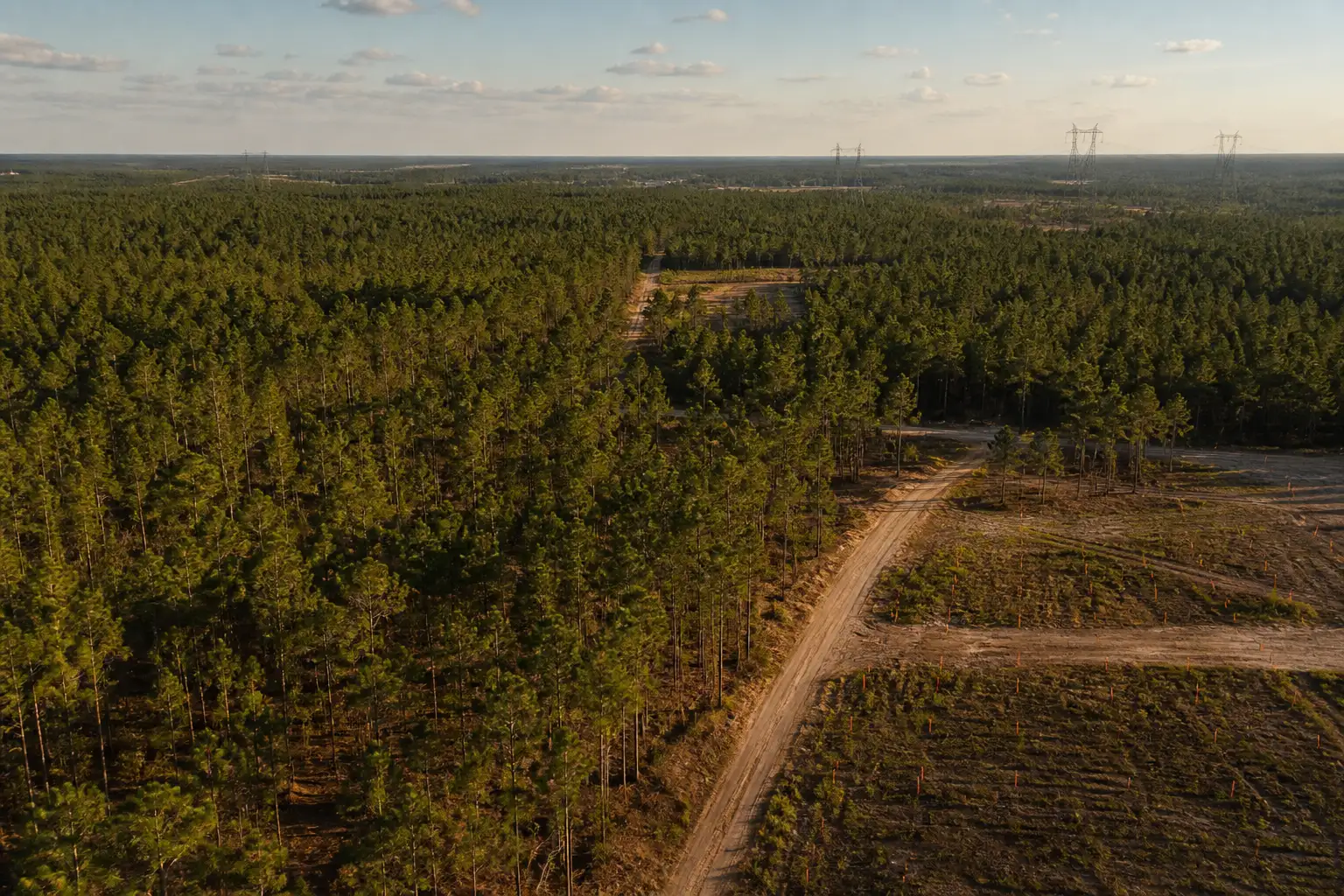
On water, OpenAI states the project will use a closed-loop system that recirculates like a car radiator. Ongoing needs will resemble those of an office building of similar headcount and will not divert supplies from local communities. The site sits inside the already industrially zoned Savannah Gateway Industrial Hub, a 2,600-acre Broe Group logistics campus. OpenAI says the data center will generate less traffic and stronger long-term tax revenue than a warehouse project on the same land.
County officials toured OpenAI’s Abilene, Texas campus and other facilities. They reported lower noise than expected and received positive local assessments. Records of who paid for which travel expenses were still incomplete at the time of the original investigative reporting.
Residents Pack the Open House and Keep Asking
Nearly 1,000 people turned out for the July 23 open house, many angry about the secrecy and the abatements granted to a company valued in the hundreds of billions or more. Protesters gathered outside. More than 100 Savannah-area residents demonstrated. Inside, residents confronted Callanan and other officials about the lack of public comment before the vote.
I didn’t anticipate the misinformation.
Commissioner Burdette offered that assessment of the backlash. Herndon and Callanan continued to stress the revenue path to tax relief and school funding. OpenAI communications vice president Aaron McLear confirmed the $80 million community funds would be forthcoming even though the figure sits outside the formal memorandum of understanding with the development authority.
Rural Republican legislators had already filed more than a dozen bills in the spring session seeking regulation or a temporary moratorium on data centers over water, noise and rate concerns. House Speaker Jon Burns, an Effingham native, backed one measure aimed at shielding consumers from higher bills. The bills stalled. The Effingham deal moved ahead anyway.
On social media the sharpest takes focused on scale and process. One widely shared post noted the 3.2 GW draw against Plant Vogtle’s total output and asked what it would do to bills despite official claims of savings. Another called the abatement cronyism that forces ordinary taxpayers to subsidize a trillion-dollar-scale firm. Crowd intelligence treated the short notice, NDA timeline and company-chosen meeting date as evidence that OpenAI, not the county, controlled the clock.
Three Parallel Tracks Still Hidden from View
The county’s tax MOU with Octans GA LLC, OpenAI’s Delaware affiliate, was only one of three deals that had to close. OpenAI negotiated separately with Georgia Power for electricity and with Broe Real Estate for the land parcels. County officials were not in those rooms. Herndon repeatedly sought assurances the other tracks remained on schedule.
A May 6 meeting in the governor’s office brought Georgia Power and OpenAI site engineers together with Gov. Brian Kemp. Both the company and the governor’s office initially called it a “private meeting” and declined comment. Land-use agreements for the 1,400 acres advanced in March. The power draft reached the PSC in mid-July. The authority voted on July 21 after OpenAI signaled readiness that month rather than October.
Basic questions remain open more than two weeks after approval and continue past publication of the investigative record. Future sales-tax estimates from the massive electricity purchases are not public. The precise terms of the Georgia Power contract stay confidential. The Developments of Regional Impact review and other permitting steps still lie ahead. A Georgia Community Compact is supposed to turn open-house feedback into binding local commitments, but it has not yet been finalized.
County leaders describe the project as transformational private investment that will fund services and erase homestead taxes. OpenAI presents itself as a partner that pays its own way, audits its promises and uses less water and road capacity than alternative industrial uses. Georgia Power presents the arrangement as proof that its large-load strategy protects households while growing the system.
The hidden stakeholder remains the utility that started the courtship, secured the generation pipeline and now holds a 25-year relationship with one of the world’s most prominent AI companies. Effingham’s residents will live with the land use, the noise profile, the water claims and the rate outcomes long after the spreadsheets that sold the schools have been filed away. The next tests will come when the first megawatts flow and the first independent audit appears.