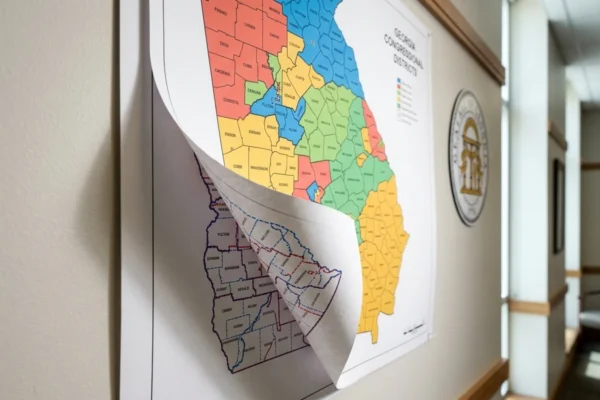
Georgia stands to lose around 800000 acres of farmland over the next 15 years, roughly 8 percent of its total land in farms, according to the state Department of Agriculture and the latest U.S. Department of Agriculture counts. That projection now drives a new joint legislative subcommittee that held its first meeting last week in Perry.
High input costs and thin commodity prices sit at the center of the pressure. Farmers already turn to solar leases and development deals for cash. Those same deals remove the land from production for decades, amplifying the conversion the subcommittee and a fledgling conservation fund hope to slow.
The 800000-Acre Projection Hits Productive Soil Hardest
American Farmland Trust research put the business-as-usual loss at 798400 acres projected lost by 2040, or about 7 percent of the state’s agricultural land. Georgia ranks fourth nationally in total acres at risk. Nearly half the converted ground sits on the state’s most productive soils. Five of the top ten U.S. counties by percentage loss are in Georgia, clustered around the Atlanta metro and other growth corridors.
The 2022 Census of Agriculture counted 9.939 million acres of farmland in the state and about 39264 farms. Average farm size sat at 253 acres. The state Department of Agriculture rounds the future loss to 800000 acres and calls the figure staggering. Commissioner Tyler Harper has repeatedly used that language.
| Metric | Georgia Figure | Source Year |
|---|---|---|
| Land in farms | 9.939 million acres | 2022 Census |
| Number of farms | ~39264 | 2022 Census |
| Projected loss by 2040 | ~798400-800000 acres | AFT / GDA |
| Average producer age | 59 years | 2022 Census |
| Share of producers 55+ | 64 percent | 2022 Census |
Conversion already removed more than 1.3 million acres of Georgia farmland between 1997 and 2022. Urban and low-density residential growth account for most of the recent shift. Warehouses, data centers and housing developments compete directly for the same parcels.
Input Costs Outrun Commodity Prices for a Third Year
University of Georgia economists project another year of negative or near-breakeven returns for major row crops in 2026. Cotton and peanut net returns above total costs remain negative. Corn and soybean prices hover near or below production costs after large ending stocks.
Diesel prices in Georgia ran well above prior-year levels earlier in 2026. Urea fertilizer jumped from the mid-$500s per ton into the $800 range at points. Labor and other inputs stayed elevated even as some chemical and fuel costs eased slightly. The 2026 Georgia crop margins stay negative for most major commodities, UGA analysts wrote.
- Cotton and peanuts: Net returns above total costs negative; many growers shifted acres toward peanuts in 2025 for the first time in decades.
- Corn price outlook: Around $4.85 per bushel in Georgia for 2026, near breakeven.
- Soybean outlook: Near $10.20 per bushel with planted acres stable to slightly lower.
- Government payments: Emergency and disaster programs propped 2025 income; similar reliance expected in 2026.
Sen. Russ Goodman, co-chair of the new subcommittee and a farmer himself, told the Perry meeting that commodity prices have not covered the full cost stack. International conflicts and trade policy sit outside state control, he said. “I’ve always said that the biggest threats of the family farm are corporate consolidation, over-regulation and unfair trade,” Goodman said.
Solar Leases Deliver Cash Farmers Cannot Ignore
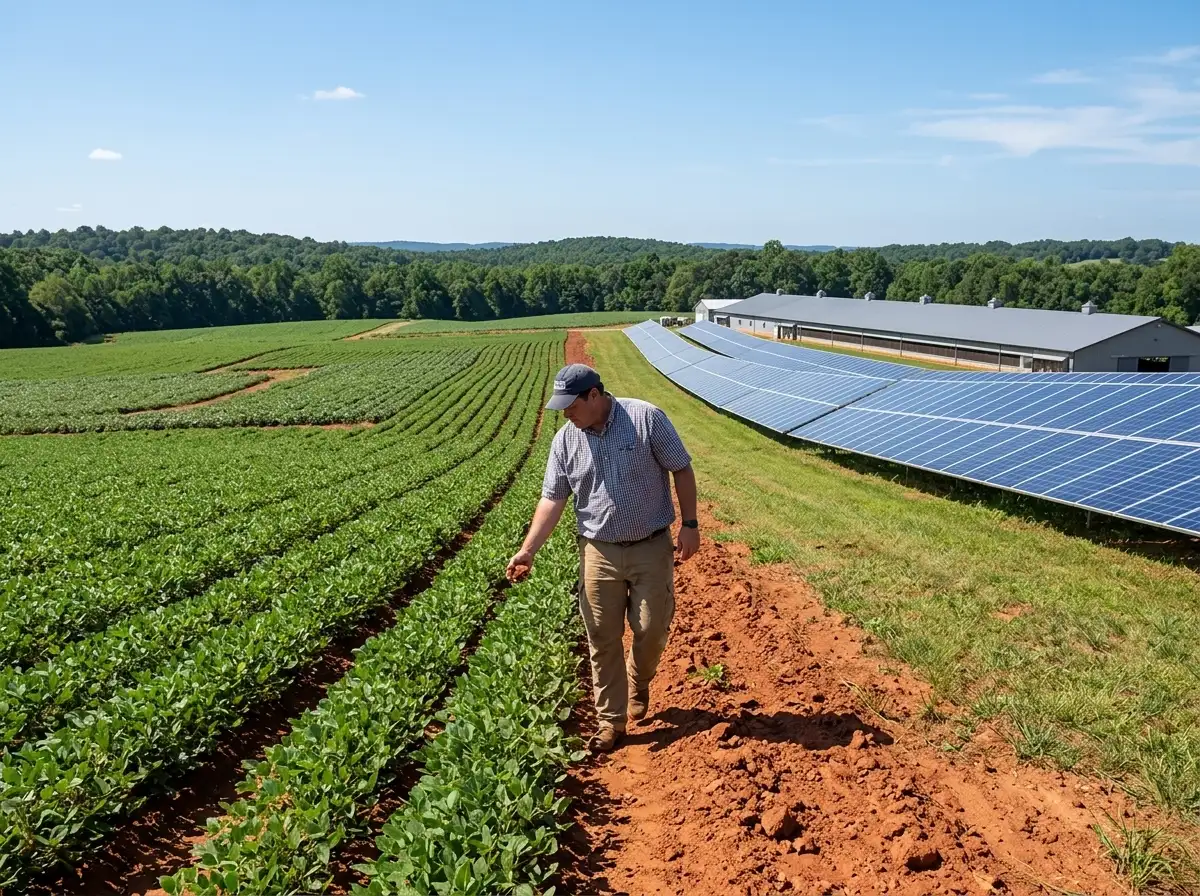
Rep. Robert Dickey, the House co-chair and a farmer, said more operators now lease land to solar companies to manage debt. “Hats off to them for that investment and that opportunity, but I think long-term, the state of Georgia is going to have to invest in trying to preserve our farmland,” Dickey said at the kickoff.
Lease rates in Georgia average about $543 per acre per year on 25-year terms with escalators, according to industry trackers. Signing bonuses run hundreds to a couple thousand dollars per acre. A 100-acre lease can generate more than $54000 in the first year, often exceeding net farm income on the same ground and removing weather and input risk.
The cash arrives immediately. The land leaves food and fiber production for a generation. Once panels go in, reversion to farming is rare and expensive. Crowd discussion on X around the meeting and related land-use fights notes the same tension: leases solve this year’s note payments while freezing acres that the state later tries to buy back into agriculture through easements.
- Typical term: 25 years with 2 percent annual escalator.
- Average annual rent: roughly $543 per acre.
- Signing bonus range: $815 to $2715 per acre.
- Comparison: traditional net farm returns often $200-400 per acre with high variability.
Data centers and warehouses add another bidder. Rapid metro growth multiplies the pressure on the same counties already projected to lose more than half their agricultural land base in some cases.
The Conservation Fund Starts Small Against the Scale
The legislature created the Georgia Farmland Conservation Fund Program in 2023 through Senate Bill 220. It provides state matching dollars for permanent conservation easements on working farmland threatened by development. The USDA supplies up to $450 million annually nationwide for state matches. Georgia’s first cycle opened in February 2026 and closed in May.
About 3500 acres have been approved for easement projects this year, with more applications under review, Harper said. Selected applicants received notice in August. The state put roughly $2 million into the initial round. Landowners work with qualified easement holders such as land trusts or local governments; the fund reimburses a share of the development-rights purchase.
Details live on the official Georgia Farmland Conservation Fund Program details page. The program is voluntary and perpetual. Once the easement is recorded, the land stays in agriculture. The first-round total equals less than half of one percent of the projected 15-year loss.
Harper has called the overall acreage threat a staggering statistic and described the fund as essential for the state’s top industry. The math remains stark: thousands of acres protected against hundreds of thousands at risk.
Average Farmer Age 59 Leaves a Clear Generational Gap
USDA census figures put the average Georgia producer at 59 years old. Sixty-four percent are 55 or older. The number of producers under 35 remains small even after a modest rise. Primary occupation as farming sits near 40 percent of all producers.
Succession planning is difficult when margins stay negative and land values for development far exceed agricultural use. Younger operators face capital barriers, high debt service and competition from non-farm buyers. The subcommittee’s full name, Generational Sustainability of Family Farms, puts that gap at the center of its charge.
Georgia still claims agriculture as its top industry. Farm-gate value reached more than $18 billion farm gate value and 370400 jobs in the latest University of Georgia impact numbers, with related industries pushing total economic output above $100 billion. Broilers alone account for more than $6 billion. The production base that supports those numbers is the same base shrinking under conversion pressure.
Subcommittee Starts Work With Limited Tools in Hand
House Resolution and Senate Resolution language created the 11-member joint study committee in the 2026 session. Co-chairs are Goodman and Dickey. Members include Sens. Drew Echols, Freddie Powell Sims and Sam Watson plus Reps. Jaclyn Ford, David Huddleston and Angie O’Steen. Harper sits as the agriculture commissioner member. The Perry meeting on August 20 doubled as the Ag Issues Summit and covered financial outlooks, forest markets, federal program changes and equipment diagnostics.
Officials posted from the room. Harper wrote that family farms form the backbone of the state’s number-one industry and that the committee must keep them strong. Echols, a fifth-generation farmer, said the work is real rather than talk. Lt. Gov. Burt Jones called the focus on lasting solutions welcome.
Goodman pointed to recent tax relief and storm recovery payments as small wins. He wants more attention on competition policy. Much of the cost structure and trade environment sits beyond the General Assembly’s reach. The next meeting is set for Rome. Recommendations for legislation will follow the study.
The second-order bind is already visible. Farmers lease to solar and developers because the cash keeps the operation alive this season. Those leases and sales permanently remove the acres the conservation fund later tries to protect and the subcommittee tries to sustain for the next generation. The fund’s first 3500 acres and the committee’s hearings are real steps. They arrive after the conversion math has already run for years and while the same economic squeeze that forces the leases continues.
Harper and the co-chairs frame the work as essential for food production, rural jobs and the state’s economic identity. The acreage numbers and the lease rates show how quickly temporary relief can become permanent change.