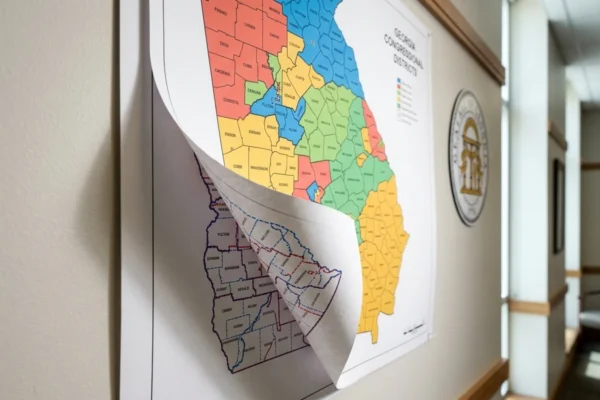
Atlanta is fast becoming a major hub for AI and tech growth, but a deeper conflict is now unfolding across Georgia. As massive data centers rise, communities, lawmakers, and corporations are clashing over one core question. Who really controls the future of energy, land, and local decision making in the state?
Georgia Emerges as Key AI and Data Center Hub
Georgia, led by Atlanta, has quietly transformed into one of the fastest growing data center markets in the United States. Tech firms, crypto companies, and AI infrastructure providers are investing billions into large scale facilities across the state.
These data centers power everything from cloud computing to artificial intelligence systems. Their importance is growing rapidly as demand for digital services explodes.
Key reasons behind Georgia’s rise include:
- Strong fiber network connectivity across the Southeast
- Competitive electricity rates compared to other states
- Tax incentives offered by local governments
- Strategic location serving both national and global markets
Industry experts say Atlanta is now a critical backbone for AI infrastructure in the Southeast.
This growth is not limited to the city. Smaller towns like Dalton are also seeing large scale projects, bringing both opportunity and tension.
Economic Gains Draw Strong Political Support
Local governments and business groups have been vocal supporters of data center expansion. The financial benefits are clear and immediate.
Data centers contribute in multiple ways:
- Property taxes on land and infrastructure
- Personal property taxes on servers and equipment
- Franchise fees paid by telecom and power companies
- Job creation during construction phases
For many counties, these projects represent a steady and predictable revenue stream.
A local official described data centers as “low impact, high return” investments. Unlike factories, they require fewer long term workers but generate consistent tax income.
This economic model has made data centers highly attractive to policymakers looking to boost local budgets without major population growth.
Residents Raise Concerns Over Noise and Environment
Despite the financial benefits, not everyone is convinced. Residents living near construction sites and operational facilities are raising serious concerns.
In Dalton, a 175 acre project by a major crypto and AI company has become a flashpoint. People in nearby neighborhoods report constant noise from heavy equipment and cooling systems.
Common complaints include:
- Continuous mechanical noise day and night
- Increased traffic from construction vehicles
- Strain on local water and power resources
- Visual impact on previously quiet landscapes
One resident described the sound as “a constant industrial hum that never stops.”
Environmental concerns are also growing. Data centers consume massive amounts of electricity and water, especially those supporting AI workloads.
Critics argue that the long term environmental cost may outweigh short term economic gains.
Power Struggles Shift to Energy and Policy Control
At the heart of the debate lies a more complex issue than jobs or noise. It is about control over energy and infrastructure.
Data centers require enormous power supply, often comparable to small cities. This demand forces utilities to expand capacity, sometimes passing costs onto regular consumers.
Key concerns include:
- Who decides how energy is allocated
- Whether residents will face higher electricity bills
- How much influence corporations have over local policy
- The role of state versus local government in approvals
Some advocacy groups argue that large tech firms are gaining too much influence over planning decisions. They point to tax incentives and fast tracked approvals as signs of imbalance.
On the other hand, industry supporters say these projects are essential for keeping the U.S. competitive in AI and digital innovation.
The debate is no longer just about data centers. It is about who holds decision making power in a rapidly changing economy.
Southeast Region Sees Ripple Effects of Growth
Georgia’s data center boom is not happening in isolation. The entire Southeast region is feeling the impact.
States like Alabama, Tennessee, and the Carolinas are also attracting similar investments. This creates both competition and shared challenges.
Regional effects include:
- Increased demand for energy infrastructure upgrades
- Expansion of fiber and telecom networks
- Pressure on land use policies across multiple states
- Growing need for environmental regulations
Atlanta’s position as a central hub means its decisions could influence how the entire region develops.
Experts warn that without coordinated planning, the Southeast could face long term infrastructure strain.
A Defining Moment for Local Communities
The rapid rise of data centers has forced communities to rethink their priorities. Economic growth is important, but so is quality of life.
Local leaders now face tough questions:
- How to balance growth with community well being
- Whether incentives should come with stricter conditions
- How to ensure transparency in decision making
Some counties are already reviewing zoning laws and considering stricter guidelines for future projects.
Others are pushing forward, eager to secure their share of the tech boom.
This moment could define how communities across Georgia shape their future in the age of AI.
The debate over data centers in Georgia is far from settled. It reflects a broader struggle playing out across the country as technology reshapes economies and daily life. While the promise of growth is undeniable, the question of who benefits and who decides remains open. What do you think about the rapid expansion of data centers in your region? Share your thoughts and join the conversation.