The Samsung Galaxy Z Fold 8 turns hours of TV and YouTube into a pocket-tablet habit thanks to its wide 7.6-inch 4:3 main display, yet both stereo speakers sit on the left edge the moment you unfold it. That left-only blast is the one design detail that sticks after a full month of use.
Tom Bedford at Android Police put the phone through extended video sessions and found the placement impossible to ignore once noticed. The same wider form factor Samsung sells for immersive viewing is what parks the grilles together.
The Passport Shape Sold as a Video Canvas
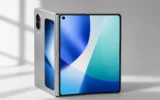
Samsung repositioned the regular Z Fold 8 this generation as a shorter, wider device. The cover screen runs a 10:16 ratio at 5.5 inches while the inner panel opens to a true 4:3 at 7.6 inches. Official materials lean hard into that match for social scrolling outside and movies or e-books inside.
The phone weighs 201 grams and measures just 4.5 mm unfolded. It starts at $1,899.99. Those numbers put a genuine mini-tablet in a jacket pocket. The 10:16 cover and 4:3 main screen combination is the clearest hardware break from the taller Ultra model and from every prior Fold.
That passport design that targets Apple switchers also explains why the video pitch lands so cleanly. The aspect ratio finally lines up with most streaming catalogs without heavy letterboxing. Users who hated the old tall-and-narrow open display suddenly have a reason to keep the phone unfolded for entire episodes.
Exactly Where the Grilles Land
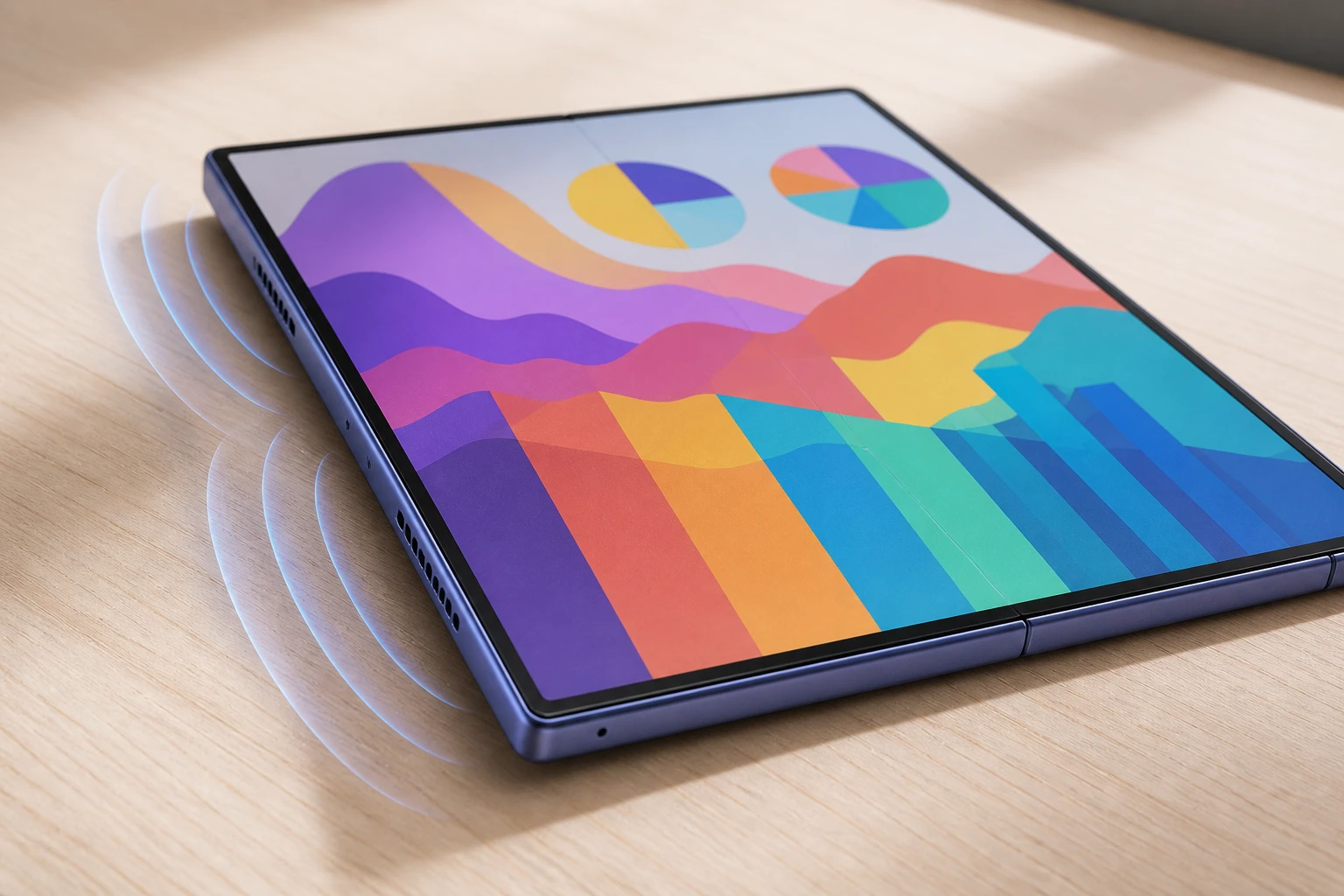
Folded and held in portrait, the Z Fold 8 behaves like any modern slab phone. One speaker sits at the top of the cover half, the other at the bottom near the USB-C port. Both fire forward. Stereo separation works the way owners expect for calls, podcasts, and quick clips.
Open the hinge and the geometry changes. Those same two grilles remain on the top and bottom edges of what is now the left side of the large screen. All audio exits from one vertical edge. There is no speaker on the right half of the open device.
- Folded portrait: top and bottom speakers deliver conventional stereo
- Unfolded portrait (the natural tablet hold): both grilles on the left edge
- Unfolded landscape: still biased left relative to the picture
- No left-right pair exists across the open span the way a tablet places drivers
Samsung did not hide the layout. The placement is a direct consequence of packing two full halves, a hinge, batteries, and cameras into the thinnest chassis the company has shipped. The speakers have nowhere else to go without thickening one side or punching new openings into the display stack.
Why Left-Only Sound Breaks the Illusion
Stereo imaging relies on physical separation. When a character speaks on the right side of the frame or an explosion pans across the soundstage, the brain expects the corresponding driver to be on the right. Two drivers stacked on the left collapse that field into a single wall of sound.
It feels apparent that the sound is coming from only one side of the device. At best, it’s an annoying distraction that I can’t un-hear. Worse, it makes it feel like this phone, which is designed for watching content, isn’t doing justice to my TV show or movie.
That is Bedford writing after weeks of daily use. The effect is the smartphone equivalent of listening to a stereo mix through one earbud. You still hear every frequency, but the spatial information that makes a scene feel three-dimensional disappears. The screen is doing its job; the speakers are announcing that the experience is still a phone trick.
Tom’s Guide reached the same conclusion in early hands-on time: Netflix looks excellent on the 4:3 panel, yet the audio “sounds a bit lop-sided,” so headphones become mandatory for serious viewing. Once you hear the bias you cannot stop hearing it.
How Past Folds and Rivals Handled Sound
Earlier Galaxy Z Folds placed speakers in similar top-and-bottom positions on the cover half. Unfolded they also clustered on one side. The difference this year is intent. Previous models leaned taller and were rarely positioned as pure media tablets. The Z Fold 8’s wider canvas invites long video sessions, so the old compromise is now more visible.
| Device | Open aspect | Speaker layout when open | Notes |
|---|---|---|---|
| Galaxy Z Fold 8 | 4:3 7.6-in | Both on left edge | Video-first redesign |
| Galaxy Z Fold 8 Ultra | Taller ~8-in | Similar top-bottom cluster | Productivity focus |
| Prior Z Fold 6/7 | Near-square tall | One-side cluster | Less video emphasis |
| Google Pixel Fold (original) | Near-square | Top-left and bottom-right | Stereo in more orientations |
Tablets have long put drivers on opposing long edges so landscape and portrait both retain left-right imaging. Foldables inherit phone speaker rules because the cover half must still function as a normal handset. The Z Fold 8 Ultra taller 8-inch panel keeps the older proportions and therefore feels less like a dedicated media slate, which somewhat masks the same speaker geometry.
Crowd reaction on X mirrors the reviews. After a week one owner listed “lopsided speakers” among the trade-offs that still give pause. Another noted the cover screen actually sounds louder thanks to its top notch placement, while the inner display feels quieter and more directional. A third simply called out bottom-firing drivers as an overlooked compromise in the rush to praise the form factor.
Headphones Become the Default Fix
Most people already watch phones with wireless earbuds or over-ears. Active noise cancellation, private listening, and true stereo imaging make built-in speakers a secondary feature for many. Bedford himself says he only runs open speakers when testing a new device. Everyday use goes straight to buds.
That reality softens the practical sting. The Z Fold 8 still delivers up to 26 hours of video playback on its 4,800 mAh silicon-carbon pack according to Samsung. Lab numbers from early testers show solid all-day endurance even with the bright inner panel. Snapdragon 8 Elite Gen 5 for Galaxy keeps multi-window streaming and AI tools smooth.
Key numbers that still win daily carry:
- 201 g total weight, lightest Fold yet
- 4.5 mm unfolded thickness
- Up to 26 hours claimed video streaming
- Dual 50 MP cameras plus Galaxy AI editing tools
Software offers partial relief. Dolby Atmos and the Sound Quality and effects menu let users boost dialogue or switch spatial modes. Some owners report turning off audio zoom and forcing stereo improves the inner-screen experience, though it cannot create physical separation that does not exist. The Amazon $350 Fold 8 gift card offer and trade-in credits lower the entry price enough that many will simply pair the phone with the buds they already own.
The Form Factor Still Changes Pocket Computing
None of the audio caveats erase what the open display delivers. Multi-window productivity, full-page magazine reading, and landscape video without black bars feel native on the 4:3 panel. The crease is reduced by the Flex Titanium layer; early owners say it only appears under specific light angles. Outdoor brightness hits 3,000 nits peak with an anti-reflective coating that actually cuts glare.
The Pixel and Fold 8 ambient display push shows the wider industry moving past pure slab thinking. Samsung’s bet is that a phone you want to keep open for content will win more daily minutes than one that merely unfolds for spreadsheets. For owners who live in earbuds the speaker layout is a footnote. For anyone who wants true open-air immersion on the big screen, it remains the one permanent reminder that this is still two phone halves hinged together.
The Z Fold 8 earns its 9/10 from Bedford and strong first impressions elsewhere because the screen, weight, and battery finally match the video promise. The left-side stereo is the ironic cost of getting there.
Frequently Asked Questions
Where are the Galaxy Z Fold 8 speakers located when unfolded?
Both speakers remain on the top and bottom edges of the left half of the open device. There is no driver on the right half, so all sound exits from one vertical side during typical tablet-style viewing.
Does the Galaxy Z Fold 8 still have true stereo speakers?
Yes. It uses dual stereo speakers. When folded they sit top and bottom for normal separation. Unfolded the physical positions simply coincide on the left edge, collapsing the stereo image even though both channels still play.
How does the Z Fold 8 aspect ratio differ from the Ultra model?
The regular Z Fold 8 uses a 5.5-inch 10:16 cover and 7.6-inch 4:3 main display aimed at content. The Ultra keeps a taller cover around 6.5 inches and an 8-inch main panel closer to traditional Fold proportions for productivity.
Can software fix the lopsided audio on the open screen?
Atmos, dialogue boost, and forcing stereo mode improve balance and clarity, but they cannot move sound to a missing right-side driver. Physical placement remains the limit; headphones restore full imaging instantly.
Is the speaker issue new to the Z Fold 8?
Earlier Folds also clustered speakers on one side when open. The Z Fold 8’s wider passport proportions and explicit video marketing make the same geometry more noticeable because owners keep the panel open longer for movies and shows.