The U.S. Federal Reserve is holding its ground. Chair Jerome Powell made it clear that the central bank will not rush into changing interest rates as global tensions push oil prices higher and raise fresh inflation fears.
His message is simple but critical. The Fed wants more clarity before making its next move, even as markets grow uneasy.
Powell Says Fed Will Wait Before Any Rate Move
Federal Reserve Chair Jerome Powell on Monday said monetary policy is in a stable position for now. He stressed that the central bank will take a cautious approach as the Middle East conflict continues to unfold.
“It is too soon to know” how the situation will affect inflation and growth, Powell said, highlighting the uncertainty tied to geopolitical risks.
The Fed recently kept its benchmark interest rate unchanged at 3.50 percent to 3.75 percent during its March meeting. That decision now looks more strategic than temporary.
Powell also pointed out a key concern. Reacting too quickly to rising oil prices could backfire if those price shocks fade over time.
Oil Prices Surge and Fuel Inflation Fears
The ongoing conflict has already hit consumers hard. Fuel prices have surged sharply in just a few weeks.
Here is what has changed:
- Average gasoline price jumped from $2.98 to nearly $3.99 per gallon
- Crude oil markets are reacting to supply fears
- Shipping and production costs are rising across industries
These increases are feeding into broader inflation, making everyday goods more expensive.
Energy prices often act as a trigger for wider inflation across the economy. Transportation, manufacturing, and food sectors all feel the pressure quickly.
This puts the Fed in a difficult spot. Raising rates could control inflation, but it may also slow economic growth at a fragile time.
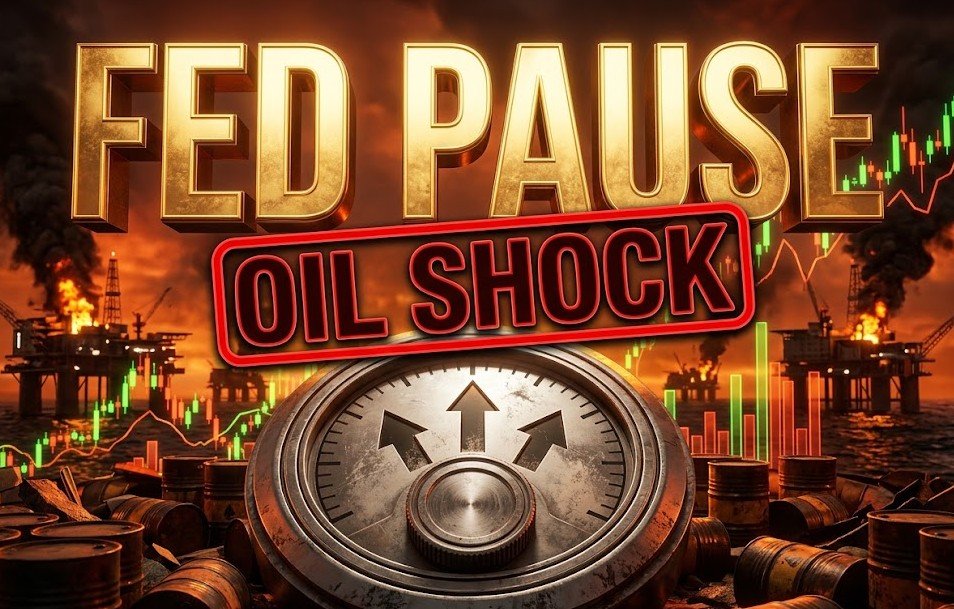
Markets Shift Expectations on Interest Rates
Financial markets are already adjusting to the new reality.
Recent pricing in money markets shows:
| Expectation | Probability |
|---|---|
| Rate hike possibility | 42% to 52% |
| No rate cuts in 2026 | 92% |
This marks a sharp shift. Earlier forecasts expected multiple rate cuts this year.
Now, traders are bracing for a prolonged period of higher interest rates.
The fear of “stagflation” is growing, a situation where inflation rises while economic growth slows. This is one of the toughest scenarios for central banks to manage.
Government Tries to Calm Oil Market Nerves
The U.S. government is stepping in to ease concerns around supply disruptions.
Treasury Secretary Scott Bessent said global oil markets remain well supplied despite the tensions. He also suggested that efforts are underway to ensure safe passage through critical shipping routes.
A key focus is the Strait of Hormuz, one of the world’s most important oil transit points.
However, markets remain skeptical.
Traders are not fully convinced that supply risks will ease soon, especially if the conflict expands or disrupts shipping lanes further.
Long Term Oil Risks Could Reshape Global Economy
Some analysts are warning that the current crisis may not be short lived.
Investment banks and energy experts are projecting that oil prices could stay elevated for years if supply constraints persist.
In extreme scenarios:
- Oil prices could reach $150 to $200 per barrel
- Supply shortages may worsen due to limited alternatives
- Global growth could slow as energy costs remain high
A prolonged energy shock would change how economies grow, trade, and invest.
It could also force central banks like the Fed to rethink their strategy entirely.
What It Means for Consumers and Businesses
The impact is already visible in daily life.
Higher fuel costs are:
- Raising travel and transport expenses
- Increasing prices of goods and services
- Pressuring household budgets
Businesses are also facing rising input costs, which may lead to reduced hiring or delayed investments.
For now, the Fed is choosing patience over action.
That decision reflects a deeper concern. Moving too early could hurt the economy, but waiting too long could allow inflation to take hold.
This balancing act will define the next phase of U.S. economic policy.
The Federal Reserve’s cautious stance signals that uncertainty is far from over. As oil prices climb and global tensions continue, the path ahead remains unclear. What do you think the Fed should do next? Share your views and join the conversation as this story continues to unfold.