Georgia Tech has finalized the design for a $70 million renovation of Bobby Dodd Stadium at Hyundai Field, ending more than a year of study on what kind of chairback seat the 113-year-old venue can actually hold. Construction will begin right after the 2026 football season and finish ahead of the 2027 campaign, the university said Monday. The decision is the product of an engineering reality, as the stadium’s narrow row depths cannot accommodate a modern flip-up chairback system without either cutting capacity in half or demolishing large portions of the original grandstand.
Georgia Tech will install 12,500 bleacher-mounted mesh chairback seats in place of the original concept, a swap the school says preserves a post-renovation capacity of approximately 50,000, well above the roughly 42,000 projected under the early design. Premium areas, a new videoboard, a new sound system, wider aisles, and additional handrails round out the project.
What Was Finalized in the $70 Million Design
The $70 million project covers the football stadium’s first major overhaul since 2003, a span of more than 20 years. Work will start immediately after Georgia Tech closes its 2026 home schedule and wrap up before the 2027 season kicks off. Renderings from the project architect, Ewing Cole, show new bleacher-mounted mesh seats, a wider videoboard, and a redesigned west-side club level.
The renovation is the largest piece of the Full Steam Ahead initiative, a $500 million fundraising push Georgia Tech launched in 2024 to upgrade its athletics facilities. The stadium project was originally scoped at a smaller figure, with early concepts calling for flip-up chairback seating throughout. Engineers and the construction manager, working through what Georgia Tech described as extensive studies, concluded that the stadium’s original 1913 structure could not support that system.
Some of the originally proposed elements “are either functionally unfeasible within the existing structure of the stadium, or could only be accomplished through a substantial increase to the project budget (likely more than doubling the originally approved financial investment),” the school said in its release outlining the completed renovation design. That price ceiling kept the design within the approved $70 million envelope, even as the chosen seating solution differs sharply from the early concept.
Why the Stadium’s 25.75-Inch Rows Forced a Redesign
The hidden constraint in the project is geometry. Modern chairback systems need more space between rows than the original Bobby Dodd grandstand provides.
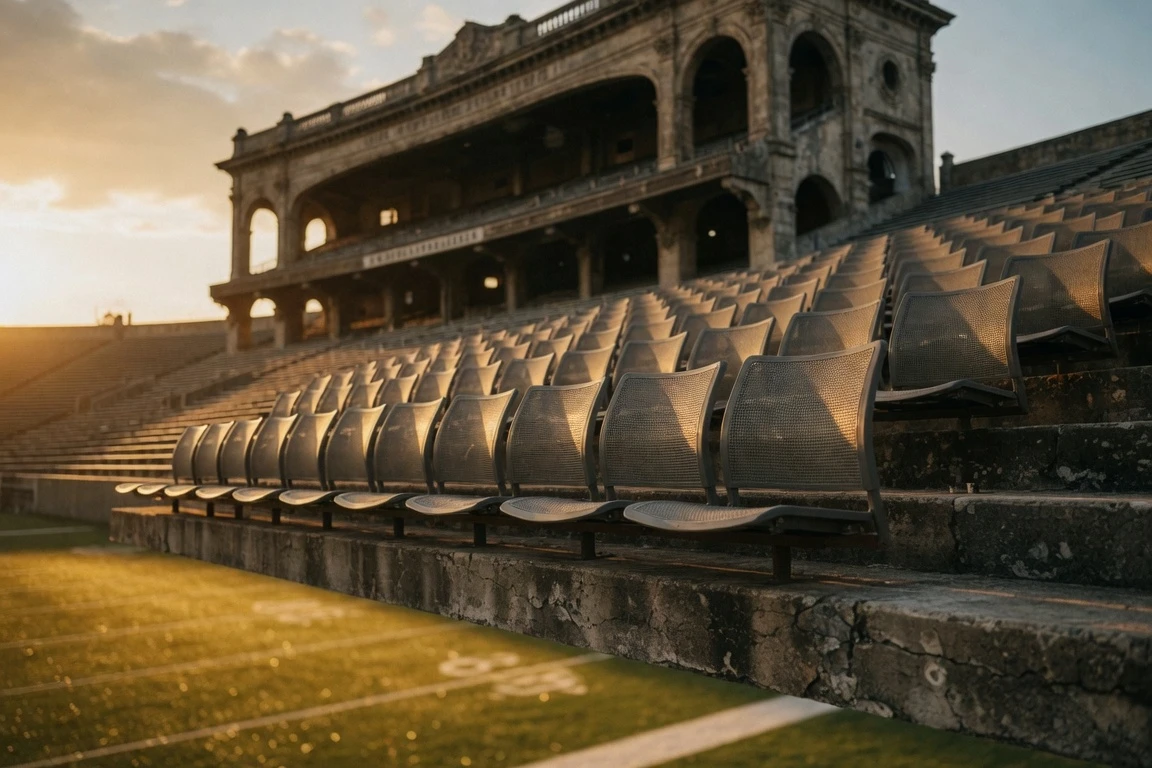
“Modern stadiums are built with a 33-inch tread depth to accommodate chairs, and 30 inches is the minimum for installation of a flip-up chairback system,” Georgia Tech said. “The tread depths at Bobby Dodd Stadium are 26.5-27 inches in the lower west, 27 inches in the lower east and lower north and 25.75 inches in the upper east.”
- 113 years since Bobby Dodd opened as Grant Field in 1913
- 30 inches: the minimum tread depth for a modern flip-up chairback
- 25.75 inches: the narrowest row depth at Bobby Dodd (upper east)
- 26.5-27 inches: tread depths across the rest of the seating bowl
- 33 inches: the standard tread depth in newly built stadiums
The school laid out the only two paths to a flip-up system. Georgia Tech would either have to eliminate every other row across the stadium, a step that would have drastically cut capacity, or demolish and reconstruct significant portions of the original structure. Neither option could fit inside a single offseason construction window.
| Attribute | Originally Proposed Concept | Finalized Design |
|---|---|---|
| Seating type | Flip-up chairback | Bleacher-mounted mesh chairback |
| Post-renovation capacity | ~42,000 | ~50,000 |
| Fit with existing row depths | Did not fit (would require rebuilding or row removal) | Fits 25.75-27 inch rows |
| Construction timeline | Could not complete in a single offseason | Single offseason install |
The pivot went to bleacher-mounted seats that bolt onto the existing concrete benches. School officials tested several industry-leading models and found that many sat too tightly for taller spectators. The winning design, a non-flip-up mesh chairback, was tested by fans at Georgia Tech’s spring game in April and drew positive reviews. The chosen seat needs 20 inches of spacing per chair, two inches more than the 18-inch standard, a trade-off that costs capacity wherever the new seats go in.
The narrower 25.75-inch rows in the upper east are still too tight for the mesh chairback, so the upper east will not get the new seats. That single decision shaped the 12,500-seat target.
What 12,500 New Chairback Seats Will Look Like
The mesh chairbacks will be installed through much of the stadium, excluding the upper east sections. Wider aisles and new handrails will be added in the sections that receive new seats, and the wider rows will eat into the total seat count. School officials also confirmed a new videoboard and a new sound system for the bowl.
- 12,500 seats of bleacher-mounted mesh chairback seating
- A new state-of-the-art videoboard
- A new state-of-the-art sound system
- Wider aisles and additional handrails in the sections that get new seats
The post-renovation bowl will hold approximately 50,000 spectators, up sharply from the roughly 42,000 projected under the original chairback concept. The current configuration seats more than 55,000, per Rough Draft Atlanta, so the renovation is a net reduction from today. The trade-off, the school argues, is a more modern experience and chairbacks in much of the stadium.
The 50,000-seat target was set with demand in mind. Three consecutive crowds of more than 50,000 closed Georgia Tech’s 2025 home schedule, the school’s first such run since 2014, and three concerts at the venue also sold out during the 2025-26 cycle. Ryan Alpert, Georgia Tech’s vice president and director of athletics, has framed the project as a balance between modernization and tradition. The renovation is set to wrap before the 2027 season.
The Premium Overhaul
The premium seating areas will see the most visible change. Georgia Tech is building a new Founders Club on the west side of the stadium and overhauling the East Club, including a new indoor VIP Members Club within the East Club footprint. All of the existing suites are being remodeled.
The project description and renderings are on the Alexander-Tharpe Fund’s Bobby Dodd project page, where donors and prospective premium buyers can sign up for one-on-one meetings. Premium seating revenue is a key funding stream for the renovation, and the new club spaces are designed to expand inventory in the parts of the stadium that already command the highest prices.
Reseating, 2026 Tweaks, and What Comes Next
Every season ticket holder in the affected sections will go through a reseating process ahead of the 2027 season. The school expects fewer members to be displaced than originally feared, a result of the higher 50,000-seat final capacity.
Details on the reseating will be announced in the coming months. The change covers a wide swath of the stadium, and the process typically requires donors and longtime holders to re-prioritize seats. Anyone with questions about premium seating or season tickets has been directed to the Alexander-Tharpe Fund staff for one-on-one meetings. The school is still working through the seating manifest caused by the installation of the 12,500 new chairbacks.
We remain committed to delivering a renovation that positively impacts all fans, preserves capacity at a level to meet demand and maintains the tradition of our historic home. This project is designed to modernize the gameday experience, while preserving the character and atmosphere that make Bobby Dodd Stadium at Hyundai Field so special. We’re looking forward to delivering on those promises and welcoming fans to a newly renovated Bobby Dodd Stadium in 2027.
Ryan Alpert, Georgia Tech’s vice president and director of athletics, said the project is designed to modernize the gameday experience while preserving the character of the historic venue. Before the heavy construction begins, Georgia Tech plans to roll out 100 gameday experience improvements for the 2026 season, the last one played under the old configuration. That list will be announced this summer, the school said, with the renovation itself running through a single offseason before the rebuilt stadium opens for 2027.
How Full Steam Ahead Frames the Stadium Piece
The stadium project is the largest single piece of Full Steam Ahead, a $500 million fundraising initiative that also covers the Zelnak Basketball Center, the practice and training facility for Tech basketball, and O’Keefe Gymnasium, the home of Yellow Jackets volleyball. The stadium’s “Hyundai Field” suffix comes from a separate multi-decade Hyundai-Georgia Tech partnership, signed well before the renovation was announced. The initiative is also funding program-wide operational support across Georgia Tech athletics.
The athletic association that runs the program recently had a separate $65 million in revenue bonds earn an A+ bond rating on Georgia Tech athletic debt, a signal of the financial base that underpins the Full Steam Ahead push. The stadium renovation itself is funded through the Alexander-Tharpe Fund’s donor campaign and premium-seating sales, not the bond proceeds.
Frequently Asked Questions
When does Bobby Dodd Stadium renovation construction start and finish?
Construction begins immediately after the conclusion of the 2026 Georgia Tech football season and is scheduled for completion ahead of the 2027 season, according to the university’s June 22 release.
Why did Georgia Tech drop the flip-up chairback design?
Engineers determined the stadium’s row depths, 25.75 to 27 inches across the seating bowl, are too narrow for a modern flip-up system, which requires a 30-inch minimum. Installing flip-ups would have forced Georgia Tech to remove every other row or rebuild large sections of the original 1913 grandstand.
How many new chairback seats will Bobby Dodd Stadium have after the renovation?
Georgia Tech will install 12,500 bleacher-mounted mesh chairback seats through most of the stadium, excluding the upper east sections where the rows are narrowest.
Will Georgia Tech season ticket holders be reseated for 2027?
The school will run a full reseating process ahead of the 2027 season. Officials expect the number of significantly affected members to be lower than originally anticipated, given that the final 50,000-seat capacity is well above the earlier 42,000-seat concept.
What else is the Full Steam Ahead initiative funding?
Beyond Bobby Dodd Stadium, Full Steam Ahead also covers the Zelnak Basketball Center and O’Keefe Gymnasium, with the balance of the $500 million going to operational support and additional projects across Georgia Tech athletics. The initiative launched in 2024.