The Georgia Forestry Foundation steered an $85,000 grant to Brantley County Family Connection this month so more than 30 families hit by the Highway 82 Fire can fix wells, septic systems and other basic infrastructure. The money arrives four months after the blaze that destroyed 110 homes, and it moves through private forestry channels because federal Individual Assistance never opened for households.
That local handoff is the part most wire coverage skips. The industry-seeded fund and a trusted county nonprofit became the practical rebuild path for rural families left outside the usual federal household programs.
The sequence matters as much as the dollar figure. Suppression aid moved first. Household aid did not. A private fund then raised cash, chose a county partner that already knew the roads and the damage, and cut a single infrastructure grant large enough to reach more than 30 families at once.
Highway 82 Set the Residential Record
The fire started near U.S. Route 82 in mid-April 2026 and tore through Brantley County and neighboring areas before full containment. Georgia Forestry Commission Director Johnny Sabo later told lawmakers it produced the worst home loss from a single fire in state history.
Final tallies locked in at 110 homes destroyed and 27 damaged. The blaze burned 22,419 acres. At the same time the nearby Pineland Road Fire added roughly 10,000 more acres and stretched crews thin.
| Metric | Highway 82 Fire |
|---|---|
| Homes destroyed | 110 |
| Homes damaged | 27 |
| Acres burned | 22,419 |
| Homes saved inside footprint | 350 |
| Personnel deployed | more than 600 |
| Suppression cost | just under $20 million |
Sabo described plume-dominated runs with 150-foot flame lengths. Only one minor injury occurred among responders. National Guard costs ran an estimated additional $3 million to $4 million. Evacuations topped 5,000 people at peak.
- Air assets included one Type 1 helicopter, one Type 3, 10 large air tankers and three air-attack aircraft.
- Federal partners staged resources without a formal Georgia request in some cases.
- Recent state investments in a suppression helicopter and readiness funds drew thanks from the commission.
Containment reached 100 percent by early June. The residential destruction still dominates the recovery story months later.
The same footprint that destroyed 110 homes also held 350 homes that crews kept standing. That split frames the recovery load: hundreds of households avoided total loss, yet more than a hundred still faced full rebuilds on rural lots where private wells and septic systems are the default.
Private Money Stepped Into a Federal Hole
FEMA approved Fire Management Assistance for suppression costs early on. A full major-disaster declaration that would unlock household aid never followed. On the official designated-areas page the Individual Assistance category shows none. Limited Public Assistance categories covered Brantley County for some government work, but families received no direct federal grants or housing assistance through that route.
Private groups filled pieces of the gap. One organization delivered 18 RVs to displaced households after noting the missing federal household declaration. Local churches, neighboring Family Connection chapters and the forestry sector did the same for supplies and cash.
The Georgia Forestry Foundation launched its Forest Wildfire Recovery Fund in April with a $10,000 seed. Georgia’s forestry community and partner groups then contributed roughly $150,000 more. The fund targets forest landowners, families, wildland firefighters, first responders and rural communities hit by the South Georgia fires.
Priority goes to documented loss of forestland, damage to homes or structures, or significant recovery hardship. Support can cover direct grants, cleanup, restoration, reforestation or other immediate needs. Distribution follows a documented review of need, impact and eligibility, done with local community leaders.
| Channel | What moved | What did not |
|---|---|---|
| Federal Fire Management Assistance | Suppression cost support | Household grants or housing aid |
| Major-disaster Individual Assistance | Nothing listed for households | Direct family recovery dollars |
| Limited Public Assistance | Some Brantley County government work | Private wells, septic, home systems |
| Forest Wildfire Recovery Fund | Seed plus roughly $150,000 raised | A public individual application portal |
The table is the gap in plain form. Firefighting money and limited government-category aid arrived. Direct household recovery did not. Private forestry dollars and local partners became the substitute path.
Family Connection Becomes the Delivery Arm
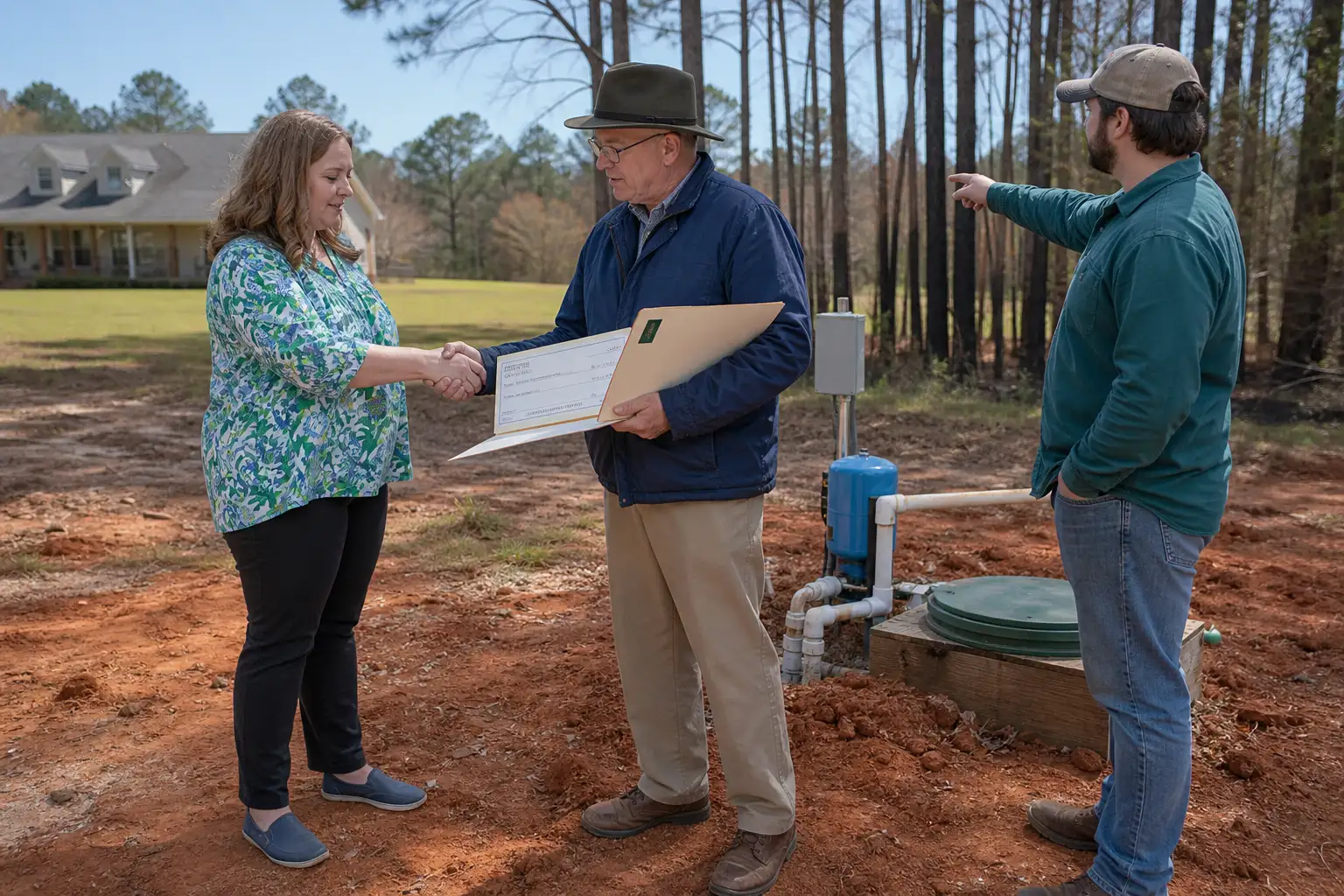
Rather than open a public individual application portal, the foundation presented an $85,000 grant for infrastructure to Brantley County Family Connection. The local group already runs prevention and family-support work in the county and keeps on-the-ground relationships that outsiders lack.
Board chairman Fairiby Frye said the funds help families return to safe housing quickly as needs keep growing. The organization will use its network to place the money with the households facing the steepest infrastructure bills.
What happened in Brantley County reminds us that forestry is more than an industry, it’s a community. The overwhelming generosity shown through the Georgia Forestry Foundation’s first-ever wildfire relief fund reflects a spirit of altruism that has always been at the heart of Georgia forestry.
Tim Lowrimore, president and CEO of the Georgia Forestry Association, made that point when the grant was announced. Industry partners including Rayonier, AgSouth Farm Credit and Superior Pine Products stood with foundation and Family Connection leaders for the presentation.
The delivery choice is deliberate. A county nonprofit that already serves families can match dollars to failed wells and septic systems without building a new statewide intake system from scratch. The foundation keeps the review standards. Family Connection keeps the local map.
What the $85,000 Buys
The grant is earmarked for wells, septic systems and other essential infrastructure for more than 30 families. That focus matches the practical damage left after homes burned or were compromised. Many rural properties rely on private water and wastewater systems that insurance or temporary shelter money rarely fully replace.
No public income cutoffs, document checklists or individual deadlines appear in the foundation’s materials. Eligibility still runs through the three-factor review and local partners. Not every affected household automatically qualifies. The foundation continues to accept donations restricted to the recovery effort.
Readers who want to contribute can find the Forest Wildfire Recovery Fund donation details on the foundation site, including online giving and a mailing address in Forsyth. Contact for larger gifts is listed as Matt Hestad, senior vice president.
Infrastructure is the narrow, durable slice of recovery. Temporary shelter and household goods can come from churches or an RV donation drive. A working well and a functioning septic system decide whether a repaired or replaced home is livable again on the same lot.
Landowners and Broader Needs Still Wait
The $85,000 is the largest single outlay announced so far from the roughly $150,000 raised. That leaves room for additional grants to other communities, landowners needing reforestation help, or first-responder support. The foundation has said it will keep working with Brantley Family Connection and other partners as recovery continues.
Separate cost-share and seedling programs through the Georgia Forestry Commission already target private forest restoration after disasters. Those tools sit alongside the new foundation fund rather than inside it. Families still sorting insurance, temporary housing or long-term rebuild loans face a patchwork that local nonprofits are stitching together one grant at a time.
- Documented forestland loss remains a priority for future fund distributions.
- Cleanup and reforestation support can flow to qualifying landowners.
- Wildland firefighters and first responders are named eligible groups even if the first large grant went to family infrastructure.
- Communities as a whole can receive assistance when partners identify shared needs.
No second large grant has been publicized yet. The foundation’s commitment is to deliver help as directly and responsibly as possible with local leaders guiding placement.
The remaining balance after the $85,000 grant is the practical limit on how many more rounds can look like the Brantley award unless new gifts arrive. Landowner reforestation and responder support stay on the eligible list, waiting on the same documented review.
How the Recovery Timeline Unfolded
The money trail follows the fire trail by several months. Each stage closed one problem and left another open for local partners.
- Mid-April 2026: The Highway 82 Fire starts near U.S. Route 82, spreads through Brantley County and neighboring areas, and overlaps in time with the Pineland Road Fire.
- April: The Georgia Forestry Foundation opens the Forest Wildfire Recovery Fund with a $10,000 seed as the forestry community begins adding contributions.
- Early June: Containment reaches 100 percent after deployments that topped 600 personnel and suppression costs just under $20 million.
- Four months after the blaze: The foundation presents $85,000 to Brantley County Family Connection for wells, septic systems and related infrastructure for more than 30 families.
Federal Fire Management Assistance covered suppression early. Individual Assistance for households never opened. The private fund’s first large grant landed only after containment and after local partners could document which infrastructure failures blocked a return to safe housing.
That lag is built into the model. Crews stop the fire. Assessors count homes and acres. A 501(c)(3) fund raises cash and routes it through a county group that already knows which families face the steepest system repairs.
Why Local Partners Place the Dollars
The foundation did not build a new public portal for individual applications. It chose a county Family Connection chapter that already runs prevention and family-support work and that holds relationships outsiders lack. Fairiby Frye’s board tied the grant to a simple outcome: families back in safe housing while needs keep growing.
Industry partners showed up at the presentation for a reason. Rayonier, AgSouth Farm Credit and Superior Pine Products stood with foundation and Family Connection leaders, signaling that the same network that grows and finances timber also staffs the relief channel when homes and forestland burn together.
Eligibility still runs on documented need, impact and a local review. The three-factor screen and the partner network replace income cutoffs and mass deadlines. Not every affected household qualifies automatically. The design trades broad open intake for targeted placement on failed wells and septic lines.
- Fund targets include forest landowners, families, wildland firefighters, first responders and rural communities.
- Support forms include direct grants, cleanup, restoration, reforestation and other immediate needs.
- The Brantley grant concentrates on essential infrastructure rather than every recovery category at once.
- Future rounds can shift toward forestland loss, cleanup or responder needs as partners document them.
The model is portable only as far as trusted local partners and remaining cash allow. Brantley County became the first large test because the residential loss was the worst from a single fire in state history and because Family Connection could put dollars on specific systems quickly.
Industry Networks Carry the Rebuild Load
The Highway 82 Fire cost nearly $20 million to suppress and still left more than 100 families without homes. Federal firefighting aid arrived quickly. Household aid did not. Into that space stepped a 501(c)(3) educational arm of the Georgia Forestry Association, its first wildfire relief fund, and a county Family Connection chapter that already knew which wells and septic tanks had failed.
More than 30 families now have a concrete path to restore basic systems. The rest of the $150,000 pool and any new gifts will decide how far the same model stretches across South Georgia. For now the hidden stakeholders (the timber community that raised the money and the local nonprofit that knows the dirt roads) are the ones moving cash to the people who need it most.
Suppression took air tankers, Guard support and a bill just under $20 million. Household recovery, for this group of families, took a seeded private fund, a county nonprofit and an $85,000 infrastructure grant. That is the rebuild path that opened when Individual Assistance did not.