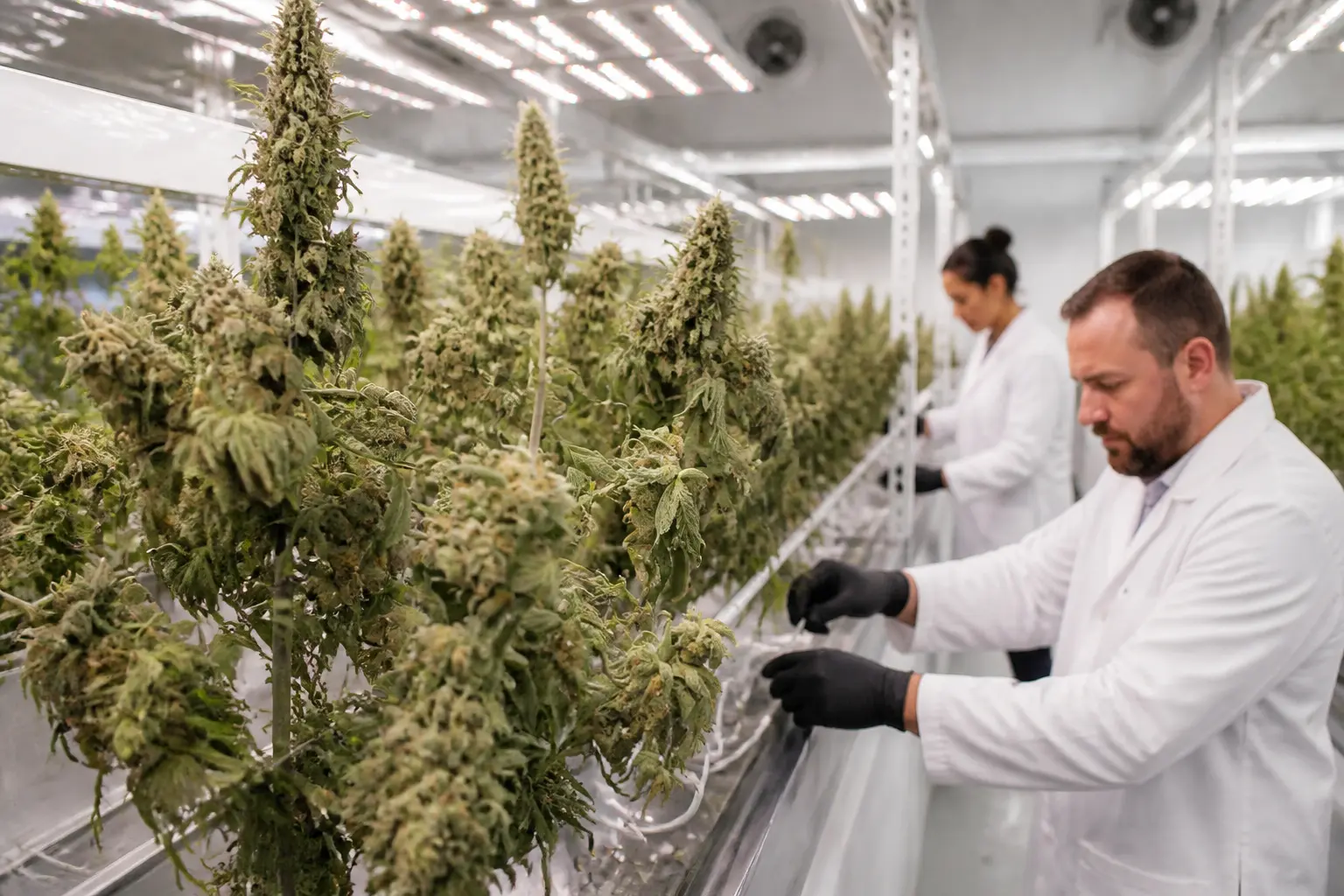
Georgia Access to Medical Cannabis Commission members walked the production floors at Fine Fettle’s Macon facility Monday, inspecting how the company grows, processes and packages medical cannabis just weeks after a major law change took hold. The visit landed amid a sharp rise in registered patients who can now buy flower for vaporization and higher-potency products.
Andrew Turnage, the commission’s executive director, said the tour helps staff understand the operations they oversee. Fine Fettle president Judson Hill pointed to ready capacity and a new Macon dispensary planned for this fall.
What the Regulators Saw Inside the Plant
Turnage described the commission’s core job as regulating the plants, the process and the finished products that reach patients through dispensaries or independent pharmacies. The Macon site is one of only six licensed cultivation operations in the state.
Fine Fettle runs a sealed indoor facility that keeps temperature, humidity, light and airflow under tight control year-round. Plants grow in rockwool with drip irrigation, then move through slow dry, cure and hand-trim steps before lab testing.
- Precision climate control that protects trichomes and blocks mold
- Seed-to-sale tracking and independent lab tests for every batch
- Local hiring that supports Macon-Bibb jobs
- Conversion of flower into oils, tinctures, capsules, topicals and the new vaporization formats
The company has already begun shipping flower and vape products under the July rules. Hill said the plant can ramp output as demand grows. Full Macon cultivation facility details show the focus on consistency for Georgia patients.
July 1 Rewrote the Old Low-THC Rules
The Putting Georgia’s Patients First Act, Senate Bill 220 signed by Gov. Brian Kemp in May, took effect July 1. It replaced the long-standing 5 percent THC cap with a total-possession limit and opened new product categories.
| Rule | Before July 1 | After July 1 |
|---|---|---|
| THC limit | 5% by weight per product | 12,000 mg total possession; 1,200 mg max per package |
| Allowed formats | Mostly low-THC oils, tinctures, topicals, capsules | Flower for vaporization (age 21+), vapes, prior formats plus ingestibles |
| Name | Low THC oil | Medical cannabis |
| Smoking | Prohibited | Still prohibited; vaporization only |
| Conditions | Narrow list with many “severe or end-stage” gates | Broader list including lupus and IBD; many severity gates removed |
Patients must keep products in original labeled pharmaceutical containers. Food products such as candies or cookies remain banned. The Georgia Access to Medical Cannabis Commission continues to license and inspect producers and dispensaries.
Patient Numbers Climbed Fast After the Change
Hill told reporters the patient base rose by about 10,000 in the last six weeks alone. Independent tallies put the registry at 36,595 in late June and 44,854 in early August, a gain of more than 22 percent in roughly five weeks.
- 44,854 registered patients by early August
- More than 22% growth since late June
- ~34,500 patients as recently as March
- Processing times at the Georgia Department of Public Health stretched from one week toward four weeks under the application wave
Industry voices note that mature medical markets often reach 3 to 4 percent of a state’s population. Applied to Georgia’s roughly 11.5 million residents, that points to potential long-term enrollment in the hundreds of thousands if the current pace holds. The surge already backs up registry processing, which is why production readiness at sites like Macon matters right now.
How New Patients Unlock More Stores
Georgia currently caps cultivation licenses at six and retail licenses at a lower base that grows with enrollment. An additional retail license becomes available for every 10,000 new patients after set markers. Trulieve holds multiple retail sites; Fine Fettle operates several including Athens, Decatur, Smyrna and a newer Evans location.
Independent pharmacies can still sell only the older low-THC formats. Higher-potency flower and vapes stay limited to commission-licensed dispensaries. The patient jump therefore feeds both demand at existing counters and pressure for fresh retail permits.
Fine Fettle Bet Early on the Expansion
Hill said the company spent two and a half years pushing for the law. Once it landed, Fine Fettle moved flower and vape products into the market immediately.
We worked for two and a half years to get this law passed, went into effect on July 1, and the patients have been extremely pleased since then.
Judson Hill, president of Fine Fettle, also noted the Macon plant’s ability to scale and the company’s plan for a new dispensary in Macon this fall. The facility itself represents a multi-tens-of-millions investment and local jobs in the Ocmulgee East Industrial Park area.
What Still Stays Off Limits
The expansion is real but bounded. Recreational sales remain illegal. Home cultivation is banned. Public use and smoking are prohibited. Physicians who certify patients cannot hold financial stakes in licensees. Advertising to the public is restricted.
- No combustion or smoking of any cannabis product
- No homemade edibles or patient home grows
- No out-of-state reciprocity beyond limited short-visit recognition
- Federal Schedule III status for state-licensed medical cannabis does not eliminate the need for a Georgia registry card
The commission’s official FAQs on product rules spell out the exact possession and packaging requirements patients must follow. Qualifying conditions now include any cancer except non-metastatic skin cancer, ALS, seizure disorders, MS, inflammatory bowel disease, Parkinson’s, sickle cell, Tourette’s, autism (with age and severity notes), epidermolysis bullosa, Alzheimer’s, stage-III HIV, severe peripheral neuropathy, hospice, intractable pain, PTSD for adults 18+, and lupus. A complete full summary of qualifying conditions tracks the statutory list.
Patients register through the Department of Public Health patient registry after a Georgia-licensed physician with a principal practice in the state certifies a qualifying diagnosis and ongoing treatment relationship.
Capacity Already Matches the Next Wave
The Monday tour put regulators face to face with production lines that are already turning out the newly legal formats. With enrollment still climbing and another retail license threshold approaching, the second-order effect is clear: Georgia’s long-restrictive program is converting stored demand into volume that licensed operators prepared for in advance. Fine Fettle’s fall Macon dispensary will add another local outlet. Processing delays at the registry show the administrative side is catching up more slowly than the grow rooms. Patients who waited years for stronger options now have them, and the infrastructure standing behind those products is what the commission came to inspect.
Frequently Asked Questions
What products can Georgia medical cannabis patients buy now?
Registered patients may purchase oils, tinctures, topicals, patches, capsules, ingestibles, vaporizer cartridges and botanical flower intended only for dry-herb vaporization if they are 21 or older; each package is capped at 1,200 mg THC and total possession at any time is limited to 12,000 mg THC in original labeled containers.
Is smoking medical cannabis legal in Georgia?
No. Combustion and smoking remain illegal under state law; the July expansion expressly authorizes vaporization of flower and concentrates while continuing the ban on lighting products on fire.
How many patients does Georgia have and how fast is the list growing?
The registry stood at roughly 44,854 in early August 2026 after climbing more than 22 percent from 36,595 in late June, the fastest expansion in the program’s decade-long history, with further growth expected as awareness of the new conditions and formats spreads.
Who can certify a patient for the Georgia registry?
Only a physician licensed to practice medicine in Georgia whose principal place of business is in the state may certify a patient after establishing a bona fide relationship, diagnosing a qualifying condition, and providing treatment for that condition.
Can independent pharmacies sell the new flower and vape products?
No. Independent pharmacies licensed by the Board of Pharmacy remain limited to older low-THC formats such as oils and topicals; flower and higher-potency vaporization products are available only at dispensaries licensed by the Georgia Access to Medical Cannabis Commission.
Disclaimer: This article is for informational purposes only and does not constitute medical or legal advice. Patients should consult licensed physicians and review current Georgia law and commission rules before seeking registration or products.