Kazakhstan is weighing extra oil export paths through Georgia and Azerbaijan after drone strikes repeatedly disrupted the Caspian Pipeline Consortium, its dominant Black Sea outlet. The Energy Ministry confirmed consideration of the Baku-Tbilisi-Ceyhan pipeline, the Baku-Supsa line and Caspian Sea tanker transit, with national company plans pointing to a 31 percent rise in BTC shipments to 1.7 million tonnes in 2026.
The move follows July production cuts forced by full tanks at the Novorossiysk terminal. Absolute volumes on the new routes will stay small next to the main line, yet the shift hands concrete gains to the transit states that sit astride them.
The Routes Now on the Table
Asel Serikpayeva, adviser to the minister and Energy Ministry spokesperson, told reporters that July intake limits at the CPC forced diversions to the Port of Aktau, the Atasu-Alashankou line to China and the Atyrau-Samara route. Additional options under review include the full BTC system, tanker movements across the Caspian to Azerbaijan and the Baku-Supsa pipeline.
Some oil volumes were diverted to alternative transportation routes, including the Port of Aktau, the Atasu-Alashankou pipeline, and the Atyrau-Samara route.
Serikpayeva said Kazakhstan already moves oil on BTC at roughly 1.2 million tonnes a year and that Azerbaijan stands ready to take up to 2.2 million tonnes annually, opening room for about one million tonnes of extra throughput.
Azerbaijani media and the SOVA report put the 2026 national-company target at 1.7 million tonnes, a 31 percent lift from 2025. Transshipment of Kazakh oil through Aktau toward BTC reached 704,000 tonnes in the first half of 2026 alone.
- Baku-Tbilisi-Ceyhan: 1,768 km from Sangachal to Ceyhan, Turkey; current capacity about 1 million barrels per day (over 50 million tonnes a year).
- Baku-Supsa: shorter Western Route line to Georgia’s Black Sea coast, capacity in the 5 to 7.5 million tonnes per year range depending on source.
- Trans-Caspian tanker legs from Aktau or other Kazakh ports into the Azerbaijani system that feeds both pipelines.
Both pipelines already carry some non-Azeri volumes. The difference now is deliberate scale-up under pressure.
The three western options differ in length, handoffs and market reach. BTC offers a long-haul path to the Mediterranean. Baku-Supsa is shorter and ends on the Black Sea. Tanker legs into Azerbaijan are the necessary bridge for either pipeline when volumes leave Aktau by sea.
None of those paths was invented in July. What changed was the urgency of filling spare space that Azerbaijan had already signaled it could provide.
How Drone Strikes Closed the Main Gate
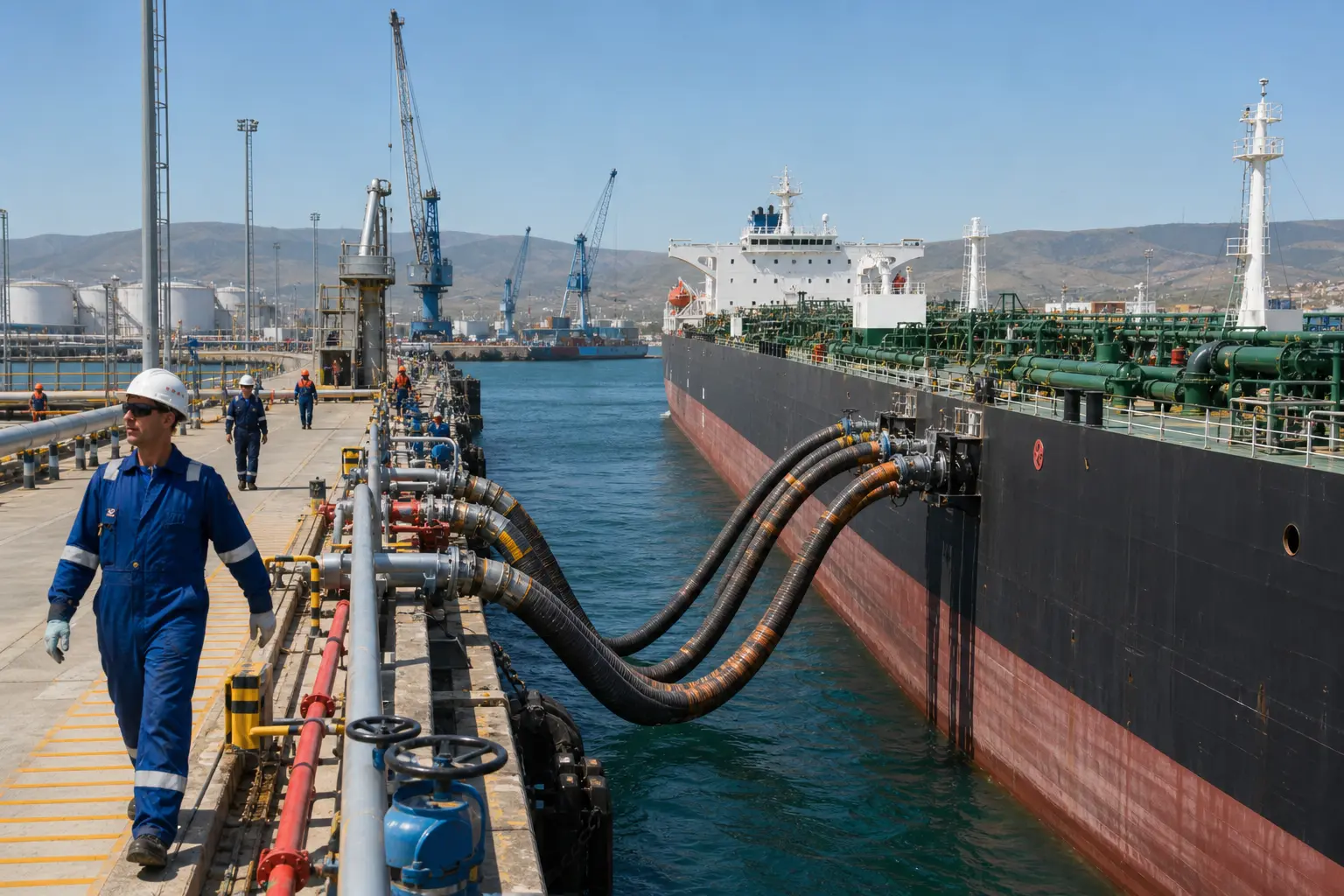
The CPC carries the bulk of Kazakhstan’s crude, commonly estimated near 80 percent of exports, from fields such as Tengiz to the Black Sea terminal near Novorossiysk. In July 2026 that outlet came under repeated attack.
- 19 July 2026: Drones struck two tankers, the Asia and Nissos Ios, while loading Kazakh oil; Kazakhstan’s Energy and Foreign Ministries condemned the hits on civilian vessels and economic interests; no casualties reported and SPMs undamaged.
- Late July: Loadings suspended multiple times for safety; storage filled; Kazakhstan ordered controlled production cuts described as purely technical to avoid overflow.
- 30 July 2026: Further drone hits on tankers; fire on one vessel; third suspension of the month.
- Early August: Sources told Reuters July CPC loadings ran more than 20 percent behind schedule, falling to roughly 1.2 to 1.3 million barrels per day and removing about 400,000 bpd from markets for the month.
Tengiz output was reported halved at the sharpest point. Overall Kazakh oil and condensate production dropped sharply for July. Shipowners grew reluctant to call at the terminal. The pattern turned a temporary safety pause into a structural reminder that almost all of Kazakhstan’s export cash flows through one Russian-controlled corridor.
Each suspension compounded the last. Once loadings stopped, tanks at the terminal filled fast. Inland fields then had to cut rates or risk overflow. The sequence left little room for gradual adjustment.
Numbers That Show the Trade-Off
The alternative is more expensive and slower. Oil and gas analyst Abzal Narymbetov has put BTC transport near $120 per tonne against roughly $38 on the CPC. The multi-step journey (pipeline or rail to Aktau, tanker across the Caspian, then BTC or Supsa) adds storage and waiting costs. Aktau’s oil-handling capacity sits around 5 to 6 million tonnes a year, far below any ambition to move tens of millions of tonnes west.
| Route | Approx. Kazakh share / plan | Capacity note | Relative cost |
|---|---|---|---|
| CPC to Novorossiysk | ~80% of exports; ~70 mt class in strong years | Main artery; SPM and storage constrained by security | Baseline (~$38/t cited) |
| BTC via Aktau-Baku | ~1.2 mt current; 1.7 mt 2026 target; Az ready for 2.2 mt | 1 mbpd / 50+ mtpa system, mostly Azeri crude today | ~3x higher |
| Baku-Supsa | Under consideration; talks earlier for up to 3 mtpa | 5-7.5 mtpa range | Higher than CPC, shorter path to Black Sea |
| China (Atasu-Alashankou) | Used in diversions; ~1 mt class recent years | Eastbound outlet | Different market |
Earlier Kazakh statements floated far larger BTC ambitions, including 20 million tonnes longer term. Those numbers require major Aktau expansion, more tankers and possibly a subsea Caspian pipeline that remains legally blocked by the five littoral states. For now the realistic increment is measured in low single-digit millions of tonnes.
Rashid Zhaksylykov of the KazService association has argued that only higher oil prices make the BTC path profitable and that no alternative yet matches CPC economics. The latest disruption simply raised the price of staying dependent.
Put side by side, the figures explain the hesitation as well as the move. A near threefold freight gap, a port that handles only a few million tonnes a year, and a main line still moving volumes an order of magnitude larger all point the same way: diversification is insurance, not replacement.
Georgia Collects the Quiet Upside
Every extra barrel that crosses Georgia brings transit revenue, port work and political weight to Tbilisi’s Black Sea corridor. The country already saw Georgia ports and rail cargo decade high on war-driven trade. Oil is a higher-value layer on the same geography.
Baku-Supsa ends on the Georgian coast. BTC snakes through Georgia before reaching Turkey. Both lines generate fees and local employment. When Tengizchevroil looked for quick options, sources noted rail shipments toward Batumi. That is small, but it is cash and activity that would not exist if CPC ran without interruption.
The same corridor hosts gas infrastructure. Parallel capacity growth on the South Caucasus gas line volume surge shows how the route has become a multi-commodity bridge. Oil diversification locks in that role. Georgia does not need to replace the CPC; it only needs the incremental flows and the narrative that the Middle Corridor can take more when Russian routes falter.
- Transit fees on BTC volumes that cross Georgian territory
- Port and rail activity linked to Baku-Supsa and Batumi movements
- Political weight as a multi-commodity bridge when Russian routes falter
Azerbaijan gains too. Higher Kazakh throughput fills space as Azeri production matures and domestic use rises. Transit fees and political centrality rise with the barrels.
Who Holds the Pipes After the July Handover
BTC ownership is a consortium. SOVA listed SOCAR at 32.97 percent, BP at 30.1 percent, MOL 8.9 percent, TPAO 6.53 percent, Eni and TotalEnergies 5 percent each, plus Itochu, ONGC Videsh, ExxonMobil and INPEX. Other tallies put SOCAR nearer 25 percent; the precise equity can shift with secondary trades, but the core group is stable.
On 1 July 2026 the operatorship transfer from BP to SOCAR Midstream Operations took effect across the Azerbaijan, Georgia and Türkiye sections. BP remains a major shareholder and still runs the Sangachal terminal and upstream fields. The change marks SOCAR’s rise as operator of a world-scale export system.
Weeks earlier the Western Route (Baku-Supsa) facilities returned to Azerbaijani and Georgian entities. The Baku-Supsa operatorship handed to regional entities fits the same pattern: local operators, international equity. Readers can check BTC technical parameters and ownership on the SOCAR Midstream site for diameter, pump stations and cumulative volumes (more than 4.7 billion barrels loaded to date).
Western majors still sit on both sides of the ledger. Chevron and Exxon hold large CPC and Tengiz stakes; Eni, TotalEnergies, BP and others hold BTC. Diversion protects some barrels while leaving the biggest equity exposure on the disrupted line.
The July timing mattered. Operatorship of the western lines shifted to regional hands just as Kazakhstan began looking harder at those same lines for spare capacity. Equity stayed international; day-to-day control moved closer to Baku and Tbilisi.
Why Spare Capacity Still Carries a Premium
The freight gap Narymbetov cited, near $120 a tonne on BTC against roughly $38 on the CPC, is only the start of the bill. Multi-step moves add storage, tanker waiting time and port handling at Aktau before a barrel ever reaches Baku.
That premium buys something CPC alone cannot guarantee after July: a second door when the main gate closes. Azerbaijan’s readiness to take up to 2.2 million tonnes a year, against Kazakhstan’s 1.2 million tonne baseline and 1.7 million tonne 2026 target, sketches how much headroom exists without new steel in the ground.
Zhaksylykov’s point still holds. Higher oil prices ease the pain of the dearer route. Lower prices shrink the case for anything but the cheapest path. July did not rewrite that arithmetic. It raised the cost of ignoring it.
| Factor | On CPC | On western alternatives |
|---|---|---|
| Unit transport cost | ~\$38 per tonne cited | ~\$120 per tonne on BTC |
| Scale available now | ~70 mt class in strong years | Low single-digit millions of tonnes |
| Security exposure | Single corridor, repeated July hits | Spread across Aktau, tankers, BTC and Supsa |
| Speed of expansion | Already built | Years of port, tanker and storage work |
For a state whose budget leans on crude, the choice is not abstract. Paying more on a thin slice of exports is the price of proving that production need not stop when Novorossiysk does.
The Gap That Keeps CPC Essential
Crowd and analyst tallies converge on the same hard fact: combined BTC, China and other outlets have recently moved under 3 million tonnes of Kazakh oil in a year while CPC has moved on the order of 70 million. Expanding the western options takes years of port, tanker and storage investment. A subsea Caspian oil line remains blocked by legal disagreement among the five coastal states.
That is why July’s outages translated so quickly into production cuts. Storage at the terminal fills in roughly a day and a half at full rate once loadings stop. Fields hundreds of kilometres inland have no choice but to throttle. The Energy Ministry called the cuts technical. The economics are geopolitical.
Kazakhstan’s budget leans heavily on oil and gas. Roughly half of budget revenue and a large share of export earnings ride on crude sales. Temporary diversions to China or rail to Batumi buy time. They do not replace the CPC’s scale. The 1.7 million tonne BTC target for 2026 is real progress from a low base and a 31 percent jump, yet it remains a rounding error next to the main artery.
Still, every repeated outage raises the insurance premium of concentration. The Ministry of Foreign Affairs framed the tanker attacks as an infringement on national economic interests and called for partner states to respond. The practical answer is already visible in Aktau loadings and the BTC target: pay more, move less, but keep options open.
Georgia and Azerbaijan collect the transit margin and the strategic credit. Kazakhstan buys a thinner but safer insurance policy. The CPC remains the volume king until far larger western infrastructure appears. That imbalance is the lasting feature of the story, not the temporary headline about diversification.